

The lesser whitethroat (Curruca curruca, formerly placed in the genus Sylvia) is a small, neat grey-and-white warbler that breeds across Europe and Asia and spends the winter in large numbers across the Indian subcontinent. In India it is a familiar cold-season visitor to thorn scrub, hedgerows, orchards and gardens, where it is recognised by its grey-brown back, dark cheek patch, bright white throat and a hard, rattling “tak” call.
The lesser whitethroat arrives in India from roughly autumn, hunts quietly through bushes for insects and berries all winter, and leaves again in spring for its northern breeding grounds. This explainer covers its identification, the related whitethroat species seen in India, its diet, its long-distance migration, its call, its place in Indian habitats and its conservation status.
| Quick Facts: Lesser Whitethroat | |
|---|---|
| Common name | Lesser whitethroat |
| Scientific name | Curruca curruca (earlier Sylvia curruca) |
| Family and order | Sylviidae (typical warblers), order Passeriformes |
| Size | Roughly 12-13 cm; a slim, small warbler with a fairly long tail |
| Key field marks | Grey crown, darker ear patch, pure white throat, grey-brown back, pale underparts and white outer tail feathers |
| Habitat in India | Thorn scrub, babul and acacia woodland, hedges, gardens, orchards, crop edges and wasteland bushes |
| Diet | Insects and spiders, plus berries, small fruits and occasionally nectar |
| Breeding and migration | Breeds in Europe and Asia; a long-distance migrant that winters in Africa, the Middle East and the Indian subcontinent |
| Conservation status | Least Concern on the IUCN Red List |
Key Takeaways
- The lesser whitethroat is a small grey-and-white warbler about 12-13 cm long, with a clean white throat and a darker patch behind the eye.
- The lesser whitethroat is a winter visitor to India, generally arriving in autumn and leaving by spring for breeding grounds in Europe and Asia.
- The lesser whitethroat gives a hard, dry “tak” or rattling call in winter, which is often the first clue to its presence in a bush.
- The lesser whitethroat eats insects and spiders for most of the year and adds berries and small fruits to its diet in cooler months.
- The lesser whitethroat belongs to a group of closely related whitethroats in which several forms, including Hume’s and desert whitethroats, are now often treated as separate species.
- The IUCN lists the lesser whitethroat as Least Concern because of its enormous range and large population.
What is the lesser whitethroat?
The lesser whitethroat is a small insect-eating warbler of scrub and woodland edges that breeds in Europe and Asia and migrates south for winter. It belongs to the typical warbler family, Sylviidae, and to a genus of scrub warblers that includes the common whitethroat, the Sardinian warbler and several other species.
For many years the lesser whitethroat was placed in the genus Sylvia. More recent classification, based on genetic studies, has moved this group of scrub warblers into the genus Curruca, so both names appear in books and websites. The common name comes from the clean white throat that contrasts with the dark cheek and grey head, and “lesser” separates it from the slightly larger common whitethroat.
The lesser whitethroat is one of the most widespread warblers on earth, with a breeding range spanning a broad band of the Old World from western Europe across Russia and Central Asia. This enormous range is the reason that the species is so familiar to Indian birdwatchers in winter.
How can you identify a lesser whitethroat?
A lesser whitethroat can be identified by its grey crown, dark ear patch, white throat, greyish-brown back and white edges to a rather long, dark tail. The underparts look whitish, sometimes with a faint pinkish-buff wash on the flanks, and the legs are dark grey.
Key field marks
- Head: clean grey crown with a darker, blackish-grey mask through the eye and ear coverts, giving a slightly masked look.
- Throat: bright white, set off by the darker face above it.
- Upperparts: plain grey-brown, without wing bars or streaks; the wing may show a faint brown edge.
- Tail: dark with white outer feathers that flash when the bird flies or flicks its tail.
- Bill and legs: short dark bill, dark legs, and a dark eye with a thin pale ring in some individuals.
The lesser whitethroat has a lively, restless way of moving through branches, often flicking its tail and wings, and it tends to keep inside foliage rather than perch in the open for long.
Where does the lesser whitethroat live in India?
The lesser whitethroat lives across a wide part of India during winter, especially in the drier north, west and centre, where it frequents thorn scrub, acacia and babul woodland, hedges, orchards, gardens and the bushy edges of farms. It is less common in dense evergreen forest and rarer in the wettest regions.
The lesser whitethroat prefers low, dense, thorny vegetation that offers cover and a steady supply of insects. In towns it turns up in parks, bungalow gardens and campus shrubberies. It is often seen alone or in loose association with other small insectivorous birds.
- Open thorn scrub and semi-arid land with acacia, ber and prosopis bushes.
- Field edges, hedgerows and plantations with scattered shrubs.
- Gardens and orchards, particularly those with flowering or fruiting trees.
- Scrub around ponds, river banks and wasteland.
Within these habitats, the lesser whitethroat typically works the lower and middle layers of bushes, moving quickly from one thicket to the next.
Which whitethroats occur in India?
Several closely related whitethroats occur in India, including the lesser whitethroat itself, the desert whitethroat and Hume’s whitethroat, along with the larger common whitethroat on passage in some areas. They look similar, and taxonomists have long debated how many species they represent.
| Form | General appearance | Notes |
|---|---|---|
| Lesser whitethroat | Darker grey-brown above, dark ear patch, white throat | The common winter visitor across much of India |
| Desert whitethroat | Paler and sandier, with a weaker cheek patch | Often treated as a separate species from the lesser whitethroat; frequents drier country |
| Hume’s whitethroat | Darker and greyer-brown than the desert form, with a stronger face mask | Breeds in Central Asian mountains; a regular winter visitor to parts of India |
| Common whitethroat | Larger, with rufous wing panel and a longer tail | Seen mainly on passage in the north-west |
Because the forms overlap in appearance and are still being reviewed, many Indian birdwatchers record these birds simply as lesser whitethroats unless they have clear photographs and a good look at the plumage tones.
What does the lesser whitethroat eat?
The lesser whitethroat eats mostly insects and spiders, which it gleans from leaves, twigs and bark, supplemented in autumn and winter by berries, small fruits and sometimes flower nectar. Its prey includes small caterpillars, beetles, flies, aphids, bugs and spider eggs, usually picked from within a bush.
The lesser whitethroat hunts by moving quickly through foliage, pausing to peer, then lunging or hovering briefly to take an insect from a leaf. It also hops along the ground under shrubs at times. In winter, when insects can be scarcer, it turns to fruit such as small berries, which supply sugars and fats.
By eating many small insects and spiders, the lesser whitethroat contributes to natural pest control in gardens, orchards and field margins. The fruit it eats may also help spread the seeds of scrub plants, although the effect is modest.
Why does the lesser whitethroat come to India?
The lesser whitethroat comes to India because winter in its northern breeding range is too cold for insect-eating birds, and the Indian subcontinent offers mild weather, plentiful insects and abundant scrub. Migration lets the species breed in the long daylight and insect boom of the northern summer, then escape the freezing season.
The lesser whitethroat is a classic example of a long-distance migrant. Different populations follow different routes: birds from Europe largely winter in Africa, while those from eastern parts of the range winter in Arabia, Iran, Pakistan and India. Indian winter birds arrive from about autumn, with numbers building through the cold season, and most depart by spring.
The yearly cycle in brief
- Autumn: birds leave the breeding grounds and travel south, mostly at night.
- Winter: they settle in a patch of scrub or garden and often defend a small feeding territory, sometimes returning to the same patch each year.
- Spring: birds feed up, gain weight and fly north to breed.
Individuals are thought to show strong loyalty to wintering sites, which is why the same bush may host a lesser whitethroat year after year.
What does the lesser whitethroat sound like?
The lesser whitethroat makes a hard, dry “tak” or “tek” call and a rattling, chattering note, and this is the sound most Indian birdwatchers learn first. The call is often repeated several times, and it carries from deep inside bushes where the bird itself is hidden.
On its breeding grounds the male sings a short song that begins with a soft, jumbled warble and ends with a flat, dry rattle on one pitch. Birds in India are usually silent songsters in winter, but they may give snatches of subdued song late in the season, shortly before they depart for the north.
The lesser whitethroat call is a useful identification clue because many small grey-brown warblers look alike but sound different. A listener who learns the dry “tak” can find lesser whitethroats in a garden even on a day when no bird is visible.
How does the lesser whitethroat breed?
The lesser whitethroat breeds far from India, building a small, neat cup nest low in dense bushes or hedges in Europe and Asia during the northern summer. The nest is made of grasses and plant stems, lined with finer grass and hair.
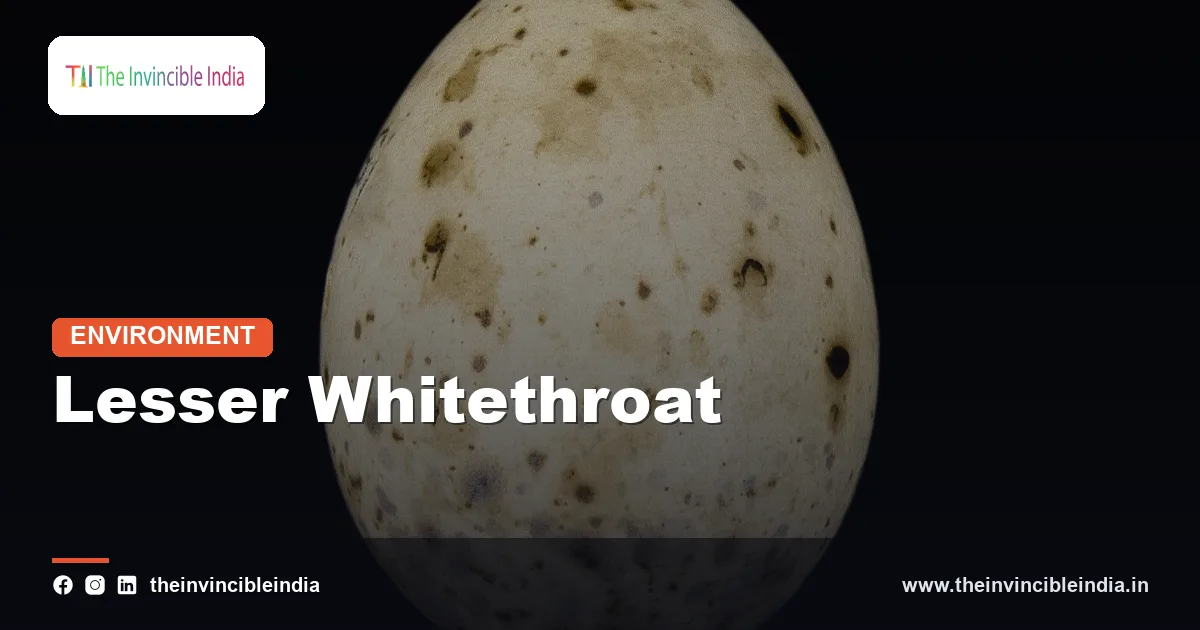
The female typically lays a clutch of about four to six eggs, which are pale with brown and grey speckles. Both parents usually feed the chicks on insects. Because breeding takes place outside India, most Indian sightings are of non-breeding adults and young birds in winter, and nests are not part of the Indian experience of the species.
The breeding season is short and intense, which is why the birds need to fatten up and migrate efficiently, and why safe stopover and wintering habitats matter so much to them.
Is the lesser whitethroat threatened?
The lesser whitethroat is not threatened globally: the IUCN rates it Least Concern because its breeding range is enormous and its population is large. It remains common in Indian winter scrub and gardens, though numbers can vary from year to year.
Local concerns for the lesser whitethroat include the clearing of thorn scrub and hedgerows for development, intensive agriculture, heavy pesticide use that reduces insects, and the loss of old gardens and orchards. Climate change may also alter migration timing and the availability of food at breeding and wintering sites.
- Keep patches of native scrub and hedgerow along fields and roads.
- Plant fruiting and flowering shrubs in gardens, which attract insects and provide winter food.
- Avoid broad-spectrum insecticide spraying in gardens and orchards.
- Do not trim hedges heavily during the main winter season.
Such small habitat measures help many other winter visitors as well, from chiffchaffs to leaf warblers.
How can you spot a lesser whitethroat in your garden?
You can spot a lesser whitethroat by listening for its dry “tak” call in winter, then scanning the middle layers of nearby bushes for a small grey bird with a white throat and a dark cheek. It moves quickly, so a steady, patient approach works best.
- Look from late autumn to early spring, when the species is present in India.
- Stand still near dense, thorny or flowering shrubs and let the birds come into view.
- Watch for the flash of white outer tail feathers as the bird flies between bushes.
- Check the throat and cheek pattern before deciding between lesser whitethroat and other grey warblers.
- Photograph the bird whenever possible, because later review helps separate similar whitethroat forms.
Records submitted to citizen science platforms help researchers track arrival and departure dates, which are useful signals of how migration is changing.
Bottom Line
The lesser whitethroat is a modest-looking but remarkable traveller: a bird that weighs only about a dozen grams yet crosses mountains and deserts each year to winter in Indian scrub and gardens. Learning its white throat and dry call turns a hidden winter bush into a place full of life.
Frequently Asked Questions
What is a lesser whitethroat?
A lesser whitethroat is a small grey-and-white warbler with a white throat and a dark cheek patch. It breeds in Europe and Asia and winters in Africa, the Middle East and the Indian subcontinent. Its scientific name is Curruca curruca, formerly Sylvia curruca.
When does the lesser whitethroat visit India?
The lesser whitethroat visits India in the cold season, generally arriving from around autumn and leaving by spring. Exact dates vary by region and by year. It is a winter visitor and does not breed in India.
How can I tell a lesser whitethroat from other warblers?
You can tell a lesser whitethroat by its clean white throat, grey crown, dark ear patch and white outer tail feathers. It also gives a hard, dry tak call. Most other small Indian warblers have streaks, wing bars or a yellowish tone that the lesser whitethroat lacks.
What does the lesser whitethroat eat?
The lesser whitethroat eats mainly insects and spiders gleaned from leaves and twigs. In autumn and winter it also eats berries and small fruits. It sometimes takes nectar from flowers.
Where does the lesser whitethroat breed?
The lesser whitethroat breeds across Europe and Asia, in scrub, hedges and woodland edges, and not in the Indian plains. Birds that winter in India travel north in spring to breeding grounds in Central Asia and neighbouring regions. They build a small cup nest low in dense bushes.
Is the lesser whitethroat common in India?
Yes, the lesser whitethroat is common in India during winter, especially in drier scrub and gardens. It is listed as Least Concern by the IUCN. It can be harder to see than to hear because it keeps within dense bushes.
{“@context”:”https://schema.org”,”@graph”:[{“@type”:”FAQPage”,”mainEntity”:[{“@type”:”Question”,”name”:”What is a lesser whitethroat?”,”acceptedAnswer”:{“@type”:”Answer”,”text”:”A lesser whitethroat is a small grey-and-white warbler with a white throat and a dark cheek patch. It breeds in Europe and Asia and winters in Africa, the Middle East and the Indian subcontinent. Its scientific name is Curruca curruca, formerly Sylvia curruca.”}},{“@type”:”Question”,”name”:”When does the lesser whitethroat visit India?”,”acceptedAnswer”:{“@type”:”Answer”,”text”:”The lesser whitethroat visits India in the cold season, generally arriving from around autumn and leaving by spring. Exact dates vary by region and by year. It is a winter visitor and does not breed in India.”}},{“@type”:”Question”,”name”:”How can I tell a lesser whitethroat from other warblers?”,”acceptedAnswer”:{“@type”:”Answer”,”text”:”You can tell a lesser whitethroat by its clean white throat, grey crown, dark ear patch and white outer tail feathers. It also gives a hard, dry tak call. Most other small Indian warblers have streaks, wing bars or a yellowish tone that the lesser whitethroat lacks.”}},{“@type”:”Question”,”name”:”What does the lesser whitethroat eat?”,”acceptedAnswer”:{“@type”:”Answer”,”text”:”The lesser whitethroat eats mainly insects and spiders gleaned from leaves and twigs. In autumn and winter it also eats berries and small fruits. It sometimes takes nectar from flowers.”}},{“@type”:”Question”,”name”:”Where does the lesser whitethroat breed?”,”acceptedAnswer”:{“@type”:”Answer”,”text”:”The lesser whitethroat breeds across Europe and Asia, in scrub, hedges and woodland edges, and not in the Indian plains. Birds that winter in India travel north in spring to breeding grounds in Central Asia and neighbouring regions. They build a small cup nest low in dense bushes.”}},{“@type”:”Question”,”name”:”Is the lesser whitethroat common in India?”,”acceptedAnswer”:{“@type”:”Answer”,”text”:”Yes, the lesser whitethroat is common in India during winter, especially in drier scrub and gardens. It is listed as Least Concern by the IUCN. It can be harder to see than to hear because it keeps within dense bushes.”}}]}]}


