

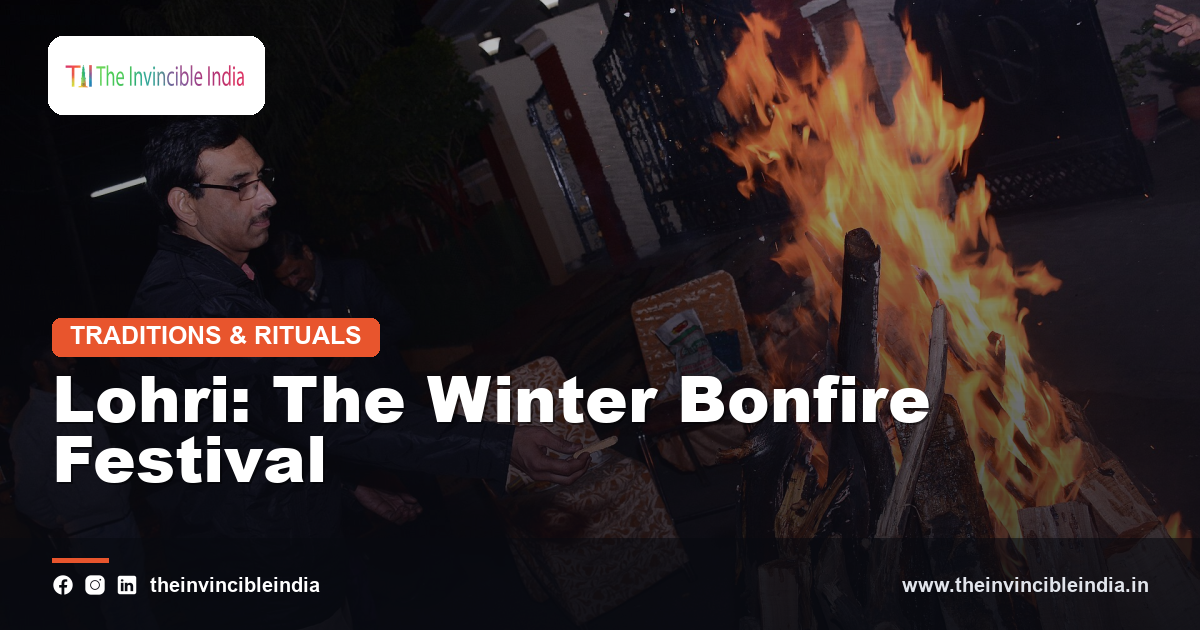
Lohri is a widely celebrated winter festival, most closely associated with Punjab, marking the end of the winter solstice period and the approach of the harvest season. Families gather around bonfires on the eve of the festival, tossing in sesame seeds, popcorn and peanuts while singing traditional folk songs. Falling just before Makar Sankranti, Lohri shares the same seasonal roots as that festival while carrying its own distinct customs of fire, food and folk performance. This guide explores its origins, rituals and the many ways it continues to bring communities together each winter.
Quick Facts
| Detail | Information |
|---|---|
| Also Known As | Punjabi winter bonfire festival |
| Associated Season | Winter solstice period, ahead of Makar Sankranti |
| Type of Observance | Regional harvest and folk festival |
| General Timing | Mid-January, on the eve of Makar Sankranti |
| Key Practices | Bonfire gathering, folk songs, offerings of til and gud |
| Region of Prominence | Punjab, Haryana, Himachal Pradesh and northern India |
Meaning and Significance
Lohri is celebrated as a festival of warmth and community at a point in the year when winter is at its coldest, drawing families and neighbours together around a shared bonfire. It is closely tied to the agricultural calendar of northern India, marking the end of the winter crop-sowing period and looking ahead to the harvest that follows in the weeks after. The fire at the centre of the celebration is understood as a symbol of light, energy and the retreat of winter’s darkness.
Beyond its seasonal meaning, Lohri carries a strong social dimension, bringing together relatives, friends and neighbours for an evening of song, food and shared warmth. This blend of natural symbolism and communal gathering has helped the festival remain a vibrant part of regional life across generations, even as its specific customs have evolved somewhat over time.
Historical and Agricultural Origins
Lohri’s roots lie in the agrarian rhythms of the Punjab region, where the festival traditionally coincided with the close of the rabi crop-sowing season and served as an occasion to celebrate the fields’ promise for the months ahead. Farmers historically marked the shortening of winter nights and the gradual lengthening of days with a communal fire, a practical and symbolic response to the season’s demands.
Over time, the festival’s agricultural associations have been woven together with broader cultural and social customs, so that Lohri today is understood as much as a community celebration as a farming milestone. This layering of practical origin and cultural meaning is common to many regional Indian festivals, where the cycles of nature provide the underlying occasion for celebration.
Position in the Winter Calendar
Lohri is observed on the eve of Makar Sankranti, placing it firmly within the transition from the winter solstice period toward the sun’s northward movement, known in Indian tradition as Uttarayana. Unlike many Hindu festivals that follow the lunar calendar, Lohri and Makar Sankranti are linked to the solar calendar, which is why the festival falls on a comparatively fixed date each year rather than shifting widely.
This solar positioning ties Lohri closely to seasonal change itself, rather than to a lunar phase, reinforcing its character as a festival of the turning year. The proximity to Makar Sankranti also means the two occasions are often celebrated as a connected sequence of festivities in many households.
The Lohri Bonfire Ritual
The central ritual of Lohri takes place after sunset, when families and communities gather around a bonfire built in open courtyards, streets or fields. Participants circle the fire, offering handfuls of sesame seeds, popped corn, peanuts and puffed rice into the flames while reciting traditional words of blessing, a practice understood as an offering to the fire itself.
The gathering around the bonfire is as much a social occasion as a ritual one, with neighbours and relatives coming together to share warmth, food and conversation late into the evening. In many localities, community bonfires are organised in shared spaces, extending the celebration beyond individual households to the wider neighbourhood.
Traditional Foods and Offerings
Food plays a central role in Lohri celebrations, with sesame seeds (til), jaggery (gud), peanuts and popcorn among the most common offerings made to the bonfire and shared among those gathered. Sweets made from til and gud, prized for their warming qualities in the cold winter months, are especially associated with the occasion.
A traditional Punjabi meal often follows the bonfire ceremony, typically featuring sarson da saag, a mustard greens preparation, served with makki di roti, a flatbread made from maize flour. This meal, closely tied to the region’s winter produce, rounds out the day’s festivities and reflects the festival’s deep connection to the agricultural calendar.
Folk Songs and Lohri Lore
Lohri is closely associated with traditional folk songs sung while going door to door or gathered around the fire, often invoking blessings of prosperity for the household. Among the best known is the ballad of Dulla Bhatti, a folk figure remembered in Punjabi oral tradition for aiding those in distress, whose story is retold through song during the festival.
These folk songs, passed down largely through oral tradition, give Lohri a strong connection to Punjabi language and storytelling culture. Children in particular often participate in groups that move from house to house singing Lohri songs and collecting small treats, a practice that keeps the oral tradition alive across generations.
Lohri for New Brides and Newborns
Lohri holds particular significance for families celebrating a recent marriage or the birth of a child, with the first Lohri after such an event often marked with special enthusiasm. Relatives and friends are invited to join the celebration, and the new bride or newborn is typically the centre of attention during the evening’s festivities.
This custom reflects the festival’s broader association with new beginnings and household prosperity, extending its symbolism of warmth and light to significant family milestones. Such celebrations often involve additional gift-giving and larger gatherings than a typical Lohri, underscoring the occasion’s importance within extended family networks.
Giddha and Bhangra Performances
Traditional Punjabi dance forms, particularly giddha performed by women and bhangra performed by men, are closely associated with Lohri celebrations, adding movement and energy to the evening’s festivities. These folk dances are typically performed to the rhythm of the dhol, a double-headed drum central to Punjabi music.
The lively, communal nature of these dances mirrors the festival’s broader spirit of shared celebration, drawing participants of different ages into a common performance. Public and community Lohri events frequently feature organised giddha and bhangra performances, extending the festival’s traditional dance culture to a wider audience beyond individual households.
Lohri and the Rabi Crop Season
The timing of Lohri aligns closely with the rabi cropping season in northern India, a period during which crops such as wheat and mustard are maturing in the fields ahead of the spring harvest. The festival has traditionally served as an expression of gratitude and anticipation tied to this agricultural cycle.
For farming communities, the festival’s emphasis on fire and warmth carries a practical resonance, marking a turning point after the coldest weeks of winter and looking forward to the productive months ahead. This agricultural backdrop remains part of Lohri’s identity even as the festival has taken on wider urban and cultural dimensions.
Regional Variations Across North India
While Lohri is most strongly associated with Punjab, the festival and its related observances are also marked in neighbouring states such as Haryana and Himachal Pradesh, often under similar names and with comparable bonfire rituals. Local variations in songs, foods and specific customs reflect the particular agricultural and cultural traditions of each area.
In some regions, the festival’s customs merge closely with those of Makar Sankranti, given the two occasions’ proximity on the calendar, while in others Lohri retains a distinct identity as an evening bonfire celebration separate from the following day’s rituals. This regional variation illustrates the broader pattern of shared northern Indian winter festivities taking on local character.
Lohri in Punjab, Haryana and Himachal
In Punjab, Lohri is celebrated with particular intensity, involving large community bonfires, extensive folk singing and dancing, and a strong emphasis on family gatherings. The festival is considered one of the most important seasonal occasions in Punjabi cultural life, often rivalling other major festivals in the enthusiasm of its celebration.
In Haryana, comparable customs are observed, often blending Lohri traditions with the region’s own harvest celebrations. In parts of Himachal Pradesh, the festival known locally by related names shares the core elements of a winter bonfire but incorporates distinct regional songs and foods suited to the hill terrain and its particular agricultural calendar.
The Punjabi Diaspora and Global Celebrations
Lohri is celebrated with enthusiasm by Punjabi communities well beyond India, particularly in countries with significant Punjabi diaspora populations such as the United Kingdom, Canada and parts of the United States. Community centres and gurdwaras in these regions often organise Lohri events featuring bonfires where permitted, along with music, dance and traditional food.
These diaspora celebrations play an important role in maintaining cultural continuity for Punjabi families living abroad, offering a familiar and communal occasion during the winter months. The adaptability of Lohri’s core customs, centred on gathering, song and shared food, has allowed it to travel successfully to very different climates and settings.
Community and Neighbourhood Celebrations
Beyond individual households, Lohri is frequently celebrated as a neighbourhood or community event, with residents pooling resources to build a shared bonfire in a common space. Such gatherings often extend to residential colonies, workplaces and educational institutions, which may organise their own Lohri programmes featuring music, food and folk performances.
This communal dimension reinforces Lohri’s identity as a festival that draws people together across household lines, turning a domestic ritual into a wider social occasion. The informal, inclusive nature of many neighbourhood celebrations has helped the festival remain accessible and popular even in dense urban settings far from its rural origins.
Symbolism of Fire in Lohri
Fire occupies a central symbolic place in Lohri, representing warmth, light and the triumph over the season’s coldest and darkest days. The act of gathering around a shared flame, offering food into it, and singing together reflects a long-standing human association between fire and community, expressed here in a distinctly Punjabi form.
The bonfire is also understood as a purifying and protective element, with the offerings made into the flames symbolising gratitude and hope for prosperity in the year ahead. This symbolic weight gives the otherwise simple act of building a fire a deeper cultural resonance within the festival’s overall meaning.
Connection to Makar Sankranti and Maghi
Lohri is closely linked to the festivals that follow it, particularly Makar Sankranti, observed the next day across much of India, and Maghi, marked in Punjab itself. Together, these occasions form a connected sequence of winter celebrations tied to the sun’s changing position and the turn toward longer days.
While each festival retains its own specific customs, this sequence reflects a shared regional understanding of the season as a time of transition, worth marking with fire, food and family gathering. The overlapping timing of these festivals often means celebrations extend across more than a single day in many households.
Lohri Today
In contemporary India, Lohri continues to be celebrated with its traditional core of bonfires, folk songs and shared food, even as urban settings have adapted some of its practical elements, such as using designated community spaces for fires where open flames are restricted. Social media has also become a platform for sharing festival greetings and images of celebrations among extended family and friends.
Despite these changes in setting, the festival’s essential spirit, a communal marking of winter’s turn toward the harvest season, remains recognisably continuous with its rural origins. Lohri’s enduring popularity, both within Punjab and among Punjabi communities worldwide, reflects the lasting appeal of its blend of warmth, food and togetherness.
Sources & Further Reading
- Ministry of Culture, Government of India (indiaculture.gov.in).
- Sangeet Natak Akademi (sangeetnatak.gov.in).
Frequently Asked Questions
What is Lohri?
Lohri is a winter festival, most closely associated with Punjab, celebrated with bonfires, folk songs and traditional foods on the eve of Makar Sankranti.
Why is a bonfire central to Lohri?
The bonfire symbolises warmth and light during the coldest part of winter, and offerings of sesame seeds, peanuts and popcorn are traditionally made into the flames.
What foods are associated with Lohri?
Til and gud sweets, peanuts and popcorn are common Lohri offerings, often followed by a meal of sarson da saag and makki di roti.
Why is Lohri special for new brides and newborns?
A family’s first Lohri after a marriage or a child’s birth is traditionally celebrated with extra enthusiasm, larger gatherings and additional festivities.
Is Lohri celebrated outside Punjab?
Yes, related bonfire customs are observed in neighbouring states such as Haryana and Himachal Pradesh, and Punjabi diaspora communities celebrate it worldwide.


