

The longan (Dimocarpus longan) is a small, round, brown-skinned tropical fruit with sweet, translucent white flesh and a glossy black seed, and it is a close relative of the lychee that is grown on a small scale in parts of eastern and southern India. The name comes from the Cantonese words for “dragon eye”, which describe how the peeled fruit, with its black seed showing through pale flesh, resembles an eye.
The longan is a minor fruit in India, far less known than the lychee, the mango or the banana, but it is an important orchard crop in China, Thailand and Vietnam, and it has found a place in a few Indian gardens and plantations. This article explains what the longan is, how the tree grows, where it is cultivated in India, when the fruit is in season, how it differs from the lychee and how it is eaten. It was last reviewed on 30 October 2026.
| Attribute | Detail |
|---|---|
| Scientific name | Dimocarpus longan (older name Euphoria longan) |
| Family | Sapindaceae (the soapberry family, which includes lychee and rambutan) |
| Other names | Dragon eye (from the Cantonese name) |
| Where grown in India | Small plantings and home trees in parts of eastern and north-eastern India and in the warm, humid south, including Kerala, Tamil Nadu and Karnataka |
| Season | Late summer into the monsoon, generally after the lychee season |
| Fruit | Round, about 2 to 3 cm across, thin brittle tan skin, translucent white juicy pulp and one glossy black seed |
| Uses | Eaten fresh, dried, canned, and used in soups, desserts and drinks |
| Notable facts | A lychee relative; native to southern Asia; grows in bunches; dried longan is widely used in East Asian cooking |
Key Takeaways
- The longan (Dimocarpus longan) is a tropical to subtropical fruit tree of the soapberry family, Sapindaceae, and a close relative of the lychee and the rambutan.
- The longan fruit is a small, round berry-like fruit with a thin, brittle, light-brown skin, sweet translucent flesh and a single shiny black seed.
- The name longan comes from Cantonese words meaning “dragon eye”, a reference to the look of a peeled fruit with its dark seed showing through the pale flesh.
- In India the longan is a minor fruit grown in small numbers in parts of the east, north-east and south, and it ripens later in the year than the lychee.
- The longan is eaten fresh, dried or canned, and in East Asia it is also added to sweet soups and traditional drinks.
- Compared with the lychee, the longan has smooth brown skin instead of a rough red shell, and a flavour that is more musky and less floral.
What is a longan?
A longan is the fruit of Dimocarpus longan, an evergreen tree of the soapberry family that bears bunches of small, round fruits with brittle brown skins and sweet, juicy, translucent flesh. The fruit is native to southern Asia, and its origin is usually placed in the region around Myanmar and southern China, from where it spread through mainland Southeast Asia.
The longan is closely related to the lychee (Litchi chinensis) and the rambutan (Nephelium lappaceum). All three belong to the Sapindaceae, a large family that also contains soapnut trees such as the reetha (Sapindus). The family is known for fruits with a fleshy covering, called an aril, around a hard seed. In the longan the edible part is this aril, which surrounds the black seed.
The fruit grows in hanging clusters, and each cluster can hold dozens of fruits on a single stalk. Fruit is often sold still attached to the stalk.
What does a longan tree look like?
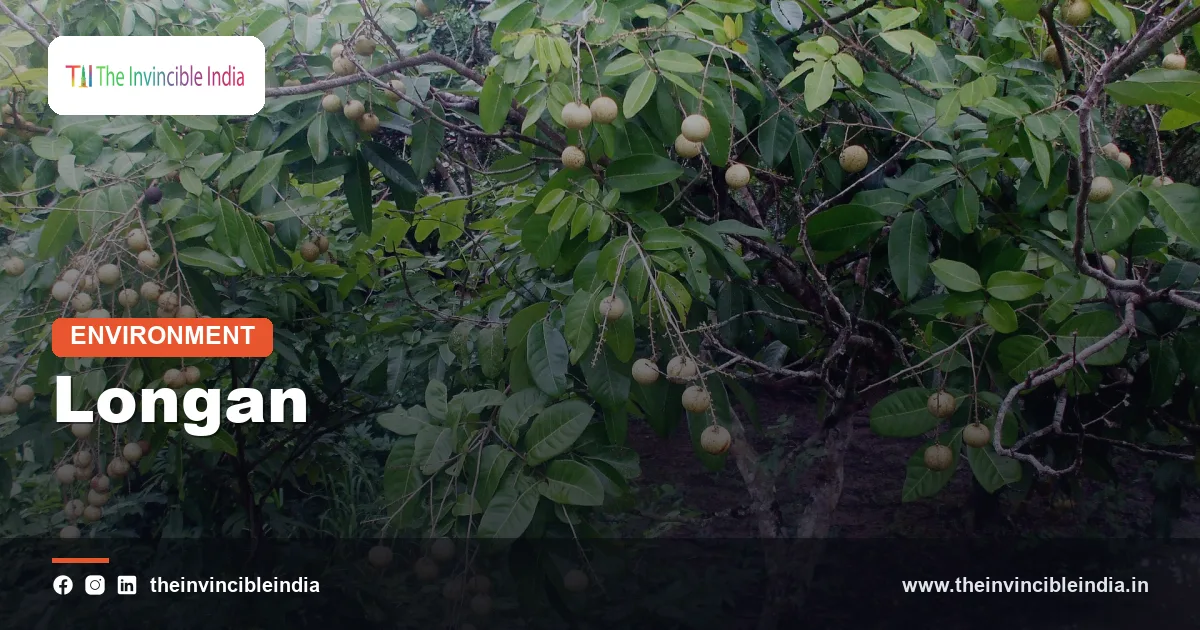
A longan tree is a large, spreading evergreen tree, commonly 10 to 20 metres tall in good conditions, with a dense, rounded crown and dark green compound leaves. Each leaf is made up of several long, glossy leaflets arranged in pairs along a central stalk, and the new growth is often reddish or bronze.
The tree bears small, yellowish-white, fragrant flowers in large branching clusters at the ends of the branches. Bees and other insects pollinate the flowers, and in some places longan honey is a valued product. The fruits that follow turn from green to light brown as they ripen, and they hang in heavy bunches that bend the branches down.
Features of the fruit
- Size: roughly 2 to 3 cm across, about the size of a large grape.
- Skin: thin, smooth, brittle and light brown to tan, which cracks easily with the fingernail.
- Flesh: translucent, white to pale grey, juicy and firm with a sweet, slightly musky taste.
- Seed: one glossy black seed, which is not eaten.
Where is the longan grown in India?
The longan is grown in India in a few small areas, mainly as home-garden trees and small plantations in the warm, humid parts of the east and north-east and in the hills and coastal belts of the south, such as Kerala, Tamil Nadu and Karnataka. The scale is small, and India does not have a significant commercial longan industry comparable to those of Thailand, China or Vietnam.
The tree prefers a warm, humid climate with a distinct cool or dry season, which helps it flower. It grows best in deep, well-drained, slightly acidic soils and is sensitive to waterlogging. In India it is mostly propagated by air layering or grafting, which gives trees that fruit sooner and keep the qualities of the parent.
Because the longan is a minor crop in India, reliable statistics on area and production are not widely available. The fruit is sold in a few local markets and in specialty shops, and imported dried and canned longan is more commonly seen in cities than fresh fruit.
When is the longan in season?
The longan is in season in India roughly from late summer through the monsoon months, generally a few weeks after the lychee harvest has ended. In the main producing countries of Asia the fruit ripens in the middle and late part of the year, and Indian trees follow a similar pattern, although exact dates depend on the variety, altitude and local weather.
The tree flowers in spring, and the fruit takes several months to develop. A cool, dry spell in winter is helpful for flower initiation, and unseasonal warmth can lead to poor flowering. For this reason, trees in very uniform warm climates may fruit unreliably, and growers in some countries use management methods to manage the timing of flowering.
Like the lychee, the longan does not ripen further after harvest, so the fruit is picked when it has coloured and developed its full sweetness. Fresh longans keep only for a few days at room temperature, though they last longer in a refrigerator and are often dried or canned to extend their life.
How is the longan different from the lychee?
The longan differs from the lychee mainly in having a smooth, brown, thin skin instead of a bumpy red shell, a smaller, rounder fruit, a milder, more musky flavour and a later fruiting season. Both fruits share a translucent white aril around a single seed, but the two are easy to tell apart on sight.
| Feature | Longan | Lychee |
|---|---|---|
| Scientific name | Dimocarpus longan | Litchi chinensis |
| Skin | Smooth, thin, light brown | Rough, bumpy, red to pink |
| Size | About 2 to 3 cm | About 3 to 4 cm |
| Flavour | Sweet and musky | Sweet, floral and slightly acidic |
| Seed | Glossy black, round | Dark brown, oblong |
| Season in India | Late summer to monsoon | May to June |
| Main commercial areas in India | Very limited | Bihar, West Bengal, Uttarakhand and others |
The longan is also less perishable than the lychee. Its brown skin protects the pulp better and does not turn black as quickly, which is one reason the fruit is widely dried.
How is the longan eaten and used?
The longan is eaten fresh by cracking the thin skin, squeezing out the translucent flesh and discarding the seed, and it is also dried, canned or cooked in sweet dishes. The flesh is juicy and firm, with a sweet, slightly musky taste, and many people eat the fruit by the handful, just as they would grapes.
Common uses
- Fresh: eaten plain, chilled, or added to fruit salads and chaats.
- Dried: the flesh is dried to a dark, chewy fruit, which is used in East Asian soups, teas and desserts.
- Canned: packed in syrup and used in sweets and drinks.
- Cooked: simmered in sweet soups and puddings, often with rock sugar.
- Honey: longan flowers are visited by bees, and the honey is prized in some countries.
In traditional Chinese practice, dried longan has been used in herbal tonics and sweet soups, but these are traditional uses that should not be read as medical claims. In India the fruit is mostly enjoyed simply as a fresh treat.
Is the longan healthy?
The longan is a sweet fruit that provides water, natural sugars, some vitamin C and small amounts of minerals such as potassium. Like most fresh fruit, it is best treated as part of a varied diet, and its sweetness means that people watching sugar intake should eat it in moderate amounts.
Dried longan is more concentrated, which means that it has more sugar and energy by weight than the fresh fruit. People with diabetes and anyone following a special diet should read labels on canned and dried products, since canned longan is often packed in sugar syrup.
The seed and skin are not eaten. Allergies to longan are uncommon, but they can occur, especially in people allergic to related fruits in the soapberry family. Anyone who notices itching, swelling or breathing difficulty after eating the fruit should seek medical advice.
How is the longan tree grown?
The longan tree is grown from seed, air layers or grafts, and it needs a warm climate, full sun, good drainage and regular watering during dry spells and fruit development. Trees raised from seed can take many years to bear and produce fruit of variable quality, so named varieties propagated by air layering or grafting are preferred for orchards.
- Plant in a sunny site with deep, well-drained soil.
- Protect young trees from frost and strong winds.
- Water regularly during establishment and fruit set, but avoid waterlogging.
- Prune after harvest to keep the canopy open and the tree at a reasonable height.
- Protect the ripening fruit from birds, bats, fruit flies and fruit-sucking insects.
Several varieties are grown around the world, and Thai cultivars such as Daw are among the most widely planted. Varieties differ in fruit size, flesh thickness, seed size and the climate in which they flower reliably. Anyone planning a tree in India should check which varieties perform well in their own region.
Why is the longan a useful tree?
The longan is a useful tree because it provides fruit, shade, nectar for bees and timber from the hard wood, while the large, dense crown makes it a good evergreen tree for warm gardens. In its native area and in other Asian countries the tree is also valued for its ornamental form and its long life.
Because longan orchards are rare in India, the tree offers an opportunity for diversification among small farmers in suitable regions, but growers face challenges in finding good planting material, learning the local flowering pattern and reaching buyers for a fruit that few consumers know. Interest is likely to grow slowly rather than suddenly.
Bottom Line
The longan is a small, brown-skinned, sweet fruit, a close relative of the lychee, that is grown in a few warm, humid parts of India. It is a minor but pleasant fruit with a musky sweetness, and it is easy to dry and store. For gardeners in suitable climates, a grafted longan tree is a long-lived and attractive addition.
Frequently Asked Questions
What is a longan?
A longan is a small, round, brown-skinned fruit of the tree Dimocarpus longan, with sweet, translucent flesh and one glossy black seed. It belongs to the soapberry family and is a close relative of the lychee. The name means “dragon eye” in Cantonese.
Is the longan the same as the lychee?
No, the longan and the lychee are different fruits, although they are close relatives in the same plant family. The longan has smooth brown skin and a musky sweet flavour, while the lychee has a rough red shell and a floral taste. The longan also ripens later in the year.
Where is the longan grown in India?
The longan is grown in India on a small scale in parts of the east, north-east and south, including Kerala, Tamil Nadu and Karnataka. Most plantings are home gardens and small orchards. There is no large commercial industry for the fruit in India.
When is the longan season?
The longan season in India falls in late summer and the monsoon months, usually after the lychee season has ended. Exact dates vary with variety, altitude and weather. The fruit does not ripen after picking, so it is harvested when fully coloured.
How do you eat a longan?
You eat a longan by cracking the thin brown skin with your fingers, squeezing out the translucent flesh and discarding the black seed. The flesh is sweet and juicy and can be eaten fresh, chilled or added to desserts. Longan is also available dried or canned in syrup.
Why is the longan called dragon eye?
The longan is called dragon eye because its name comes from Cantonese words meaning “dragon eye”. When the fruit is peeled, the black seed shows through the pale, translucent flesh and looks like an eye.
{“@context”:”https://schema.org”,”@graph”:[{“@type”:”FAQPage”,”mainEntity”:[{“@type”:”Question”,”name”:”What is a longan?”,”acceptedAnswer”:{“@type”:”Answer”,”text”:”A longan is a small, round, brown-skinned fruit of the tree Dimocarpus longan, with sweet, translucent flesh and one glossy black seed. It belongs to the soapberry family and is a close relative of the lychee. The name means “dragon eye” in Cantonese.”}},{“@type”:”Question”,”name”:”Is the longan the same as the lychee?”,”acceptedAnswer”:{“@type”:”Answer”,”text”:”No, the longan and the lychee are different fruits, although they are close relatives in the same plant family. The longan has smooth brown skin and a musky sweet flavour, while the lychee has a rough red shell and a floral taste. The longan also ripens later in the year.”}},{“@type”:”Question”,”name”:”Where is the longan grown in India?”,”acceptedAnswer”:{“@type”:”Answer”,”text”:”The longan is grown in India on a small scale in parts of the east, north-east and south, including Kerala, Tamil Nadu and Karnataka. Most plantings are home gardens and small orchards. There is no large commercial industry for the fruit in India.”}},{“@type”:”Question”,”name”:”When is the longan season?”,”acceptedAnswer”:{“@type”:”Answer”,”text”:”The longan season in India falls in late summer and the monsoon months, usually after the lychee season has ended. Exact dates vary with variety, altitude and weather. The fruit does not ripen after picking, so it is harvested when fully coloured.”}},{“@type”:”Question”,”name”:”How do you eat a longan?”,”acceptedAnswer”:{“@type”:”Answer”,”text”:”You eat a longan by cracking the thin brown skin with your fingers, squeezing out the translucent flesh and discarding the black seed. The flesh is sweet and juicy and can be eaten fresh, chilled or added to desserts. Longan is also available dried or canned in syrup.”}},{“@type”:”Question”,”name”:”Why is the longan called dragon eye?”,”acceptedAnswer”:{“@type”:”Answer”,”text”:”The longan is called dragon eye because its name comes from Cantonese words meaning “dragon eye”. When the fruit is peeled, the black seed shows through the pale, translucent flesh and looks like an eye.”}}]}]}


