

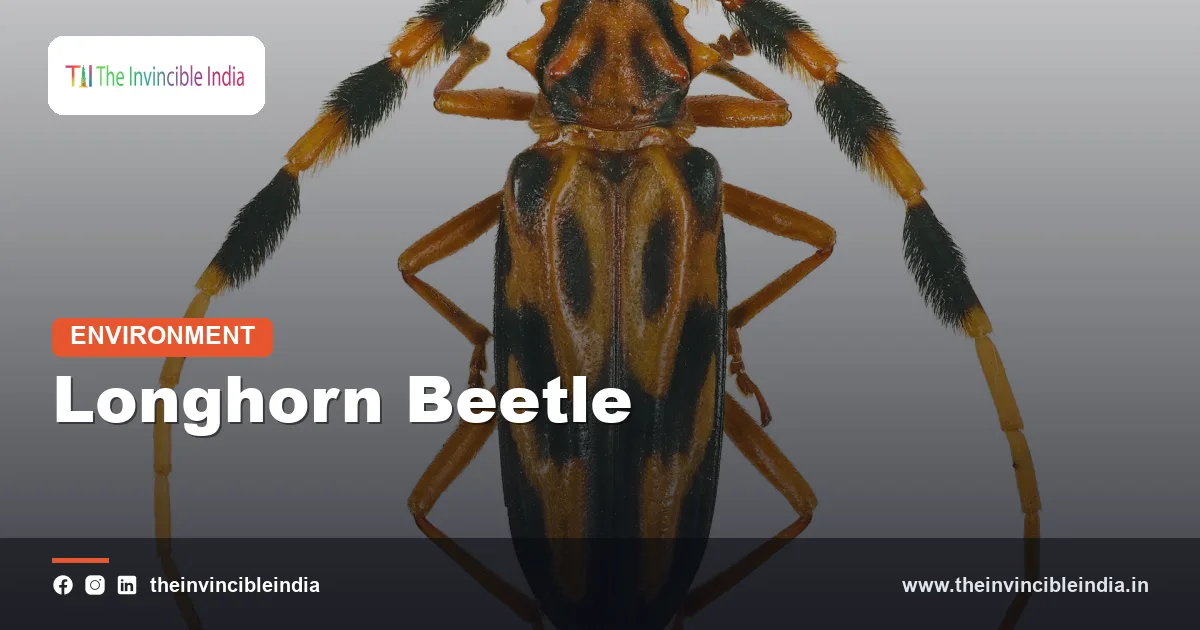
A longhorn beetle is a beetle of the family Cerambycidae, easily recognised by its very long, thread-like antennae, which are often as long as its body or longer, and by larvae that bore tunnels in the wood of living, dying and dead trees. Also called a long-horned beetle, a cerambycid or a wood borer, the longhorn beetle is one of the largest and most varied beetle families, with tens of thousands of species worldwide and many hundreds recorded in India.
Most Indian gardeners, farmers and villagers meet this insect in one of two ways: as a handsome, slow-moving adult resting on a trunk or flying to a verandah light on a monsoon night, or as the tell-tale sawdust, exit holes and weakened branches left behind by its grubs. This article explains what a longhorn beetle is, how it lives, which species matter in India, and how to tell a harmless visitor from a pest.
Quick Facts
| Common name | Longhorn beetle (long-horned beetle, wood-boring beetle, cerambycid) |
|---|---|
| Scientific classification | Order Coleoptera; family Cerambycidae |
| Size | From a few millimetres to well over 5 cm in Indian species; the largest in the world exceed 15 cm |
| Habitat in India | Forests, plantations, orchards, gardens, village trees and timber stores, from the Himalaya to the Western Ghats and the Northeast |
| Diet | Grubs eat wood, bark and the cambium layer; adults eat pollen, nectar, sap, bark, leaves or nothing at all |
| Life cycle | Complete metamorphosis: egg, larva (grub), pupa, adult; the grub stage can last from months to several years |
| Ecological role | Decomposer of dead wood, food for birds and other predators, and a pest of several trees and seasoned timber |
| Notable features | Very long antennae, strong biting jaws, and larvae called roundheaded borers because of their rounded heads |
Key Takeaways
- The longhorn beetle belongs to the family Cerambycidae in the order Coleoptera, and it is named for antennae that are frequently as long as the body or longer.
- Longhorn beetle grubs live inside wood, and this hidden feeding is the reason several species are serious pests of mango, coffee, sal and other trees in India.
- Adult longhorn beetles do not damage wood by feeding; the harm to trees is done almost entirely by the grubs tunnelling within the trunk or branches.
- A longhorn beetle can spend one to several years as a grub and only a few weeks to months as a winged adult.
- Longhorn beetles recycle dead wood in natural forests, which returns nutrients to the soil and provides food for woodpeckers and other predators.
- Longhorn beetles are not venomous, but large species can give a painful pinch with their jaws if handled carelessly.
What is a longhorn beetle and how is it classified?
A longhorn beetle is any member of the beetle family Cerambycidae, a group within the order Coleoptera, the beetles, which is itself the largest order of animals on Earth. The family is known to science from every continent except Antarctica, and it includes roughly thirty thousand or more described species, making it one of the most diverse families of beetles.
The word “longhorn” refers to the antennae, which early naturalists mistook for horns. In many species, especially the males, the antennae are far longer than the body. The family is divided into several subfamilies, including the Cerambycinae, Lamiinae, Lepturinae and Prioninae. The Lamiinae, often called flat-faced longhorns, form the biggest group in the tropics and contribute many of the species seen in India. The Prioninae include some of the largest and heaviest forms, with powerful jaws. The Lepturinae, or flower longhorns, are slimmer beetles that visit blossoms.
The family name Cerambycidae comes from Cerambyx, a genus name that goes back to classical writers. Because the group is so large, taxonomists continue to describe new species and revise genera, and the number of species recorded from India keeps changing. For that reason it is more accurate to say that the longhorn beetle fauna of India runs into many hundreds of species than to quote a single fixed figure.
What does a longhorn beetle look like?
A longhorn beetle usually has an elongated, slightly flattened or cylindrical body, a pair of long antennae that arise from notches near the eyes, and a hard pair of wing covers called elytra that protect the folded flying wings beneath. The body is covered in colour, hairs or patterns that vary hugely between species.
Size varies widely. Some Indian species are barely a centimetre long, while the larger ones, such as the mango stem borer and several of the prionine beetles, reach five or six centimetres. Colours range from dull brown and grey, which blend with bark, to metallic blues and greens, bright orange and bold stripes. Several species are covered in fine pale or yellow patches that look like lichen on a trunk.
Three features help in identification:
- Antennae: They have eleven segments in most species and are carried back over the body or held out to the sides. In males the antennae are usually longer than in females.
- Eyes: The eyes are often kidney-shaped and wrap partly around the base of each antenna.
- Jaws: The mandibles are strong in species that chew bark or exit holes in wood, and very large in the males of some prionine beetles.
Some longhorn beetles mimic other insects. Certain slender species resemble wasps or ants, and their short wing covers and banded colours discourage birds and lizards from attacking them. Others are such good mimics of bark or lichen that they are visible only when they move.
Why do longhorn beetles have such long antennae?
Longhorn beetles have long antennae mainly because the antennae are their principal sensory organs, covered in tiny receptors that detect smells, chemicals and touch. A longer antenna carries more sensory surface and lets the beetle pick up faint scents of mates, host trees and food from a distance, which matters for an insect that must find the right kind of dying tree among thousands of others.
Males often have longer antennae than females, which is consistent with a role in locating females. Many female longhorn beetles and many trees give off chemical signals, and the beetles use both to find one another. Research on cerambycids in several countries has shown that many species use pheromones to bring males and females together, and these chemicals are sometimes shared among closely related species.
The antennae also help in balance and navigation. When the beetle walks along a branch, the long antennae sweep ahead and to the sides, warning of obstacles and gaps. When the insect is at rest, many species fold the antennae backwards along the body so that they are not damaged.
Where do longhorn beetles live in India?
Longhorn beetles live almost everywhere in India where there are trees, from the moist evergreen forests of the Western Ghats and the Northeast to dry deciduous forests, mangroves, tea and coffee estates, orchards, roadside avenues and city gardens. The greatest variety is found in humid forests, where dead and dying wood is abundant.
Within these habitats, different species prefer different parts of a tree. Some develop only in the living heartwood of mature trees, some prefer thin twigs and branches, some require freshly dead bark, and others thrive in seasoned or stored timber in buildings. A few develop in the stems of herbaceous plants or even in roots. This habit of partitioning the tree allows many species to share a single forest without competing directly.
The Himalaya, the Northeast and the Western Ghats are especially rich in species, partly because they combine high rainfall, dense forest and long-standing habitats. Species in cooler hill regions often have a life cycle lasting two years or more, while those of the warm plains may complete one generation each year.
How does the life cycle of a longhorn beetle work?
The longhorn beetle goes through complete metamorphosis, meaning that it passes through four distinct stages: egg, larva, pupa and adult. The larva, commonly called a grub or borer, is the long-lived feeding stage, while the adult stage is usually short and devoted to mating and egg-laying.
Egg and larva
The female chooses a suitable tree and lays eggs in crevices of the bark, in small slits that she chews with her jaws, or sometimes under loose bark. Each female may lay from a few dozen to several hundred eggs, depending on the species. The eggs hatch in days to a couple of weeks, and the tiny grubs bore through the bark into the sapwood or cambium layer.
The larva of most longhorn beetles is creamy white, elongated and nearly legless or with very small legs, with a rounded head and powerful jaws. For this reason the group is often called roundheaded borers, to distinguish them from the flatheaded borers, which are the larvae of jewel beetles. As it feeds, the grub pushes out coarse sawdust-like material called frass through holes in the bark, and this frass at the base of a tree is often the first sign of an infestation.
Pupa and adult
When the grub is fully grown, it makes a pupal chamber inside the wood, often sealing it with a plug of chewed fibre, and changes into a pupa. After a few weeks, the adult chews its way out through a round or oval exit hole. This exit hole is another reliable clue to the beetle: it is usually larger than the hole made by a small wood-boring weevil and is neatly shaped.
The length of the larval stage varies from several months to several years. The grub may stay longer in dry, nutrient-poor wood and finish faster in moist, sappy wood. A few species are known to live in dry timber for many years, and adults sometimes emerge from furniture or beams long after the wood was cut. Once emerged, many adults live only a few weeks, though some feed and survive for a few months.
What do longhorn beetle grubs and adults eat?
Longhorn beetle grubs eat the wood, inner bark and sapwood of trees, while the adults feed on pollen, nectar, sap, tender bark or leaves, depending on the species. Many adult longhorn beetles of wood-boring species feed very little, and some do not feed at all.
Grubs digest wood with the help of enzymes and gut microorganisms. Because wood is poor in nitrogen, the larva compensates by eating large amounts of material and by extending its development time. Some grubs live on dead, dry wood and are recycled into the soil as frass. Others feed on the living cambium and phloem just beneath the bark, and these are the species that can girdle and kill a stem.
Adult feeding is quite varied:
- Flower-visiting species, mostly slender lepturine beetles, take pollen and nectar and can act as minor pollinators.
- Bark-feeding species gnaw the tender bark of young twigs, which can cause small wounds in orchards and plantations.
- Leaf-feeding species chew the midribs or edges of leaves, especially in the Lamiinae.
- Non-feeding species, including some large prionine beetles, rely on energy stored during the larval stage.
Which longhorn beetles are important in India?
Several longhorn beetles are well known in India for the damage their grubs cause to trees, plantations and timber. The table below lists some of the most frequently discussed species and the plants or products they are associated with.
| Species | Common name | Main plants or products affected |
|---|---|---|
| Batocera rufomaculata | Red-spotted or mango stem borer | Mango, fig, jackfruit and several other fruit and forest trees |
| Xylotrechus quadripes | Coffee white stem borer | Arabica coffee in southern India |
| Hoplocerambyx spinicornis | Sal heartwood borer | Sal (Shorea robusta) trees in central and eastern India |
| Aeolesthes sarta | City longhorn or quince borer | Poplar, walnut, mulberry and fruit trees in northern India and the Himalaya |
| Stromatium barbatum | Seasoned wood borer | Dry and seasoned timber, furniture and beams |
The sal heartwood borer is a good illustration of how a native species can become a forest problem. In years with weather stress, large numbers of sal trees have been attacked in forest tracts of central India, and the standing, weakened trees are more vulnerable. The coffee white stem borer is a continuing problem on the coffee estates of the Western Ghats, where the grubs tunnel in the stems and can kill bushes if not controlled.
Not every Indian longhorn beetle is a pest. The great majority of species feed on dead or dying wood in forests and never come into contact with farms or houses. They are mainly noticed by naturalists, photographers and insect collectors.
Are longhorn beetles harmful to trees and timber?
Some longhorn beetles are harmful, but most are not: only a minority of species attack healthy living trees or seasoned timber, while the majority recycle dead wood in forests. Harm occurs when the grubs of a species tunnel through the living wood of a valuable tree or through timber that is already cut and in use.
In living trees, repeated tunnelling disrupts the movement of water and sugars. A heavily infested branch may wilt, turn yellow and die back, and a tree with many grubs in the main trunk can weaken, break in strong wind, or die. Trees under stress from drought, waterlogging, injury or other pests are more likely to be attacked than vigorous ones. In timber, the grubs of species such as Stromatium barbatum can honeycomb beams and furniture from the inside, leaving the surface looking almost sound until the exit holes appear.
Signs of attack to look for include:
- Sawdust, frass or sticky gum collecting at the base of a trunk or under a branch.
- Round or oval holes in the bark, typically between a few millimetres and a centimetre or more across.
- Wilting, yellowing or dying branches on an otherwise healthy tree.
- Faint rasping or crunching sounds from stored timber on a quiet night, caused by feeding grubs.
What good do longhorn beetles do for forests?
Longhorn beetles benefit forests mainly by breaking down dead and dying wood, which speeds the return of carbon and nutrients to the soil and creates habitat for many other organisms. In natural forests, their tunnels let moisture, fungi and other decomposers into the wood, so the log decays faster.
The tunnels left by longhorn beetles are later used by ants, termites, other beetles, spiders, small lizards and fungi. Woodpeckers, barbets and other birds feed on the grubs, locating them by sound and probing with their beaks. Adult beetles are eaten by birds, bats, lizards, spiders and praying mantises. In this way the insect connects dead trees to the wider food web.
Scientists also treat the diversity of longhorn beetles as an indicator of forest health. A forest with many species of cerambycids usually has plenty of standing dead wood and fallen logs, which is a sign of a mature and structurally complex habitat.
Are longhorn beetles dangerous to people?
Longhorn beetles are not dangerous to people: they carry no venom, do not sting, and do not spread disease. The only risk is a pinch or minor bite from the strong jaws of larger species when they are handled, which can break the skin but is not medically serious.
Some species produce a squeaking or hissing sound by rubbing body parts together, which is a defensive signal. Others release unpleasant chemicals or play dead. Children often keep large beetles for a short while, and the simplest precaution is to hold the insect gently from the sides of the body and wash the hands afterwards. Beetles that enter homes at night are drawn to the lights and are best guided back outdoors with a piece of paper.
A rare issue is allergic or irritant reaction to hairs or defensive secretions in sensitive individuals. Adult longhorn beetles do not damage food grains, clothes or books, so they are not household pests in the way that carpet beetles or grain weevils are.
How can damage from longhorn beetles be reduced?
Damage from longhorn beetles is reduced mainly by keeping trees healthy, removing dead or heavily infested wood, and protecting cut timber, since these steps address the conditions that let the grubs survive. Chemical treatment is a last resort and is most effective when applied early.
Practical measures commonly recommended by agricultural and forestry institutions include:
- Watering, feeding and pruning orchard and shade trees properly so that they are not stressed.
- Removing and burning dead or dying branches before the adults emerge, rather than leaving them to rot nearby.
- Scraping and cleaning loose bark, and smearing the lower trunk with a protective paste to discourage egg-laying.
- Locating fresh frass or holes and removing grubs with a stiff wire, then sealing the hole with a suitable material.
- Seasoning timber properly, keeping it dry and off the ground, and using approved preservative treatment for timber that will be stored for long.
- Avoiding blanket spraying, which kills the natural enemies of borers and rarely reaches grubs hidden inside the wood.
For coffee and some other plantation crops, integrated programmes combine shade management, hygiene and, where appropriate, trapping of adults. Farmers should seek advice from the local agricultural university or krishi vigyan kendra for recommendations suited to their crop and region.
Bottom Line
The longhorn beetle is a large and fascinating family whose long antennae and wood-boring grubs make it easy to recognise. Most species are harmless recyclers of dead wood, while a few are real pests of trees and timber in India. Knowing the signs of attack and keeping trees healthy are the best protection.
Frequently Asked Questions
What is a longhorn beetle?
A longhorn beetle is a beetle of the family Cerambycidae, named for its very long antennae. Its grubs bore into wood, and the adults are often seen on trunks, flowers or lit windows. The family has tens of thousands of species worldwide and many hundreds in India.
Are longhorn beetles harmful to trees?
Some longhorn beetles harm trees, but most feed only on dead wood. The grubs of pest species tunnel in living trees such as mango, coffee and sal and can weaken or kill them, especially if the trees are already stressed. The adults do not damage wood by feeding.
Do longhorn beetles bite or sting?
Longhorn beetles do not sting and are not venomous, but large species can bite. The strong jaws can give a painful pinch and may break the skin if the beetle is handled roughly. The bite is not medically serious and needs only washing with soap and water.
How long does a longhorn beetle live?
A longhorn beetle usually lives for one to several years in total, most of it as a grub inside wood. The adult stage typically lasts only a few weeks to a few months. The exact time depends on the species, the kind of wood and the climate.
How can I tell if a longhorn beetle is attacking my tree?
The clearest signs of a longhorn beetle attack are sawdust-like frass at the base of the trunk and round or oval holes in the bark. Wilting or dying branches on an otherwise healthy tree may also indicate borers. A local agricultural or forestry officer can confirm the species and suggest treatment.
Why are longhorn beetles attracted to lights?
Many adult longhorn beetles are active at night and are drawn to bright lights, particularly during warm, humid weather in the monsoon. They then flutter against windows and lamps. Switching off outdoor lights or using yellow bulbs reduces the number that gather.
{“@context”:”https://schema.org”,”@graph”:[{“@type”:”FAQPage”,”mainEntity”:[{“@type”:”Question”,”name”:”What is a longhorn beetle?”,”acceptedAnswer”:{“@type”:”Answer”,”text”:”A longhorn beetle is a beetle of the family Cerambycidae, named for its very long antennae. Its grubs bore into wood, and the adults are often seen on trunks, flowers or lit windows. The family has tens of thousands of species worldwide and many hundreds in India.”}},{“@type”:”Question”,”name”:”Are longhorn beetles harmful to trees?”,”acceptedAnswer”:{“@type”:”Answer”,”text”:”Some longhorn beetles harm trees, but most feed only on dead wood. The grubs of pest species tunnel in living trees such as mango, coffee and sal and can weaken or kill them, especially if the trees are already stressed. The adults do not damage wood by feeding.”}},{“@type”:”Question”,”name”:”Do longhorn beetles bite or sting?”,”acceptedAnswer”:{“@type”:”Answer”,”text”:”Longhorn beetles do not sting and are not venomous, but large species can bite. The strong jaws can give a painful pinch and may break the skin if the beetle is handled roughly. The bite is not medically serious and needs only washing with soap and water.”}},{“@type”:”Question”,”name”:”How long does a longhorn beetle live?”,”acceptedAnswer”:{“@type”:”Answer”,”text”:”A longhorn beetle usually lives for one to several years in total, most of it as a grub inside wood. The adult stage typically lasts only a few weeks to a few months. The exact time depends on the species, the kind of wood and the climate.”}},{“@type”:”Question”,”name”:”How can I tell if a longhorn beetle is attacking my tree?”,”acceptedAnswer”:{“@type”:”Answer”,”text”:”The clearest signs of a longhorn beetle attack are sawdust-like frass at the base of the trunk and round or oval holes in the bark. Wilting or dying branches on an otherwise healthy tree may also indicate borers. A local agricultural or forestry officer can confirm the species and suggest treatment.”}},{“@type”:”Question”,”name”:”Why are longhorn beetles attracted to lights?”,”acceptedAnswer”:{“@type”:”Answer”,”text”:”Many adult longhorn beetles are active at night and are drawn to bright lights, particularly during warm, humid weather in the monsoon. They then flutter against windows and lamps. Switching off outdoor lights or using yellow bulbs reduces the number that gather.”}}]}]}


