

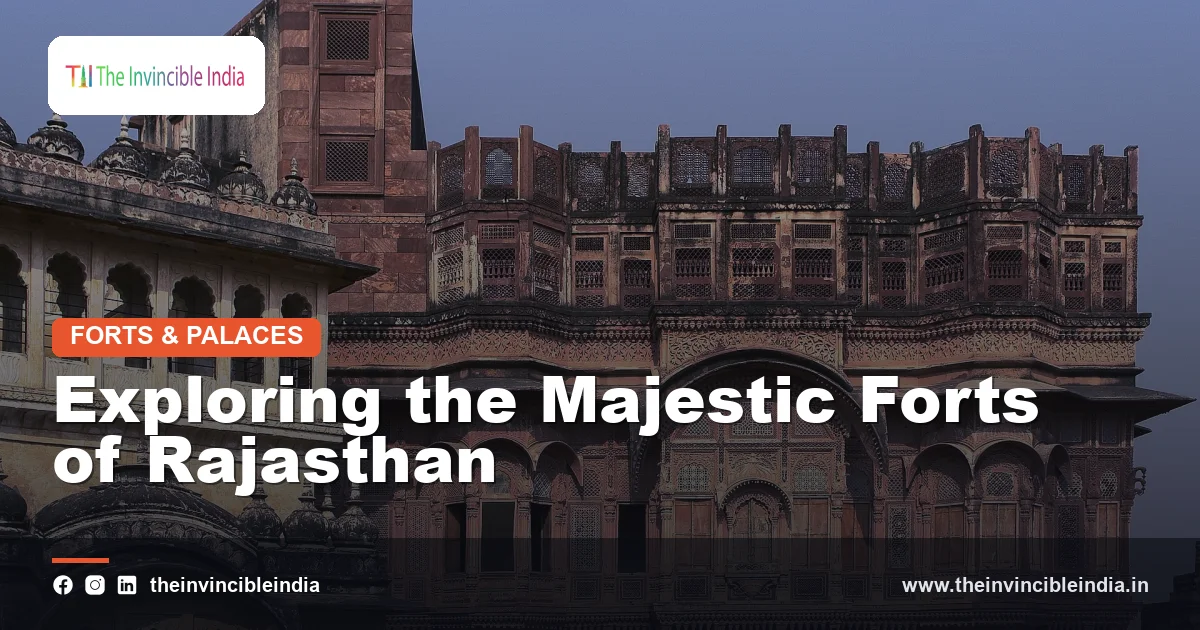
Rajasthan is a land of legends, and nowhere is that heritage more visible than in its towering forts. Built by proud Rajput rulers over many centuries, these fortresses were far more than military strongholds — they were self-contained cities of palaces, temples, markets, stepwells and reservoirs, and centres of art, power and fierce resistance against invaders. In 2013, six of Rajasthan’s forts were collectively inscribed as the “Hill Forts of Rajasthan” UNESCO World Heritage Site. This detailed guide explores the most majestic forts of Rajasthan, their history, architecture and how to experience them.
The Legacy of Rajput Fort Architecture
The forts of Rajasthan reflect a distinctive style of military architecture superbly adapted to the region’s hills and deserts. Massive ramparts, multiple fortified gates (pols) angled to slow charging armies and elephants, sophisticated rainwater-harvesting systems and stepwells, secret escape passages, and lavish palaces within the walls are common features. Many forts also witnessed the tragic practice of jauhar — the mass self-immolation of women — and saka, the final march of the men into battle, when defeat became certain. These acts became powerful symbols of Rajput honour and are woven deeply into the region’s folklore and pride.
Quick Facts
| UNESCO Hill Forts (2013) | Amber, Chittorgarh, Kumbhalgarh, Ranthambore, Gagron, Jaisalmer |
| Largest fort by area | Chittorgarh (~700 acres) |
| Longest fort wall | Kumbhalgarh (~36 km) |
| Living fort | Jaisalmer Fort |
| Best time to visit | October to March |
Amber Fort, Jaipur
Rising above Maota Lake near Jaipur, Amber (or Amer) Fort was begun in 1592 by Raja Man Singh I and expanded by later rulers over the following century. A stunning blend of Hindu and Mughal architecture in red sandstone and marble, it is famous for the dazzling Sheesh Mahal (Mirror Palace), where the light of a single candle is multiplied by thousands of tiny mirrors and pieces of coloured glass. Other highlights include the ornate silver-and-gold Ganesh Pol gateway, the pillared Diwan-i-Aam, the Sukh Niwas cooled by channels of flowing water, and the Kesar Kyari garden on the lake. An evening sound-and-light show narrates the fort’s history, and the views over the lake and old town are magnificent. Amber is part of the UNESCO Hill Forts and among the most visited monuments in Rajasthan.
Mehrangarh Fort, Jodhpur
One of India’s largest and most imposing forts, Mehrangarh towers around 120 metres above the “Blue City” of Jodhpur. Founded in 1459 by Rao Jodha, its thick, curving walls — in places up to 36 metres high and 21 metres wide — enclose beautifully preserved palaces such as Moti Mahal (Pearl Palace), Phool Mahal (Flower Palace) and Sheesh Mahal, as well as one of the best-curated museums in India, displaying palanquins, royal cradles, miniature paintings, arms and armour. Cannonball marks still scar the second gate, and the seventh gate, Jayapol, commemorates a victory. The panoramic views of the blue-painted old city sprawled below are unforgettable, and a zip-line now soars over the fort’s ramparts.
Chittorgarh Fort
The largest fort in India by area, spread over around 700 acres atop a 180-metre hill, Chittorgarh is the ultimate symbol of Rajput valour and sacrifice. It witnessed three great sieges — by Alauddin Khalji, Bahadur Shah of Gujarat and the Mughal emperor Akbar — and multiple jauhars. Within its vast walls stand the soaring nine-storey Vijay Stambh (Tower of Victory), built in the 15th century by Rana Kumbha, the older Kirti Stambh (Tower of Fame), the Rana Kumbha Palace, the Padmini Palace associated with the legendary queen Rani Padmini, the Meera Temple linked to the mystic poet-saint Meerabai, and numerous reservoirs and gates.
Kumbhalgarh Fort
Built in the 15th century by Rana Kumbha near Udaipur, Kumbhalgarh is famous for having the second-longest continuous wall in the world after the Great Wall of China, stretching around 36 kilometres and, it is said, wide enough for several horses to ride abreast. Perched high in the Aravallis at about 1,100 metres, it encloses more than 360 temples along with palaces and gardens, and was the birthplace of the great Maharana Pratap. Its remote, formidable position meant it was almost never conquered; it fell only once, briefly, to a combined Mughal-led force that cut off its water supply. The nightly sound-and-light show is a highlight.
Jaisalmer Fort
Rising from the Thar Desert like a giant golden sandcastle, Jaisalmer Fort (Sonar Quila), built in 1156 by Rawal Jaisal, is one of the very few “living forts” in the world. A significant part of the town’s population — several thousand people — still lives within its honey-coloured sandstone walls, alongside shops, exquisitely carved havelis, Jain temples and guesthouses. Built on Trikuta Hill, the fort has 99 bastions and glows a magical gold at sunrise and sunset. Because it is inhabited, conservationists urge responsible tourism to protect its fragile drainage and foundations.
Ranthambore Fort
Set dramatically within Ranthambore National Park, this ancient hilltop fort dates back to around the 10th century and offers a rare combination of history and wildlife. From its ramparts, visitors sometimes spot the tigers that roam the reserve below, and the fort contains temples (including a famous Ganesh temple), palaces, pavilions and stepwells amid the wilderness. It is one of the six UNESCO-listed hill forts.
Junagarh Fort, Bikaner
Unusually built on the plains rather than a hilltop, Junagarh Fort was constructed in 1594 by Raja Rai Singh, a trusted general of Emperor Akbar. It is celebrated for its beautifully preserved palaces, courtyards and a rich blend of architectural styles, including the ornate Anup Mahal, the Phool Mahal and the Chandra Mahal, decorated with gold leaf, mirrors and carvings. Remarkably, the fort was never conquered, and its museum even displays a First World War-era aeroplane gifted to the Maharaja.
Gagron Fort
One of the six UNESCO-listed hill forts, Gagron near Jhalawar is a rare example of a “jal durg” (water fort), surrounded on three sides by the Ahu and Kali Sindh rivers and on the fourth by a moat. Its unique riverine setting, layered defences and relative tranquillity make it a fascinating, if less-visited, destination for those seeking to escape the crowds.
Comparing the Great Forts
| Fort | City | Known for |
| Amber | Jaipur | Sheesh Mahal, Hindu-Mughal art |
| Mehrangarh | Jodhpur | Height, museum, blue-city views |
| Chittorgarh | Chittorgarh | Largest by area, Rajput valour |
| Kumbhalgarh | Rajsamand | 36 km wall |
| Jaisalmer | Jaisalmer | Living golden fort |
Tips for Visiting the Forts
The cooler months from October to March are ideal for exploring Rajasthan’s forts, as summers can be extremely hot. Wear comfortable walking shoes for the steep climbs and uneven surfaces, carry water and sun protection, and hire a knowledgeable local guide to bring the history, legends and hidden details of these magnificent structures to life. Many forts offer evening sound-and-light shows that are well worth attending, and arriving early helps you beat both the heat and the crowds. Combining forts on a well-planned circuit — such as Jaipur, Jodhpur, Jaisalmer and Udaipur/Kumbhalgarh — makes for an unforgettable Rajasthan itinerary.
More Forts Worth Exploring
Beyond the famous six, Rajasthan holds many more remarkable fortresses. Taragarh Fort in Bundi, perched on a steep hillside, is known for its stepwells and rugged ramparts. Jaigarh Fort above Amber houses Jaivana, once one of the largest cannons on wheels in the world. Nahargarh Fort overlooks the Pink City of Jaipur and offers superb sunset views. Bhainsrorgarh, Neemrana and Khimsar are historic forts now converted into atmospheric heritage hotels, allowing visitors to actually sleep within centuries-old walls.
Common Features of Rajput Forts
Rajput fort architecture developed ingenious defensive and practical features. Zigzag entrance passages and heavy gates studded with iron spikes were designed to blunt elephant charges. Multiple concentric walls, bastions and watchtowers provided layered defence. Inside, elaborate rainwater harvesting systems, stepwells (baoris) and tanks ensured water during long sieges. Palaces featured jharokhas (overhanging balconies), jali (lattice) screens for ventilation and privacy, and cooling systems using water channels. Temples, granaries, armouries and even entire markets made many forts fully self-sufficient.
Fort Stays and Heritage Hotels
One of the most memorable ways to experience Rajasthan’s forts is to stay in one. Many former royal residences and forts have been sensitively converted into heritage hotels, offering period furnishings, courtyards, folk performances and royal Rajasthani cuisine. From the grand palaces of Jaipur and Jodhpur to smaller fortress hotels in the countryside, a heritage stay adds a magical dimension to any Rajasthan itinerary.
Suggested Fort Circuit
A classic Rajasthan fort tour begins in Jaipur (Amber, Nahargarh, Jaigarh), continues to Jodhpur (Mehrangarh), then to the golden city of Jaisalmer, before heading south to Chittorgarh, Kumbhalgarh and Udaipur. Allowing ten days to two weeks lets you savour the forts without rushing, ideally between October and March.
The Rajputs and Their Forts
The forts of Rajasthan cannot be understood without the Rajputs, the warrior clans who ruled the region for over a thousand years. Divided into clans such as the Sisodias of Mewar, the Rathores of Marwar (Jodhpur), the Kachhwahas of Amber (Jaipur) and the Bhattis of Jaisalmer, the Rajputs prized honour, loyalty and valour above life itself. Their forts were built on hilltops, in deserts and beside rivers to command trade routes and defend their kingdoms against the Delhi Sultanate, the Mughals and rival clans. Many of the great battles, sieges and legends of medieval India played out within and around these walls, and the forts remain powerful symbols of Rajput identity and pride to this day.
Legends and Stories
Every Rajasthani fort carries its legends. Chittorgarh is bound to the tale of Rani Padmini, whose beauty is said to have provoked the siege by Alauddin Khalji, and to the heroic sacrifice of its defenders. Mehrangarh is associated with the curse of a hermit displaced during its construction and with a commemorated act of human sacrifice at its foundation. Kumbhalgarh’s vast wall is said to have been built after a sage advised that a voluntary human sacrifice would break a construction curse. These stories, passed down through bardic traditions, add a haunting, romantic dimension to a visit.
How to Reach the Major Forts
Rajasthan’s forts are well connected. Amber and Nahargarh are just outside Jaipur, which has its own airport and excellent rail links. Mehrangarh sits in the heart of Jodhpur, also served by air and rail. Jaisalmer, in the far west, is reached by road or an overnight train from Jodhpur. Chittorgarh and Kumbhalgarh are most easily visited from Udaipur, around two hours away by road. Renting a car with a driver is a popular and convenient way to link the forts on a single tour.
Tickets, Timings and Practical Tips
Most forts are open from around 9 am to 5 or 6 pm, with modest entry fees and separate charges for cameras, museums or audio guides. Sound-and-light shows at Amber, Mehrangarh, Kumbhalgarh and Chittorgarh usually run in the evening and are worth planning around. Wear sturdy shoes, carry water and a hat, and start early to avoid both the heat and the tour-bus crowds. Many forts involve steep climbs, though some, like Amber, offer jeep rides to the top.
Frequently Asked Questions
How many Rajasthan forts are UNESCO World Heritage Sites?
Six forts — Amber, Chittorgarh, Kumbhalgarh, Ranthambore, Gagron and Jaisalmer — were inscribed together in 2013 as the Hill Forts of Rajasthan.
Which is the largest fort in India?
Chittorgarh Fort is the largest fort in India by area, covering around 700 acres.
Which fort has the second-longest wall in the world?
Kumbhalgarh Fort has a wall around 36 kilometres long, the second-longest continuous wall after the Great Wall of China.
What is a “living fort”?
Jaisalmer Fort is called a living fort because thousands of people still live inside its walls, alongside shops and temples.
What is jauhar?
Jauhar was the practice of mass self-immolation by Rajput women to avoid capture when defeat in a siege was certain.
How many days do you need to see Rajasthan’s forts?
A week to ten days allows you to comfortably cover the major forts of Jaipur, Jodhpur, Jaisalmer, Chittorgarh and Kumbhalgarh.


