


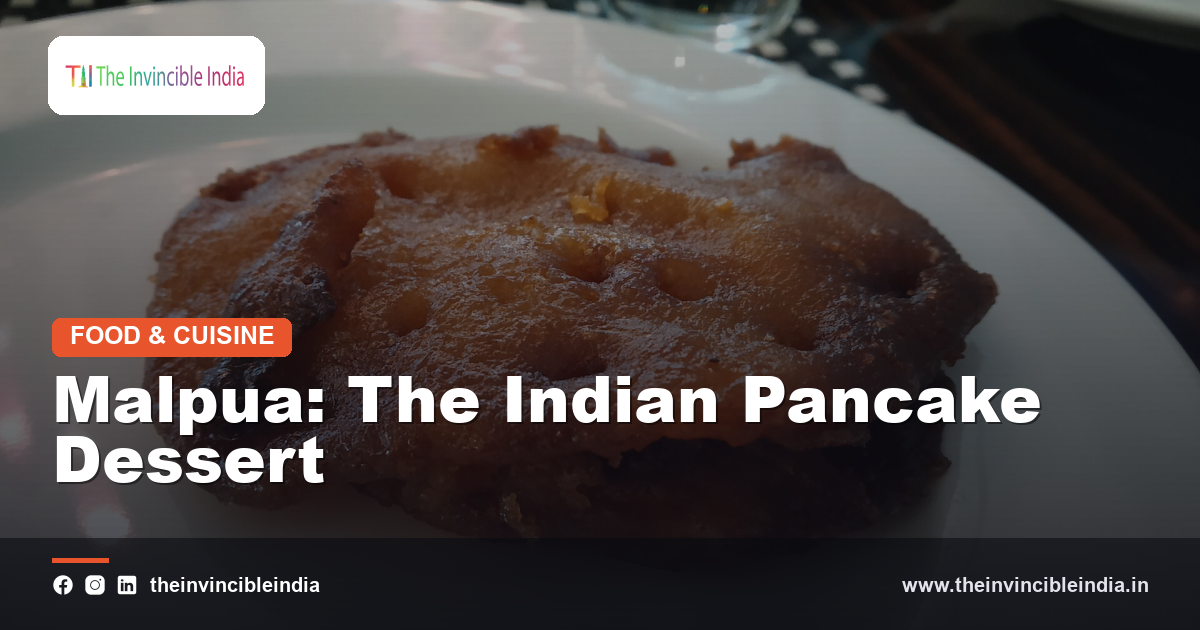
Malpua is a beloved Indian dessert, a small, thick pancake made from a sweetened flour-and-milk batter, shallow-fried until golden and then soaked briefly in sugar syrup before being served warm, often alongside a generous helping of rich, thickened rabri. Found in various forms across the country, from Rajasthan and Uttar Pradesh to Bengal and Odisha, malpua occupies a cherished place among India’s festival sweets, prepared for celebrations, religious offerings and special family occasions. Alongside other classics gathered under the wider umbrella of famous Indian sweets, malpua stands out for its distinctive pancake form and its comforting combination of crisp edges and syrup-soaked softness. This guide explores malpua, its history, its regional varieties and its lasting place in India’s dessert traditions.
Quick Facts
| Detail | Information |
|---|---|
| Type | A syrup-soaked Indian pancake dessert |
| Rooted in | North and East Indian festival sweet traditions |
| Main ingredients | Flour, milk, sugar syrup and fennel |
| Often served with | Rich, thickened rabri |
| Associated with | Festivals, temple offerings and celebrations |
| Character | Crisp-edged, soft and richly sweet |
What Is Malpua
Malpua is a classic Indian dessert made by shallow-frying a small, thick pancake of sweetened batter, typically prepared from flour, milk or khoya, and a little sugar, until it turns golden brown with slightly crisp edges. Once fried, the warm pancake is dipped briefly into a light sugar syrup, allowing it to absorb sweetness while retaining a pleasant contrast between its crisp exterior and soft interior. It is frequently finished with a garnish of chopped nuts and served warm, often with a bowl of rabri alongside. As a fried, syrup-soaked pancake with a soft and richly flavoured centre, malpua stands among the most distinctive and beloved sweets in the Indian dessert repertoire.
Origins and History
Malpua is understood to be one of the older sweets in the Indian culinary tradition, with pancake-style desserts made from grain flour and sweetened liquid appearing in various forms across the subcontinent for many generations. Over time, different regions developed their own versions of this basic idea, adapting the batter, the frying method and the accompanying syrup or topping to local taste and available ingredients. Its long history has made it a familiar sweet across a wide swath of India. Rooted in this old and widespread tradition of fried, sweetened pancakes, malpua reflects a shared culinary heritage that has been adapted and cherished across many different regions of the country.
The Batter: Flour, Milk and Fennel
The batter for malpua is generally prepared from a combination of refined or whole wheat flour with milk or reduced milk solids known as khoya, sweetened lightly with sugar and flavoured with a pinch of fennel seeds or cardamom, which lend the finished pancake its characteristic gentle fragrance. Some versions include mashed banana or semolina for added texture and body. The batter is left to rest briefly before frying, allowing the flour to hydrate fully and the flavours to settle. This carefully balanced batter of flour, milk and warm spice is the foundation upon which every regional style of malpua is built.
Frying Technique
Malpua is shallow-fried in ghee or oil, with a ladleful of batter poured into the hot fat and allowed to spread naturally into a small, round pancake rather than being pressed or shaped by hand. The pancake is fried gently on both sides until it turns an even golden brown, developing lightly crisp, lacy edges while remaining soft at its centre. Achieving this balance requires careful control of oil temperature, since fat that is too hot will brown the malpua before its centre is properly cooked. This deliberate frying technique, patient and attentive to temperature, is essential to producing a malpua with the right contrast of textures.
Soaking in Sugar Syrup
Once fried, malpua is dipped or soaked briefly in a light sugar syrup, often flavoured with a touch of cardamom or saffron, which the warm pancake absorbs quickly through its crisp, slightly porous surface. This soaking step is kept brief, just long enough for the malpua to take on sweetness and a glossy sheen without becoming soggy or losing its structure entirely. The syrup also helps keep the pancake moist for some time after frying. This careful soaking in sugar syrup, brief but essential, is what transforms a simple fried pancake into the rich, glistening dessert for which malpua is so well known.
Malpua with Rabri
Malpua is very often served together with rabri, a thick, sweetened milk preparation made by slowly simmering and reducing milk until it thickens considerably, taking on a rich, creamy texture and a deep, caramelised flavour. The warm malpua is placed atop or alongside a generous spoonful of rabri, creating a dessert that combines the pancake’s syrup-soaked sweetness with the rabri’s dense, milky richness. This pairing is considered by many to be the definitive way to enjoy the dish. This combination of malpua with rabri, rich upon rich, has become one of the most celebrated dessert pairings in Indian cuisine, especially popular during festivals.
Regional Variations Across India
Malpua takes on distinct regional identities across India, differing in batter, thickness and accompanying syrup or topping depending on where it is made. In parts of North India, malpua is often made richer with khoya and served with rabri, while in the east it may be thinner, crisper and served without any dairy accompaniment at all. Some regions favour a plain sugar syrup, while others flavour it with fruit or additional spice. This considerable regional variation across malpua preparations, each shaped by local taste and ingredient availability, demonstrates how a single basic idea can flourish into many distinct and cherished forms.
Malpua in Bengal and Odisha
In Bengal and Odisha, malpua is prepared in its own distinctive style, often made with a batter enriched by mashed banana or semolina and fried into a slightly thinner pancake than its North Indian counterpart, then soaked in a light sugar syrup rather than paired with rabri. This eastern version holds particular importance during certain religious and temple traditions, where it is prepared as an offering during specific festivals and observances. Its lighter texture suits the region’s dessert preferences. This distinctive Bengali and Odia style of malpua, lighter and often linked to temple offering traditions, adds an important regional dimension to the dish’s wider identity across India.
Malpua in North India
In North India, particularly in Rajasthan and Uttar Pradesh, malpua tends to be richer, often made with khoya added directly to the batter and fried until deeply golden before being generously soaked in syrup and paired with rabri. This northern style is closely associated with festive and celebratory occasions, prepared in considerable quantity for weddings, religious festivals and family gatherings. Sweet shops across the region are well known for their own particular versions of the dish. This rich, festive North Indian style of malpua, paired almost inseparably with rabri, represents one of the most widely recognised forms of the dessert across the country.
Malpua During Festivals
Malpua holds a special place during Indian festivals, prepared in many households and sweet shops in the lead-up to celebrations such as Holi and various regional harvest and religious festivals, when families gather and rich, celebratory sweets are considered an essential part of the occasion. Its preparation, requiring some time and attention, is often treated as a festive activity in itself, undertaken together by family members. Sweet shops see a marked rise in demand for malpua around these occasions. This strong association between malpua and festival celebration reflects the dish’s status as a treat reserved for special, joyful moments rather than everyday eating.
Malpua as Temple Prasad
In parts of eastern India, malpua carries particular religious significance, prepared as prasad, or sanctified food, offered to deities during certain temple rituals and festivals before being distributed among devotees as a blessed sweet. This tradition reflects a wider pattern within Indian religious practice in which specific sweets become closely tied to particular temples, deities or occasions. The preparation of malpua for such offerings often follows customs observed for generations. This role of malpua as temple prasad in certain regions lends the dessert a spiritual dimension beyond its everyday enjoyment, connecting food and faith in a manner deeply characteristic of Indian culture.
Ingredients and Symbolism
The core ingredients of malpua, flour, milk and sugar, are common to many Indian sweets, yet their transformation through frying and syrup-soaking into a dessert of considerable richness reflects a broader cultural association between fried, sweetened foods and celebration or abundance. Ghee, used for frying in traditional preparations, is itself considered an auspicious ingredient in Indian cooking, adding both flavour and symbolic value to the finished dish. Nuts scattered on top further signal festivity and generosity. This symbolic weight carried by malpua’s everyday ingredients, transformed into something festive and rich, helps explain the dessert’s enduring association with celebration throughout Indian culture.
Family and Household Traditions
Malpua is frequently prepared at home rather than bought ready-made, with many families maintaining their own particular recipe for the batter and syrup passed down through generations, often adjusted slightly according to individual taste or the occasion being celebrated. The process of frying a batch of malpua is sometimes undertaken as a shared family activity, particularly around festivals, with each pancake fried carefully in turn. Such gatherings often double as an occasion for teaching younger family members the recipe. These family and household traditions surrounding malpua preparation give the dessert a personal, intergenerational significance beyond its taste alone.
Malpua Compared to Other Indian Sweets
Malpua occupies a distinctive place among India’s syrup-based sweets, sharing the technique of frying followed by syrup-soaking with dishes such as gulab jamun and jalebi, yet standing apart through its flat, pancake-like form and its frequent pairing with rabri rather than being served alone. Its texture, softer and less dense than a typical fried milk sweet, gives it a lighter character despite its rich flavour. This distinct identity has helped it remain popular alongside its more widely known counterparts. This comparison with other Indian sweets highlights malpua’s particular character within the broader and much-loved category of syrup-soaked Indian desserts.
Malpua in Modern Times
In recent times, malpua has found its way onto restaurant dessert menus and into modern bakeries alongside its traditional home in sweet shops and household kitchens, sometimes presented with contemporary garnishes such as ice cream or flavoured syrups while retaining its essential fried, syrup-soaked identity. Packaged and ready-to-fry malpua mixes have also made the dessert more accessible to those short on time. Its popularity continues to grow beyond the regions where it originated. This continued adaptation of malpua in modern times, while preserving its core character, shows the dessert’s ability to remain relevant to changing tastes without losing its traditional appeal.
Malpua Today
Today malpua remains a cherished part of India’s festival and dessert culture, prepared in homes and sold in sweet shops across the country in its many regional forms, from the rich, khoya-laden versions of the north to the lighter, banana-based styles of the east. Its pairing with rabri continues to be regarded by many as the ultimate way to enjoy the dish. Sweet shops continue to see it as a seasonal favourite during major festivals each year. As a syrup-soaked, festival-associated pancake dessert with deep regional variety, malpua stands as one of India’s most enduring and widely loved sweets.
Sources & Further Reading
- Ministry of Tourism, Government of India, on the cuisines of India (tourism.gov.in).
- Culinary references on Indian festival sweets and dessert traditions.
Frequently Asked Questions
What is malpua made of?
Malpua is made from a batter of flour, milk or khoya and sugar, shallow-fried until golden and then soaked briefly in sugar syrup, often flavoured with cardamom or fennel.
What is malpua traditionally served with?
Malpua is very often served with rabri, a thick, sweetened milk preparation, though in some eastern Indian styles it is enjoyed on its own after being soaked in syrup.
Is malpua the same everywhere in India?
No, malpua varies by region: North Indian versions are often richer with khoya and paired with rabri, while Bengali and Odia versions tend to be thinner, sometimes made with banana, and served without dairy.
When is malpua traditionally eaten?
Malpua is especially popular during festivals such as Holi and various regional celebrations, and in parts of eastern India it is also prepared as temple prasad offered during certain rituals.
How is malpua different from jalebi or gulab jamun?
Malpua is a flat, pancake-shaped fried sweet, unlike the coiled jalebi or the round, dumpling-like gulab jamun, though all three share the technique of frying followed by soaking in sugar syrup.