


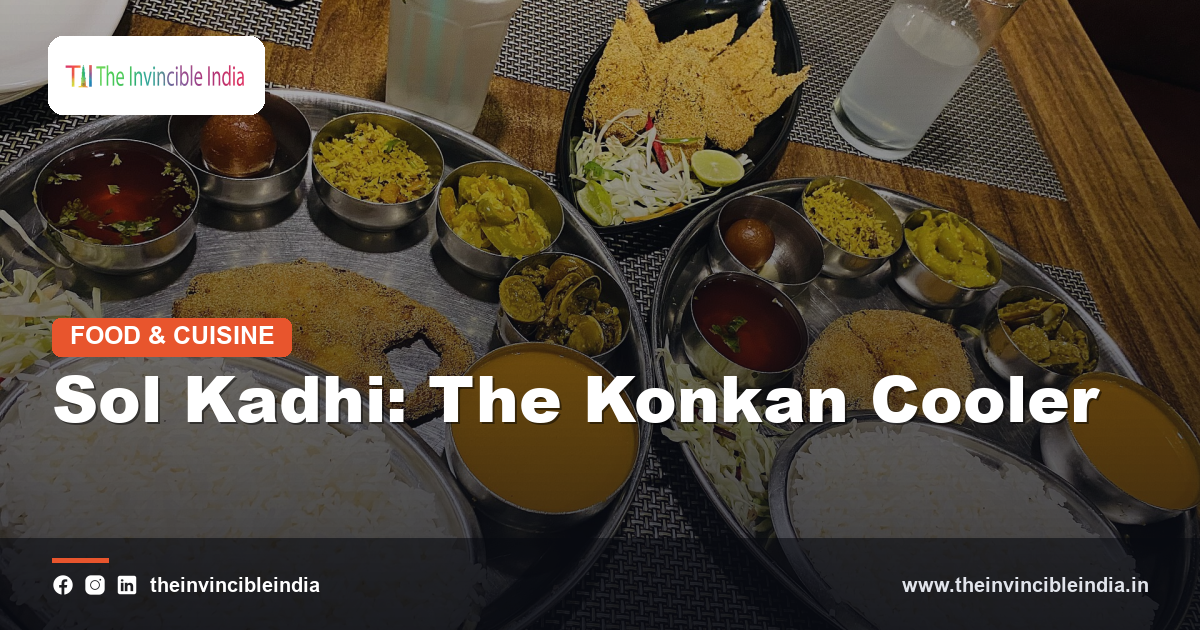
Sol kadhi is a distinctive pink drink from the Konkan coast, made by combining the tangy, dark red extract of kokum fruit with the smooth richness of coconut milk and a light seasoning of garlic, cumin and green chilli. Served chilled or at room temperature, it is traditionally offered at the end of a meal, particularly one built around spicy seafood, where its cooling, faintly sour flavour is valued for settling the stomach and refreshing the palate. As one of the signature preparations within Maharashtrian cuisine and its coastal Konkan traditions, sol kadhi reflects a deep local knowledge of ingredients suited to a warm, humid coastal climate. This guide explores sol kadhi, its ingredients, its preparation and its enduring place at the Konkan table.
Quick Facts
| Detail | Information |
|---|---|
| Type | A pink kokum and coconut milk drink |
| Rooted in | Konkan coastal cuisine of Maharashtra and Goa |
| Key ingredient | Kokum fruit extract |
| Base | Coconut milk |
| Traditionally served | After a spicy seafood meal |
| Character | Tangy, cooling and lightly spiced |
What Is Sol Kadhi
Sol kadhi is a distinctive drink from India’s Konkan coast, made by blending the tangy, deep red extract of dried kokum fruit with smooth coconut milk and a light tempering of garlic, cumin and green chilli. The result is a striking pink liquid that is tangy, faintly sweet from the coconut and gently spiced, served either chilled as a refreshing drink or alongside rice as part of a meal. Unlike thicker kadhi preparations found elsewhere in India that rely on yogurt and gram flour, sol kadhi is thinner and built around fruit and coconut rather than dairy and lentil flour. As a tangy, cooling coastal preparation, sol kadhi holds a unique place among India’s regional beverages.
Origins on the Konkan Coast
Sol kadhi originates along the Konkan coast, the narrow coastal strip running through Maharashtra and into Goa, a region whose cuisine has long been shaped by its warm, humid climate, its abundance of coconut palms and its close relationship with the sea. Local cooks developed sol kadhi as a way of using the tangy kokum fruit that grows abundantly in the region, pairing it with coconut, another staple crop of the coast, to create a drink suited to cooling the body and calming the stomach after rich or spicy food. This origin reflects careful adaptation to local produce and climate. Rooted in this Konkan coastal tradition, sol kadhi remains one of the region’s most distinctive culinary contributions.
Kokum: The Defining Ingredient
Kokum, the dried rind of a fruit native to the Western Ghats and the Konkan coast, is the single ingredient that defines sol kadhi, lending the drink both its deep pink or maroon colour and its distinctive tart, slightly sweet-sour flavour. The dried kokum is soaked in warm water to draw out its colour and tang before being strained and combined with coconut milk. Kokum is also valued in Konkan households for its use in other dishes and for its traditional association with cooling and digestive properties. This defining role of kokum, both visually and in flavour, is what gives sol kadhi its unmistakable identity among Indian regional drinks.
Coconut Milk Base
Coconut milk provides the smooth, creamy base of sol kadhi, extracted fresh from grated coconut and diluted to the desired consistency before being combined with the tangy kokum extract. This coconut base softens the sharpness of the kokum, rounding out the drink’s flavour and giving it a gentle richness that balances its tang. Fresh coconut milk is generally preferred for the best flavour, though thinner, more diluted versions are sometimes used for a lighter drink. This reliance on coconut milk as its base reflects the wider importance of coconut throughout Konkan and coastal Indian cooking, and it is essential to sol kadhi’s characteristic smooth texture.
Spicing: Garlic, Cumin and Green Chilli
Sol kadhi is seasoned lightly but distinctively with crushed garlic, roasted cumin and finely chopped green chilli, often added through a quick tempering in a little oil or ghee before being stirred into the kokum and coconut mixture. This modest spicing is designed to add depth and a gentle warmth without overpowering the tang of the kokum or the richness of the coconut milk. Fresh coriander leaves are sometimes added as a final garnish. This careful, restrained approach to spicing in sol kadhi reflects the drink’s role as a soothing accompaniment rather than a bold, dominant dish in its own right.
Preparation Method
To prepare sol kadhi, dried kokum is soaked in warm water until it releases its colour and flavour, and this liquid is then strained and combined with coconut milk to the desired thickness. A tempering of mustard seeds, garlic, cumin and green chilli, briefly fried in oil, is stirred into the mixture along with a pinch of salt, and the drink is then chilled before serving. Some cooks add a touch of sugar to soften the tang. This simple, quick preparation method, requiring no cooking of the base ingredients themselves, makes sol kadhi an easy addition to any Konkan meal.
Sol Kadhi as a Digestive
Sol kadhi is traditionally valued in Konkan households for its digestive qualities, believed to soothe the stomach and aid digestion after a rich or spicy meal, particularly one built around fried or heavily seasoned seafood. It is commonly served at the very end of a meal, in the manner of a digestive drink rather than a starter or side dish, sipped slowly rather than consumed quickly. This reputation has made it a fixture of traditional Konkan dining customs for generations. This established role of sol kadhi as a digestive aid reflects a wider pattern in Indian food culture of pairing rich dishes with something cooling and settling.
Pairing with Seafood
Given its origins along the coast, sol kadhi is especially closely associated with seafood meals, traditionally served after a spread of fried or curried fish and prawns to cool the palate and balance the richness and spice of the preceding dishes. Its tangy, refreshing character provides an effective counterpoint to the heavier, often fried textures common in Konkan seafood cooking. Many coastal households consider a seafood meal incomplete without it. This traditional pairing of sol kadhi with seafood remains one of the most characteristic and well-loved combinations within Konkan coastal cuisine.
Pairing with Rice and Curry Meals
Beyond its role after seafood, sol kadhi is also commonly poured over plain steamed rice and eaten as part of the main meal itself, similar in spirit to how a thin curry or rasam might be used elsewhere in India, moistening the rice and adding a tangy, cooling dimension to the plate. This use of sol kadhi as a rice accompaniment is especially common in vegetarian Konkan households. It is generally served in a small bowl or glass alongside the rice. This flexible use of sol kadhi, either as a standalone drink or poured over rice, shows the dish’s adaptable place within the wider Konkan meal.
Sol Kadhi in Maharashtrian Cuisine
Within the broader landscape of Maharashtrian cuisine, sol kadhi represents the distinct coastal Konkan strand of the state’s food, standing apart from the drier, more chilli-forward cooking found further inland around cities such as Pune and Nagpur. This coastal style draws heavily on coconut, kokum and fresh seafood, reflecting the very different produce and climate of the Konkan region compared to the Deccan plateau. Sol kadhi is one of its most recognisable exports. As a signature dish of Maharashtra’s coastal Konkan tradition, sol kadhi highlights the impressive regional diversity contained within a single state’s culinary identity.
Sol Kadhi in Goan Cuisine
Sol kadhi is also closely associated with neighbouring Goa, where it is known locally by similar names and prepared in much the same way, reflecting the shared coastal geography and culinary heritage that runs continuously along the Konkan coastline through Maharashtra and into Goa. Goan versions may include small variations in spicing or in the ratio of coconut to kokum, but the essential character of the drink remains consistent. It is served in Goan homes for much the same digestive purpose. This shared presence of sol kadhi in both Maharashtrian and Goan cuisine underscores the continuous culinary identity of the wider Konkan coastal belt.
Serving Customs
Sol kadhi is typically served in a small glass or bowl, either chilled directly from the refrigerator or at a cool room temperature, and is sipped slowly rather than gulped like an ordinary drink, in keeping with its traditional role as a digestive aid at the end of a meal. It is rarely served with ice, since chilling the base ingredients beforehand is considered sufficient. Some households serve it in a small metal tumbler typical of Maharashtrian dining. These simple serving customs, modest yet consistent across Konkan households, reflect the understated but well-established place sol kadhi holds within the regional meal.
Nutritional and Cooling Qualities
Sol kadhi is generally regarded as a light, cooling preparation, its coconut milk providing a measure of fat and calories while kokum contributes antioxidant-rich tang without adding significant weight to the meal. In the warm, humid climate of the Konkan coast, a cooling drink of this kind is traditionally valued for helping the body manage heat and for settling the stomach after a heavy meal. It is generally consumed in modest quantities rather than as a filling dish on its own. This light, cooling nutritional character suits sol kadhi well to its traditional role as an end-of-meal digestive rather than a substantial dish.
Variations Without Coconut
While coconut milk forms the classic base of sol kadhi, some lighter or occasion-specific versions are prepared using only the kokum extract diluted with water, omitting the coconut milk entirely to create a thinner, more purely tangy drink sometimes referred to simply as kokum sherbet or kokum water. This variation is especially popular during particularly hot weather, when a lighter, less rich drink is preferred. Both versions share the same essential kokum base. This occasional variation without coconut shows that the essential appeal of sol kadhi lies chiefly in its kokum tang, with coconut milk serving as a rich but optional enhancement.
Sol Kadhi Beyond the Konkan
As Maharashtrian and Goan cuisine have become better known across India and internationally, sol kadhi has begun to appear on restaurant menus well beyond its coastal home, often introduced to diners as a refreshing accompaniment to seafood-focused meals or as a distinctive regional specialty in its own right. Its striking pink colour and unusual flavour profile make it memorable to those trying it for the first time. Bottled kokum concentrate has also made it easier to prepare sol kadhi far from the Konkan coast. This gradual spread of sol kadhi beyond its home region reflects the growing wider recognition of Konkan coastal cuisine.
Sol Kadhi Today
Today sol kadhi remains a cherished part of Konkan coastal dining, prepared in homes and served in restaurants throughout Maharashtra and Goa as a traditional accompaniment to seafood meals and rice-based dishes alike. Its preparation has changed little over time, relying on the same essential combination of kokum and coconut milk that has defined it for generations. It continues to be valued as much for its digestive role as for its refreshing taste. As a tangy, cooling and distinctly coastal preparation, sol kadhi stands as one of the most characteristic and enduring drinks of India’s Konkan culinary heritage.
Sources & Further Reading
- Ministry of Tourism, Government of India, on the cuisines of India (tourism.gov.in).
- Culinary references on Konkan coastal and Maharashtrian food traditions.
Frequently Asked Questions
What is sol kadhi made of?
Sol kadhi is made from kokum fruit extract combined with coconut milk and a light tempering of garlic, cumin and green chilli, giving it a tangy, cooling flavour and a distinctive pink colour.
Why is sol kadhi served after a meal?
Sol kadhi is traditionally served at the end of a meal, particularly one featuring spicy seafood, because it is believed to aid digestion and cool the palate after rich or heavily spiced food.
Is sol kadhi the same as regular kadhi?
No, sol kadhi is different from the yogurt and gram flour based kadhi found elsewhere in India; it is built around kokum and coconut milk instead, giving it a thinner texture and a distinctly tangy, coastal flavour.
Can sol kadhi be made without coconut milk?
Yes, a lighter version made only with diluted kokum extract, sometimes called kokum sherbet, is also prepared, especially in very hot weather, though the classic version includes coconut milk.
Where is sol kadhi traditionally from?
Sol kadhi originates from the Konkan coast, the coastal belt running through Maharashtra into Goa, where kokum and coconut are both abundant local ingredients central to the region’s cuisine.