

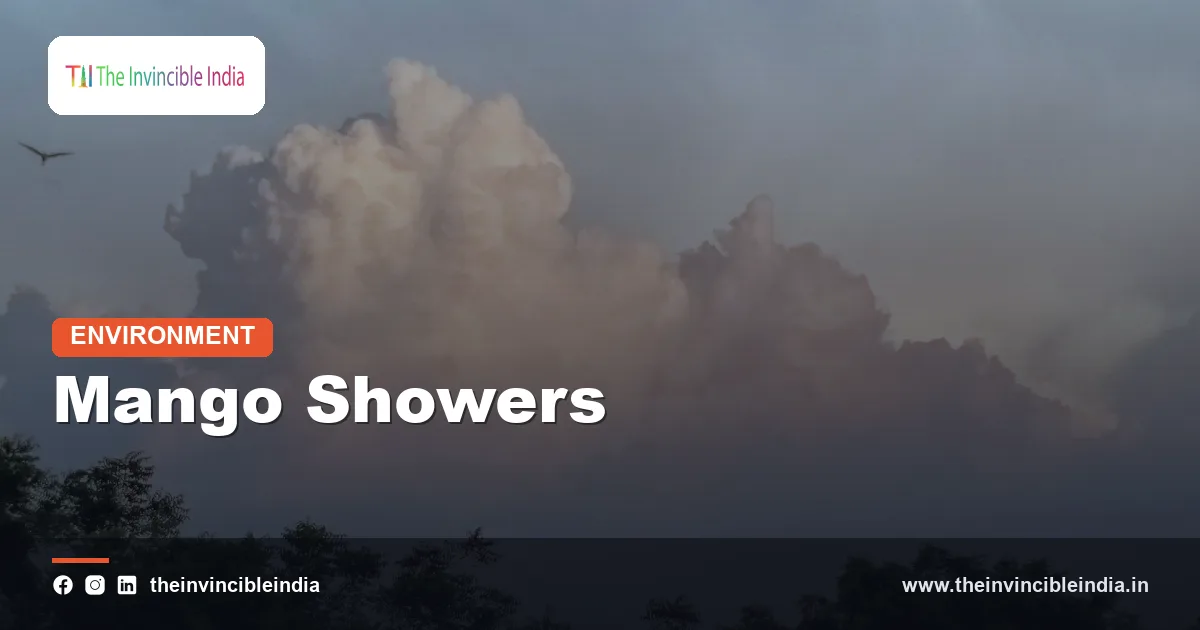
In south India, mango showers are the scattered pre-monsoon thunderstorms of March to May, falling mainly over Kerala, Karnataka and the neighbouring coastal belt, that cool the summer heat and are believed to help mangoes swell and ripen. They are the first rain of the year after the long dry season and a sign that the southwest monsoon is not far away.
The showers are short, localised and often accompanied by thunder and lightning, and they usually arrive in the afternoon or evening. Their name comes from their timing and their traditional link to the mango season, but their importance extends well beyond one fruit, reaching coffee, pepper, cashew, rubber and the ordinary comfort of households sweltering in humid heat.
| Quick Fact | Detail |
|---|---|
| Type of rain | Pre-monsoon convective thundershowers |
| Season | Roughly March to May, before the southwest monsoon |
| Main regions | Kerala, coastal and southern Karnataka, Tamil Nadu, coastal Andhra Pradesh |
| Time of day | Mostly afternoon and evening |
| Related local names | Mango showers, blossom showers (cherry blossom showers), summer showers |
| Crops linked | Mango, coffee, black pepper, cashew, rubber, cardamom and vegetables |
| Typical hazards | Lightning, squalls, localised flooding, occasional hail |
| Monitoring agency | India Meteorological Department (IMD) |
Key Takeaways
- Mango showers are pre-monsoon thunderstorms of March to May that fall mainly over Kerala, Karnataka and the coastal south of India.
- Mango showers get their name from their traditional association with the ripening of the mango crop in the hot-weather season.
- Blossom showers are a related pre-monsoon rain in the coffee-growing hills of Karnataka and Kerala that triggers coffee plants to flower.
- Mango showers form through local convection, when intense heating and moist sea breezes build towering thunderclouds over the Western Ghats and the coastal plains.
- Mango showers are not the monsoon: they are brief, patchy showers that precede the Kerala onset of the southwest monsoon around the start of June.
- Lightning is the main danger of mango showers, so people in Kerala and Karnataka are advised to avoid open ground and tall trees during evening thunderstorms.
What Are Mango Showers?
Mango showers are the pre-monsoon rains of south India, so called because they arrive during the mango season and are said to hasten the ripening of the fruit. They are a type of convective rainfall, in which intense surface heating makes warm, moist air rise rapidly and form thunderclouds.
The showers are a feature of the summer or “pre-monsoon” season, which the India Meteorological Department (IMD) defines as March to May. In Kerala, thunderstorms can begin as early as March and become more frequent in April and May. They are usually patchy: one district may receive a heavy downpour while a neighbouring one stays dry.
The rain is typically short, lasting from half an hour to a few hours, and often follows a hot, sultry day. Locals commonly say that the first mango shower breaks the heat, although temperatures may rise again within a day or two.
Why Are They Called Mango Showers?
They are called mango showers because they coincide with the fruiting and ripening of the mango and have traditionally been associated with helping the fruit develop and mature. The name is a piece of agricultural folk wisdom that has been adopted in weather vocabulary across Kerala and Karnataka.
Mango trees in south India flower in the cooler months, usually between December and February, and the fruit develops through the following hot months. Fruit set depends on the weather at flowering, but the weeks of April and May decide how the fruit grows. A light shower provides moisture and cools the air, which helps fruit swell, while dry, extreme heat can cause fruit drop and poor size.
The name should not be read as a guarantee. Heavy rain, strong winds or hail during the fruiting stage can cause raw mangoes to fall and increase disease. The popular belief reflects an average benefit from moderate showers rather than a rule that more rain always means better fruit.
How Do Mango Showers Form?
Mango showers form when strong daytime heating of the land and humid winds from the Arabian Sea and the Bay of Bengal combine to create towering cumulonimbus clouds over south India. The process is a local, afternoon-driven form of convection and does not depend on the large-scale monsoon circulation.
The main ingredients are:
- High temperatures in March, April and May, which heat the land far more than the nearby sea and create rising air.
- A sea breeze that carries moist air inland during the day, supplying water vapour to the developing clouds.
- The Western Ghats, whose slopes force the moist air to rise and cool, which promotes cloud formation.
- Convergence zones, where winds from different directions meet and lift the air, often over the coast or over the interior of Karnataka and Tamil Nadu.
- Upper-air troughs and wind patterns that help organise thunderstorms and make them last longer.
As the warm moist air rises, it cools, condenses and releases heat, which powers the updraft. Eventually the cloud becomes heavy with raindrops, and the downpour begins. The cold air dragged down by the rain spreads out at the ground as a gusty wind, and the storm may weaken within hours as it cuts off its own supply of warm air.
Where Do Mango Showers Occur?
Mango showers occur mainly in Kerala and coastal and southern Karnataka, and similar pre-monsoon thunderstorms also occur in Tamil Nadu, Goa, Konkan and coastal Andhra Pradesh. The term itself is most strongly tied to Kerala and Karnataka.
Kerala receives pre-monsoon showers on a large scale. Since the state lies along the Western Ghats and faces the Arabian Sea, it has both moisture and terrain to trigger storms. The interior districts of Karnataka, including the Malnad and coffee-growing districts of Kodagu, Chikmagalur and Hassan, receive a share of the rains, as do the coastal districts of Dakshina Kannada and Udupi.
In Tamil Nadu, summer thunderstorms appear mainly over the western and interior districts, and in Andhra Pradesh and Telangana they mix with the hot weather as afternoon storms. In all these places the common thread is a spell of intense heat, followed by an afternoon thunderstorm.
What Are Blossom Showers?
Blossom showers are the early pre-monsoon rains, usually in March and April, that trigger coffee plants in Karnataka and Kerala to burst into flower. They are sometimes called cherry blossom showers, after the coffee cherry, the fruit that follows the flower.
Coffee plants flower in response to a rainfall trigger after a dry spell. In the coffee estates of Kodagu, Chikmagalur, Hassan and Wayanad, planters watch the sky closely in March and April. A good blossom shower produces a spectacular, short-lived display in which the bushes turn white with fragrant flowers within days. Many estates also use sprinklers to supply the water if the rain does not come in time.
The timing and size of the shower matter greatly. A well-timed rain supports uniform flowering and a good crop, whereas an early or very late shower can lead to patchy flowering, uneven ripening and lower yield. The balance is a major reason why pre-monsoon rainfall is closely watched in the plantation belt.
How Do the Showers Benefit Crops and People?
The showers benefit crops by cooling plants, adding soil moisture and triggering flowering, and they benefit people by lowering temperatures and easing water shortages before the monsoon. They arrive when the land is driest and most stressed.
| Crop or sector | Benefit of pre-monsoon showers |
|---|---|
| Mango | Moisture and cooler air help fruit swell and mature; showers also wash dust from leaves |
| Coffee | Blossom showers trigger flowering; later showers support fruit growth |
| Black pepper | Showers encourage new shoots and spikes before the monsoon |
| Cashew, jackfruit, banana | Moisture supports fruit development in the final summer weeks |
| Rubber, coconut, arecanut | Help soil moisture and reduce summer stress on trees |
| Households | Relief from heat, partial refilling of wells and ponds, reduced pressure on drinking water supply |
The showers also have an environmental benefit by lowering the risk of forest and plantation fires in the dry hills, and by moistening the soil enough for farmers to begin preparing fields before the monsoon. Fishers and boatmen are alert to the changes in wind that accompany the storms.
Can Mango Showers Be Harmful?
Yes, mango showers can be harmful when they bring lightning, squalls, hail or unseasonal heavy rain that damages crops, homes and power networks. Thunderstorms are strong convective events, and their benefits come with real hazards.
- Lightning: Kerala and Karnataka record many lightning strikes in the pre-monsoon season, and deaths among farmers, workers and children playing outdoors occur every year.
- Gusty winds: squalls can uproot trees, damage banana and plantain plantations and bring down electricity lines.
- Crop loss: strong winds can knock down raw mangoes, and hail or very heavy rain can damage coffee flowers and young fruit.
- Disease: excess moisture in humid weather can encourage fungal diseases in mango and other fruit trees.
- Urban flooding: a short but intense downpour can overwhelm drains in cities such as Kochi, Thiruvananthapuram and Bengaluru.
The IMD and the state disaster management authorities issue thunderstorm and lightning warnings during the season. The Damini lightning alert app, developed by the Indian Institute of Tropical Meteorology (IITM), Pune, provides location-based alerts to mobile users.
How Are Mango Showers Different From the Monsoon?
Mango showers differ from the monsoon because they are local, short-lived thunderstorms driven by surface heating, whereas the southwest monsoon is a continent-scale seasonal wind reversal that brings sustained rain for months. Mango showers come first and the monsoon follows.
| Feature | Mango showers | Southwest monsoon |
|---|---|---|
| Season | March to May | June to September |
| Cause | Local convection and sea breeze | Seasonal wind reversal and the monsoon trough |
| Nature of rain | Patchy, short, thundery | Widespread, sustained, with active and break spells |
| Start date | Gradual, from March | Onset over Kerala around 1 June, declared by the IMD |
| Amount of rain | A small share of the annual total | Most of the yearly rainfall for much of India |
Pre-monsoon showers do not by themselves signal that the monsoon has arrived. The IMD declares the monsoon onset over Kerala only when specific criteria are met, including widespread rain over several days across designated stations and a change in the wind pattern.
Are Mango Showers Changing With the Climate?
Mango showers are changing in some years, with research suggesting that pre-monsoon thunderstorms are becoming more intense and less regular, although long-term trends remain an active area of study. Pre-monsoon rain varies from year to year with ocean temperatures, the El Nino and La Nina cycle and other factors.
Warmer air holds more moisture, which can make individual thunderstorms heavier and raise the chance of intense lightning, while higher sea temperatures in the Arabian Sea can feed more moisture into the region. At the same time, erratic timing may cause problems for coffee and mango growers, who need the rain at a specific stage of crop development. Planters in Karnataka have reported years when blossom showers were early, late or too weak, forcing them to rely on irrigation.
Scientists caution that a single wet or dry season is not evidence of long-term change. Long-term rainfall records, radar data and improved forecast models are helping the IMD and research institutes to understand how pre-monsoon storms are shifting.
Bottom Line
Mango showers are small in scale but large in meaning: they mark the transition from the dry summer to the monsoon in south India and support a chain of crops from mango to coffee. They deserve respect as well as welcome, because the same storms that sweeten the fruit can also carry lightning and damaging winds.
Frequently Asked Questions
What are mango showers?
Mango showers are the pre-monsoon thunderstorms of March to May that fall mainly over Kerala, Karnataka and the coastal south of India. They are short, patchy showers that cool the heat. The name comes from their traditional association with mango ripening.
Why are they called mango showers?
They are called mango showers because they arrive during the mango season and are believed to help the fruit swell and ripen. Moderate rain and cooler air support fruit development. Heavy rain or strong winds, however, can make raw mangoes fall.
What are blossom showers?
Blossom showers are the early pre-monsoon rains, usually in March and April, that make coffee plants flower. They are important in the coffee districts of Karnataka and Kerala, such as Kodagu, Chikmagalur and Wayanad. They are sometimes called cherry blossom showers.
Which states get mango showers?
Mango showers occur mainly in Kerala and Karnataka. Similar pre-monsoon thunderstorms also occur in Tamil Nadu, Goa, the Konkan coast and coastal Andhra Pradesh. The term is used most strongly in the Kerala and Karnataka region.
Are mango showers the start of the monsoon?
No, mango showers are not the start of the monsoon. They are local thunderstorms that come before it, whereas the southwest monsoon is a seasonal wind system that brings sustained rain. The India Meteorological Department declares the monsoon onset over Kerala around 1 June, based on specific criteria.
Can mango showers be dangerous?
Yes, mango showers can be dangerous because they often come with lightning, squalls and sometimes hail. Lightning is the main cause of deaths, so people should avoid open fields and tall trees during storms. Warnings are issued by the India Meteorological Department and through the Damini app.
{“@context”:”https://schema.org”,”@graph”:[{“@type”:”FAQPage”,”mainEntity”:[{“@type”:”Question”,”name”:”What are mango showers?”,”acceptedAnswer”:{“@type”:”Answer”,”text”:”Mango showers are the pre-monsoon thunderstorms of March to May that fall mainly over Kerala, Karnataka and the coastal south of India. They are short, patchy showers that cool the heat. The name comes from their traditional association with mango ripening.”}},{“@type”:”Question”,”name”:”Why are they called mango showers?”,”acceptedAnswer”:{“@type”:”Answer”,”text”:”They are called mango showers because they arrive during the mango season and are believed to help the fruit swell and ripen. Moderate rain and cooler air support fruit development. Heavy rain or strong winds, however, can make raw mangoes fall.”}},{“@type”:”Question”,”name”:”What are blossom showers?”,”acceptedAnswer”:{“@type”:”Answer”,”text”:”Blossom showers are the early pre-monsoon rains, usually in March and April, that make coffee plants flower. They are important in the coffee districts of Karnataka and Kerala, such as Kodagu, Chikmagalur and Wayanad. They are sometimes called cherry blossom showers.”}},{“@type”:”Question”,”name”:”Which states get mango showers?”,”acceptedAnswer”:{“@type”:”Answer”,”text”:”Mango showers occur mainly in Kerala and Karnataka. Similar pre-monsoon thunderstorms also occur in Tamil Nadu, Goa, the Konkan coast and coastal Andhra Pradesh. The term is used most strongly in the Kerala and Karnataka region.”}},{“@type”:”Question”,”name”:”Are mango showers the start of the monsoon?”,”acceptedAnswer”:{“@type”:”Answer”,”text”:”No, mango showers are not the start of the monsoon. They are local thunderstorms that come before it, whereas the southwest monsoon is a seasonal wind system that brings sustained rain. The India Meteorological Department declares the monsoon onset over Kerala around 1 June, based on specific criteria.”}},{“@type”:”Question”,”name”:”Can mango showers be dangerous?”,”acceptedAnswer”:{“@type”:”Answer”,”text”:”Yes, mango showers can be dangerous because they often come with lightning, squalls and sometimes hail. Lightning is the main cause of deaths, so people should avoid open fields and tall trees during storms. Warnings are issued by the India Meteorological Department and through the Damini app.”}}]}]}


