

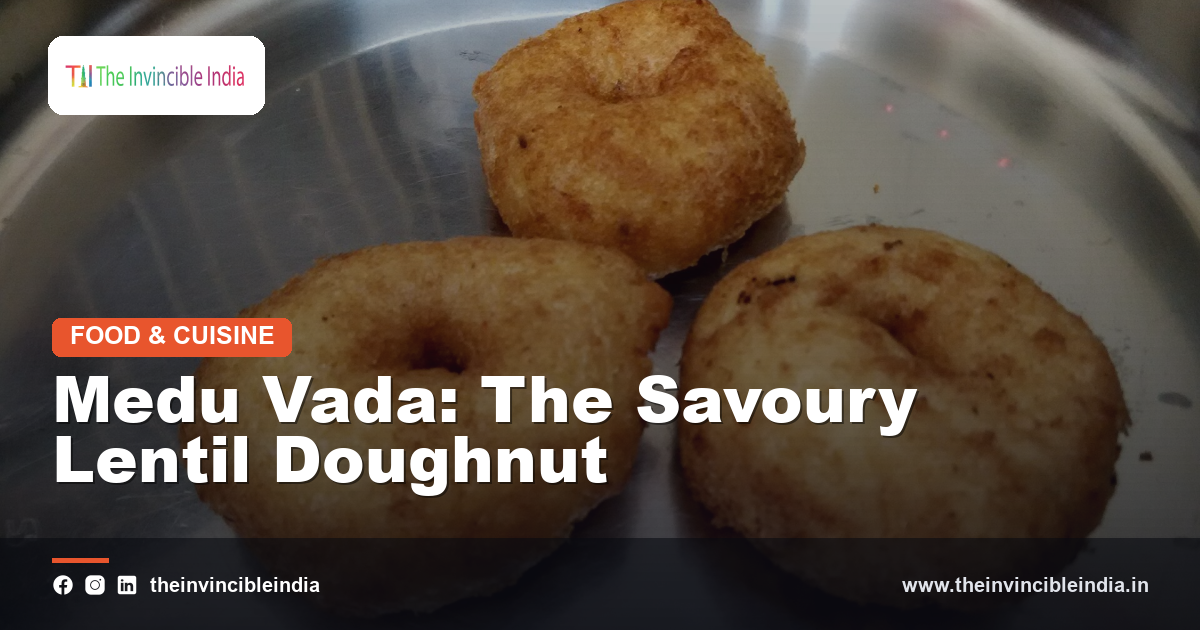
Medu vada is the crisp, ring-shaped lentil fritter that anchors so much of South Indian tiffin culture, a savoury doughnut of ground urad dal fried until its crust turns deep gold while its interior stays soft, airy and fragrant with black pepper and curry leaf. Served alongside sambar and coconut chutney, it appears on breakfast tables, temple platters and restaurant menus across the south and, increasingly, well beyond it. Much as idli and dosa anchor the wider South Indian breakfast tradition, medu vada holds an equally central place, prized for the contrast between its crunchy exterior and its light, fluffy centre. This guide explores medu vada, its preparation, its regional character and its enduring place in India’s culinary heritage.
Quick Facts
| Detail | Information |
|---|---|
| Type | A fried savoury lentil fritter |
| Main ingredient | Ground urad dal (split black gram) |
| Region | South India, especially Tamil Nadu and Karnataka |
| Usually served with | Sambar and coconut chutney |
| Texture | Crisp golden crust, soft fluffy centre |
| Occasion | Breakfast, tiffin, festivals and temple offerings |
What Is Medu Vada
Medu vada is a savoury South Indian fritter made from a thick batter of ground urad dal, shaped into a ring with a hole in the centre and deep-fried until the outside turns crisp and golden while the inside remains soft and airy. Its name is thought to reflect its soft, gentle texture, distinguishing it from firmer snacks in the same fried-lentil family. The doughnut shape is not merely decorative; the hole allows the vada to cook evenly all the way through during frying. As a savoury lentil fritter defined by this crisp-outside, soft-inside contrast, medu vada is instantly recognisable on any South Indian breakfast table.
Origins in South Indian Cooking
Medu vada belongs to a broad and ancient family of lentil-based fried foods found across South India, where urad dal has long been ground, fermented and shaped into a wide range of savoury preparations. Its development reflects the region’s deep reliance on lentils as both a protein source and a base for texture-rich cooking, alongside rice, in the everyday diet. Over generations, households and temple kitchens refined the batter and technique into the light, evenly fried vada eaten today. This grounding in South India’s long lentil-cooking tradition explains why medu vada feels so thoroughly at home within the region’s wider culinary heritage.
Urad Dal, the Key Ingredient
Urad dal, or split black gram, forms the essential foundation of medu vada, valued for the way it grinds into a thick, aerated batter capable of holding air when whipped by hand or machine. The dal is soaked, drained and ground with a small amount of water, and skilled cooks judge the right consistency by feel, since a batter that is too thin will not hold its shape when fried. This same lentil underpins several other South Indian preparations, including dosa batter. As the key ingredient that gives medu vada both its structure and its characteristic lightness, urad dal remains central to every stage of the dish’s preparation.
The Art of the Batter
Preparing medu vada batter is considered a small culinary art in itself, requiring the ground urad dal to be whipped thoroughly by hand until it turns pale, light and full of tiny air pockets that will later expand during frying. Cooks traditionally test readiness by dropping a small ball of batter into water and checking that it floats, a sign that enough air has been incorporated. Chopped green chilli, ginger, curry leaves and black pepper are folded in just before shaping. This careful attention to aeration and seasoning in the batter is what ultimately separates a light, well-made vada from a dense, heavy one.
Shaping the Doughnut Ring
Shaping medu vada is a distinctive skill, traditionally done by wetting the palm, flattening a portion of batter into a disc, and pressing a hole through the centre with a thumb before sliding the ring gently into hot oil. This doughnut shape allows heat to reach the vada evenly from both the outer edge and the inner hole, helping it cook through without turning greasy or remaining raw in the middle. Some cooks use a small piece of banana leaf or plastic sheet to help form the shape. This distinctive ring shape, functional as much as traditional, is one of the most recognisable features of medu vada.
Frying to a Golden Crisp
Frying is the stage that determines the final character of medu vada, with the shaped rings lowered into moderately hot oil and turned occasionally until they achieve an even, deep golden colour on all sides. Oil that is too hot will brown the outside before the inside cooks through, while oil that is too cool will leave the vada greasy and dense rather than light and crisp. Experienced cooks judge the oil temperature by the sound and behaviour of the batter on contact. This careful control of frying temperature is essential to achieving the crisp exterior and fluffy interior for which medu vada is loved.
Vada and Sambar, the Classic Pairing
Vada sambar, in which crisp medu vada is soaked in hot, tangy lentil and vegetable sambar until it softens slightly while retaining some bite, is one of the most beloved combinations in South Indian breakfast cuisine. The sambar’s tamarind-based tang and vegetable sweetness complement the vada’s savoury, peppery flavour, creating a dish enjoyed at home and in restaurants alike. Some diners prefer their vada served on the side, dipping each piece rather than fully soaking it. This pairing of vada and sambar, balancing crisp fritter with warm, tangy stew, is considered a defining combination of South Indian tiffin cuisine.
Coconut Chutney and Vada
Coconut chutney, a smooth blend of fresh coconut, green chilli and a light tempering of mustard seed and curry leaf, is the other essential accompaniment to medu vada, offering a cooling, mildly sweet contrast to the fritter’s savoury crunch. Together, vada, sambar and coconut chutney form the classic South Indian breakfast trio served in homes, temples and restaurants across the region. Variations of the chutney, using tomato, coriander or roasted gram, are also common in different households. This trio of vada with sambar and coconut chutney remains one of the most complete and satisfying combinations in the South Indian culinary repertoire.
A Breakfast and Tiffin Staple
Medu vada holds a firm place within the South Indian tiffin tradition, the light but substantial meals eaten at breakfast or in the early evening alongside dishes such as idli and dosa. Its combination of protein-rich lentil and satisfying crunch makes it a popular choice for a meal meant to sustain rather than overwhelm. Tiffin centres and small breakfast eateries across South Indian cities often specialise in serving vada fresh and hot throughout the morning. This established role as a tiffin staple, eaten fresh alongside other South Indian breakfast dishes, has helped medu vada remain a daily favourite for generations.
Regional Variations Across South India
While the classic urad dal medu vada is found throughout South India, regional variations exist, including versions flavoured with additional spices or paired with different chutneys depending on local preference across Tamil Nadu, Karnataka, Andhra Pradesh and Kerala. Some regions favour a slightly thicker vada, while others prepare it thinner and crisper. These small differences reflect the same broader regional diversity found across South Indian cooking more generally, much as dishes vary within the wider tradition of Tamil Nadu cuisine. This regional variation in medu vada preparation reflects the dish’s deep and widespread roots across the entire South Indian culinary landscape.
Vada in Temple and Prasad Traditions
Medu vada holds a respected place in temple food traditions across South India, frequently prepared as part of prasad offerings distributed to devotees after worship. Its relatively simple, wholesome ingredients and the skill required to prepare it in large batches make it well suited to temple kitchens, which often produce vada alongside other lentil and rice dishes for communal distribution. Being fried rather than left raw, it also keeps reasonably well for distribution over several hours. This role within temple and prasad traditions gives medu vada a spiritual as well as a culinary significance in South Indian religious life.
Vada as a Popular Snack
Beyond breakfast, medu vada is widely enjoyed as a standalone snack at any time of day, sold hot from street stalls, tea shops and small eateries across South Indian towns and cities. Eaten plain, dipped in chutney, or paired with a cup of filter coffee or tea, it offers a satisfying bite that requires no elaborate accompaniment. Its portability and durability once fried make it a convenient choice for vendors and customers alike. This versatility as both a formal breakfast dish and a casual snack has helped medu vada maintain its popularity across generations and settings.
Nutritional Character
Medu vada offers a notable amount of plant protein thanks to its urad dal base, making it a relatively filling choice compared with many other fried snacks, though its preparation in oil means it is generally considered an occasional rather than everyday indulgence in that form. Some households prepare baked or air-fried versions to reduce oil content while retaining much of the flavour. The addition of pepper and curry leaves also contributes digestive and aromatic qualities valued in traditional South Indian cooking. This balance of lentil-based nourishment and fried indulgence defines medu vada’s place within a broader, largely wholesome regional diet.
Vada Beyond South India
As South Indian communities have settled across India and internationally, medu vada has travelled with them, appearing on menus in cities and countries far from its Tamil Nadu and Karnataka origins. It is now a familiar item at South Indian restaurants worldwide, often introducing newcomers to the wider tradition of dosa, idli and sambar alongside it. Its relatively simple ingredient list has also made it easy to reproduce in home kitchens outside the region. This spread of medu vada well beyond South India reflects the growing national and global appreciation for the region’s distinctive breakfast cuisine.
Vada in Restaurants and Modern Dining
Modern South Indian restaurants, from humble tiffin centres to upscale dining establishments, continue to feature medu vada prominently on their menus, sometimes alongside contemporary variations such as vada served with different chutneys or as part of a fusion platter. Its familiar shape and flavour make it an accessible entry point for diners less acquainted with South Indian food more broadly. Chefs occasionally experiment with alternative lentils or added vegetables while preserving the essential technique. This continued presence in both traditional and modern dining settings shows how medu vada has adapted without losing its essential identity.
Medu Vada Today
Today medu vada remains one of the most recognisable and widely loved dishes in Indian cuisine, prepared daily in homes, temples, tiffin centres and restaurants across South India and served to visitors as an introduction to the region’s food culture. Its enduring popularity rests on a simple but well-honed combination of technique, ingredient and pairing that has changed little over generations. Home cooks continue to pass down their preferred methods for whipping and shaping the batter. As a savoury lentil doughnut defined by its crisp crust and fluffy centre, medu vada stands as an enduring symbol of South India’s rich culinary heritage.
Sources & Further Reading
- Ministry of Tourism, Government of India, on the cuisines of India (tourism.gov.in).
- Culinary references on South Indian breakfast and tiffin traditions.
Frequently Asked Questions
What is medu vada made of?
Medu vada is made primarily from ground urad dal, or split black gram, whipped into a light, aerated batter and seasoned with green chilli, ginger, curry leaves and black pepper before being shaped and deep-fried.
What is medu vada usually served with?
Medu vada is usually served with sambar, a tangy lentil and vegetable stew, and coconut chutney, together forming one of the most classic combinations in South Indian breakfast cuisine.
Why does medu vada have a hole in the middle?
The hole in medu vada allows heat to reach the fritter evenly from both the outer edge and the centre during frying, helping it cook through fully without becoming greasy or remaining raw inside.
Is medu vada the same as regular vada?
Medu vada is one specific type of vada, distinguished by its urad dal base, ring shape and soft, fluffy texture; other vada varieties may use different lentils or vegetables and take different shapes.
Is medu vada vegetarian?
Yes, medu vada is entirely vegetarian, made from lentils, mild spices and oil, and it is a common feature of vegetarian breakfast tables and temple food traditions across South India.


