

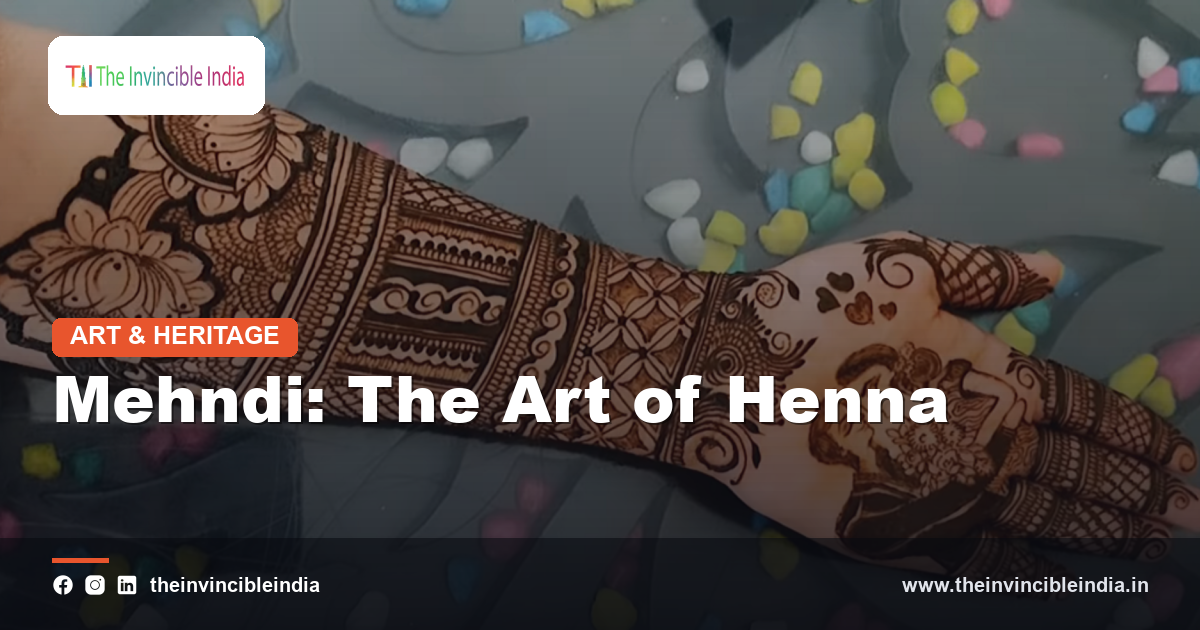
Mehndi is one of the most beautiful and beloved of India’s decorative art traditions, the art of applying intricate designs of henna to the hands and feet. A cherished part of weddings, festivals and celebrations, mehndi adorns the skin with elaborate and beautiful patterns in a rich reddish-brown colour, and it is especially associated with brides, for whom the application of mehndi is an important and joyous part of the wedding. Rich in beauty, meaning and tradition, and practised across India and beyond, mehndi is a living folk art and a symbol of joy, love and celebration. This guide explores the art of mehndi, its designs, its use in weddings and festivals, its meaning and its regional styles, one of the most beautiful of India’s traditions.
Quick Facts
| Detail | Information |
|---|---|
| Type | The art of applying henna designs to the skin |
| Applied to | The hands and feet |
| Colour | A rich reddish-brown, from the henna |
| Associated with | Weddings, festivals and celebrations |
| Especially for | Brides, in an important wedding custom |
| Symbolism | Joy, love, beauty and good fortune |
A Beautiful Decorative Art
Mehndi is one of the most beautiful and beloved of India’s decorative art traditions, the art of adorning the hands and feet with intricate designs of henna. Applied as a paste that leaves a rich reddish-brown stain on the skin, mehndi creates elaborate and beautiful patterns that are a cherished part of weddings, festivals and celebrations, above all for brides. Beautiful, temporary and full of meaning, mehndi is a living folk art and a symbol of joy and celebration. As a beautiful decorative art, adorning the hands and feet with intricate henna designs, mehndi holds a cherished place among the traditions of India and is a beloved part of its weddings, festivals and celebrations.
The Art of Henna
Mehndi is created using henna, a natural dye made from the leaves of the henna plant, which stains the skin a rich reddish-brown colour. The henna is prepared as a paste and applied to the skin in intricate designs, and as it dries and is removed, it leaves behind a beautiful stain that lasts for some time before gradually fading. The natural henna gives mehndi its characteristic colour and its temporary nature. This use of henna, the natural dye that stains the skin a rich reddish-brown, is the basis of the art of mehndi, and the preparation and application of the henna paste to create beautiful, temporary designs on the skin is the essence of this beloved decorative tradition.
Intricate Designs
Mehndi is renowned for its intricate and beautiful designs, elaborate patterns applied to the hands and feet with great skill and artistry. The designs may include delicate floral and paisley motifs, fine geometric patterns, creepers and vines, and a wealth of intricate detail, covering the hands and feet in beautiful and elaborate compositions. The finest mehndi is a work of great skill and beauty. These intricate designs, the elaborate and beautiful patterns applied to the hands and feet with great skill, are the glory of mehndi, and the artistry and detail of the finest designs, from delicate florals to fine geometric patterns, make mehndi a beautiful and admired decorative art.
Mehndi and Weddings
Mehndi holds a special and central place in Indian weddings, where the application of henna to the bride is an important, joyous and cherished custom. Before the wedding, the bride’s hands and feet are adorned with elaborate and beautiful mehndi designs, often in a special ceremony celebrated with music and festivity among the women, and the bridal mehndi is regarded as an essential and auspicious part of the wedding preparations. This role in weddings is central to the tradition. This special place of mehndi in Indian weddings, where the application of elaborate henna designs to the bride is an important and joyous custom, often celebrated in a festive ceremony, is central to the tradition and makes mehndi a cherished and essential part of the beauty and celebration of the Indian wedding.
The Bridal Mehndi
The bridal mehndi is the most elaborate and beautiful form of the art, in which the bride’s hands and feet are adorned with especially intricate and extensive designs for her wedding. The bridal mehndi often covers the hands and forearms and the feet with rich and detailed patterns, and it may include special motifs and even the hidden name or initial of the groom, and it is regarded as an important and auspicious adornment of the bride. The bridal mehndi is the crowning form of the art. This bridal mehndi, the most elaborate and beautiful form of the art in which the bride is adorned with especially intricate designs for her wedding, is the crowning expression of the tradition and a cherished and important part of the beautifying of the bride and the celebration of the Indian wedding.
The Mehndi Ceremony
In many Indian weddings, the application of the bride’s mehndi is celebrated as a special pre-wedding ceremony, a joyous occasion of music, festivity and togetherness among the women. At the mehndi ceremony, the bride’s henna is applied, often by a skilled artist, while the women of the family and friends gather to celebrate with singing, dancing and festivity, and the occasion is one of joy and celebration in anticipation of the wedding. The mehndi ceremony is a cherished pre-wedding tradition. This mehndi ceremony, the joyous pre-wedding occasion at which the bride’s henna is applied amid music and festivity among the women, is a cherished tradition of Indian weddings and a beautiful and festive part of the celebrations leading up to the wedding.
Mehndi in Festivals
Beyond weddings, mehndi is a cherished part of festivals and celebrations, when women adorn their hands with henna designs to mark the occasion. On festivals such as the great celebrations of the year, and on other joyous and auspicious occasions, women apply mehndi as part of the festivity and adornment, and the beautiful designs add to the joy and beauty of the celebration. This role in festivals is an important part of the tradition. This role of mehndi in festivals and celebrations, when women adorn their hands with beautiful henna designs to mark the occasion, is an important part of the tradition and makes mehndi a cherished and joyful part of the festive life of India, beyond its central place in weddings.
Symbolism and Meaning
Mehndi is rich in symbolism and meaning, associated with joy, love, beauty, good fortune and auspiciousness. The application of mehndi is regarded as auspicious, especially for the bride, and it is associated with love, happiness, beauty and blessing, and traditional beliefs hold that the deeper and darker the colour of the bride’s mehndi, the greater the love and good fortune it betokens. This symbolism gives the art meaning beyond its beauty. This rich symbolism and meaning of mehndi, associated with joy, love, beauty, good fortune and auspiciousness, gives the art a significance beyond its beauty, and the beliefs surrounding it, especially for the bride, make it a cherished and meaningful custom as well as a beautiful adornment.
A Temporary Adornment
One of the distinctive qualities of mehndi is that it is a temporary adornment, for the henna stain gradually fades over time, lasting for a period before disappearing. Unlike permanent body art, mehndi is applied for a particular occasion, enjoyed while it lasts, and then allowed to fade, so that it can be applied anew for the next celebration. This temporary nature is part of the character of the art. This temporary quality of mehndi, in which the beautiful henna designs gradually fade over time, is a distinctive feature of the art, making it a beautiful adornment for particular occasions that can be renewed for each new celebration, ever fresh and ever changing.
Regional Styles
Mehndi is practised in a variety of regional styles across India and beyond, each with its own characteristic designs and patterns. Different regions and traditions favour different styles of mehndi, from fine and intricate patterns to bolder designs, and the art has also developed distinctive styles in different countries where henna is used. This variety of styles enriches the art of mehndi. This variety of regional styles of mehndi, each with its own characteristic designs and patterns, enriches the art and reflects the diversity of the traditions in which henna is used, so that mehndi takes many beautiful forms across India and the wider world.
The Skill of the Artist
The creation of beautiful mehndi requires great skill and artistry, and skilled mehndi artists are much valued, especially for bridal designs. Applying the fine, intricate designs by hand, using the henna paste, demands a steady hand, an eye for pattern and considerable practice, and the finest mehndi artists create designs of great beauty and detail. The skill of the artist is central to the beauty of the finished mehndi. This skill of the mehndi artist, required to create the fine, intricate designs by hand, is central to the beauty of the art, and skilled mehndi artists, especially those who create elaborate bridal designs, are much valued for their artistry in this beautiful decorative tradition.
A Living Tradition
Mehndi is a vibrant living tradition, practised across India and beyond and cherished as a beautiful part of weddings, festivals and celebrations. The art continues to be a beloved and widely practised custom, especially for brides and for festivals, and it has also grown in popularity in many parts of the world, adapting to new tastes and occasions while keeping its traditional beauty. This living tradition is passed down and continually renewed. This character of mehndi as a vibrant living tradition, practised and cherished across India and beyond, reflects the enduring appeal of the art and its deep place in the celebrations of Indian life, kept alive and continually renewed as a beautiful part of weddings, festivals and joyous occasions.
A Symbol of Celebration
Mehndi has become a beautiful symbol of celebration, joy and festivity in Indian culture, associated with the happy occasions of life, above all weddings. The beautiful henna designs, applied to mark weddings, festivals and joyous occasions, express the joy and festivity of the moment and add beauty to the celebration, so that mehndi is a beloved emblem of festive joy and of the happy occasions of life. This role as a symbol of celebration is a cherished aspect of the art. This role of mehndi as a symbol of celebration, joy and festivity, associated above all with weddings and the happy occasions of life, is a cherished aspect of the art and a large part of its beloved place in the culture and celebrations of India.
Mehndi Today
Today mehndi remains one of the most beautiful and beloved of India’s decorative traditions, cherished as an essential and joyous part of weddings, festivals and celebrations, and practised across the country and among Indian communities around the world. The beautiful and intricate henna designs, above all the bridal mehndi, continue to adorn the hands and feet for the happy occasions of life, and the art has grown in popularity around the world. The tradition is kept vibrant and continually renewed. As a beautiful art of adornment, rich in beauty, meaning and joy, and cherished above all in weddings and festivals, mehndi endures as one of the most beloved and living decorative traditions of India.
Sources & Further Reading
- Ministry of Culture, Government of India, on the decorative arts and traditions of India (indiaculture.gov.in).
- Cultural records on the traditions and customs of India.
Frequently Asked Questions
What is Mehndi?
Mehndi is the beautiful art of applying intricate designs of henna to the hands and feet, leaving a rich reddish-brown stain on the skin. It is a cherished part of Indian weddings, festivals and celebrations, and is especially associated with brides.
What is henna?
Henna is a natural dye made from the leaves of the henna plant, which stains the skin a rich reddish-brown colour. It is prepared as a paste and applied to the skin in intricate designs, leaving a beautiful temporary stain that lasts for a period before fading.
Why is Mehndi important in Indian weddings?
Mehndi holds a special place in Indian weddings, where the application of elaborate henna designs to the bride is an important, joyous and auspicious custom, often celebrated in a festive ceremony among the women. The bridal mehndi is a cherished part of the beautifying of the bride.
What does the bridal mehndi involve?
The bridal mehndi is the most elaborate form of the art, in which the bride’s hands, forearms and feet are adorned with especially intricate and extensive henna designs for her wedding, sometimes including special motifs and the hidden name or initial of the groom.
Is Mehndi permanent?
No. Mehndi is a temporary adornment, for the henna stain gradually fades over time, lasting for a period before disappearing. It is applied for a particular occasion, enjoyed while it lasts, and then allowed to fade, to be applied anew for the next celebration.


