

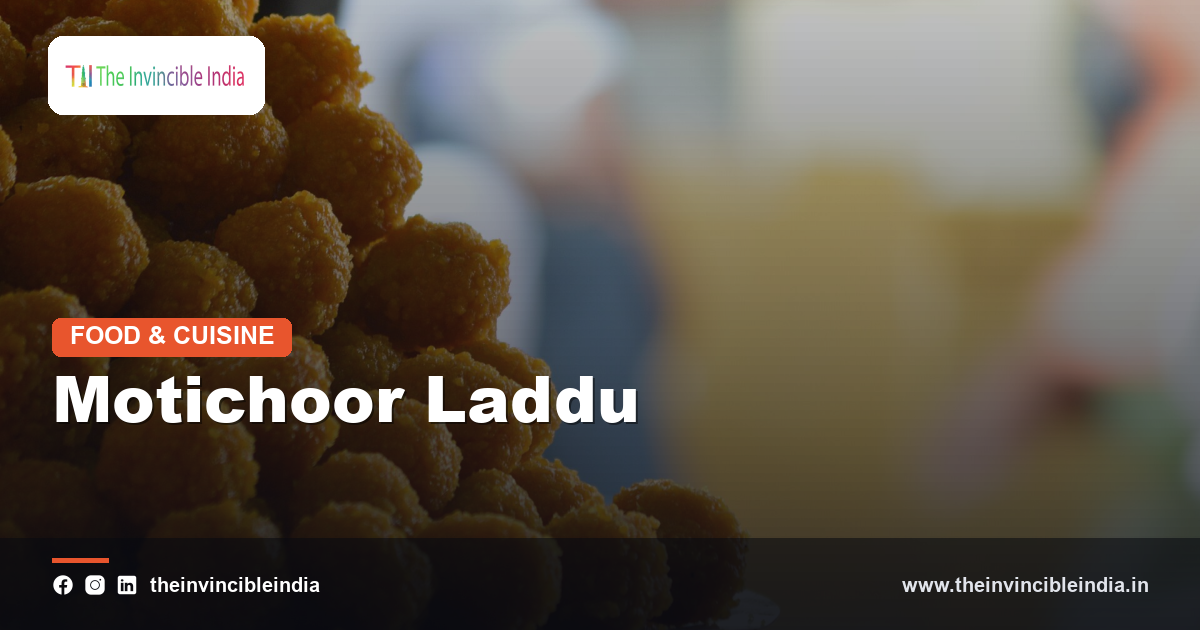
Motichoor laddu is among the most cherished sweets of India, a soft, golden sphere made from thousands of tiny fried gram flour pearls soaked in fragrant sugar syrup and gently pressed together. Its name evokes pearls, and its fine, melting texture sets it apart from firmer laddus. Present at weddings, festivals, temple offerings and happy family announcements, it has long been a symbol of celebration and good fortune. As with the many sweets described in the guide to famous sweets of India, its appeal lies in the careful skill behind simple ingredients. This guide explores motichoor laddu, its making, its meaning and its place in Indian traditions.
Quick Facts
| Detail | Information |
|---|---|
| Type | Festive Indian sweet |
| Main ingredients | Gram flour, sugar syrup and ghee |
| Key flavours | Cardamom, saffron and nuts |
| Shape | Round ball of tiny fried pearls |
| Popular at | Weddings, festivals and temple offerings |
| Character | Soft, moist, fragrant and mildly sweet |
What Is Motichoor Laddu
Motichoor laddu is a round Indian sweet built from tiny droplets of fried gram flour batter, known as boondi, which are soaked in sugar syrup and then shaped by hand into soft spheres. Unlike a laddu made from a single dense dough, it is composed of countless fine pearls that cling together while retaining a delicate, almost crumbly texture. The sweet is usually flavoured with cardamom and decorated with melon seeds, almonds or pistachios, and its colour ranges from pale yellow to deep orange. It is eaten on its own, as an offering and as a gift. This pearl-like construction is what makes motichoor laddu so distinctive among the wide variety of laddus in Indian cooking.
The Meaning of the Name
The name motichoor is generally understood to combine the Hindi word moti, meaning pearl, with choor, which refers to something crushed or broken into small pieces. Together they describe the tiny, pearl-like boondi that form the body of the sweet. The name captures both the appearance and the delicacy of the dish, as the fine grains are far smaller than those in ordinary boondi laddu. In some regions the sweet is spelled as motichur or simply called a type of boondi laddu, though the finest motichoor is distinguished by its tiny size. This poetic name reflects the care that Indian sweet makers invest in their craft, linking a humble confection with the beauty of pearls.
The Tradition of Laddus
Laddus are among the oldest and most widespread sweets of the Indian subcontinent, and they come in countless forms, made from gram flour, semolina, sesame, coconut, lentils and many other ingredients. The round shape is easy to make by hand, convenient to share and well suited to storing and carrying. Laddus appear in religious offerings, family celebrations and everyday treats, and their long history is woven into festivals and domestic life. Motichoor laddu is among the most refined of these, requiring particular skill to produce its fine pearls. Understood within this broad tradition, it represents one of the most elegant expressions of the Indian art of making sweets in round form.
Gram Flour and the Batter
The foundation of motichoor laddu is besan, the fine flour ground from chickpeas, which is mixed with water into a smooth, flowing batter. The consistency is critical, since a batter that is too thick will not pass easily through the tiny holes used to form the droplets, while one that is too thin will not hold its shape in the oil. Some cooks add a pinch of food colour or saffron to give the finished boondi a rich golden-orange hue. The batter is often rested briefly so that the flour absorbs the water fully. This careful preparation of the humble gram flour batter is the first and most important step towards achieving the fine pearls for which the sweet is known.
Frying the Tiny Boondi
To make the pearls, the batter is poured through a flat perforated ladle, known as a jhara, held over hot ghee or oil, so that tiny droplets fall into the pan and puff up as they fry. The cook must keep the heat steady and the droplets small, removing them quickly while they are still pale and soft rather than crisp. Overfrying would harden the boondi and spoil the soft, moist character of the sweet. Experienced sweet makers fry batch after batch with practised speed and rhythm. The golden pearls that result, uniformly tiny and delicate, show the precision of this craft, which is as much about control and timing as it is about ingredients.
The Sugar Syrup
Once fried, the boondi is immediately immersed in warm sugar syrup, which gives the sweet its flavour, moisture and binding quality. The syrup is traditionally cooked to a light consistency, often called one-string, so that it is sticky enough to hold the pearls together without becoming hard. Cardamom is commonly added to the syrup, and some cooks include a few strands of saffron or a drop of rose water for fragrance. The boondi soaks up the syrup gradually and swells slightly, becoming soft and juicy. Getting the syrup right is one of the central skills of the sweet maker, since too thin a syrup leaves the laddu loose and too thick a syrup makes it dense and heavy.
Flavourings and Nuts
Motichoor laddu is usually perfumed with green cardamom, which gives it an unmistakable warm, floral aroma, and many recipes add a few strands of saffron for colour and fragrance. Chopped almonds, pistachios, cashews or raisins are often stirred into the soaked boondi, while melon seeds, known as char magaz, add a subtle crunch and a traditional touch. Some cooks add a little edible camphor or rose water in small amounts. These flavourings are used with restraint, so that they enhance rather than overwhelm the delicate taste of the gram flour and ghee. This careful, aromatic seasoning is one of the reasons why a well-made motichoor laddu is considered a sweet of rare refinement and fragrance.
Shaping the Laddus
After soaking, the boondi is allowed to cool until it is warm enough to handle, and the sweet maker then takes small portions and presses them firmly between the palms, rolling them into smooth, round balls. The timing is important, because the mixture must still hold some warmth and syrup to bind properly, yet not be so wet that the laddu collapses. Skilled hands can produce a uniform batch quickly, each laddu neatly rounded and slightly glossy. Some makers press a nut or a strand of saffron on top as decoration. The shaping stage, quick and tactile, completes the transformation of loose pearls into the familiar spherical sweet that people recognise and love.
Texture and Taste
A good motichoor laddu is soft, moist and slightly crumbly, yielding easily to the bite and then dissolving on the tongue. The tiny pearls remain faintly distinct, while the ghee, sugar and cardamom blend into a unified, comforting sweetness. The balance of flavours is gentle rather than overpowering, with the nutty undertone of roasted gram flour providing depth beneath the syrup. Connoisseurs judge the sweet by the fineness of its boondi, its freshness and the evenness of its sweetness. A well-made laddu should hold its shape in the hand but give way softly in the mouth. This delicate texture and harmonious taste are the true measure of a motichoor laddu and the reason why it commands such affection.
A Sweet for Celebrations
Motichoor laddu is firmly associated with joyous occasions in India. It is a customary sweet at weddings, where it may be served to guests or exchanged between families, and it is commonly distributed to announce good news such as a birth, a promotion or an exam success. Sweet shops prepare large quantities for festival seasons, and boxes of fresh laddus are often given as gifts to friends and relatives. The sweet fits naturally with the Indian tradition of beginning an auspicious occasion with something sweet. This strong link to celebration has made motichoor laddu a symbol of happiness, generosity and shared good fortune across many communities.
Religious Offerings and Prasad
Laddus hold an important place in Hindu worship, and motichoor laddu is frequently offered to deities and then distributed as prasad. It is particularly associated with the worship of Lord Ganesha, who is traditionally described in popular devotion as being fond of laddus, and it features prominently during Ganesh Chaturthi. Many temples and households also offer it on other festivals and special prayer days. Receiving a laddu as prasad is regarded as a blessing, and the sweet is shared among family members and visitors. This devotional role gives motichoor laddu a spiritual dimension in addition to its culinary appeal, linking taste with faith and community in a gentle, traditional way.
Festivals and Gifting
Throughout the festival calendar, motichoor laddu is a leading choice for sweet boxes and gift hampers. During Diwali, Raksha Bandhan, Holi and many regional festivals, sweet shops are filled with trays of golden laddus, and families buy them to share with neighbours and colleagues. The sweet travels well and keeps for a reasonable time, making it practical as a gift. In many households, preparing laddus at home forms part of the festive routine, with relatives gathering to help. The tradition of exchanging sweets during festivals reflects the values of generosity and friendship, and motichoor laddu stands among the most recognised sweets chosen for this purpose throughout the country.
Regional Preferences
Though motichoor laddu is popular across India, local preferences shape the way it is made and enjoyed. In northern states, it is often brightly coloured and rich with ghee, and it is a mainstay of wedding feasts and halwai shops. In western India, similar boondi laddus are closely tied to festivals and temple offerings, while in the south, laddus of various types are central to temple prasad traditions. Some regions favour a slightly coarser boondi, while others prize the very finest pearls. Each community adds its own touches in flavouring, size and presentation. These regional differences enrich the tradition, demonstrating how a beloved sweet can take on different forms while keeping its essential identity.
The Halwai and the Craft
The making of motichoor laddu has traditionally been the work of the halwai, the professional sweet maker, whose craft is often learned over many years and passed down within families. Early in the morning, large pans of ghee are heated, and rows of workers fry boondi, soak it in syrup and shape laddus before the shop opens. Freshness is considered vital, and many shops pride themselves on making sweets daily in small batches. The sight and aroma of a sweet shop at work, with trays of golden pearls and the fragrance of cardamom, is a familiar part of Indian town life. This enduring craft tradition is the human foundation behind every plate of motichoor laddu.
Nutritional Character and Moderation
Motichoor laddu is a rich, energy-dense sweet, made from gram flour, sugar and ghee, and it is intended to be enjoyed in small quantities as a celebratory treat rather than an everyday food. Gram flour provides some protein and fibre, while ghee, valued in Indian cooking, contributes richness, but the sugar content is considerable. Traditional food wisdom emphasises moderation and the pleasure of sharing, and a single laddu is often considered ample. Some modern cooks prepare lighter versions with reduced sugar or alternative sweeteners, though the classic form remains the most popular. Enjoyed mindfully and on special occasions, motichoor laddu fits comfortably within a balanced approach to food and festivity.
Making Motichoor Laddu at Home
Preparing motichoor laddu at home is a rewarding if patient task. Cooks begin with a smooth, medium-thick gram flour batter, pass it through a fine-holed ladle into hot ghee or oil, and fry the tiny droplets briefly until just set. The boondi is then lifted out and dropped into warm cardamom-scented syrup, soaked, drained slightly and mixed with nuts and melon seeds. Once cool enough to handle, it is shaped into balls with firm pressure. Practice is needed to master the fineness of the pearls and the right syrup consistency. With attention and care, home cooks can produce laddus that bring the taste of the sweet shop into a family celebration.
Motichoor Laddu Today
Motichoor laddu remains as popular as ever, found in sweet shops, home kitchens, online gift stores and festive spreads across India and in Indian communities around the world. Modern confectioners have created variations such as saffron-rich, sugar-free and dry-fruit versions, and the sweet appears in fusion desserts and creative presentations. Yet the classic golden laddu, fragrant with cardamom and soft with syrup, continues to be the standard that people turn to at moments of joy. It is a sweet bound up with memory, family and faith. As a delicate confection of tiny pearls, motichoor laddu remains a lasting and delicious emblem of celebration in Indian life.
Sources & Further Reading
- Ministry of Culture, Government of India (indiaculture.gov.in).
- Food Safety and Standards Authority of India (fssai.gov.in).
Frequently Asked Questions
What is motichoor laddu made of?
Motichoor laddu is made from tiny fried droplets of gram flour batter, called boondi, soaked in sugar syrup and shaped into balls. It is flavoured with cardamom and usually decorated with nuts and melon seeds.
What does motichoor mean?
The name is generally understood to combine moti, meaning pearl, with choor, meaning crushed or small pieces. It describes the tiny pearl-like boondi that make up the sweet.
What is the difference between motichoor laddu and boondi laddu?
Both are made from fried gram flour droplets in syrup, but motichoor laddu uses much finer, smaller pearls. This gives it a softer, more delicate and more melting texture than ordinary boondi laddu.
When is motichoor laddu traditionally served?
It is served at weddings, festivals such as Diwali and Ganesh Chaturthi, and family celebrations. It is also widely offered as prasad in temples and homes.
Why is motichoor laddu associated with Lord Ganesha?
In popular Hindu devotion, Lord Ganesha is described as being fond of laddus, so the sweet is commonly offered to him, especially during Ganesh Chaturthi. It is then shared among devotees as prasad.


