

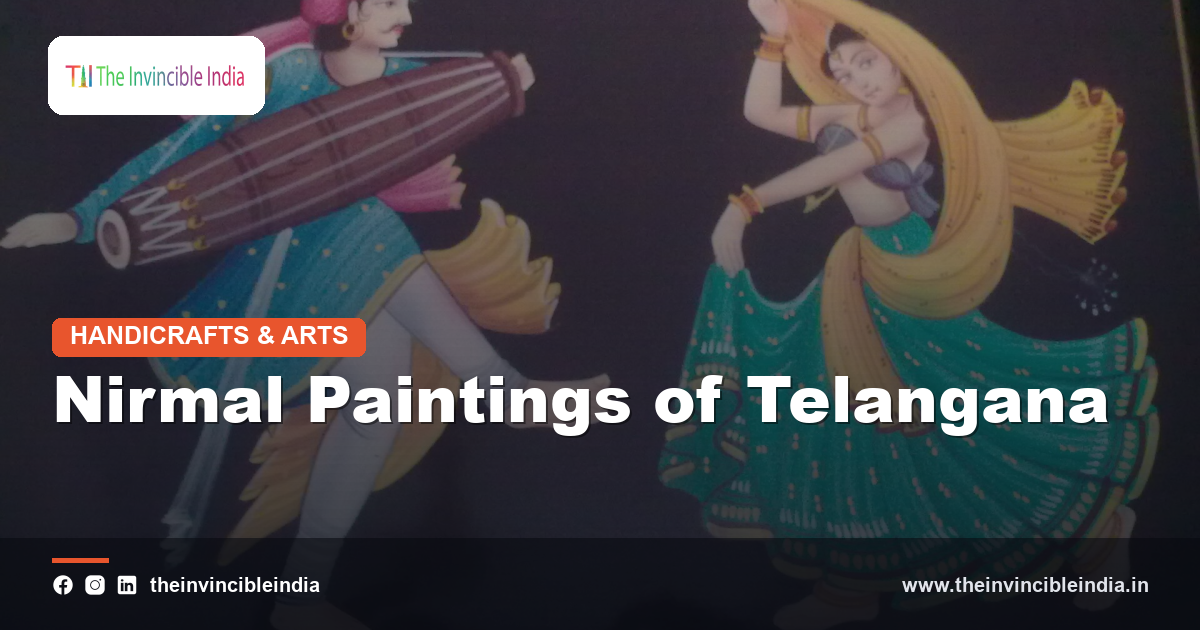
Nirmal paintings, also called Nirmal art or Nirmal kalalu, are a tradition of golden-toned folk paintings and decorated wooden objects made in the town of Nirmal, the headquarters of Nirmal district in the Adilabad region of northern Telangana. The craft is famous for its soft, glowing colours, its gold-tinted highlights and its themes drawn from the Hindu epics and from the courtly miniature styles of Mughal and Kangra painting. Alongside the paintings, the artisans of Nirmal are celebrated for their lacquered wooden toys and furniture, all made from a soft local wood. Admirers of the bold tribal line of Gond art will find in Nirmal a gentler, courtly cousin from the same broad Deccan cultural world. This guide explains the place, the artisans, the materials, the technique and the living legacy of Nirmal painting.
Quick answer: Nirmal painting is a traditional folk art and wooden craft from the town of Nirmal in Nirmal district, in the former Adilabad region of Telangana, India. It is known for golden-toned highlights, soft muted colours and themes taken from the Hindu epics and from Mughal and Kangra miniature styles, applied to wooden panels, toys and furniture. The craft is practised by a community of hereditary artisans and is a recognised folk-art tradition of Telangana.
Key Takeaways
- Nirmal painting is a folk-art and wooden-craft tradition from Nirmal town in Nirmal district, in the former Adilabad region of Telangana.
- The art is known for gold-toned highlights, soft muted backgrounds and a glowing, luminous finish.
- Themes are drawn from the Hindu epics, the Puranas and from Mughal and Kangra miniature painting styles.
- The craft includes not only paintings but also lacquered Nirmal toys and painted wooden furniture.
- Artisans traditionally use a soft local wood, natural pigments and a gum-and-tamarind ground to prepare their surfaces.
- Nirmal art is a recognised folk tradition of Telangana and is supported through state craft and handicraft bodies.
The sections below describe where Nirmal is, who makes the art, how it is painted, what it depicts and why it still matters today.
Quick Facts
| Detail | Information |
|---|---|
| Art form | Folk painting and lacquered wooden craft |
| Place of origin | Nirmal town, Nirmal district, Telangana |
| Region | Former Adilabad region, northern Telangana |
| Also known as | Nirmal art, Nirmal kalalu |
| Known for | Golden-toned highlights and soft muted colours |
| Typical themes | Hindu epics, Puranas, Mughal and Kangra styles |
| Materials | Soft local wood, natural pigments, gold tint, lacquer |
| Related products | Nirmal toys and painted furniture |
What Are Nirmal Paintings?
Nirmal paintings are a folk-art tradition from the town of Nirmal in Telangana, made on wood and marked by a soft, golden glow. The paintings are produced on seasoned wooden panels prepared with a smooth ground, and they are known for muted backgrounds against which figures and ornament stand out in warm, gold-tinted tones. The subjects are usually drawn from Hindu mythology, including scenes from the epics and the Puranas, as well as flowers, birds and courtly figures. The same community of artisans also makes lacquered wooden toys and decorative furniture, so that painting and woodcraft are closely linked. The overall style joins folk warmth with the refinement of the miniature tradition. Nirmal painting is therefore both a decorative art and a cultural emblem of its region.
Where Is Nirmal and Why Is It Known for This Art?
Nirmal is a town in northern Telangana that serves as the headquarters of Nirmal district, an area long associated with the wider Adilabad region. The town lies in a part of the Deccan that has been a meeting ground of southern, Deccani and northern influences, which helped shape its art. Nirmal is known for this craft because families of artisans settled there and handed down their skills over many generations, giving the town a lasting identity as a craft centre. Local forests once supplied the soft wood that the artisans favoured. Markets, patrons and later state support helped keep the tradition alive. The town’s name has become inseparable from its paintings, toys and furniture. Nirmal is therefore both a place and a byword for a distinctive folk art.
How Did Nirmal Painting Begin?
Nirmal painting is traditionally said to have grown up under the encouragement of local rulers and patrons who valued decorative art, though the earliest history is not documented in precise detail. Accounts describe a community of craftsmen who combined woodworking with painting, producing panels, toys and furniture for homes and for gifts. Over time the artisans absorbed influences from Mughal and Kangra miniature painting, which reached the Deccan through courts and trade, and blended these with local folk sensibility. The use of gold tones and soft colours became a recognisable signature. Because the exact origins rest partly on tradition, they are best described in general terms. What is clear is that the craft emerged as a settled, hereditary tradition in and around the town of Nirmal.
What Makes Nirmal Art Distinctive?
Nirmal art is distinctive for its luminous golden tone, its soft muted palette and its blend of folk and courtly styles. Artisans prepare a special paint, often described as gold-toned, that gives highlights a warm, shimmering quality against darker or subdued backgrounds. The figures are drawn with a folk simplicity but arranged with the grace of miniature painting, so that the work feels both homely and refined. Subjects from the epics are rendered with devotion rather than drama. The link between painting and lacquered woodcraft is another distinctive feature, since the same hands make toys, panels and furniture. This combination of glow, gentleness and craftsmanship sets Nirmal apart from other folk arts of the Deccan. Its character is easy to recognise once seen.
What Wood and Materials Are Used?
Nirmal artisans traditionally work on a soft, lightweight local wood that is easy to carve and shape into panels, toys and furniture. The surface is prepared with a ground, often made from a mixture that may include tamarind seed paste, gum and fine clay or sawdust, which is smoothed so that paint sits evenly. Natural pigments drawn from minerals and plant sources provide the colours, and a gold-toned preparation gives the characteristic highlights. A lacquer or varnish finish protects the surface and adds sheen, especially on toys. Brushes are made fine enough for delicate linework. Because practices vary between workshops, the exact recipes differ from family to family. These simple, local materials are central to the look and durability of Nirmal work.
How Is a Nirmal Painting Made Step by Step?
A Nirmal painting is built up in stages that begin with preparing the wooden surface and end with a protective finish. The artisan first seasons and smooths a wooden panel, then applies a ground to create an even base for painting. The composition is sketched in outline, after which flat areas of soft colour are laid in for backgrounds, garments and architecture. Details such as faces, ornaments and borders are added with a fine brush, and the gold-toned highlights are applied to make the work glow. A final coat of lacquer or varnish seals and protects the surface. Each step calls for patience and a steady hand, and skills are learned by long practice. The method gives the finished piece its smooth, luminous character.
What Themes and Motifs Appear in Nirmal Paintings?
Nirmal paintings most often depict themes from Hindu mythology, including episodes from the Ramayana and Mahabharata and stories of Krishna and other deities. Alongside these religious subjects, artisans paint flowers, creepers, birds, animals and courtly figures in the manner of miniature art. Decorative borders frame many panels, and compositions are arranged for balance and calm rather than for dramatic action. The influence of Mughal and Kangra painting appears in the graceful figures and ornamental detail. Folk warmth softens these courtly borrowings, giving the work an approachable charm. The motifs reflect both devotion and a love of nature. Together they make Nirmal painting a gentle visual retelling of myth and the natural world.
What Are Nirmal Toys and Furniture?
Nirmal toys and furniture are the wooden companions of the painting tradition, made by the same community of artisans. The toys are carved from soft wood, then primed, painted in bright or soft colours and finished with lacquer to produce smooth, glossy figures of animals, birds, fruit and mythological characters. The furniture includes decorated boxes, trays, panels and larger pieces, often painted with the same gold-toned motifs found in the paintings. This woodcraft shows how deeply painting and carving are joined in Nirmal. The toys in particular have carried the town’s name to buyers far beyond the region. Both toys and furniture extend the art from the wall into everyday objects. They are an integral part of the Nirmal craft family.
Who Are the Artisans of Nirmal?
The artisans of Nirmal are families who have practised painting and woodcraft for generations, often described as a hereditary community of craftsmen known locally by community names such as Naqash. Work is usually organised around the household and the workshop, with skills passed from elders to the young through long apprenticeship. Different members may specialise in carving, priming, painting or finishing, so that a single piece passes through several hands. Cooperative societies and state craft bodies have supported the artisans by providing training, raw materials and access to markets. Like many traditional crafts, the community faces challenges from changing tastes and economic pressure. These artisans are the living carriers of the tradition. Their continued work keeps Nirmal art alive.
How Did Mughal and Kangra Styles Influence Nirmal?
Mughal and Kangra miniature styles influenced Nirmal painting by shaping its graceful figures, ornamental detail and courtly subjects. The Mughal tradition brought naturalistic portraiture, fine borders and a love of garden and courtly scenes, while the Kangra style of the hills contributed lyrical figures and tender depictions of Krishna themes. These influences reached the Deccan through the movement of artists, patrons and objects. Nirmal artisans absorbed what suited their own folk idiom and combined it with the gold-toned, soft-coloured manner of their town. The result is neither purely folk nor purely courtly, but a distinctive blend. This mingling of styles is part of what gives Nirmal painting its refined yet warm character. It reflects the crossroads culture of the region.
How Does Nirmal Art Compare with Other Deccan Folk Arts?
Nirmal art differs from other Deccan and south Indian folk arts in its wooden base, its gold tone and its blend of folk and miniature styles. Cheriyal scroll painting, also from Telangana, is made on cloth with bold narrative panels, while Nirmal favours softer, gold-highlighted scenes on wood. Tanjore painting of Tamil Nadu uses gold foil and gesso relief, a richer and more raised technique than Nirmal’s smooth, painted gold tone. Gond art of central India is a tribal painting with patterned fill, quite unlike the courtly calm of Nirmal. Comparing these traditions shows the variety of Indian folk painting. Nirmal contributes a gentle, luminous voice rooted in woodcraft. Its character stands apart within a rich regional family.
Does Nirmal Art Have a Geographical Indication?
Nirmal is strongly associated with its town and region, and its wooden crafts have been recognised within India’s framework for protecting place-based traditional products. A Geographical Indication ties a product name to the place whose conditions and craftsmanship give it its character, and such protection helps guard against imitation. Because sources can differ on the exact scope and dates of any registration, the precise details are best confirmed with the official Geographical Indications Registry. Whatever the formal position, the craft is clearly identified with Nirmal town and its hereditary artisans. Recognition of this kind supports the reputation of genuine Nirmal work. It also encourages buyers to seek pieces made in the traditional way. The link between the art and its place remains central to its identity.
What Challenges Does the Craft Face Today?
Nirmal art faces challenges common to many traditional crafts, including competition from machine-made goods, changing tastes and the difficulty of earning a steady living. Cheaper mass-produced toys and prints can crowd out handmade work in the market, putting pressure on artisan incomes. Younger members of craft families may choose other careers, which threatens the passing on of skills. The supply of suitable soft wood and natural materials can also be a concern. At the same time, interest in authentic handmade crafts and support from cultural bodies offer hope. Fair prices and honest labelling help genuine artisans. Meeting these challenges is essential if the tradition is to continue. The craft’s survival depends on steady demand and real support.
How Is Nirmal Art Being Kept Alive?
Nirmal art is being kept alive through artisan cooperatives, state handicraft support, training programmes and growing interest in traditional crafts. Craft bodies in Telangana help artisans obtain materials, improve designs and reach new markets through emporiums and fairs. Exhibitions and craft melas introduce Nirmal toys and paintings to buyers across India and abroad. Some artisans adapt their work to contemporary tastes, creating new products while keeping the traditional technique. Documentation and teaching help pass the skills to the next generation. Encouraging fair trade and authentic labelling protects both artisans and buyers. These efforts together give the tradition a path forward. The future of Nirmal art depends on this shared work of preservation and renewal.
How Can You Buy Authentic Nirmal Pieces?
Authentic Nirmal pieces can be bought from state handicraft emporiums, recognised cooperatives, craft fairs and reputable stores that name Nirmal and its artisans as the source. A genuine piece shows the soft gold-toned highlights, hand-painted detail and smooth lacquered finish typical of the craft, along with small natural variations that reveal handwork. Machine-made imitations tend to look flat, perfectly uniform or printed. Buyers can ask about the wood, the pigments and the workshop, since honest sellers will share this information. Buying directly from artisan societies helps income reach the makers. Keeping painted wooden pieces away from damp and strong sunlight helps them last. Careful buying supports the craft and ensures a true example of Nirmal art.
Nirmal Paintings Today
Nirmal paintings today stand as a valued folk-art tradition of Telangana and as a living link to the region’s blend of folk and courtly culture. The gold-toned panels, lacquered toys and painted furniture continue to be made by hereditary artisans, who adapt their work for new buyers while preserving the old technique. Recognition as a traditional craft, support from state bodies and interest from collectors have brought the art renewed attention. Challenges of market, materials and transmission remain real, but the tradition endures. Readers can explore Nirmal art by visiting craft emporiums, learning about its themes and choosing authentic handmade pieces. Nirmal painting remains a gentle, glowing expression of the artistic heritage of northern Telangana. It continues to carry its town’s name with quiet pride.
Sources & Further Reading
- Development Commissioner (Handicrafts), Ministry of Textiles, Government of India (handicrafts.nic.in).
- Geographical Indications Registry, Government of India (ipindia.gov.in).
Frequently Asked Questions
What are Nirmal paintings?
Nirmal paintings are a folk-art and wooden-craft tradition from Nirmal town in Nirmal district, Telangana. They are known for golden-toned highlights, soft muted colours and themes from the Hindu epics and miniature styles, applied to wooden panels, toys and furniture. The craft is made by a hereditary community of artisans.
Where do Nirmal paintings come from?
Nirmal paintings come from the town of Nirmal, the headquarters of Nirmal district in the former Adilabad region of northern Telangana, India. The town has long been a centre for painting and woodcraft. Its name is now inseparable from the art.
What are Nirmal paintings known for?
Nirmal paintings are known for their luminous gold-toned highlights, soft muted backgrounds and a blend of folk warmth with Mughal and Kangra miniature styles. They usually depict scenes from Hindu mythology along with flowers, birds and courtly figures. The same artisans also make lacquered Nirmal toys and furniture.
What materials are used in Nirmal art?
Nirmal art uses a soft local wood prepared with a smooth ground, natural pigments and a gold-toned preparation for highlights, finished with lacquer or varnish. The ground often includes a mixture such as tamarind paste and gum. Recipes vary between workshops.
What is the difference between Nirmal and Tanjore painting?
Nirmal painting uses a smooth, painted gold tone on wood with soft colours, while Tanjore painting of Tamil Nadu uses raised gesso relief and gold foil, often with gem or glass inlay. Both feature gold and devotional themes, but their techniques and surfaces differ. Nirmal also includes a strong tradition of toys and furniture.
How can I buy authentic Nirmal pieces?
Authentic Nirmal pieces can be bought from state handicraft emporiums, recognised cooperatives, craft fairs and trusted stores that name Nirmal as the source. Genuine work shows hand-painted gold-toned detail and a smooth lacquered finish with small natural variations. Buying from artisan societies helps income reach the makers.


