

Onam is the most important and beloved festival of Kerala, a vibrant harvest celebration that brings the entire state together in a spirit of joy, unity and cultural pride. Celebrated by Malayalis of all communities and faiths, Onam marks the homecoming of the legendary King Mahabali, whose reign is remembered as a golden age of prosperity and equality. With its stunning flower carpets, grand feasts, spectacular boat races and colourful cultural performances, Onam is a magnificent expression of Kerala’s heritage. This guide explores the meaning, legends and joyful traditions of this cherished festival.
Quick Facts: Onam
| Detail | Information |
|---|---|
| Region | Kerala (and Malayalis worldwide) |
| Celebrates | The homecoming of King Mahabali; the harvest |
| When | August or September (month of Chingam) |
| Duration | Ten days, culminating in Thiruvonam |
| Signature feast | Onam Sadya (grand vegetarian meal) |
| Famous features | Pookalam (flower carpet), Vallamkali (boat races) |
The Legend of King Mahabali
At the heart of Onam lies the beloved legend of King Mahabali, a wise and generous demon king whose reign over Kerala was so just and prosperous that his people knew no sorrow, deceit or inequality. The gods, envious of his growing power, sent Lord Vishnu in the form of Vamana, a dwarf brahmin, who asked for three paces of land. When granted, Vamana grew immense and covered the earth and heavens in two steps, and for the third, the devoted Mahabali offered his own head. Pleased by his devotion, Vishnu granted him the boon of visiting his beloved people once every year, and Onam celebrates this annual homecoming of the good king.
Pookalam: The Flower Carpets
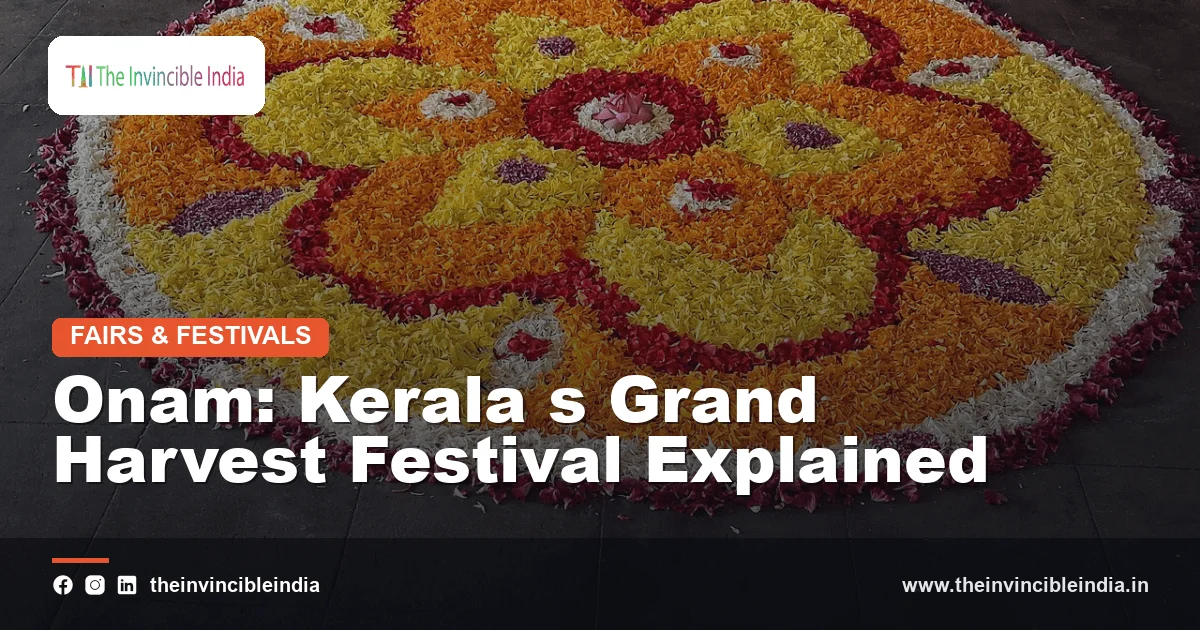
One of the most beautiful traditions of Onam is the Pookalam, intricate and colourful carpets made of fresh flower petals laid out at the entrances of homes to welcome King Mahabali. Beginning on the first day of the festival, Atham, families create a small Pookalam, adding new rings and colours each day so that it grows larger and more elaborate as Onam approaches its climax. These stunning floral designs, crafted with great care and artistry, transform homes and public spaces into vibrant displays of colour and are a joyful symbol of the festive spirit.
The Onam Sadya: A Grand Feast
No Onam celebration is complete without the magnificent Onam Sadya, a grand vegetarian feast served traditionally on a banana leaf and considered one of the greatest culinary experiences in India. This elaborate meal can feature more than two dozen dishes, including rice, an array of curries and vegetable preparations, pickles, pappadams, and the beloved dessert payasam. Each dish is placed in a specific position on the leaf, and the balance of flavours, sweet, sour, salty, spicy and bitter, reflects the richness of Kerala’s cuisine. Sharing the Sadya with family and friends is a cherished highlight of the festival.
Boat Races and Cultural Performances
Onam is famous for its spectacular Vallamkali, or snake boat races, in which enormous, ornately decorated boats manned by dozens of rowers race along Kerala’s backwaters to the rhythm of traditional songs, watched by huge, cheering crowds. The festival is also marked by a rich array of cultural performances, including the graceful Kaikottikali (Thiruvathira) dance performed by women around a Pookalam, the striking Pulikali (tiger dance), and displays of Kerala’s classical arts. Together with games, processions and the wearing of traditional attire, these festivities make Onam a magnificent celebration of Kerala’s culture.
The Ten Days of Onam
Onam unfolds over ten joyous days, each with its own significance, building towards the grand climax. The festival begins with Atham, when the first ring of the Pookalam flower carpet is laid and preparations get under way. Over the following days, the floral carpets grow larger and more elaborate, and the festive spirit intensifies. The most important days are the last few, culminating in Thiruvonam, the holiest and grandest day, believed to be when King Mahabali visits his people. On this day, families don their finest traditional attire, complete the largest Pookalam, prepare the grand Sadya feast, and celebrate with prayers, games and joyful gatherings, making it the heart of the entire festival.
Onam and Kerala’s Spirit of Unity
One of the most beautiful aspects of Onam is its inclusive and secular character, which makes it a festival for all Malayalis regardless of religion or community. Rooted in the legend of a just and beloved king whose reign symbolised equality and harmony, Onam embodies the values of unity, generosity and shared joy. People of all faiths in Kerala participate in the celebrations, coming together to create flower carpets, share feasts and enjoy the festivities. This spirit of togetherness, reflecting the state’s tradition of communal harmony, gives Onam a special place in the hearts of Malayalis and makes it a powerful symbol of Kerala’s cultural identity and unity.
Traditional Games and Onakalikal
Onam is celebrated with a host of traditional games and sports collectively known as Onakalikal, which add to the festive fun and community spirit. These include tug-of-war, archery, various folk games, and playful activities enjoyed by young and old alike. Among the most spectacular are the martial art displays and, of course, the famous snake boat races. Traditional swings (oonjal) are hung from trees for children and adults to enjoy, and cultural performances abound. These games and activities, many rooted in ancient custom, bring communities together in shared enjoyment and are an integral part of the joyful atmosphere that defines the Onam celebrations across Kerala.
The Flowers, Attire and Decorations
Colour and beauty are central to the Onam celebrations, expressed through flowers, traditional attire and festive decorations. The Pookalam flower carpets, made from a wide variety of blooms in vivid hues, are the festival’s signature adornment, transforming homes and public spaces. For the festivities, people wear traditional Kerala attire, with women in the elegant cream-and-gold kasavu saree and men in the classic mundu, adding to the graceful, festive atmosphere. Homes are cleaned, decorated and filled with the aroma of festive cooking, while temples and public spaces are adorned for the occasion, creating an environment of joy, beauty and celebration throughout the ten days of Onam.
Onam Around the World
Onam is celebrated with great enthusiasm not only in Kerala but wherever Malayalis have made their homes around the world. From the Gulf countries, with their large Malayali populations, to Europe, North America, Southeast Asia and beyond, communities come together to recreate the magic of the festival, laying flower carpets, preparing the grand Sadya feast, organising cultural programmes and celebrating their shared heritage. These global celebrations help keep the traditions of Onam alive for younger generations far from home and allow Malayalis around the world to stay connected to their roots, culture and the warm, joyful spirit of their beloved homecoming festival.
The Vallamkali Snake Boat Races
Among the most thrilling and iconic spectacles of Onam are the Vallamkali, or snake boat races, held on the backwaters and rivers of Kerala. These races feature magnificent, elongated snake boats known as chundan vallam, some over a hundred feet long, each crewed by scores of rowers who paddle in perfect synchrony to the beat of traditional boat songs (vanchipattu). The sight of these enormous boats slicing through the water amid the cheers of vast crowds is unforgettable, and famous races such as the Nehru Trophy Boat Race attract huge numbers of spectators from across India and around the world. The Vallamkali embodies the teamwork, tradition and festive spirit that lie at the heart of Onam.
The Cultural Performances of Onam
Onam is a magnificent showcase of Kerala’s rich performing arts and cultural traditions. The graceful Thiruvathira (Kaikottikali) dance, performed by women in traditional attire moving in a circle around a lamp or Pookalam, is a beloved feature of the festivities. The dramatic Pulikali, or tiger dance, sees performers painted as tigers and hunters parading through the streets in a riot of colour and energy. Kerala’s classical art forms, including Kathakali, along with folk dances, music and processions such as the elephant-adorned Athachamayam that marks the start of Onam, all come alive during the festival, making it a grand celebration of the state’s artistic heritage.
Onam and the Harvest Tradition
While Onam is famed for the legend of King Mahabali, it is at its foundation a harvest festival, celebrating the bounty of the land at the end of the monsoon season. Traditionally, this was a time when the fields yielded their produce and communities gave thanks for nature’s abundance, and this agricultural spirit remains central to the festival’s meaning. The Onam Sadya feast, with its many dishes drawn from the fresh harvest, is itself a celebration of this bounty. The festival’s themes of prosperity, gratitude and renewal reflect its deep roots in Kerala’s agrarian past, connecting the people to the rhythms of nature and the land that sustains them.
The Enduring Spirit of Onam
Onam endures as the great festival of Kerala because it beautifully unites so many cherished values, gratitude for the harvest, the celebration of a golden age of equality and justice, the joy of family and community, and pride in a rich cultural heritage. Its inclusive, secular spirit brings together people of all faiths and backgrounds, and its traditions, from the delicate flower carpets to the grand feasts and thrilling boat races, delight the senses and warm the heart. For Malayalis everywhere, Onam is far more than a festival; it is a heartfelt expression of who they are, a joyful reaffirmation of their identity, values and enduring bond with their homeland.
Onam in the Modern World
Even as Kerala modernises and its people spread across the globe, Onam continues to be celebrated with undiminished enthusiasm, adapting gracefully to changing times while retaining its essential spirit. In cities and towns, communities, schools, offices and organisations hold Onam celebrations complete with Pookalams, Sadya feasts and cultural programmes, and the festival is marked as a major public holiday across the state. Modern touches, from Onam shopping and festive sales to social media sharing of celebrations, coexist with age-old traditions. Through it all, the heart of Onam, its message of gratitude, unity, joy and homecoming, remains unchanged, ensuring that this beloved festival continues to thrive and bring people together year after year.
Frequently Asked Questions
What is Onam?
Onam is the most important festival of Kerala, a harvest festival that celebrates the annual homecoming of the legendary King Mahabali and is marked by flower carpets, grand feasts, boat races and cultural festivities.
When is Onam celebrated?
Onam is celebrated in August or September, during the Malayalam month of Chingam, over ten days, culminating in the most important day, Thiruvonam.
What is the Onam Sadya?
The Onam Sadya is a grand traditional vegetarian feast served on a banana leaf, featuring more than two dozen dishes and considered a highlight of the festival.
Why is King Mahabali important to Onam?
King Mahabali was a just and generous ruler whose reign is remembered as a golden age; Onam celebrates his annual return to visit his people, granted as a boon by Lord Vishnu.


