

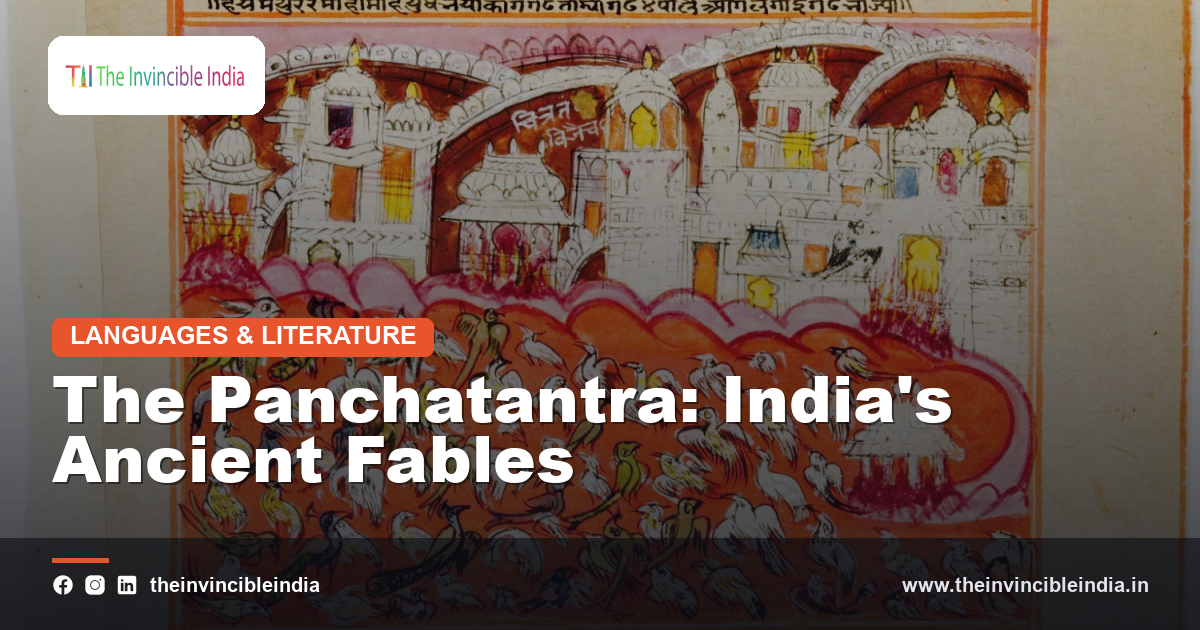
The Panchatantra is one of the oldest and most influential collections of fables in the world, a treasury of ancient Indian tales of talking animals that teach the wisdom of living well. Composed in Sanskrit in antiquity and traditionally attributed to the sage Vishnu Sharma, its stories were framed as lessons in worldly wisdom for young princes, using the adventures and misadventures of clever crows, foolish donkeys, cunning jackals and wise old animals to teach lasting truths. Delightful, witty and wise, the Panchatantra has been loved by children and adults alike for centuries and has travelled across the world, shaping the fable traditions of many lands. This guide explores its frame story, its wisdom, its famous tales and its extraordinary global influence.
Quick Facts
| Detail | Information |
|---|---|
| Type | Ancient collection of animal fables |
| Language | Composed in Sanskrit |
| Traditional author | The sage Vishnu Sharma |
| Structure | Five books, with stories set in a frame narrative |
| Purpose | To teach niti, the wisdom of living well |
| Influence | Travelled across the world, shaping many fable traditions |
India's Ancient Fables
The Panchatantra is India’s great ancient collection of fables, a body of delightful and wise stories that has been treasured for well over a thousand years. Its tales, mostly featuring animals who speak and act like human beings, are at once entertaining stories and lessons in the wisdom of life, teaching through the adventures of their clever and foolish characters. Loved by children for their charm and humour and by adults for their wisdom, the fables of the Panchatantra are among the most enduring and widely known stories in the world. As one of the oldest and most influential fable collections ever composed, the Panchatantra holds a cherished place in the literature of India and of humanity.
The Meaning of the Name
The name Panchatantra means the five treatises or the five principles, from the words for five and for a body of teaching. This refers to the structure of the work, which is divided into five books or sections, each dealing with a particular theme of worldly wisdom and each containing a group of connected stories. The name thus reflects both the organisation of the collection into five parts and its purpose as a work of instruction, a set of teachings on how to live wisely and well. This division into five books, each with its own theme, is fundamental to the structure of the Panchatantra and is reflected in its very name.
The Sage Vishnu Sharma
The Panchatantra is traditionally attributed to the sage Vishnu Sharma, a wise old scholar whose story provides the frame for the whole collection. According to the traditional account, a king despaired of his three sons, who were foolish and unwilling to learn, and entrusted them to Vishnu Sharma, who promised to teach them wisdom. To do so, the sage composed the delightful animal fables of the Panchatantra, teaching the princes the ways of the world through engaging stories rather than dry instruction, and in a short time made them wise. The figure of Vishnu Sharma, the wise teacher who taught through stories, is central to the tradition and to the framing conception of the whole work.
A Manual of Wisdom
At its heart, the Panchatantra is a manual of niti, the practical wisdom of living well and succeeding in the world, especially the wisdom needed by a ruler or a person of affairs. Its stories teach lessons in prudence, cleverness, friendship, caution, diplomacy, the dangers of foolishness and greed, and the ways of getting on wisely in a complicated world. Unlike purely religious or moral teaching, the Panchatantra offers worldly, practical wisdom, sometimes shrewd and hard-headed, about how to navigate life successfully. This character as a guide to practical wisdom, teaching the art of living well through entertaining stories, is fundamental to the purpose and appeal of the Panchatantra.
The Frame Story
The Panchatantra is famous for its use of the frame story, a narrative technique in which a main story provides a frame within which other stories are told, often with further stories nested inside those. Within the overarching frame of Vishnu Sharma teaching the princes, each of the five books has its own framing tale, and within these, characters tell stories to make a point, and characters within those stories tell yet more stories. This ingenious technique of stories within stories allows the collection to hold a great many tales in an interconnected structure. The frame-story technique of the Panchatantra is one of its most influential features and has been imitated in storytelling traditions around the world.
Talking Animals
The characters of the Panchatantra are chiefly animals, who talk, think and behave like human beings while retaining the natures traditionally associated with their kinds. There are cunning jackals and foxes, wise and foolish crows, mighty but sometimes gullible lions, timid deer, industrious mice, greedy monkeys and many others, each embodying particular human qualities. Through these animal characters, the fables can comment on human nature, folly and wisdom with humour, freedom and a certain gentle distance. The device of talking animals, so effective for teaching and delight, is central to the charm and the method of the Panchatantra, and it is one of the reasons the fables have been so beloved across cultures and ages.
The Five Books
The Panchatantra is divided into five books, each dealing with a theme of worldly wisdom through its group of stories. The books treat such subjects as the breaking of friendships, the winning of friends, the dangers of war and the value of peace, the loss of what one has gained, and the perils of hasty action. Each book opens with a frame tale that sets its theme, within which the connected stories unfold. This thematic division gives the collection its structure and allows it to teach a range of lessons in the art of living. The five books, each exploring its own aspect of practical wisdom, together form the complete and well-ordered treasury of the Panchatantra.
Famous Tales
The Panchatantra contains many famous and beloved tales that have been told and retold for centuries and are known throughout India and beyond. Among them are stories of clever animals who outwit stronger foes by their wits, of foolish creatures brought low by their own greed or vanity, of loyal friends and treacherous ones, and of the value of caution, cooperation and cleverness. Many of these tales have become so well known that their morals have passed into proverb. These famous fables, delightful as stories and pointed in their wisdom, are the heart of the Panchatantra and the source of its enduring popularity among readers of every age.
Wisdom Through Delight
The genius of the Panchatantra lies in its method of teaching wisdom through delight, of making instruction so entertaining that the lesson is absorbed almost without effort. Rather than lecturing, it charms and amuses, and the wisdom comes wrapped in the pleasure of a good story. This is precisely how the sage Vishnu Sharma is said to have succeeded in teaching the foolish princes: by making learning a delight. This principle, that the best teaching is that which entertains, is at the heart of the Panchatantra and is one of the great secrets of its success and its long life. It teaches while it pleases, and pleases while it teaches.
A Book for All Ages
One of the remarkable qualities of the Panchatantra is that it appeals to all ages, offering delight to children and wisdom to adults. Children love the tales for their talking animals, their humour and their adventure, while adults appreciate the shrewd worldly wisdom, the wit and the insight into human nature that the stories contain. The same fable can be enjoyed as a simple story by a child and as a subtle lesson in life by an adult. This universal appeal, spanning the generations, is one of the reasons the Panchatantra has remained so beloved and so widely read for so many centuries, cherished alike in the nursery and by the wise.
A Journey Across the World
The Panchatantra is one of the most travelled books in the history of the world, for its fables spread from India across Asia, the Middle East and Europe over the centuries. It was translated into many languages, and through a famous chain of translations it passed into the literatures of many lands, reaching far beyond its Indian home. In this journey the stories were adapted and retold, entering the folk and literary traditions of numerous cultures. This extraordinary spread of the Panchatantra across the world, carrying Indian stories and wisdom to distant lands, is one of the great chapters in the history of world literature and a testament to the universal appeal of these ancient fables.
Influence on World Fables
Through its journey across the world, the Panchatantra had a profound influence on the fable and storytelling traditions of many cultures. Its tales and its technique of the frame story shaped later collections of fables and stories in the Middle East and Europe, and echoes of its stories can be found in the fable traditions of many lands. The great European fabulists and storytellers drew, directly or indirectly, on the stream of stories that flowed from the Panchatantra. This immense influence on world literature makes the Panchatantra not only a treasure of India but a foundational work in the global tradition of the fable, one of India’s great gifts to the storytelling of humanity.
A Living Tradition
The Panchatantra remains a living tradition in India, its stories still told to children and still cherished by adults, and continually retold in new forms. The fables appear in countless children’s books, in beautifully illustrated editions, in comics, and in animated films and television, keeping them alive and beloved for each new generation. They are among the first stories many Indian children learn, and their morals and characters remain part of the shared culture. This continued life, adapting to new media while keeping its ancient wisdom and charm, shows the enduring vitality of the Panchatantra, which after more than a thousand years remains as delightful and as instructive as ever.
The Panchatantra Today
Today the Panchatantra remains one of the most beloved and widely known collections of stories in India and one of the most influential in the world. Its fables continue to delight and instruct, retold in books, illustrations, comics and films for new generations of children, and cherished for their timeless wisdom by adults. Its influence lives on in the fable traditions of many cultures around the globe. Ancient yet ever fresh, entertaining yet wise, the Panchatantra endures as a masterpiece of storytelling and one of India’s great gifts to world literature, a treasury of talking-animal tales whose charm and wisdom have never faded across the centuries.
Sources & Further Reading
- Ministry of Culture, Government of India, on classical Indian literature (indiaculture.gov.in).
- Sahitya Akademi, national academy of letters, on the Panchatantra and Sanskrit literature (sahitya-akademi.gov.in).
- The Panchatantra, the classical Sanskrit collection of fables.
Frequently Asked Questions
What is the Panchatantra?
The Panchatantra is one of the oldest and most influential collections of fables in the world, an ancient Indian treasury of tales of talking animals that teach the practical wisdom of living well. It is composed in Sanskrit and traditionally attributed to the sage Vishnu Sharma.
Who wrote the Panchatantra?
The Panchatantra is traditionally attributed to the sage Vishnu Sharma, who, according to the frame story, composed the fables to teach worldly wisdom to a king’s three foolish sons through engaging stories rather than dry instruction.
What does the name Panchatantra mean?
The name Panchatantra means the five treatises or five principles, referring to the work’s division into five books, each dealing with a theme of worldly wisdom and containing a group of connected stories.
What kind of stories are in the Panchatantra?
The Panchatantra contains fables featuring animals who talk and act like human beings, such as cunning jackals, clever crows and mighty lions. The stories teach practical wisdom about friendship, prudence, cleverness and the ways of the world.
How did the Panchatantra influence world literature?
The Panchatantra spread from India across Asia, the Middle East and Europe through a chain of translations, shaping the fable and storytelling traditions of many cultures and influencing later collections of fables and the technique of the frame story.


