

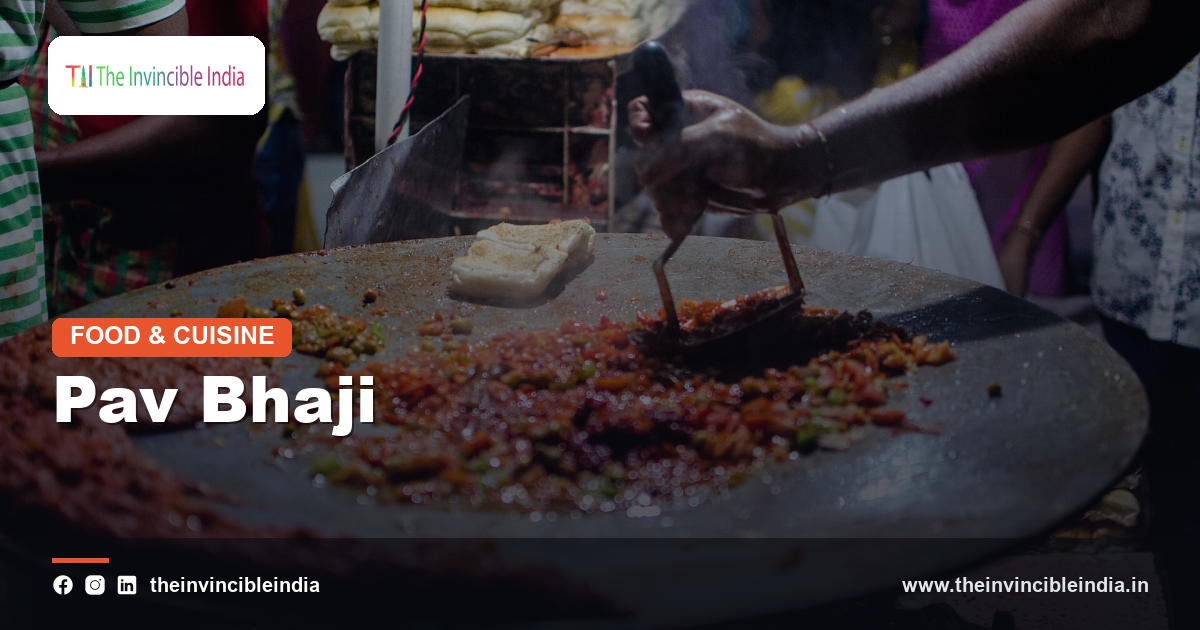
Pav bhaji is a popular Mumbai street food dish consisting of a thick, buttery mashed vegetable curry, known as bhaji, served alongside soft, toasted bread rolls called pav. Bright orange-red in colour and rich in flavour, the dish is prepared by cooking an assortment of vegetables together until soft, then mashing and simmering them with butter and a distinct spice blend until they form a smooth, hearty mixture. As one of Mumbai’s most celebrated contributions to regional cuisines of India, pav bhaji is widely sold at street stalls, roadside carts, and restaurants throughout the city and beyond, valued for its comforting texture, generous use of butter, and its ability to combine a wide range of vegetables into a single, satisfying meal.
Quick Facts
| Detail | Information |
|---|---|
| Origin City | Mumbai, Maharashtra |
| Main Components | Mashed vegetable curry and pav bread |
| Key Ingredients | Potato, tomato, and mixed vegetables |
| Distinctive Element | Generous use of butter |
| Typical Accompaniments | Chopped onion, lemon, and coriander |
| Meal Role | Street food and evening snack |
Origins of Pav Bhaji in Mumbai
Pav bhaji is generally understood to have developed in Mumbai, with its emergence often linked to the need for a quick, filling meal that could be served to mill workers and labourers during long working hours in the city’s textile industry. Street vendors are thought to have created the dish by combining leftover or readily available vegetables into a single mashed curry, paired with soft pav bread as an easy way to eat it without cutlery. This practical origin reflects a broader pattern seen in several of Mumbai’s iconic street foods, where necessity and resourcefulness gave rise to dishes that later became beloved specialities in their own right. While precise historical details remain difficult to confirm, pav bhaji’s identity as a distinctly Mumbai creation is widely accepted.
The Vegetable Base of Bhaji
The bhaji at the heart of pav bhaji is built from a combination of vegetables, most commonly potato, tomato, onion, and capsicum, along with peas and other seasonal additions depending on availability and personal preference. These vegetables are boiled or cooked until soft, then mashed together on a flat griddle, allowing them to combine into a single, thick mixture rather than remaining as distinct pieces. Potato typically provides the bulk and body of the dish, while tomato contributes acidity and colour, and the remaining vegetables add texture and nutritional variety. This flexible vegetable base allows pav bhaji to be adapted based on what is seasonally available, while still maintaining its essential mashed, curry-like consistency.
The Pav Bhaji Spice Blend
A distinctive pav bhaji masala, a blended spice mixture typically including coriander, cumin, and other warming spices, gives the dish its characteristic flavour and reddish colour, setting it apart from other mashed vegetable preparations. This spice blend is usually added while the vegetables are being mashed and cooked together on the griddle, allowing the flavours to fully infuse the mixture as it thickens. While ready-made pav bhaji masala blends are widely available and commonly used, some cooks and vendors prepare their own versions, adjusting the proportion of spices to achieve a particular balance of warmth and depth. This specific spice blend is central to what distinguishes pav bhaji from other Indian vegetable curries.
The Role of Butter
Butter is one of the most defining features of pav bhaji, used generously both in cooking the bhaji itself and in toasting the pav, contributing a rich, indulgent quality that sets the dish apart from lighter vegetable preparations. Street vendors often add butter liberally at multiple stages, both while mashing the vegetables and as a final garnish melting over the top of the finished dish, and the pav itself is typically griddled with butter until lightly golden and slightly crisp on the outside. This generous use of butter is considered essential to an authentic pav bhaji experience, and reduced-butter versions, while available, are generally seen as a departure from the traditional preparation most closely associated with Mumbai’s street stalls.
Pav Bread and Its Preparation
The pav served alongside bhaji is the same soft, slightly sweet bread roll used in vada pav and other Mumbai street foods, typically split in half and toasted on a griddle with butter until warm and lightly crisp on the surface. This preparation gives the pav a pleasant contrast in texture, soft on the inside while offering a slight resistance on the outside, making it ideal for scooping up the thick bhaji. The bread’s mild sweetness also helps balance the spiced, buttery richness of the vegetable curry, creating a rounded overall flavour. Properly toasted pav is considered an important element of a well-made pav bhaji, and vendors often take care to ensure it is served warm rather than cold or dry.
Toppings and Garnishes
Pav bhaji is typically finished with a scattering of finely chopped raw onion, a wedge of lemon, and fresh coriander leaves, each adding a distinct element that balances the rich, buttery base of the dish. The raw onion provides crunch and a sharp bite, the lemon adds a note of acidity that cuts through the richness, and the coriander contributes freshness and aroma. Some versions also include a small dollop of extra butter melted directly on top just before serving, reinforcing the dish’s indulgent character. These simple garnishes, while minor in quantity, play an important role in rounding out the flavour profile of the otherwise thick and heavily spiced bhaji.
Cooking Technique and the Tawa Griddle
Pav bhaji is traditionally cooked on a large, flat iron griddle known as a tawa, which allows vendors to mash and cook the vegetables directly on its surface using large metal spatulas, working the mixture continuously until it reaches the desired thick, smooth consistency. This method differs from typical Indian curry preparation in a pot, instead resembling a more active, hands-on process that also allows for repeated addition of butter and spice as the dish cooks. The wide surface area of the tawa enables vendors to prepare large batches efficiently, an important consideration given the dish’s popularity and the high volume typically served at busy street stalls. This distinctive cooking method is closely tied to the dish’s characteristic texture and flavour development.
Regional and Modern Variations
While the classic Mumbai-style pav bhaji remains the most widely recognised version, numerous variations have emerged over time, including versions with added cheese, paneer, or extra vegetables catering to different tastes and dietary preferences. Some restaurants offer a jain version prepared without onion and garlic to suit specific dietary requirements, while others experiment with different spice intensities or additional garnishes such as extra butter or grated cheese for a richer presentation. Despite these variations, the fundamental structure of a thick, spiced mashed vegetable curry served with buttered pav remains consistent, demonstrating how the dish’s core format can accommodate considerable variety while retaining its recognisable identity.
Pav Bhaji as Street Food and Family Meal
Pav bhaji occupies a dual role in Indian food culture, functioning both as a beloved street food sold at stalls and carts and as a popular dish prepared at home for family meals, particularly in the evening. Its relatively simple preparation, once the vegetables are cooked, makes it a practical option for feeding a family in a single pot, while its universally appealing flavour makes it popular with both children and adults. This dual identity, spanning both the informal street stall and the home kitchen, reflects the dish’s broad accessibility and helps explain its widespread popularity across different settings and occasions throughout India.
Pav Bhaji's Spread Beyond Mumbai
Although closely associated with Mumbai, pav bhaji has spread widely across India, appearing on street food menus, in restaurants, and at food stalls in cities far from its city of origin. Its universal appeal, requiring no specific regional ingredients that cannot be sourced elsewhere, has made it relatively easy for the dish to be replicated across different regions while retaining its essential character. This widespread adoption mirrors the trajectory of other iconic Mumbai street foods, illustrating how a dish born from a specific urban and industrial context can become a broadly loved part of the country’s shared street food culture, recognised and enjoyed well beyond its original setting.
Pav Bhaji in Popular Food Culture
Pav bhaji has become closely associated with Mumbai’s food identity, frequently mentioned alongside vada pav and other street foods as representative of the city’s inventive, working-class culinary heritage. It regularly appears in discussions of India’s most beloved street foods and is often cited as an accessible entry point for those new to Indian street food more broadly, given its familiar vegetable base and universally appealing buttery flavour. This cultural visibility has helped sustain its popularity across generations, reinforcing its position not just as a dish but as a recognisable symbol of Mumbai’s broader food culture and its knack for turning humble ingredients into something widely cherished.
Preparing Pav Bhaji at Home
Making pav bhaji at home involves boiling and mashing a combination of vegetables, then cooking them with butter, pav bhaji masala, and other seasonings until the mixture thickens into a smooth curry, a process that, while requiring some patience during the mashing and simmering stage, does not demand advanced cooking skills. Home cooks often adjust the vegetable combination and spice level to suit family preferences, and the dish can be prepared in advance and reheated, making it a convenient option for busy households. Toasting the pav in butter just before serving is considered an essential final step, ensuring the bread retains its characteristic warm, slightly crisp texture rather than being served cold.
Health Considerations and Butter Content
Given its generous use of butter, pav bhaji is generally regarded as an indulgent rather than everyday health food, though its vegetable base does provide a good source of fibre and nutrients when prepared with a variety of vegetables. In response to health-conscious eating trends, some home cooks and restaurants have introduced lower-butter or oil-based versions, seeking to preserve the dish’s flavour while reducing its richness. Such adaptations remain less common than the traditional buttery preparation, which continues to be closely tied to the dish’s identity and appeal. This tension between indulgence and health-conscious adaptation reflects a broader pattern seen across many popular Indian street foods as dietary preferences continue to evolve.
Pav Bhaji Vendors and Commercial Growth
Pav bhaji has moved well beyond individual street carts into organised restaurant chains and franchises, some specialising exclusively in the dish and its variations, reflecting its enduring popularity and commercial appeal. This growth has occurred alongside the continued presence of independent street vendors, many of whom have built long-standing reputations for their specific version of the dish over years or even decades of consistent preparation. The coexistence of small-scale street vending and larger commercial operations illustrates how pav bhaji has successfully adapted to different scales of food service while remaining recognisable as the same fundamental dish across settings.
Pav Bhaji at Festivals and Gatherings
Beyond its everyday street food role, pav bhaji is also commonly served at informal gatherings, parties, and festive occasions, valued for its ability to be prepared in large quantities and served easily to groups of guests. Its universally appealing flavour and vegetarian nature make it a convenient choice for hosts seeking a crowd-pleasing dish that requires relatively straightforward preparation compared to more elaborate multi-course spreads. This role at gatherings, alongside its identity as a street food, further underscores pav bhaji’s versatility, capable of suiting both a quick individual meal and a shared dish prepared for a larger group of people.
Pav Bhaji Today
Today, pav bhaji remains one of India’s most widely recognised and loved street foods, sold at countless stalls, restaurants, and food courts across the country and increasingly available among the Indian diaspora abroad. Its combination of comforting texture, rich buttery flavour, and vegetarian accessibility continues to make it a popular choice across different age groups and occasions. As Indian street food continues to gain wider recognition both domestically and internationally, pav bhaji stands as one of its most enduring representatives, admired for transforming a simple mix of vegetables into a dish with broad, lasting appeal well beyond its Mumbai origins.
Sources & Further Reading
- Ministry of Tourism, Government of India (tourism.gov.in).
- Maharashtra Tourism, Government of Maharashtra (maharashtratourism.gov.in).
Frequently Asked Questions
What is pav bhaji made of?
Pav bhaji is made from a mix of mashed vegetables, typically potato, tomato, and peas, cooked with butter and a distinctive spice blend, and served with buttered pav bread.
Where did pav bhaji originate?
Pav bhaji is believed to have originated in Mumbai, developing as a quick, filling meal for mill workers and labourers in the city.
Is pav bhaji vegetarian?
Yes, pav bhaji is a vegetarian dish built entirely around a mashed vegetable curry, though some versions add cheese or paneer as extra toppings.
Why does pav bhaji use so much butter?
Butter is central to pav bhaji’s flavour and richness, used both while cooking the vegetable mixture and while toasting the pav bread.
What is usually served with pav bhaji?
Pav bhaji is typically garnished with chopped raw onion, a wedge of lemon, and fresh coriander, served alongside soft, buttered pav bread.


