

Khus khus is the Hindi name for poppy seed, the tiny, kidney-shaped, cream-coloured seed of the opium poppy plant, Papaver somniferum, which Indian cooks use to thicken gravies, enrich sweets and add a nutty flavour to dishes. The plant is grown in India only under a government licence because the same species is the source of opium, but the seeds themselves are an ordinary food ingredient.
Poppy seed is known as posto in Bengali, gasagase in Kannada and kasa kasa in Tamil, and it is a staple of Bengali, Mughlai, Rajasthani and South Indian cooking. This explainer covers what poppy seed is, how it is grown under licence, where it is used and what rules apply to it, in a factual and non-sensational way.
Quick Facts
| Attribute | Detail |
|---|---|
| Common names | Poppy seed, khus khus (Hindi), posto (Bengali), gasagase (Kannada), kasa kasa (Tamil), gasalu (Telugu) |
| Scientific name | Papaver somniferum |
| Family | Papaveraceae (the poppy family) |
| Native region | Mediterranean region and parts of western Asia; cultivated for thousands of years |
| Where licensed cultivation occurs in India | Notified districts of Madhya Pradesh (such as Neemuch, Mandsaur and Ratlam), Rajasthan (such as Chittorgarh, Kota and Jhalawar) and Uttar Pradesh |
| Crop season | Rabi: sown in October-November; capsules mature and seed is collected around February-April |
| Part used | Dried seed from the mature capsule (poppy head) |
| Main uses | Thickening agent in curries and kormas, posto dishes, halwa and sweets, bakery topping, cold-pressed oil |
| Regulating law and bodies | Narcotic Drugs and Psychotropic Substances Act, 1985 (NDPS Act); Central Bureau of Narcotics under the Ministry of Finance |
Key Takeaways
- Poppy seed, called khus khus in Hindi, comes from the capsule of the opium poppy, Papaver somniferum, and has been used as food for thousands of years.
- Cultivation of the opium poppy in India is allowed only under licence from the government under the Narcotic Drugs and Psychotropic Substances Act, 1985.
- Licensed poppy farming in India is concentrated in notified areas of Madhya Pradesh, Rajasthan and Uttar Pradesh.
- Poppy seed is white or cream in Indian cooking and is used as a thickener and flavouring in Bengali, Mughlai, Rajasthani and South Indian dishes.
- Poppy seed contains no meaningful amount of opium by itself, but traces of alkaloids from surface contamination can make the seeds count in some drug tests.
- Khus khus, the poppy seed, is a different thing from khus, the fragrant vetiver grass used for cooling screens and syrups.
What is poppy seed?
Poppy seed is the small seed produced inside the dried capsule of the opium poppy, a plant of the Papaveraceae family that grows to about one metre tall. Each capsule, sometimes called a poppy head or “doda” in Hindi, contains thousands of very small seeds that rattle inside once the capsule dries.
The plant has grey-green, waxy leaves and large flowers that may be white, pink, red or purple. After the petals fall, a rounded green capsule forms and slowly turns pale brown as it matures. The seeds are harvested from these mature capsules. Seed colour varies by variety: Indian poppy seed is typically white to pale cream, while European varieties are commonly blue-grey.
The seed itself is rich in oil, usually around forty to fifty per cent by weight, together with protein, fibre and minerals such as calcium. It has a mild, nutty taste, especially when lightly roasted, and a slightly crunchy texture when whole.
Is poppy seed the same as opium?
No, poppy seed is not the same as opium, although both come from the same plant species. Opium is the dried latex that oozes from cuts made in the green capsule, while poppy seed is the mature seed taken from the dried capsule once the plant has finished growing.
The latex contains the alkaloids morphine, codeine and thebaine, which are used to make important painkillers and other medicines. The seed inside the capsule does not make these alkaloids. However, small traces can stick to the seed surface from the latex during harvest and handling. Washing, heating and processing reduce these traces, though they do not remove them completely.
Because of this slight possibility of trace contamination, eating a large quantity of poppy seed shortly before a drug test can in some cases produce a positive result for opiates. This effect is widely documented. It is one reason that some employers and sporting bodies advise people to be cautious, and it is why a few countries restrict poppy seed imports and travellers’ baggage.
How is poppy farmed in India under licence?
Poppy is farmed in India under a licensing system run by the central government, in which individual farmers receive annual licences to grow a fixed area of opium poppy in notified districts. The system follows the Narcotic Drugs and Psychotropic Substances Act, 1985 (NDPS Act) and its rules, and it forms part of India’s obligations under international drug-control treaties.
Who regulates it?
The Central Bureau of Narcotics (CBN) is the agency responsible for administering the opium policy. It functions under the Department of Revenue in the Ministry of Finance, and the Narcotics Commissioner of India, with headquarters in Gwalior, Madhya Pradesh, oversees licensing. The government opium and alkaloid factories at Neemuch in Madhya Pradesh and Ghazipur in Uttar Pradesh process the opium that farmers deliver.
How does the licence work?
- The government announces an annual opium policy that sets out the eligible districts and conditions for cultivation.
- Eligible farmers apply for a licence that specifies the area they may plant.
- Licensed farmers must weigh and hand over the opium gum they obtain to the government at a notified rate and meet a minimum qualifying yield.
- The farmers may keep the seed, which is sold into the food market, subject to the rules.
- Fields are measured and monitored by officials, and unlicensed cultivation is an offence under the NDPS Act.
India is one of the small number of countries that the International Narcotics Control Board (INCB) recognises as a licit producer of opium for medical and scientific use. The opium is used to make medicines, and the seed is a by-product that supplies the culinary market.
Where is poppy seed grown in India?
Poppy seed in India is grown in the notified opium-growing tracts of Madhya Pradesh, Rajasthan and Uttar Pradesh, where licensed farmers plant the crop in winter. In Madhya Pradesh, the districts around Neemuch, Mandsaur and Ratlam are the best-known. In Rajasthan, the main areas include Chittorgarh, Kota, Jhalawar, Bhilwara and Pratapgarh.
The list of districts and the area allowed for licensed cultivation are set out in each year’s policy and can change. Because of this, farm output of poppy seed depends on how much licensed area is sown and on the weather, and domestic supply has not always been enough to satisfy demand. India has also imported poppy seed from other countries to meet needs, subject to government import regulations. Readers who need exact production, import and price figures should consult the latest official releases.
How is the poppy crop grown and harvested?
The poppy crop is grown in the winter season, sown in October-November on well-prepared fertile soil, and harvested in the spring after the capsules mature and dry. Poppy is a cool-season annual that prefers moderate temperatures, good sunlight and well-drained loamy soil.
Sowing and growth
The seed is tiny, so it is mixed with sand or soil for even sowing and then thinned as the seedlings grow. The crop needs several irrigations, regular weeding and careful nutrient management. The plants flower in late winter, and the flowers drop their petals within a few days to leave the green capsule.
Collection of opium and seed
Licensed farmers make shallow cuts on the green capsules, which causes the milky latex to ooze out and dry on the surface. They scrape this off and deliver it to the government. After the latex collection finishes, the capsules are left on the plant to dry. Once dry, the capsules are cut, the seeds are shaken out through small openings, cleaned and dried. The empty capsule, called poppy straw, is also regulated by law.
How is poppy seed used in Indian cooking?
Poppy seed is used in Indian cooking mainly as a thickener and flavouring, ground into a smooth paste for gravies, or toasted and added to sweets and snacks. Its high oil content gives creaminess and body without the need for dairy.
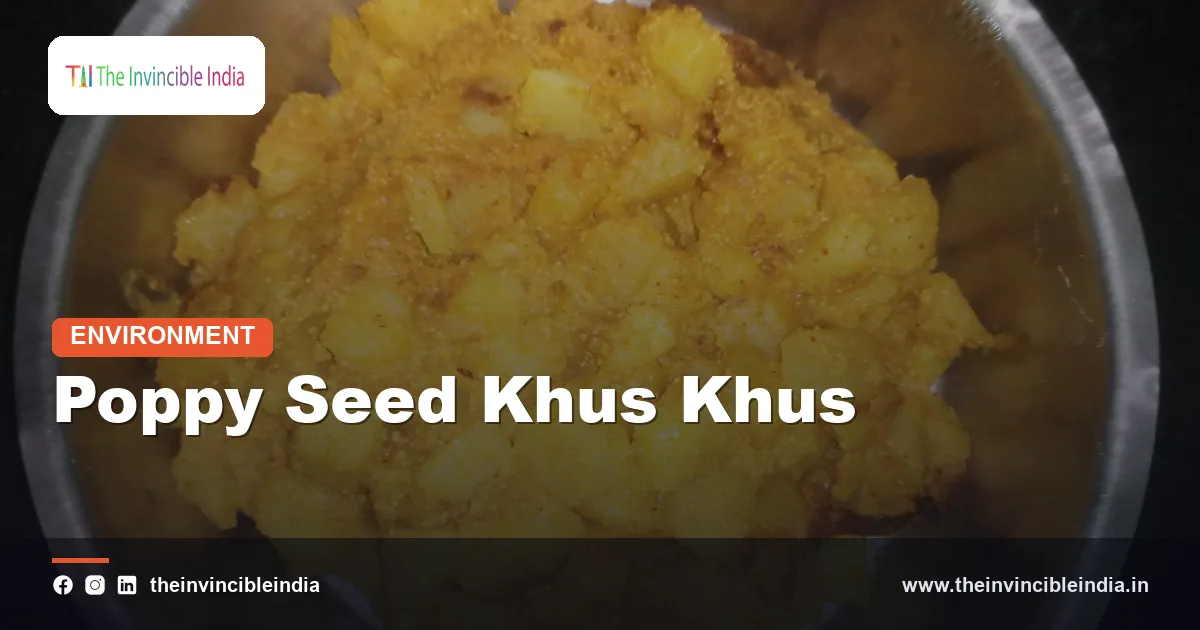
- Bengali posto dishes: posto bata (poppy seed paste) is cooked with potatoes (aloo posto), ridge gourd, bitter gourd, fish and prawns, usually with mustard oil and green chillies.
- Mughlai and north Indian gravies: khus khus paste is blended with cashew, almond and melon seeds to make rich kormas and white gravies.
- South Indian dishes: kasa kasa or gasagase is ground into coconut-based masalas for kurmas and sweet payasam; gasagase payasa is a festival dessert in Karnataka.
- Sweets: khus khus halwa and various ladoos use the roasted seed, sugar and ghee.
- Bakery: the seed is sprinkled on breads, rolls and naan for a crunchy topping.
- Spice blends: some regional masalas, such as certain garam masala versions, use a small amount of poppy seed.
Cooks generally soak the seeds in warm water for a few hours or roast them lightly before grinding to a paste. Whole seeds are hard to crush, so a stone grinder, mortar or a strong blender is used.
What is the nutritional value of poppy seed?
Poppy seed is rich in oil, calcium and dietary fibre, and also supplies protein, iron, magnesium and zinc. A tablespoon of seeds is a small portion, but the nutrients are concentrated because the seeds are tiny and dense.
The oil in poppy seed is mostly unsaturated fat, with a high proportion of linoleic acid. A cold-pressed edible oil is made from the seed in some countries and is used in cooking and in paints. In India, the culinary use is mainly the seed itself. As with other seeds and nuts, poppy seed is energy-dense, so quantities are small in most recipes. People with allergies should note that poppy seed allergy, although uncommon, has been reported.
Traditional Indian households regard khus khus as a “cooling” food and sometimes give it in sweets or drinks in summer. Such beliefs belong to folk and Ayurvedic tradition and should not be treated as medical advice.
What are the legal rules for poppy seed?
Poppy seed as a food ingredient is legally sold and used in India, but the opium poppy plant, its capsules and its latex are strictly regulated under the NDPS Act, 1985. The Act defines “poppy straw” as all parts of the harvested opium poppy except the seeds, which is why the seed is treated differently from the rest of the plant.
| Item | General legal position in India |
|---|---|
| Poppy seed for cooking | Sold in shops and used in kitchens; subject to food safety and import rules |
| Cultivation of opium poppy | Allowed only with a government licence in notified areas |
| Opium (latex) | Must be delivered to the government by licensed farmers; private possession and sale is prohibited |
| Poppy straw and capsules (doda) | Regulated narcotic material under the NDPS Act |
| Import of poppy seed | Regulated and subject to import conditions set by the government |
| Carrying poppy seed abroad | Prohibited or restricted in some countries; travellers should check local rules |
The law is mainly concerned with preventing diversion of opium into illegal markets, which is why the licensing system, measurement of fields and procurement of latex are so tightly controlled. Households that buy khus khus from a shop for cooking are not affected, but anyone planning to grow the plant, even as an ornamental, should know that it is not permitted without a licence.
Is khus khus the same as khus grass?
No, khus khus the poppy seed and khus the grass are two unrelated plants that happen to share part of their name in Hindi. The name khus khus refers to the poppy seed, while khus refers to vetiver, Chrysopogon zizanioides, a fragrant grass whose roots are used for cooling screens, perfumes and a popular sherbet.
Vetiver is a tall perennial grass of the Poaceae family, grown in parts of Rajasthan, Uttar Pradesh and South India for its aromatic roots and essential oil, which is called khus oil or ruh khus. It has no connection to the opium poppy and carries none of its legal restrictions. The mix-up is common, so recipes and shop labels that mention khus khus almost always mean the seed.
How should poppy seed be chosen and stored?
Poppy seed should be bought in small quantities, checked for a fresh, nutty smell and stored in an airtight container in a cool, dry place. Because the seeds are high in oil, they can turn rancid with time and heat, giving a bitter, stale taste.
A few practical points help:
- Choose seeds that are clean, uniform in colour and free of dust or husk.
- Smell a small sample; rancid seeds have a sharp, oily, unpleasant odour.
- Store in a sealed jar away from sunlight, and refrigerate in hot and humid weather if keeping for many months.
- Roast lightly and grind just before cooking for the best flavour.
Bottom Line
Poppy seed, or khus khus, is a nutty, oil-rich kitchen staple that comes from a plant India grows only under strict government control. The seed itself is an ordinary food in Bengali, Mughlai and South Indian cooking, while the plant, its capsule and its latex stay under the NDPS Act.
Frequently Asked Questions
What is khus khus called in English?
Khus khus is called poppy seed in English. It is the small seed of the opium poppy, Papaver somniferum. In Bengali it is posto, in Kannada gasagase and in Tamil kasa kasa.
Is it legal to buy and cook with poppy seed in India?
Yes, buying and cooking with poppy seed is legal in India. The seed is sold in ordinary grocery shops and used widely in home kitchens. The strict controls apply to growing the opium poppy and to opium and poppy straw, not to culinary seed.
Why is poppy cultivation licensed in India?
Poppy cultivation is licensed in India because the opium poppy is also the source of opium and its alkaloids. The government permits limited cultivation under the NDPS Act, 1985 to produce opium for medicines, and it monitors the crop to prevent illegal diversion. Farmers deliver their opium to the government and may sell the seed.
Which states grow poppy in India?
Licensed poppy cultivation in India is concentrated in notified areas of Madhya Pradesh, Rajasthan and Uttar Pradesh. Districts such as Neemuch, Mandsaur, Chittorgarh and Kota are well known. The eligible districts are set each year by the government’s opium policy.
Can eating poppy seed cause a positive drug test?
Eating a large amount of poppy seed can sometimes cause a positive result in a test for opiates. Trace alkaloids from the latex can remain on the seed surface. Anyone facing a drug test should avoid poppy seed foods beforehand and tell the testing authority about recent consumption.
What is a good substitute for poppy seed in gravies?
Cashew paste, almond paste or melon seed (magaz) paste are common substitutes for poppy seed in gravies. They provide similar creaminess and thickness, although the flavour is slightly different. White sesame seeds, lightly roasted and ground, can also replace poppy seed in some dishes.
{“@context”:”https://schema.org”,”@graph”:[{“@type”:”FAQPage”,”mainEntity”:[{“@type”:”Question”,”name”:”What is khus khus called in English?”,”acceptedAnswer”:{“@type”:”Answer”,”text”:”Khus khus is called poppy seed in English. It is the small seed of the opium poppy, Papaver somniferum. In Bengali it is posto, in Kannada gasagase and in Tamil kasa kasa.”}},{“@type”:”Question”,”name”:”Is it legal to buy and cook with poppy seed in India?”,”acceptedAnswer”:{“@type”:”Answer”,”text”:”Yes, buying and cooking with poppy seed is legal in India. The seed is sold in ordinary grocery shops and used widely in home kitchens. The strict controls apply to growing the opium poppy and to opium and poppy straw, not to culinary seed.”}},{“@type”:”Question”,”name”:”Why is poppy cultivation licensed in India?”,”acceptedAnswer”:{“@type”:”Answer”,”text”:”Poppy cultivation is licensed in India because the opium poppy is also the source of opium and its alkaloids. The government permits limited cultivation under the NDPS Act, 1985 to produce opium for medicines, and it monitors the crop to prevent illegal diversion. Farmers deliver their opium to the government and may sell the seed.”}},{“@type”:”Question”,”name”:”Which states grow poppy in India?”,”acceptedAnswer”:{“@type”:”Answer”,”text”:”Licensed poppy cultivation in India is concentrated in notified areas of Madhya Pradesh, Rajasthan and Uttar Pradesh. Districts such as Neemuch, Mandsaur, Chittorgarh and Kota are well known. The eligible districts are set each year by the government’s opium policy.”}},{“@type”:”Question”,”name”:”Can eating poppy seed cause a positive drug test?”,”acceptedAnswer”:{“@type”:”Answer”,”text”:”Eating a large amount of poppy seed can sometimes cause a positive result in a test for opiates. Trace alkaloids from the latex can remain on the seed surface. Anyone facing a drug test should avoid poppy seed foods beforehand and tell the testing authority about recent consumption.”}},{“@type”:”Question”,”name”:”What is a good substitute for poppy seed in gravies?”,”acceptedAnswer”:{“@type”:”Answer”,”text”:”Cashew paste, almond paste or melon seed (magaz) paste are common substitutes for poppy seed in gravies. They provide similar creaminess and thickness, although the flavour is slightly different. White sesame seeds, lightly roasted and ground, can also replace poppy seed in some dishes.”}}]}]}


