

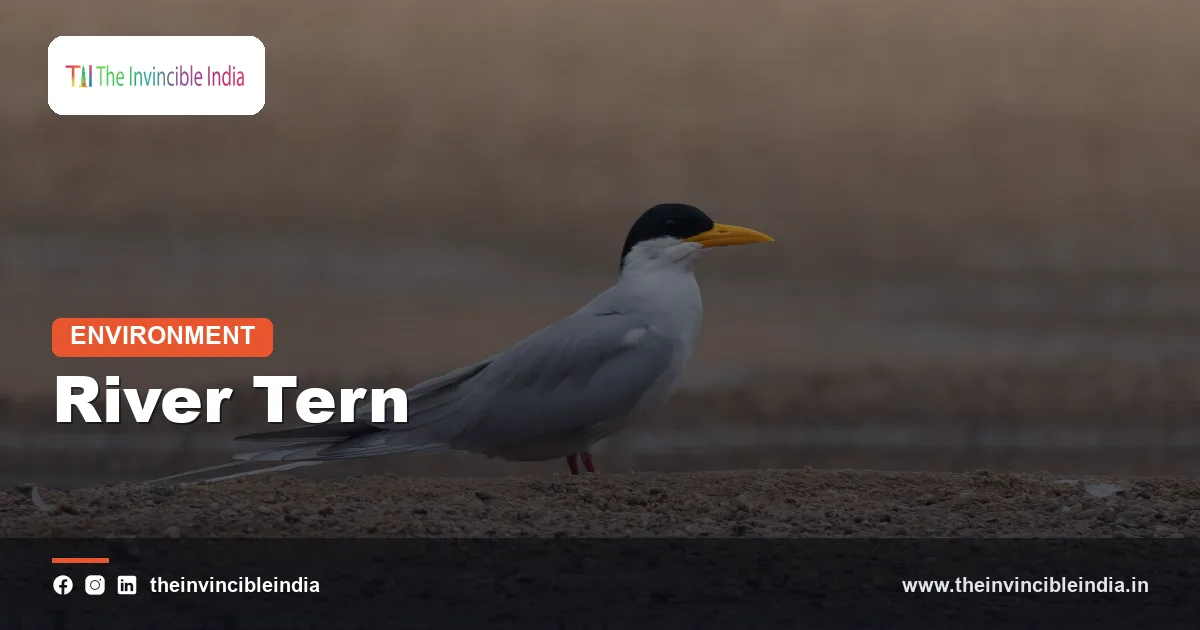
The river tern (Sterna aurantia) is a graceful, medium-sized waterbird with a pale grey back, white underparts, a black cap, a deeply forked tail and a bright yellow-orange bill, found along large rivers, reservoirs and lakes across South and South-east Asia, including much of India. It is a fish-eating bird that patrols the water in buoyant flight, hovers and then plunges to seize prey near the surface.
Unlike many terns, the river tern is mostly a freshwater species and breeds on exposed sandbanks and islands in rivers. Because its nesting sites are shaped by seasonal floods and by human activity along riverbanks, it is also a useful indicator of river health. This explainer covers what the river tern is, how to identify it, where it lives, how it feeds and breeds, and why it is regarded as Near Threatened.
Quick Facts
| Common name | River tern (also Indian river tern) |
|---|---|
| Scientific name | Sterna aurantia |
| Family | Laridae, subfamily Sterninae (terns), within the gull and tern group |
| Size | About 38 to 46 cm long, with a wingspan of roughly 80 cm or more |
| India range and habitat | Large rivers, canals, lakes and reservoirs across the plains and peninsula; rarely along coasts |
| Diet | Small fish, along with crustaceans and aquatic insects |
| Breeding | Colonies on bare river sandbanks and islands, mainly in the dry months before the monsoon, with a clutch of two to three eggs |
| Movements | Largely resident, with local movements linked to water levels |
| Conservation status | Near Threatened on the IUCN Red List |
Key Takeaways
- The river tern is a freshwater tern of South and South-east Asia, recognisable in breeding plumage by its yellow-orange bill, black cap and long forked tail.
- River terns breed in loose colonies on bare sandbanks and river islands, laying their eggs in simple scrapes on open sand.
- The river tern feeds on small fish, which it catches by hovering above the water and plunging in headfirst, or by dipping to the surface in flight.
- The river tern is considered Near Threatened because dams, sand mining, pollution and disturbance are reducing and degrading its riverine habitat.
- River terns in India are mostly resident and move locally with changes in river levels rather than undertaking long migrations.
- The National Chambal Sanctuary and several other large Indian rivers are important strongholds for river terns and other sandbank-nesting birds.
What is the river tern?
The river tern is a slender, long-winged waterbird in the tern group that lives along inland waters rather than at sea. Terns are close relatives of gulls, and in modern classifications they are placed in the family Laridae, within the subfamily Sterninae, although older books list them in a separate family, Sternidae.
Compared with a gull, the river tern is lighter, has a more pointed bill and a deeply forked tail that gives the group the nickname sea swallows. Its flight is graceful, with quick, shallow wingbeats, frequent hovering and sudden dives. The scientific name Sterna aurantia refers to the orange hue of the bill and legs in breeding season.
The species is widespread but patchily distributed through the Indian subcontinent and into mainland South-east Asia. It is a familiar sight on major rivers such as the Ganga, Yamuna, Chambal, Brahmaputra, Mahanadi and Kaveri, as well as on large reservoirs and lakes.
How can you identify a river tern?
A river tern can be identified by its size, its yellow-orange bill, pale grey upperparts and, in breeding season, its solid black cap. The tail is deeply forked, the legs are red-orange and the underparts are white or very pale grey.
Breeding plumage
In breeding plumage the river tern has a glossy black cap and nape extending down to the eye, a bright yellow bill that may be tipped dusky, and bright red-orange legs. The upperparts are pale grey and the underparts are white or washed lightly grey. The deeply forked tail has long outer feathers that stream behind in flight.
Non-breeding plumage
In non-breeding plumage the cap becomes whitish with dark streaks, and the forehead turns white. The bill is duller yellow, sometimes with a darker tip, and the legs fade to a paler orange. The overall impression is of a pale grey and white tern with a dark smudge around the eye.
Helpful identification points
- A medium-large tern, bigger than the little tern and smaller than the Caspian tern.
- A strong, deeply forked tail and long, narrow, pointed wings.
- A fairly heavy yellow bill, with a dark tip in some plumages.
- Flight is steady and buoyant, with frequent pauses to hover.
- The call is a sharp, repeated, rasping or ringing note, heard especially near colonies.
Where does the river tern live in India?
The river tern lives along large rivers, canals, lakes, reservoirs and wide, slow-flowing stretches of water across the Indian plains and peninsula. It needs open water for fishing and bare sand or gravel for nesting and resting.
The bird is largely a resident of freshwater habitats. It is seldom seen far out at sea and only occasionally along the coast, particularly in estuaries and tidal creeks. After breeding, birds disperse along rivers and often gather in loose groups on sandbars and exposed rocks, sometimes with other terns, gulls and waders.
Important river habitats
- The Chambal river, where the National Chambal Sanctuary protects sandbanks used by many species.
- The Ganga and its tributaries, which have wide channels and shifting sandbars.
- The Brahmaputra and its river islands in Assam.
- Large peninsular rivers such as the Mahanadi, Godavari and Kaveri.
- Big reservoirs and lakes with exposed shores during the dry season.
How does the river tern feed?
The river tern feeds by flying low over the water, scanning for small fish, then hovering and plunging headfirst to seize its prey in the bill. Sometimes it simply dips to the surface without fully submerging, taking fish or insects from just below or at the top of the water.
Fish form most of the diet, usually small surface-dwelling species. The bird also takes crustaceans such as shrimps and aquatic insects, and may catch flying insects over the water. After catching a fish, it often flies directly to the nest or to a chick if it is breeding, carrying the prey crosswise in the bill.
Foraging is more successful in clear, calm water, where small fish are easy to see. This is one reason why river pollution and silting, which cloud the water, can affect terns even when the sandbanks remain untouched.
How does the river tern breed?
The river tern breeds in colonies on bare sandbanks and river islands, laying a clutch of usually two or three eggs in a shallow scrape on the sand. It breeds mainly in the dry season, when water levels are low and sandbanks are exposed, before the monsoon floods return.
The nest is little more than a hollow in the sand, sometimes lined with a few stones, pebbles or bits of debris. The eggs are pale buff or greenish with darker blotches, which blend into the sandy ground. Both parents take turns incubating, and they defend the colony noisily, mobbing intruders and dive-bombing predators.
Chicks and timing
The chicks hatch with a covering of down and can move away from the nest within a short time. They hide in hollows or beside objects on the sand, and the parents bring them fish. The young fledge after several weeks, in time to leave before the rising water of the rainy season covers the sandbank.
Why timing is critical
Breeding depends on a safe window between the fall of water levels in winter and the rise of river levels with the monsoon. A sudden release of water from a dam or an early flood can wash out a whole colony. Sand mining, grazing and farming on sandbanks can also destroy nests before the birds even begin to lay.
How does the river tern differ from similar terns?
The river tern differs from other Indian terns in its size, its long yellow-orange bill and its strong association with freshwater rivers. Several other terns share the same waters, so a careful look at bill colour, size and cap helps.
| Bird | Distinguishing points |
|---|---|
| River tern | Medium-large, yellow-orange bill, black cap in breeding, deeply forked tail, freshwater rivers |
| Black-bellied tern | Similar size, but with a black belly in breeding plumage and a more orange-red bill with a dark tip; also endangered |
| Little tern | Much smaller, with a yellow bill tipped black and a white forehead |
| Whiskered tern | Marsh tern with a shorter tail and dark body in breeding plumage; found on wetlands |
| Caspian tern | Much larger, with a heavy red bill and a black cap; found on large waters and coasts |
| Indian skimmer | Related bird with a long orange bill whose lower part is longer; skims the water; also uses river sandbanks |
The river tern and the black-bellied tern are the two river terns most often confused. In the breeding season the black underparts of the latter are a clear difference, while in non-breeding plumage the two require close comparison of bill colour and size.
Why are river terns important to rivers?
River terns are important to rivers because they are both predators of small fish and sensitive indicators of the condition of riverbank habitat. The presence of healthy breeding colonies suggests that sandbanks, water flow and fish stocks are all functioning reasonably well.
As predators near the top of the food chain in shallow water, terns reflect changes in prey numbers, pollution and disturbance. A decline in tern colonies often signals problems that affect other river species, including gharials, turtles, skimmers and fishes. Conservationists therefore monitor terns as part of river health assessments.
The same sandbanks also serve nesting turtles, wading birds and local communities that use them for farming, fishing and grazing. Managing riverbanks to share space among these needs is a continuing challenge.
Is the river tern threatened?
The river tern is classed as Near Threatened by the IUCN, meaning it is close to qualifying for a threatened category, because its population is believed to be declining as river habitats are altered and degraded. The decline is gradual and tied to human use of rivers.
The main threats are changes to the natural flow of rivers by dams and barrages, which alter sandbank formation and flood timing, sand and gravel mining on riverbeds, pollution, fishing and boat traffic near colonies, and the use of sandbanks for cultivation and grazing. Egg collection and disturbance by people and dogs add to the pressure.
Actions that help the river tern
- Restricting sand mining in and near known nesting areas, especially in the breeding season.
- Keeping boats, vehicles and livestock away from colonies in the breeding months.
- Managing dam releases to avoid sudden floods during nesting.
- Protecting river stretches as sanctuaries and community-managed areas.
- Monitoring colonies through regular counts by wildlife departments and birdwatchers.
In India, wild birds are protected under the Wildlife (Protection) Act, 1972. Protected river stretches such as the National Chambal Sanctuary show how safeguarding a river can help terns, skimmers, gharials and many other species at once.
How can you watch river terns in India?
You can watch river terns in India by visiting large rivers, reservoirs and wildlife sanctuaries with exposed sandbanks, particularly in the cooler months and the early dry season, and scanning the water and sandbars with binoculars. Boat trips operated by sanctuary authorities are a good way to see them, as long as boats keep a safe distance.
- Look along sandbars and rocky islands, where terns rest in groups.
- Watch the water for birds hovering, then plunging for fish.
- Listen for sharp, repeated calls near colonies.
- Avoid landing on sandbanks in the breeding season, as eggs and chicks are almost invisible.
- Use a zoom lens or binoculars rather than approaching a colony.
Good viewing conditions are clear weather, calm water and early morning light. Reports of colonies from visitors help local authorities decide where to focus protection.
Bottom Line
The river tern is a graceful fish-eater that depends on open water and bare sandbanks, and its fortunes mirror the health of India’s rivers. Although it is still widespread, its Near Threatened status signals real pressure from dams, mining and disturbance. Protecting sandbanks and keeping rivers flowing naturally is the best way to keep these elegant birds on the water.
Frequently Asked Questions
What is a river tern?
The river tern is a medium-sized freshwater tern with a pale grey back, white underparts, a black cap in breeding season and a yellow-orange bill. It has a deeply forked tail and hunts small fish over rivers and lakes. It is found across South and South-east Asia.
Where is the river tern found in India?
The river tern is found along large rivers, canals, lakes and reservoirs across the Indian plains and peninsula. Rivers such as the Chambal, Ganga, Brahmaputra and Mahanadi support it. It is rarely seen far out at sea.
What does the river tern eat?
The river tern eats mainly small fish, with crustaceans and aquatic insects as additional food. It hovers above the water and then plunges headfirst to seize its prey. It sometimes dips to the surface in flight to snatch food.
Where does the river tern nest?
The river tern nests on bare sandbanks and river islands, laying two or three eggs in a shallow scrape on the sand. The birds nest in loose colonies in the dry season. The timing allows chicks to fledge before monsoon floods cover the sandbanks.
How can you tell a river tern from a black-bellied tern?
A river tern lacks the black belly that a breeding black-bellied tern shows. Its bill is yellow-orange, while the black-bellied tern has a more orange-red bill with a dark tip. In non-breeding plumage the two look similar and need close comparison.
Is the river tern endangered?
The river tern is not endangered, but it is classed as Near Threatened by the IUCN. Its population is declining because dams, sand mining, pollution and disturbance degrade river and sandbank habitat. In India it is protected under the Wildlife (Protection) Act, 1972.
{“@context”:”https://schema.org”,”@graph”:[{“@type”:”FAQPage”,”mainEntity”:[{“@type”:”Question”,”name”:”What is a river tern?”,”acceptedAnswer”:{“@type”:”Answer”,”text”:”The river tern is a medium-sized freshwater tern with a pale grey back, white underparts, a black cap in breeding season and a yellow-orange bill. It has a deeply forked tail and hunts small fish over rivers and lakes. It is found across South and South-east Asia.”}},{“@type”:”Question”,”name”:”Where is the river tern found in India?”,”acceptedAnswer”:{“@type”:”Answer”,”text”:”The river tern is found along large rivers, canals, lakes and reservoirs across the Indian plains and peninsula. Rivers such as the Chambal, Ganga, Brahmaputra and Mahanadi support it. It is rarely seen far out at sea.”}},{“@type”:”Question”,”name”:”What does the river tern eat?”,”acceptedAnswer”:{“@type”:”Answer”,”text”:”The river tern eats mainly small fish, with crustaceans and aquatic insects as additional food. It hovers above the water and then plunges headfirst to seize its prey. It sometimes dips to the surface in flight to snatch food.”}},{“@type”:”Question”,”name”:”Where does the river tern nest?”,”acceptedAnswer”:{“@type”:”Answer”,”text”:”The river tern nests on bare sandbanks and river islands, laying two or three eggs in a shallow scrape on the sand. The birds nest in loose colonies in the dry season. The timing allows chicks to fledge before monsoon floods cover the sandbanks.”}},{“@type”:”Question”,”name”:”How can you tell a river tern from a black-bellied tern?”,”acceptedAnswer”:{“@type”:”Answer”,”text”:”A river tern lacks the black belly that a breeding black-bellied tern shows. Its bill is yellow-orange, while the black-bellied tern has a more orange-red bill with a dark tip. In non-breeding plumage the two look similar and need close comparison.”}},{“@type”:”Question”,”name”:”Is the river tern endangered?”,”acceptedAnswer”:{“@type”:”Answer”,”text”:”The river tern is not endangered, but it is classed as Near Threatened by the IUCN. Its population is declining because dams, sand mining, pollution and disturbance degrade river and sandbank habitat. In India it is protected under the Wildlife (Protection) Act, 1972.”}}]}]}


