

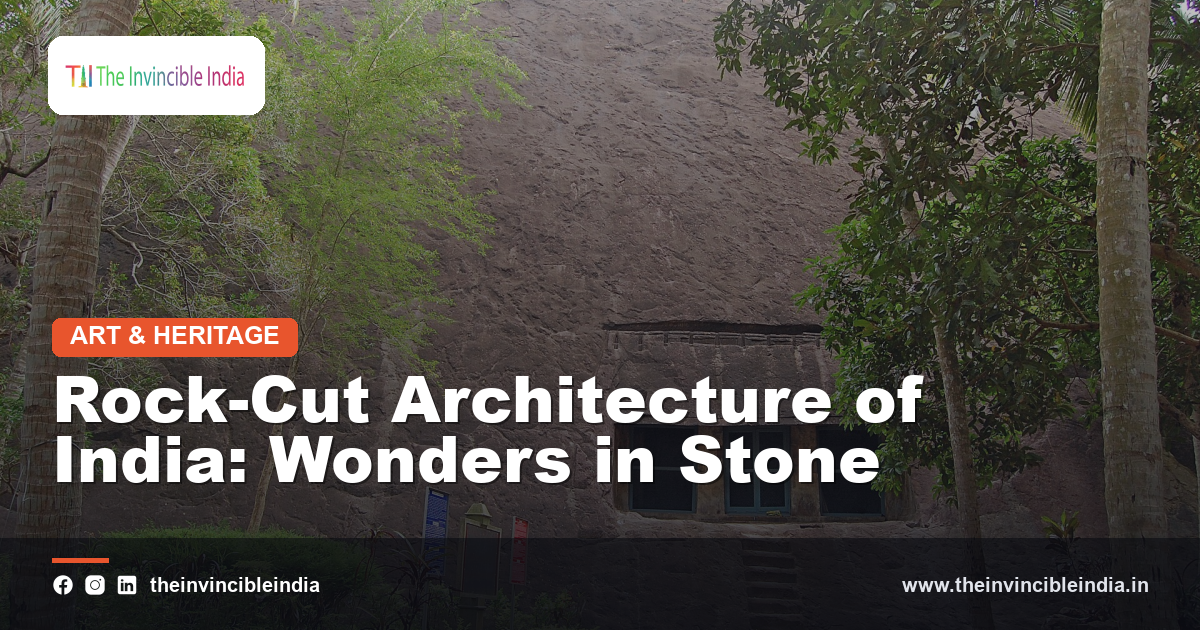
The rock-cut architecture of India is one of the most extraordinary and awe-inspiring of the country’s artistic achievements, a remarkable tradition in which entire caves, temples, monasteries and halls were carved directly from the living rock. Over many centuries, the builders of India hewed from solid cliffs and hillsides magnificent sacred spaces adorned with splendid sculpture and painting, creating some of the greatest wonders of ancient art. This tradition, embracing Buddhist, Hindu and Jain monuments, culminated in astonishing feats such as great temples carved as single monoliths from the rock. This guide explores the rock-cut architecture of India, its technique, its great sites, its Buddhist, Hindu and Jain heritage, and its wonders, among the most extraordinary treasures of India’s heritage.
Quick Facts
| Detail | Information |
|---|---|
| Type | Caves and temples carved from living rock |
| Antiquity | Developed over many centuries in ancient India |
| Traditions | Buddhist, Hindu and Jain monuments |
| Adorned with | Magnificent sculpture and painting |
| Greatest wonder | Temples carved as single monoliths from the rock |
| Heritage | Among the greatest achievements of ancient Indian art |
Wonders Carved from Rock
The rock-cut architecture of India is one of the most extraordinary and awe-inspiring of the country’s artistic achievements, a tradition in which magnificent caves, temples and monasteries were carved directly from the living rock. Rather than being built up from stone blocks, these wonders were hewn out of solid cliffs and hillsides, excavated from the rock to create sacred spaces adorned with splendid sculpture and painting, in an astonishing feat of art and labour. These rock-cut wonders are among the greatest treasures of India’s heritage. As extraordinary wonders carved directly from the living rock, the rock-cut monuments of India are among the greatest achievements of the country’s art and a testament to the skill, vision and devotion of their ancient creators.
The Art of Carving from Rock
The rock-cut technique is a remarkable and demanding art, in which the monument is created not by building but by carving away the rock to reveal the desired forms. Working from the top down and from the outside in, the builders excavated the rock to create the caves, halls and temples, carving out the spaces, pillars, sculptures and details from the solid stone, a process demanding great skill, planning and immense labour. Unlike built structures, these monuments were sculpted from the rock itself. This art of carving from rock, in which the monument is created by excavating and sculpting the living stone rather than building it up, is a remarkable and demanding technique, and the extraordinary skill and labour it required make the rock-cut wonders of India all the more astonishing.
Ancient Origins
The tradition of rock-cut architecture in India is very ancient, developing over many centuries from early beginnings into the great monuments of the classical age. The earliest rock-cut caves were relatively simple, but over time the tradition grew in sophistication and ambition, producing ever more elaborate and magnificent monuments, until it reached its heights in the great caves and temples of the classical period. This long development spanned many centuries. These ancient origins of Indian rock-cut architecture, developing over many centuries from simple early caves into the magnificent monuments of the classical age, reflect the long and rich history of the tradition and its steady growth in sophistication, ambition and beauty over the ages.
The Buddhist Caves
Much of the earliest and finest rock-cut architecture of India belongs to the Buddhist tradition, which created magnificent cave monasteries and halls of worship hewn from the rock. These Buddhist caves include monasteries, or viharas, where the monks lived, and halls of worship, or chaityas, containing sacred stupas, and they are adorned with magnificent sculpture and, in some cases, exquisite painting. The Buddhist rock-cut caves are among the greatest treasures of the tradition. These Buddhist caves, including magnificent monasteries and halls of worship carved from the rock and adorned with splendid sculpture and painting, are among the earliest and finest achievements of Indian rock-cut architecture and a glorious heritage of Indian Buddhism.
The Ajanta Caves
Among the most famous of all India’s rock-cut monuments are the Ajanta caves, a magnificent group of Buddhist caves renowned above all for their exquisite ancient paintings. These caves, carved into a cliff, contain monasteries and halls of worship adorned with sculpture, but they are celebrated most of all for their magnificent murals, which are among the greatest treasures of ancient Indian painting, depicting the life of the Buddha and other scenes with extraordinary beauty. Ajanta is a wonder of the rock-cut tradition. These Ajanta caves, a magnificent group of Buddhist rock-cut monuments renowned for their exquisite ancient paintings, are among the most famous of India’s rock-cut wonders and a treasure of world art, celebrated above all for their magnificent murals.
The Ellora Caves
Another of the greatest of India’s rock-cut monuments is the group of caves at Ellora, remarkable for containing magnificent Buddhist, Hindu and Jain monuments side by side. These caves, carved into a hillside over centuries, include a wealth of magnificent temples, monasteries and halls of the three great religions, adorned with splendid sculpture, and they testify to the coexistence and shared artistic heritage of the different faiths. Ellora is one of the great wonders of the rock-cut tradition. These Ellora caves, containing magnificent Buddhist, Hindu and Jain monuments side by side and adorned with splendid sculpture, are among the greatest of India’s rock-cut wonders and a remarkable testament to the shared artistic heritage and coexistence of the country’s great religions.
The Kailasa Temple
The supreme masterpiece of Indian rock-cut architecture, and one of the most astonishing structures in the world, is the great Kailasa temple at Ellora, a huge Hindu temple carved as a single monolith from the living rock. This extraordinary temple, dedicated to Shiva, was created by carving away the surrounding rock from the top down to leave a complete, freestanding temple, richly adorned with magnificent sculpture, hewn entirely from the solid stone of the hillside. The Kailasa temple is a wonder without equal. This great Kailasa temple, a huge Hindu temple carved as a single monolith from the living rock, is the supreme masterpiece of Indian rock-cut architecture and one of the most astonishing structures in the world, a wonder of art, engineering and devotion.
A Monolithic Marvel
The carving of a complete temple as a single monolith from the living rock, as at the Kailasa temple, represents the most astonishing achievement of the rock-cut tradition and one of the great marvels of human creativity. To conceive and execute an entire great temple, complete with towers, halls, pillars and magnificent sculpture, by carving it out of solid rock from the top down, without the possibility of error, is a feat of extraordinary vision, planning, skill and labour. Such monolithic marvels are among the wonders of the world. This achievement of carving a complete temple as a single monolith from the living rock is the most astonishing marvel of the rock-cut tradition and a testament to the extraordinary vision, skill and devotion of the ancient Indian builders who accomplished such wonders.
Hindu and Jain Caves
Alongside the Buddhist caves, the rock-cut tradition of India includes magnificent Hindu and Jain monuments, testifying to the shared artistic heritage of the country’s religions. Hindu rock-cut temples and caves, adorned with magnificent sculpture of the deities and mythological scenes, and Jain caves and temples, likewise richly carved, are found among the great rock-cut sites, and they represent the flowering of the tradition across the different faiths. These Hindu and Jain monuments are an important part of the heritage. These Hindu and Jain rock-cut monuments, adorned with magnificent sculpture and representing the flowering of the tradition across the country’s religions, are an important part of India’s rock-cut heritage and testify to the shared artistic achievement of the different faiths in this extraordinary art.
The Elephanta Caves
Among the famous rock-cut monuments of India are the Elephanta caves, a group of Hindu caves on an island, renowned for their magnificent sculpture dedicated to Shiva. These caves contain splendid rock-cut halls adorned with great sculptures of the deities, above all a famous and magnificent image of Shiva, and they are celebrated as a masterpiece of the rock-cut tradition and of Indian sculpture. The Elephanta caves are among the treasures of the heritage. These Elephanta caves, a group of Hindu rock-cut monuments renowned for their magnificent sculpture dedicated to Shiva, are among the famous treasures of India’s rock-cut heritage and a masterpiece of the tradition, celebrated especially for their great sculptures of the deity.
Magnificent Sculpture
The rock-cut monuments of India are renowned for their magnificent sculpture, which adorns the caves and temples with images of the deities, mythological scenes and rich decoration of extraordinary beauty. The sculptors carved from the living rock great images of the gods and the Buddha, scenes from mythology and religion, and a wealth of decorative and figurative work, of the highest artistry. This sculpture is among the greatest treasures of ancient Indian art. This magnificent sculpture, which adorns the rock-cut monuments of India with images of extraordinary beauty carved from the living rock, is among the greatest treasures of ancient Indian art, and the rock-cut sites are among the finest treasuries of sculpture in the country.
The Ancient Paintings
Some of the rock-cut monuments of India, above all the Ajanta caves, are adorned with magnificent ancient paintings, among the greatest treasures of Indian art. These murals, painted on the walls and ceilings of the caves, depict the life of the Buddha, scenes from religion and legend, and a wealth of figures and detail, with extraordinary beauty, grace and skill, and they are among the finest surviving examples of ancient Indian painting. These paintings are a precious heritage. These ancient paintings, which adorn some of the rock-cut monuments, above all the Ajanta caves, with magnificent murals of extraordinary beauty, are among the greatest treasures of Indian art and a precious heritage, offering a glimpse of the glory of ancient Indian painting.
A Testament to Devotion
The rock-cut monuments of India are, above all, a testament to the devotion that inspired them, for these extraordinary works of art and labour were created as sacred spaces for worship and religious life. The immense effort of carving these monuments from the living rock was undertaken as an act of faith and devotion, to create dwellings for the divine and places of worship and religious life, and the beauty and grandeur of the monuments express this profound devotion. The rock-cut wonders are monuments of faith. This character of the rock-cut monuments as a testament to devotion, created through immense effort as sacred spaces for worship, is at the heart of their meaning, and the faith and devotion that inspired these extraordinary works are as remarkable as the artistry and labour that created them.
Rock-Cut Architecture Today
Today the rock-cut monuments of India remain among the most extraordinary and admired treasures of the country’s heritage, wonders of ancient art visited and honoured by people from across the world, and several are recognised as World Heritage Sites. The magnificent caves and temples, with their splendid sculpture, their ancient paintings, and above all the astonishing monolithic marvels, continue to inspire wonder and admiration, and they are preserved and cherished as some of the greatest achievements of ancient Indian art. As extraordinary wonders carved from the living rock, the rock-cut monuments of India endure as among the most astonishing and treasured achievements of the country’s heritage and of world art.
Sources & Further Reading
- Archaeological Survey of India, on the rock-cut monuments of India (asi.nic.in).
- UNESCO World Heritage Centre, on the rock-cut sites of India (whc.unesco.org).
Frequently Asked Questions
What is the rock-cut architecture of India?
The rock-cut architecture of India is an extraordinary tradition in which caves, temples, monasteries and halls were carved directly from the living rock, rather than built up from stone blocks. It embraces Buddhist, Hindu and Jain monuments and is among the greatest achievements of ancient Indian art.
What are the Ajanta and Ellora caves?
The Ajanta caves are a magnificent group of Buddhist rock-cut monuments renowned above all for their exquisite ancient paintings, while the Ellora caves are remarkable for containing magnificent Buddhist, Hindu and Jain monuments side by side, including the great monolithic Kailasa temple.
What is the Kailasa temple?
The Kailasa temple at Ellora is the supreme masterpiece of Indian rock-cut architecture, a huge Hindu temple dedicated to Shiva that was carved as a single monolith from the living rock, from the top down, and richly adorned with magnificent sculpture, a wonder of art and engineering.
How was rock-cut architecture created?
Rock-cut architecture was created not by building but by carving away the rock to reveal the desired forms. Working from the top down and outside in, the builders excavated solid cliffs and hillsides to create the caves, halls, temples, pillars and sculptures, a feat demanding great skill and immense labour.
Which religions built rock-cut monuments in India?
The rock-cut monuments of India were built by the Buddhist, Hindu and Jain traditions. Much of the earliest and finest work is Buddhist, but there are also magnificent Hindu and Jain caves and temples, testifying to the shared artistic heritage of the country’s religions.


