

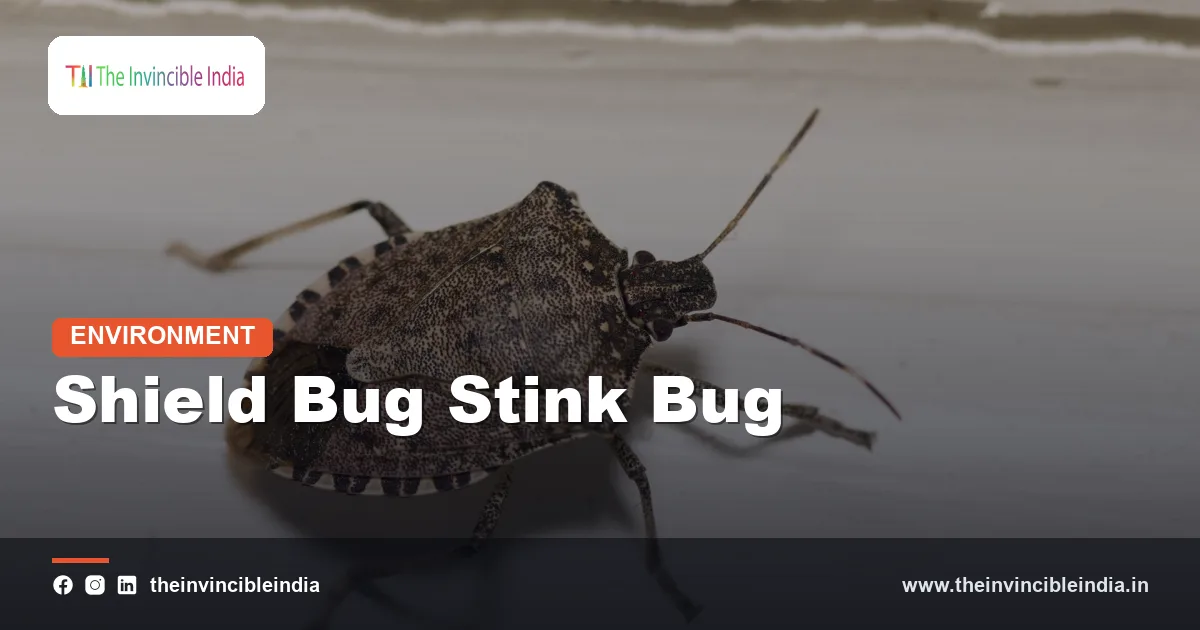
A shield bug, also called a stink bug, is a true bug (order Hemiptera) with a broad, shield-shaped body that releases a strong, unpleasant smell from scent glands when it is disturbed. The group is led by the family Pentatomidae, which has roughly 4,700 species worldwide, and shield bugs are common on crops, shrubs, weeds and garden plants all over India.
Most shield bugs feed by piercing plants and sucking their sap, so a few are agricultural pests, while others are predators that eat caterpillars and are useful to farmers. This explainer covers what a shield bug is, why it smells, how to recognise it, how its life cycle works and how to deal with it sensibly.
Quick Facts
| Common names | Shield bug, stink bug |
|---|---|
| Scientific group | Order Hemiptera, suborder Heteroptera; mainly family Pentatomidae, with related families such as Scutelleridae (jewel bugs) and Acanthosomatidae |
| Size | Typically about 5 to 25 mm long; Indian species range from small to fairly large |
| Habitat in India | Fields, orchards, vegetable plots, hedges, weeds, forest edges and gardens; adults often come to lights and into houses |
| Diet | Plant sap, developing seeds, pods and fruit for most species; predatory subfamily Asopinae feeds on caterpillars and other insects |
| Life cycle | Incomplete metamorphosis: egg, five nymphal stages, adult; no pupa |
| Distinctive feature | Shield-shaped body with a large triangular plate (scutellum) on the back and paired scent glands |
| Role | Plant-sap feeders and occasional crop pests; some species are natural enemies of caterpillars |
Key Takeaways
- A shield bug is a true bug of the order Hemiptera, with a shield-shaped body and mouthparts designed for piercing and sucking.
- The name stink bug comes from the strong-smelling chemicals that a shield bug releases from scent glands when it is disturbed or crushed.
- A shield bug develops through incomplete metamorphosis, passing from egg through five nymphal stages to the winged adult without a pupa.
- Most shield bugs eat plant sap and can damage pulses, cotton, vegetables and fruit, but some species, such as Eocanthecona furcellata, prey on caterpillars.
- Shield bugs do not bite people or carry human diseases, although their secretions can irritate eyes and skin.
- The best way to remove a shield bug indoors is to sweep or flick it into a container of soapy water, never to crush it.
What is a shield bug?
A shield bug is a plant-feeding or predatory insect of the suborder Heteroptera whose flattened, broad body resembles a heraldic shield when seen from above. The term most often refers to the Pentatomidae, but it also covers closely related families with the same general shape.
Pentatomidae takes its name from the five-segmented antennae of its members, since “penta” means five. The bugs belong to Hemiptera, an order that also includes cicadas, aphids, planthoppers and assassin bugs. The name Hemiptera means “half wing” and refers to the forewings, whose base is leathery and whose tip is thin and transparent. These half-hardened forewings are called hemelytra, and they are folded flat over the back when the bug is at rest.
On the back of every shield bug is a large, triangular plate called the scutellum. In shield bugs it is moderately large, but in the related jewel bugs (Scutelleridae) it grows so big that it covers almost the whole abdomen like a shell. This is why both groups are called shield-backed or shield bugs.
Why is it called a stink bug?
A shield bug is called a stink bug because it releases a pungent, often bitter or pesticide-like odour from special scent glands when it is disturbed, handled or crushed. The smell works as a chemical defence that warns off predators such as birds, spiders and lizards.
The scent glands of an adult open on the underside of the thorax, between the middle and hind legs. In young nymphs, the glands open on the back of the abdomen. The secretion is a mixture of volatile organic compounds, including aldehydes, and it can also act as an alarm signal to other bugs nearby. The smell is strong enough to be noticed by people when a bug is squashed against a wall or fabric.
The fluid can irritate eyes and sensitive skin and may leave a brown stain on fabric or fruit. The bug itself is not poisonous in the sense of causing illness if touched, and the chemicals usually have no lasting effect on healthy skin.
How can you recognise a shield bug?
A shield bug can be recognised by its broad, shield-like outline, five-segmented antennae, a triangular scutellum and a pointed beak folded under the body. Colours range from leaf green and brown to bright red, orange and metallic blue.
- Shield-shaped body: The body is flattened and wide at the shoulders, tapering to the rear.
- Antennae: Five segments, held out in front of the head.
- Scutellum: The triangular plate between the base of the wings; large in jewel bugs.
- Beak (rostrum): A jointed, needle-like beak held flat beneath the head and thorax when not feeding.
- Half-hard forewings: The leathery basal part and thin tip overlap on the back to form a small dark patch.
- Colour: Green species blend in with leaves, while red or metallic species display warning colours.
Unlike beetles, which have chewing mouthparts and hard wing covers that meet in a straight line, shield bugs have a beak and wings that overlap at the tip. This is the simplest way to separate a shield bug from a beetle of similar size.
Where do shield bugs live in India?
Shield bugs live throughout India, from the plains and farmland to the Western Ghats, the Himalayan foothills and the northeast, wherever they can find host plants. They are found on crops, garden plants, shrubs, trees and wayside weeds.
Different species have different preferences. Some are generalists on dozens of plants, while others feed on a single plant genus. Many shield bugs are noticeable in the warm, wet months, when new growth, flowers and fruits are abundant. In cooler regions, adults hide under bark, stones and leaf litter or enter buildings in the cold season, and become active again in spring.
Because adults are good fliers and are attracted to lights, shield bugs often turn up on verandas, window screens and lamps, which is the point at which most people notice them.
What do shield bugs eat?
Most shield bugs eat plant sap, which they obtain by piercing leaves, stems, buds, pods and fruits with their beak, while a smaller group of predatory shield bugs feeds on caterpillars and other soft-bodied insects. The diet depends on the species.
Plant feeders
A plant-feeding shield bug inserts its beak into a plant, injects saliva that softens tissues and sucks up the liquefied contents. Seeds and developing fruits are favourite targets because they are rich in nutrients. The feeding leaves small puncture marks, and the surrounding tissue may turn pale, hard or spongy.
Predatory shield bugs
Members of the subfamily Asopinae are predators. They are often more robust, with a stout, strongly curved beak. Eocanthecona furcellata, which occurs in India, attacks caterpillars of several crop pests and has been studied as a biological control agent. Predatory species are valuable in organic and low-pesticide farming.
What is the life cycle of a shield bug?
A shield bug has incomplete metamorphosis, which means it develops through three stages: egg, nymph and adult, with no pupa. The nymph looks like a small, wingless version of the adult and grows through five stages (instars) before becoming a winged adult.
- Egg: The female lays eggs in neat rows or clusters, usually on the underside of leaves. Each egg is barrel-shaped with a small lid through which the nymph hatches.
- Nymph: Young nymphs often stay together near the eggs and take little food at first. Later instars scatter and feed on sap. Nymphs are often rounder and more brightly marked than adults.
- Adult: After the last moult, the adult has full wings and can fly. Adults mate, lay eggs and may live for weeks or months.
In warm conditions a generation can be completed in around a month or two, so several generations may follow one another during the growing season. Some members of related families, such as the Acanthosomatidae, are known for the mother guarding her eggs and young nymphs.
Are shield bugs harmful to crops?
Some shield bugs are harmful to crops because their sap-sucking damages developing pods, seeds and fruits, which can lead to shrivelled grain, spotted fruit and lower yield. The scale of the damage depends on the species, the crop and the numbers of bugs present.
The southern green stink bug (Nezara viridula) is a widespread example. It feeds on a wide range of hosts, including pulses, soybean, vegetables and cotton, and is recognised as a pest in many warm countries. Typical signs of damage are:
- Small dark puncture points surrounded by discoloured tissue on fruits and pods.
- Shrivelled or poorly filled seeds in pods.
- Distorted or dimpled fruit, and early fruit drop in some crops.
- Clusters of bugs and egg rafts on the underside of leaves.
Even so, shield bugs seldom cause the same level of loss as major pests such as boll worms and stem borers. Scouting fields and thresholds are used by extension workers so that treatment is applied only where bug numbers are high.
Are some shield bugs beneficial?
Some shield bugs are beneficial because they are predators that eat caterpillars, beetle larvae and other plant-eating insects. The most useful ones belong to the subfamily Asopinae, and farmers value them as natural enemies.
Beneficial species hunt with their beak, injecting digestive saliva into the prey and sucking out its tissues. A single predatory bug can consume many caterpillars over its life. Preserving these natural enemies by avoiding unnecessary broad-spectrum sprays is a basic principle of integrated pest management (IPM).
Shield bugs are also part of the food chain themselves. Birds, spiders, praying mantises, assassin bugs and lizards eat them, and the eggs are frequently attacked by tiny parasitic wasps, such as Trissolcus and Telenomus species, which keep numbers in balance.
Which shield bugs are common in India?
Common shield bugs in India include the southern green stink bug, the jewel bug, the predatory stink bug and several green or brownish plant feeders on pulses and vegetables. A small sample illustrates the variety.
| Shield bug | Family or group | Notes |
|---|---|---|
| Southern green stink bug (Nezara viridula) | Pentatomidae | Bright green; widespread sap-feeder on pulses, vegetables, cotton and many wild plants |
| Jewel bug (Chrysocoris stollii) | Scutelleridae | Shiny, shell-like body with red, blue and black markings; found on shrubs and some trees |
| Predatory stink bug (Eocanthecona furcellata) | Pentatomidae, Asopinae | Brownish and robust with a stout beak; preys on caterpillars |
| Green stink bugs of the genus Plautia | Pentatomidae | Plant feeders on fruit and legumes in warm regions |
| Burrower bugs | Cydnidae | Dark, rounded bugs that live in the soil and feed on roots |
These examples show that the shield bug is a diverse group with different habits. Observers should identify the species before deciding whether a particular bug on a crop is a pest or a helper.
Are shield bugs dangerous to humans?
Shield bugs are not dangerous to humans: they do not bite, sting or spread disease, and the main nuisance is the smell and the occasional irritation caused by their defensive fluid. Their beak is meant for plants and prey, not for people.
The secretion can sting the eyes and cause a mild rash in people with sensitive skin, so it is wise to wash hands with soap after handling one. Pets that mouth a shield bug may drool or vomit briefly because of the taste. In some regions large stink bugs are eaten as food after the glands are removed, which shows that they are not toxic in the usual sense.
People can find shield bugs in houses when the bugs come in to shelter or are drawn by lights. Their presence does not suggest dirt, and they do not breed in homes or damage buildings, furniture or stored food.
How can you manage shield bugs at home and on farms?
Shield bugs can be managed by physical removal, good garden hygiene and conserving natural enemies, with chemical sprays kept as a last resort. The right approach depends on whether the bugs are in a home or in a crop.
- Indoors: Seal gaps around windows and doors, use screens, reduce outdoor lighting at night and remove bugs gently into a container of soapy water instead of crushing them.
- Garden: Pick off adults, nymphs and leaf-underside egg clusters by hand, and keep weedy hosts under control near vegetable beds.
- Farm: Scout fields regularly during pod and fruit formation, remove weed hosts, and use pesticides only if damage crosses recommended limits and following local agricultural advice.
- Natural enemies: Avoid broad-spectrum insecticides that also kill predatory bugs and egg parasitoids.
Squashing a bug releases its odour and can leave a stain, so it is better to avoid it. A vacuum cleaner can be used indoors, but the bag may smell afterwards.
Bottom Line
The shield bug is a diverse group of true bugs whose smell is their main trademark. Many are modest plant feeders, a few are crop pests and some are useful predators, so identification and gentle handling are more effective than panic or heavy spraying.
Frequently Asked Questions
What is a shield bug?
A shield bug is a true bug of the order Hemiptera with a broad, shield-shaped body and a needle-like beak for piercing and sucking. The term mainly covers the family Pentatomidae, which has roughly 4,700 species worldwide, along with related families such as the jewel bugs.
Is a shield bug the same as a stink bug?
Yes, the terms are used interchangeably for most purposes, with shield bug being the more common name in the United Kingdom and stink bug in North America and India. Both names refer to bugs in the family Pentatomidae, and stink bug highlights the bad smell that they release when disturbed.
Why do shield bugs smell?
Shield bugs smell because they release pungent chemicals, including aldehydes, from scent glands on the thorax of adults and on the abdomen of nymphs. The smell deters predators such as birds and spiders and can also act as an alarm signal to other bugs.
Do shield bugs bite or harm people?
Shield bugs do not bite people, and they do not carry human diseases. Their defensive fluid can irritate the eyes and sensitive skin, so it is sensible to avoid crushing them and to wash your hands after handling one.
Are shield bugs crop pests in India?
Some shield bugs, such as the southern green stink bug, damage crops by sucking sap from pods, seeds and fruits, particularly in pulses, soybean, vegetables and cotton. Others, like Eocanthecona furcellata, are predators that eat caterpillars and help farmers, so identification matters.
How do I get rid of shield bugs at home?
The best way to get rid of shield bugs at home is to flick or sweep them into a container of soapy water, and to seal gaps and use screens to keep them out. Avoid squashing them, as this releases their smell and may stain surfaces.
{“@context”:”https://schema.org”,”@graph”:[{“@type”:”FAQPage”,”mainEntity”:[{“@type”:”Question”,”name”:”What is a shield bug?”,”acceptedAnswer”:{“@type”:”Answer”,”text”:”A shield bug is a true bug of the order Hemiptera with a broad, shield-shaped body and a needle-like beak for piercing and sucking. The term mainly covers the family Pentatomidae, which has roughly 4,700 species worldwide, along with related families such as the jewel bugs.”}},{“@type”:”Question”,”name”:”Is a shield bug the same as a stink bug?”,”acceptedAnswer”:{“@type”:”Answer”,”text”:”Yes, the terms are used interchangeably for most purposes, with shield bug being the more common name in the United Kingdom and stink bug in North America and India. Both names refer to bugs in the family Pentatomidae, and stink bug highlights the bad smell that they release when disturbed.”}},{“@type”:”Question”,”name”:”Why do shield bugs smell?”,”acceptedAnswer”:{“@type”:”Answer”,”text”:”Shield bugs smell because they release pungent chemicals, including aldehydes, from scent glands on the thorax of adults and on the abdomen of nymphs. The smell deters predators such as birds and spiders and can also act as an alarm signal to other bugs.”}},{“@type”:”Question”,”name”:”Do shield bugs bite or harm people?”,”acceptedAnswer”:{“@type”:”Answer”,”text”:”Shield bugs do not bite people, and they do not carry human diseases. Their defensive fluid can irritate the eyes and sensitive skin, so it is sensible to avoid crushing them and to wash your hands after handling one.”}},{“@type”:”Question”,”name”:”Are shield bugs crop pests in India?”,”acceptedAnswer”:{“@type”:”Answer”,”text”:”Some shield bugs, such as the southern green stink bug, damage crops by sucking sap from pods, seeds and fruits, particularly in pulses, soybean, vegetables and cotton. Others, like Eocanthecona furcellata, are predators that eat caterpillars and help farmers, so identification matters.”}},{“@type”:”Question”,”name”:”How do I get rid of shield bugs at home?”,”acceptedAnswer”:{“@type”:”Answer”,”text”:”The best way to get rid of shield bugs at home is to flick or sweep them into a container of soapy water, and to seal gaps and use screens to keep them out. Avoid squashing them, as this releases their smell and may stain surfaces.”}}]}]}


