

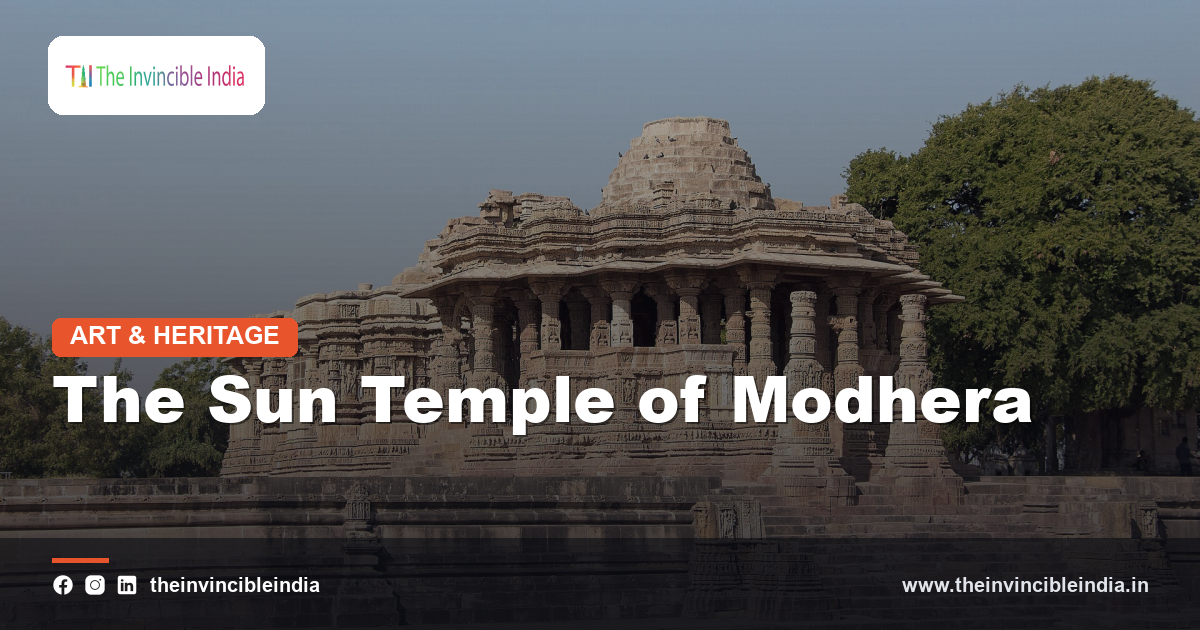
In the plains of northern Gujarat stands the Sun Temple of Modhera, a shrine dedicated to the solar deity Surya and among the finest surviving examples of temple architecture built under the medieval Solanki dynasty. Distinguished by its finely carved stone surfaces and its dramatic stepped tank, the temple represents a regional variation on the broader Nagara temple tradition of northern and western India, adapted here to local Gujarati craftsmanship and the specific demands of solar worship. Though the temple has not functioned as an active site of worship for centuries, its architectural and sculptural richness continues to draw considerable scholarly and visitor interest. This guide surveys its history, layout, and the distinctive features that set it apart within the wider Nagara tradition.
Quick Facts
| Detail | Information |
|---|---|
| Location | Modhera, Gujarat, India |
| Dedicated To | Surya, the sun god |
| Style | Solanki-era Nagara architecture |
| Notable Feature | Stepped surya kund tank |
| Dynasty | Solanki (Chaulukya) |
| Primary Material | Sandstone |
Origins and Historical Background
The Sun Temple of Modhera was constructed during the reign of the Solanki, or Chaulukya, dynasty, which ruled substantial parts of Gujarat during the medieval period and was known for sponsoring ambitious temple building across its territory. Dedicated to Surya, the sun god, the temple reflects the importance of solar worship within regional religious practice at the time, alongside devotion to other major deities. Positioned near a riverbank in northern Gujarat, the temple complex was conceived as an integrated whole, combining a main shrine, an assembly hall, and a large stepped tank into a single carefully planned sacred precinct. Its construction represents a high point of Solanki temple architecture, showcasing both the technical skill and the artistic ambition of the period’s builders and patrons. This origin as a royal solar shrine remains central to understanding the temple’s layout and symbolism.
The Solanki Dynasty and Temple Patronage
The Solanki dynasty, ruling from its capital in Gujarat during the medieval period, was among the most significant patrons of temple architecture in western India, commissioning numerous shrines noted for their fine stone carving and ambitious scale. Solanki-era temples are recognized for a distinctive regional refinement within the broader Nagara tradition, characterized by exceptionally detailed surface ornamentation and confident structural planning. Royal patronage under this dynasty extended beyond religious architecture to civic infrastructure, including stepped wells and tanks that served both practical and ceremonial purposes. The Sun Temple of Modhera stands as one of the most complete and celebrated surviving examples of this Solanki architectural achievement. Its scale and craftsmanship reflect the considerable resources and skilled labor that royal patronage could mobilize during this period of Gujarati history.
Dedication to Surya, the Sun God
The temple’s dedication to Surya, the sun god, shaped many aspects of its design, from its eastward orientation to the solar imagery carved throughout its stone surfaces. Solar worship held an important place within the broader religious landscape of medieval India, with several major temples across the subcontinent dedicated to this deity, of which Modhera remains among the most architecturally significant. The temple’s design incorporates careful attention to the sun’s movement, with the main shrine oriented so that sunlight could enter and illuminate the interior at specific times, reinforcing the symbolic connection between the structure and the deity it honored. Sculptural depictions of Surya and related solar imagery appear throughout the complex, reinforcing this central theme at every scale of the building. This solar dedication distinguishes Modhera from the many Nagara temples built primarily for other major Hindu deities.
Overall Layout of the Temple Complex
The Modhera temple complex is organized along a single east-west axis, beginning with the stepped tank at its eastern end, followed by a freestanding pillared hall, and culminating in the main shrine at the western end of the sequence. This linear arrangement allowed worshippers to move progressively through ritual bathing, congregational gathering, and finally the innermost sanctum, in a sequence that mirrored a symbolic journey toward the sacred center. Each of the three principal elements, tank, hall, and shrine, was conceived as part of an integrated architectural whole rather than as separate, unrelated structures. This coherent overall planning is considered one of the most notable achievements of the temple’s design, reflecting careful coordination between structural, ritual, and symbolic considerations. The clarity of this layout continues to make Modhera a valuable case study in medieval Indian temple planning.
The Surya Kund: A Monumental Stepped Tank
The most distinctive feature of the Modhera complex is its surya kund, a large rectangular stepped tank positioned before the main temple, lined on all sides with tiers of stone steps descending to the water. Small shrines and decorative niches are set into the steps at various points, transforming what might otherwise be a purely utilitarian water tank into an integral part of the sacred architecture of the site. The tank served practical purposes related to ritual purification while also functioning as a dramatic architectural approach to the temple itself, its receding tiers creating a striking visual transition between the surrounding landscape and the temple precinct. Such stepped tanks were a notable feature of Gujarati architecture more broadly during this period, combining water management with monumental design. The surya kund at Modhera is widely regarded as one of the finest surviving examples of this architectural form.
The Sabha Mandapa: Pillared Assembly Hall
Positioned between the tank and the main shrine, the sabha mandapa is a freestanding pillared hall that served as a gathering space for worship and ceremony, notable for its open design and richly carved columns arranged in a geometric pattern. Unlike enclosed halls attached directly to the sanctum, this structure stands independently, allowing light and air to move freely through its many carved pillars while providing a distinct architectural transition between the outer tank and the temple proper. Each pillar within the hall is carved with intricate decorative and figural detail, contributing to the overall richness of the complex’s stonework. The hall’s elevated platform and carefully proportioned pillar spacing demonstrate considerable sophistication in structural and aesthetic planning. This freestanding assembly hall remains one of the most admired architectural elements of the Modhera temple complex.
The Garbhagriha and Main Shrine
At the western end of the complex stands the main shrine, housing the garbhagriha, or inner sanctum, that once contained the primary image of Surya venerated at the site. Though the sanctum today stands without its original image, its architectural form, capped by a tower in the regional Nagara idiom, remains substantially intact, allowing visitors to appreciate its proportions and carved ornamentation. Surrounding the sanctum, an ambulatory passage permitted ritual circumambulation, a common feature of temples built within the broader Nagara architectural tradition. The relationship between the shrine, the connecting hall, and the outer tank reflects a coherent overall design intended to guide worshippers through an increasingly sacred sequence of spaces. This carefully structured approach to the sanctum remains a defining feature of the temple’s architectural identity.
Sculptural Program and Iconography
The Sun Temple of Modhera is renowned for the density and quality of its sculptural ornamentation, with carved panels covering the exterior walls of the shrine, the pillars of the assembly hall, and the niches surrounding the stepped tank. Depictions of deities, celestial figures, and decorative motifs drawn from Hindu iconography appear throughout the complex, reflecting the broader sculptural conventions of Solanki-era temple architecture. Solar imagery, in keeping with the temple’s dedication, features prominently among the carved decoration, reinforcing the site’s religious focus at every architectural level. The consistency and refinement of this carving across such a large architectural program reflects considerable investment in skilled craftsmanship by the temple’s royal patrons. This rich sculptural heritage remains one of the primary reasons the site continues to attract scholarly and public attention today.
Architectural Style within the Nagara Tradition
As a Solanki-era monument, the Sun Temple of Modhera belongs to the broader Nagara temple tradition of northern and western India, sharing its characteristic curvilinear tower form while displaying the particular refinements associated with Gujarati temple building of the period. Regional characteristics visible at Modhera include an especially high density of carved ornamentation and a distinctive treatment of the temple’s platform and approach, exemplified by the elaborate surya kund. Comparing Modhera with other Nagara temples from different regions highlights both the underlying shared structural logic of the tradition and the considerable scope for regional stylistic variation within it. Solanki temple architecture, of which Modhera is among the finest surviving examples, is often singled out for its combination of structural clarity and decorative exuberance. This regional identity situates Modhera as a key reference point within the wider study of Nagara architecture.
Materials and Construction Techniques
Builders of the Modhera temple relied on sandstone, worked with considerable precision to achieve both the structural requirements of the tower and halls and the fine detail demanded by the complex’s extensive carved decoration. Stone blocks were cut and fitted with careful attention to load-bearing requirements, particularly in the corbelled construction used for ceilings and the tiered superstructure of the shrine tower. The stepped tank required additional engineering considerations, including careful leveling and water management to maintain its function across changing seasonal water levels. Skilled masons and sculptors worked in close coordination, since much of the temple’s decorative carving was integrated directly into structural elements rather than added afterward. These combined structural and artistic techniques reflect the high level of technical accomplishment achieved by builders working under Solanki patronage.
Astronomical and Solar Alignment
Consistent with its dedication to the sun god, the design of the Modhera temple reflects careful attention to solar orientation, with the shrine positioned to allow sunlight to interact meaningfully with the sanctum at significant points during the year. Such alignment reflects a broader tradition within Indian temple architecture of integrating astronomical observation into sacred design, ensuring that a temple’s physical form resonated with the movements of the sun and other celestial phenomena central to its associated deity. Scholars studying the site have noted the deliberate coordination between the temple’s axis and the sun’s path as further evidence of the sophisticated planning behind its construction. This attention to solar alignment reinforces the deep symbolic connection between architectural form and religious meaning that runs throughout the complex. It also situates Modhera within a wider Indian tradition of astronomically informed sacred architecture.
Comparison with Other Solar Temples of India
The Sun Temple of Modhera belongs to a small but significant group of major solar temples built across different regions of India during the medieval period, each reflecting local architectural traditions while sharing a common devotional focus on Surya. Comparing these temples reveals both a shared set of solar iconographic themes and considerable variation in regional architectural expression, from the Nagara idiom seen at Modhera to other stylistic traditions found elsewhere in the subcontinent. Such comparisons help scholars understand how a single religious cult could inspire distinct architectural responses depending on regional building traditions and available materials. Modhera’s relatively compact scale, combined with its exceptional stepped tank, sets it apart within this broader group of solar temples. This comparative context underscores the temple’s importance as a regional expression of a pan-Indian devotional and architectural tradition.
Decline and Abandonment of Active Worship
Over the centuries following its construction, the Sun Temple of Modhera ceased to function as an active site of worship, with the original image of Surya no longer present within the sanctum. Various historical pressures across the medieval and early modern periods contributed to the decline of many temples in the region, and Modhera’s transition from active shrine to historical monument reflects this broader pattern rather than any single documented event. Despite this loss of active religious function, the temple’s architectural fabric has survived in substantially complete form, allowing later generations to study and appreciate its design. The absence of ongoing ritual use has, in some respects, aided the preservation of the site as a historical and architectural monument rather than a continuously modified place of worship. This transition from active shrine to protected heritage site shapes how the temple is experienced and studied today.
Conservation and Heritage Status
The Sun Temple of Modhera is protected as a significant heritage monument, with ongoing conservation efforts aimed at preserving its carved stonework and maintaining the structural integrity of the shrine, hall, and tank. Careful maintenance of the surya kund, including periodic desilting and structural repair, is necessary to preserve both its function and its appearance as a defining feature of the site. Conservation work must balance the preservation of fragile carved surfaces with the practical challenges of managing a site that receives considerable visitor interest throughout the year. Documentation and study of the temple’s architecture and sculpture continue to contribute to broader scholarly understanding of Solanki-era temple building in Gujarat. These ongoing preservation efforts ensure that the temple’s architectural and artistic legacy remains accessible to future generations.
Cultural Significance and Festivals
Beyond its architectural and historical importance, the Sun Temple of Modhera holds a significant place in the cultural life of the surrounding region, serving in recent times as the backdrop for cultural events and festivals that celebrate classical Indian dance and music. Such events draw on the temple’s dramatic architectural setting, particularly the assembly hall and stepped tank, to create a distinctive venue that connects contemporary cultural expression with a historic sacred space. This ongoing cultural use, though distinct from the temple’s original religious function, reflects the site’s continuing relevance to the region’s artistic and heritage life. Public interest in the temple extends beyond specialists in architecture and history to a broader audience engaged with Gujarat’s cultural heritage. This blending of historical preservation and contemporary cultural activity is an important part of the site’s modern identity.
The Sun Temple of Modhera Today
Today the Sun Temple of Modhera stands as one of Gujarat’s most significant heritage monuments, attracting visitors and scholars interested in its architecture, sculpture, and historical role as a center of solar worship. Its combination of a monumental stepped tank, an open pillared hall, and a finely carved shrine continues to be studied as a model of coherent medieval temple planning within the Nagara tradition. Conservation authorities maintain the site to protect its architectural fabric while accommodating ongoing public and cultural interest. The temple’s enduring reputation rests on both the technical sophistication of its construction and the sustained artistic quality of its sculptural decoration. As a protected monument of considerable historical depth, the Sun Temple of Modhera remains a defining example of Solanki-era architectural achievement.
Sources & Further Reading
- Archaeological Survey of India (asi.nic.in).
- Ministry of Culture, Government of India (indiaculture.gov.in).
Frequently Asked Questions
What is the Sun Temple of Modhera?
The Sun Temple of Modhera is a medieval temple in Gujarat dedicated to the sun god Surya, built under the Solanki dynasty and renowned for its carved stonework and monumental stepped tank.
What is the surya kund at Modhera?
The surya kund is a large stepped tank at the eastern end of the temple complex, lined with tiers of stone steps and small shrines, used historically for ritual purification.
Is the Sun Temple of Modhera still an active place of worship?
No. The temple no longer contains its original image of Surya and does not function as an active site of worship, though it remains a protected heritage monument.
Which dynasty built the Sun Temple of Modhera?
The temple was built under the patronage of the Solanki, or Chaulukya, dynasty, which ruled parts of Gujarat during the medieval period and sponsored extensive temple construction.
What architectural style does the temple follow?
The temple follows the Nagara architectural tradition of northern and western India, expressed through the regional refinements characteristic of Solanki-era Gujarati temple building.


