

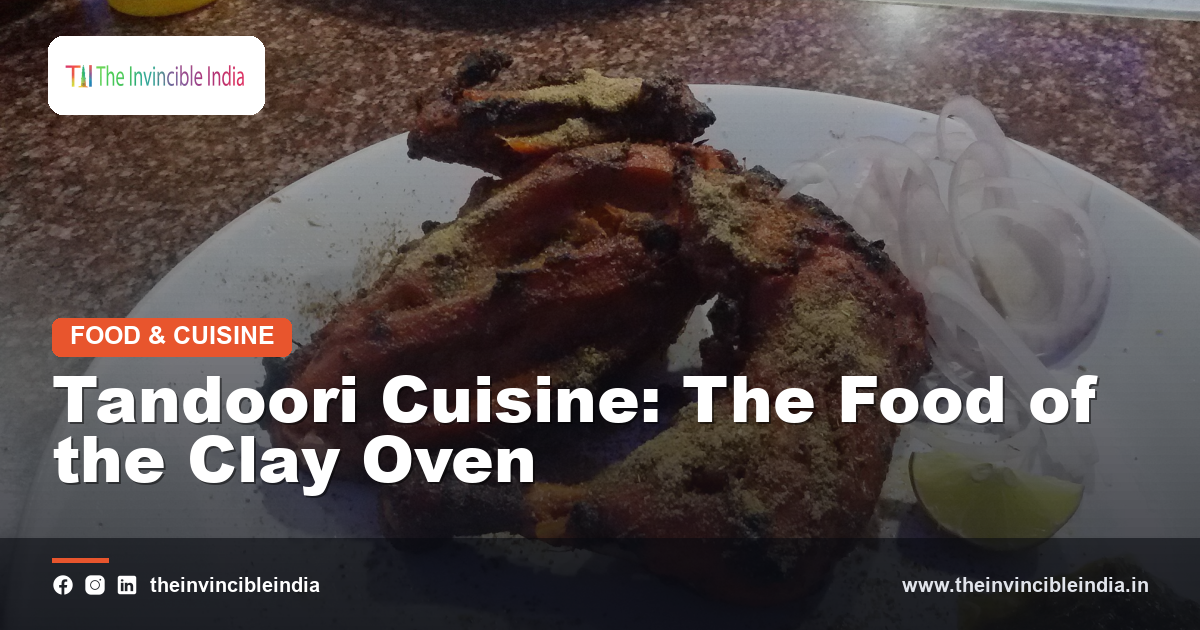
Tandoori cuisine is the beloved food of the clay oven, a distinctive style of cooking in which marinated meats, breads and vegetables are cooked at intense heat within the tandoor to achieve their characteristic smoky, charred and deeply flavourful character. From the iconic tandoori chicken with its vivid colour and smoky aroma to the soft, blistered naan pulled fresh from the oven’s walls, tandoori food has become one of the most recognised and beloved styles of Indian cooking, enjoyed in homes, restaurants and dhabas across the country and the world. This guide explores tandoori cuisine, its methods, its iconic dishes and its cherished place alongside India’s great culinary traditions.
Quick Facts
| Detail | Information |
|---|---|
| Type | Food cooked in the clay oven, or tandoor |
| Method | Marination followed by high-heat cooking |
| Iconic dish | Tandoori chicken |
| Bread | Tandoori naan and roti |
| Flavour | Smoky, charred and deeply spiced |
| Origin | North Indian and Punjabi culinary tradition |
The Food of the Clay Oven
Tandoori cuisine takes its name and its character from the tandoor, the traditional cylindrical clay oven in which food is cooked at intense heat to achieve a distinctive smoky and charred flavour. Meats, breads and vegetables cooked in the tandoor emerge with a unique combination of a crisp, charred exterior and a moist, flavourful interior, a result of the oven’s intense and even heat, making tandoori food one of the most recognisable and beloved styles of Indian cooking. This standing as the beloved food of the clay oven is well earned. As the smoky, charred and deeply flavourful cuisine of the tandoor, tandoori food holds a cherished place in Indian culinary heritage and continues to be celebrated across the country and the world.
The Tandoor Itself
The tandoor is a cylindrical clay oven, traditionally built partly or wholly underground or set upon a stand, heated by charcoal or wood to reach very high temperatures. Its shape allows breads to be slapped onto the hot inner walls to cook quickly, while skewers of marinated meat or vegetables can be lowered into the oven’s intense heat, so that the tandoor’s unique design is central to the distinctive results of tandoori cooking. This design of the tandoor is fundamental to the cuisine. This unique cylindrical design of the tandoor, allowing both breads and skewered foods to be cooked at intense heat, is fundamental to tandoori cuisine, and this traditional clay oven remains the heart of the entire cooking style.
The Art of Marination
Central to tandoori cooking is the art of marination, in which meats and vegetables are coated in a mixture of yogurt and spices before being cooked in the tandoor. The yogurt-based marinade, flavoured with a blend of spices, helps to tenderise the meat and infuse it with deep flavour, while also protecting it from drying out in the intense heat of the oven, so that a well-made marinade is essential to great tandoori food. This art of marination is central to the cuisine’s success. This central art of marination, coating meats and vegetables in a flavourful yogurt and spice mixture before cooking, is essential to tandoori cuisine, and this careful preparation is what gives tandoori food its deep, tender and flavourful character.
The Iconic Tandoori Chicken
The most iconic dish of tandoori cuisine is tandoori chicken, in which chicken is marinated in spiced yogurt, often coloured a vivid red or orange, and then cooked in the tandoor until charred and smoky. The intense heat of the oven cooks the chicken quickly, sealing in the flavour of the marinade while giving the exterior a distinctive charred character, and tandoori chicken has become one of the most beloved and internationally recognised dishes of Indian cuisine. This iconic tandoori chicken is a crowning glory of the cuisine. This creation of tandoori chicken, marinated in spiced yogurt and cooked in the tandoor until charred and smoky, is a crowning glory of the cuisine, and it remains among the most famous and beloved dishes to emerge from Indian kitchens.
The Soft, Blistered Naan
Among the most beloved breads to emerge from the tandoor is naan, a soft, leavened bread that is slapped against the hot inner walls of the oven, where it cooks quickly into a soft, blistered and slightly charred delight. The intense heat of the tandoor gives naan its distinctive texture, soft and pillowy within with charred spots on the surface, and this bread has become one of the most recognised accompaniments to rich curries and tandoori dishes alike. This tandoori naan is a beloved staple of the cuisine. This creation of soft, blistered naan through the intense heat of the tandoor is a beloved staple of the cuisine, and this bread remains one of the most cherished accompaniments to tandoori and other rich Indian dishes.
Tandoori Roti
Alongside naan, the tandoor also produces tandoori roti, a wholewheat bread cooked in the same manner against the hot oven walls to achieve a lightly charred, wholesome flatbread. Simpler and heartier than naan, tandoori roti is favoured by those seeking a more everyday, wholesome bread with the same smoky character imparted by the clay oven, making it a popular choice alongside tandoori dishes and curries. This tandoori roti offers a wholesome alternative. This production of tandoori roti, a wholewheat bread cooked in the same manner as naan to achieve a lightly charred, wholesome character, offers a popular alternative within the tandoori bread family, and it remains a favoured everyday choice across North India.
Seekh and Skewered Kebabs
The tandoor is also home to a variety of skewered kebabs, in which minced or marinated meat is shaped onto skewers and cooked over the intense heat of the oven. Seekh kebabs, made from minced meat mixed with spices and shaped onto skewers, along with other skewered preparations, emerge from the tandoor with a smoky, charred exterior and a juicy, flavourful interior, making them a beloved category of tandoori cuisine in their own right. These skewered kebabs are a highlight of tandoori cooking. This presence of skewered kebabs such as seekh kebab within the tandoor’s repertoire is a highlight of tandoori cooking, and these smoky, flavourful preparations remain among the most popular tandoori offerings at restaurants and gatherings alike.
Tandoori Vegetables and Paneer
Tandoori cuisine is not limited to meat, with vegetables and paneer, the fresh Indian cheese, also marinated and cooked in the tandoor to create delicious vegetarian options. Cubes of paneer or a variety of vegetables, marinated in the same spiced yogurt mixture used for meat, are skewered and cooked in the tandoor’s intense heat, emerging with the same beloved smoky, charred character, offering a satisfying vegetarian alternative within tandoori cuisine. This vegetarian tandoori offering broadens the cuisine’s appeal. This marination and cooking of vegetables and paneer in the tandoor broadens the appeal of the cuisine, and these vegetarian tandoori dishes remain beloved options for those seeking the smoky flavour of the clay oven without meat.
The Colour and Spice of the Marinade
A distinctive feature of many tandoori dishes is their vivid red or orange colour, achieved through a marinade rich in spices such as chilli and other seasonings that also contribute to the dish’s bold flavour. This vivid colouring has become closely associated with tandoori food in the popular imagination, though the true depth of flavour comes from the full blend of spices and the tenderising yogurt, working together with the smoky heat of the oven. This colourful marinade adds visual appeal to the cuisine. This distinctive vivid colouring of many tandoori dishes, achieved through a spiced marinade, adds visual appeal to the cuisine, and this striking appearance has helped make tandoori food instantly recognisable around the world.
The High Heat Method
What sets tandoori cooking apart from many other methods is its reliance on very high, even heat, which cooks food quickly while sealing in moisture and flavour. The intense heat of the tandoor, generated by charcoal or wood, cooks meats and breads far more quickly than conventional ovens, achieving a distinctive char on the exterior while keeping the interior moist and tender, a balance that is the hallmark of well-executed tandoori food. This high-heat method defines the cuisine’s technique. This reliance of tandoori cooking on very high, even heat to cook food quickly while sealing in moisture defines its technique, and this method is what gives tandoori food its unmistakable combination of char and tenderness.
Origins in North India
Tandoori cuisine has its roots in the culinary traditions of North India and the wider Punjab region, where the tandoor has long been used for cooking bread and, over time, meats and other dishes as well. This regional tradition, deeply connected to the agricultural and pastoral life of the north, has grown from a method of everyday bread-making into a celebrated cuisine in its own right, cherished across the country and recognised as a distinctive contribution of North Indian food culture. This northern origin remains central to tandoori identity. This deep rooting of tandoori cuisine in the culinary traditions of North India and Punjab remains central to its identity, and this heritage continues to be honoured in the tandoori restaurants and dhabas found across the country.
The Dhaba and Restaurant Tradition
Tandoori food has long been closely associated with the dhaba, the roadside eatery found along India’s highways, as well as with restaurants specialising in North Indian cuisine across the country and the world. The dhaba tradition, serving fresh tandoori bread and dishes to travellers, has helped spread the popularity of tandoori cooking widely, while dedicated tandoori restaurants have further cemented its place as one of the most beloved styles of Indian dining. This dhaba and restaurant tradition has spread tandoori cuisine’s fame. This close association of tandoori food with dhabas and specialised restaurants has spread its fame far and wide, and tandoori cuisine remains a centrepiece of North Indian dining experiences everywhere.
A Social and Celebratory Cuisine
Tandoori food is often associated with social gatherings and celebrations, its dishes commonly served at parties, weddings and festive occasions where a variety of tandoori meats, breads and vegetables are offered to guests. The communal enjoyment of freshly cooked tandoori dishes, often prepared on the spot at gatherings, adds to the festive and social character of the cuisine, making it a favoured choice for celebratory meals and large gatherings alike. This social and celebratory character enhances its appeal. This association of tandoori food with social gatherings and celebrations enhances its appeal, and the communal, festive enjoyment of freshly cooked tandoori dishes remains one of the great pleasures of Indian hospitality.
Modern Adaptations
While the traditional clay tandoor remains cherished, modern adaptations, including gas-powered and electric tandoor-style ovens, have allowed tandoori cooking to spread to homes and restaurants where a traditional clay oven may not be practical. These modern adaptations aim to replicate the high heat and distinctive results of the traditional tandoor, allowing more people to enjoy tandoori dishes while the traditional clay oven continues to be prized for its authentic flavour and character. These modern adaptations have broadened access to tandoori food. This development of modern adaptations of the tandoor has broadened access to tandoori food, and while the traditional clay oven remains cherished, these innovations have helped the cuisine reach an even wider audience.
Tandoori Cuisine Around the World
Tandoori cuisine has travelled far beyond India, becoming one of the most recognised and beloved styles of Indian cooking in restaurants across the world. Tandoori chicken, naan and other tandoori dishes are found on the menus of Indian restaurants globally, often serving as an introduction to Indian food for many people encountering the cuisine for the first time, a testament to the universal appeal of the smoky, charred flavours of the clay oven. This global reach reflects tandoori cuisine’s universal appeal. This travelling of tandoori cuisine far beyond India to become beloved worldwide reflects its universal appeal, and it stands today as one of the great ambassadors of Indian food on the international stage.
Tandoori Cuisine Today
Today tandoori cuisine continues to be celebrated as one of India’s most beloved and recognisable culinary traditions, its smoky, charred flavours enjoyed at home, in dhabas, in restaurants and at celebrations across the country and the world. Tandoori chicken, soft naan, seekh kebabs and countless other dishes continue to emerge fresh from the clay oven, carrying forward a tradition rooted deeply in North Indian culinary heritage. The tandoor continues to be at the heart of this beloved cuisine. As the smoky, charred and deeply flavourful food of the clay oven, tandoori cuisine endures as a cherished pillar of Indian food culture and one of the great culinary gifts of North India to the world.
Sources & Further Reading
- Ministry of Tourism, Government of India, on the cuisines of India (tourism.gov.in).
- Culinary references on North Indian and Punjabi food traditions.
Frequently Asked Questions
What is a tandoor?
A tandoor is a traditional cylindrical clay oven, heated by charcoal or wood to very high temperatures, used to cook breads such as naan against its inner walls and to cook marinated meats, vegetables and paneer on skewers lowered into its intense heat.
What makes tandoori chicken red or orange?
The characteristic colour of tandoori chicken comes from its spiced yogurt marinade, which typically includes chilli and other seasonings. This vivid colouring has become closely associated with tandoori dishes, though the true flavour comes from the full blend of spices and yogurt.
Is tandoori food always spicy?
Tandoori food is flavourful and often includes chilli and warming spices in its marinade, but the heat level can vary and is not always intensely spicy. The dominant characteristics are the smoky char and deep flavour imparted by the tandoor rather than pure heat.
Can vegetarians enjoy tandoori cuisine?
Yes, tandoori cuisine offers many vegetarian options, including paneer and a variety of vegetables marinated in spiced yogurt and cooked in the tandoor, achieving the same beloved smoky, charred character as meat-based tandoori dishes.
Where did tandoori cuisine originate?
Tandoori cuisine has its roots in the culinary traditions of North India and the Punjab region, where the tandoor has long been used for baking bread and, over time, for cooking marinated meats and other dishes as well.


