

Telugu is one of the great languages of South India, a classical language celebrated for its mellifluous, musical sound and its rich and ancient literary heritage. A Dravidian language spoken by many millions of people, chiefly in Andhra Pradesh and Telangana, it is one of the most widely spoken languages in India and has been honoured as a classical language of the country in recognition of its antiquity and its literature. So sweet is its sound that it has been called the Italian of the East. From the great classical poets who rendered the epics into Telugu to its vibrant modern literature and cinema, the language has a proud and living tradition. This guide explores the roots, sound, literature, script and living tradition of Telugu, one of the great languages of India.
Quick Facts
| Detail | Information |
|---|---|
| Type | Classical Dravidian language |
| Region | Andhra Pradesh and Telangana, South India |
| Speakers | One of the most widely spoken languages in India |
| Nickname | Called the Italian of the East for its musical sound |
| Status | Recognised as a classical language of India |
| Literature | A rich heritage from the classical poets onward |
A Great Language of the South
Telugu is one of the great languages of South India, spoken by many millions of people and possessing a rich and ancient heritage of literature and culture. The principal language of Andhra Pradesh and Telangana, and spoken by communities beyond them, it is among the most widely spoken languages in India, and its speakers take deep pride in its beauty, its antiquity and its literary achievements. As a major Dravidian language with a distinguished classical tradition, Telugu holds an important place among the languages of India. Its combination of a vast community of speakers, a mellifluous sound and a rich literary heritage makes Telugu one of the most significant and beloved languages of the country.
A Dravidian Language
Telugu belongs to the Dravidian family of languages, which is distinct from the Indo-Aryan family and is spoken mainly in southern India. As one of the major Dravidian languages, Telugu has its own ancient and independent roots and its own distinctive structure, sounds and grammar, developed over its long history, though it has also absorbed a great deal of vocabulary from Sanskrit over the centuries. Its place in the Dravidian family connects it to the other great languages of the south and reflects the deep and ancient linguistic heritage of the region. Understanding Telugu as a Dravidian language, with its own distinct roots and character, is fundamental to appreciating its identity and its place among the languages of India.
The Italian of the East
Telugu is famous for the sweetness and musicality of its sound, a quality that has earned it the affectionate description of the Italian of the East. This name reflects the way in which so many Telugu words end in vowels, giving the language a flowing, melodious quality pleasing to the ear, much as Italian is admired for its musical sound in the West. This mellifluous character makes Telugu especially beautiful when sung or recited, and it has contributed to the richness of its poetry and music. The reputation of Telugu as one of the most musical and sweet-sounding of languages is a source of pride to its speakers and a distinctive part of its charm and appeal.
An Ancient Heritage
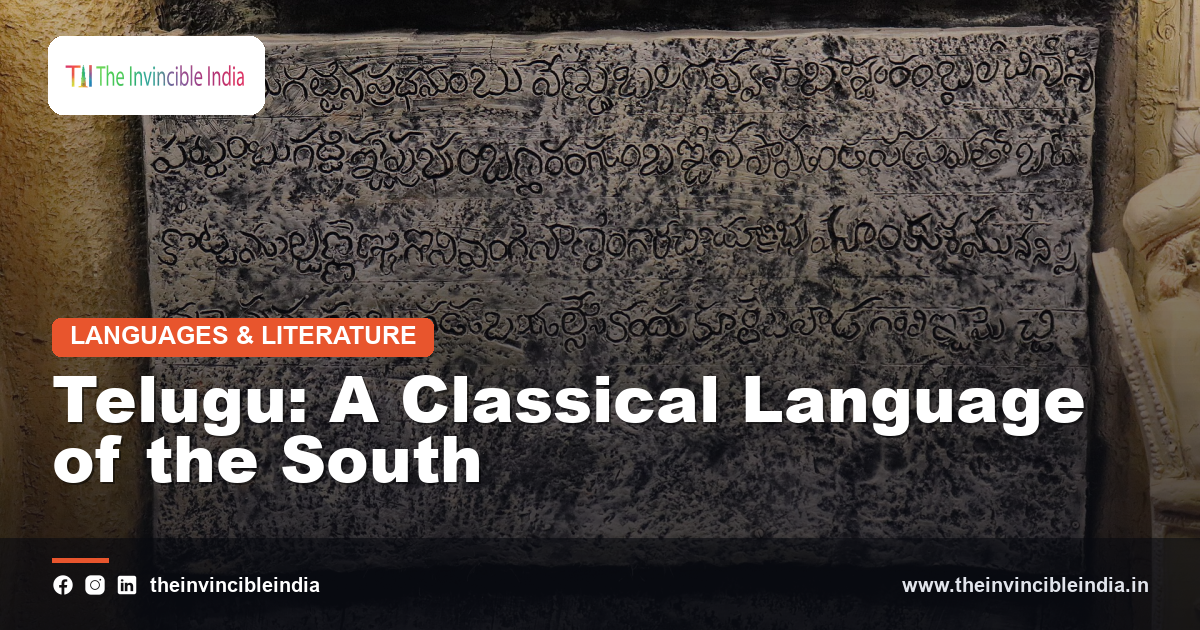
Telugu has a long and ancient heritage, its history reaching back many centuries, attested in early inscriptions and developing over time into a great literary language. The antiquity of the language is shown by ancient inscriptions and by the long development of its literature, and it possesses a continuous tradition of great depth. This deep heritage was recognised when Telugu was honoured as a classical language of India, an acknowledgement of its antiquity and the richness of its independent literary tradition. The ancient roots of Telugu, and its long and continuous development as a language of literature and culture, are a source of great pride and an important part of its identity and significance.
A Classical Language
In recognition of its antiquity and its rich, independent literary heritage, Telugu has been officially designated one of the classical languages of India, a status reserved for languages with an ancient and valuable literary tradition. This recognition affirmed the great age and cultural importance of the language and its literature, and it brought recognition, support for research and preservation, and pride to the Telugu people. As a classical language, Telugu stands among the ancient and distinguished languages of India, and its heritage is honoured and studied. The classical status of Telugu underlines its place as one of the great and ancient languages of the country, with a literary tradition of lasting value.
The Classical Poets
The classical literary tradition of Telugu was shaped by great poets whose works are treasured as the foundations of its literature. Among the most celebrated is the trio of revered poets who undertook the monumental task of rendering the great epic the Mahabharata into Telugu, a labour spanning generations and producing a masterpiece of the language. These and other classical poets created a rich body of literature, adapting the great epics and Puranas and composing original works of poetry, and they raised Telugu to a high literary art. The classical poets are honoured as the founders and masters of the Telugu literary tradition, and their works remain cherished classics, foundational to the heritage of the language.
A Golden Age of Literature
Telugu literature enjoyed a great golden age during the era of a powerful and culturally brilliant empire of the south, when the language and its literature flourished under royal patronage. In this period, celebrated as a high point of Telugu letters, great poets composed masterpieces of poetry, and the language reached new heights of literary achievement. A famous ruler of the age was himself a poet and patron of Telugu literature. This golden age produced some of the greatest classics of the language and is remembered as a period of extraordinary literary brilliance. The flourishing of Telugu literature in this era is a proud chapter in the history of the language and a treasured part of its heritage.
Devotional Literature
Telugu has a rich tradition of devotional literature, including the songs and poems of saints and devotees who sang of their love for the divine. Among the most beloved are the devotional songs of great composers and saint-poets, whose compositions in Telugu are treasured both as literature and as living devotion, sung in worship and in the classical music of the south. This devotional literature, full of love for the divine and often of great poetic beauty, is a cherished part of the Telugu heritage and is closely connected to the religious and musical life of the Telugu people. The devotional poetry and song of Telugu are among the most beloved expressions of the language and its culture.
The Telugu Script
Telugu is written in its own distinctive and beautiful script, characterised by its graceful, rounded forms. Like the other scripts of South India, the Telugu script descends ultimately from the ancient Brahmi but developed its own characteristic appearance over the centuries, its flowing, curved shapes partly reflecting the materials once used for writing in the region. The script is well suited to the sounds of the language and is used to write its vast literature, from ancient inscriptions to modern books and digital media. The elegant Telugu script is an important part of the identity of the language and a beautiful example of the rich family of Indian scripts, carrying the literature of Telugu across the centuries.
Telugu and Sanskrit
Although Telugu is a Dravidian language with its own ancient roots, it has a long and close relationship with Sanskrit, from which it has absorbed a great deal of vocabulary and literary influence. Over the centuries, especially in its classical literature, Telugu drew richly on Sanskrit for words, themes, poetic forms and learning, blending this influence with its own Dravidian foundation to create a rich and sophisticated literary language. This deep interaction with Sanskrit enriched Telugu greatly, especially in its higher literary and scholarly registers, while the language retained its own distinct Dravidian character and structure. The relationship between Telugu and Sanskrit is an important aspect of the language and its literary heritage.
Modern Telugu Literature
The ancient literary tradition of Telugu continues vigorously into the modern age, with a rich body of modern literature. Modern Telugu writers have produced novels, short stories, poetry, plays and essays, addressing contemporary life, society and ideas while drawing on the deep heritage of the language, and modern Telugu literature is vibrant and diverse. New literary movements and forms have flourished, giving voice to new sensibilities and concerns. This modern literature continues the unbroken tradition of Telugu letters into the present and is a vital part of the cultural life of the Telugu people. The vitality of modern Telugu literature shows that the language remains a living and creative vehicle of literary art.
Telugu in Cinema
Telugu is also the language of one of the largest and most vibrant film industries in India, whose films are hugely popular among Telugu speakers and, increasingly, far beyond them. Telugu cinema has carried the language and its culture to vast audiences and has become an important part of the cultural life and identity of the Telugu people, with its songs, drawing on the poetic and musical traditions of the language, especially beloved. The success and reach of Telugu cinema have given the language a powerful presence in popular culture and have carried its beauty to audiences across India and the world. The connection between Telugu and its celebrated cinema is an important part of the language’s modern life.
A Language of Pride
Telugu is a source of deep pride and identity for the many millions who speak it, cherished for its beauty, its antiquity and its rich literary and cultural heritage. Love of the Telugu language runs deep among its people, expressed in devotion to its literature, its poetry, its music and its cinema, and in pride in its classical status and its mellifluous sound. This strong cultural attachment to the language is an important part of the identity of the Telugu people, wherever they live. The deep pride that Telugu speakers take in their language, and the central place it holds in their cultural life and sense of identity, is a striking feature of Telugu culture.
Telugu Today
Today Telugu flourishes as one of the great languages of India, spoken by many millions, honoured as a classical language, and vibrant in literature, music, cinema and daily life. Its rich heritage, from the classical poets and the golden age of its literature to its beloved devotional songs, continues to be cherished, while its modern literature and its celebrated cinema show its living vitality. Sweet-sounding, ancient and rich in literature, and a source of deep pride to its people, Telugu carries its long heritage forward into the present. As a classical language with a thriving modern life, Telugu remains one of the great and beloved languages of India.
Sources & Further Reading
- Ministry of Culture, Government of India, on the classical languages of India (indiaculture.gov.in).
- Sahitya Akademi, national academy of letters, on Telugu literature (sahitya-akademi.gov.in).
Frequently Asked Questions
What is the Telugu language?
Telugu is a classical Dravidian language of South India, spoken chiefly in Andhra Pradesh and Telangana by many millions of people. It is one of the most widely spoken languages in India, celebrated for its mellifluous sound and its rich literary heritage.
Why is Telugu called the Italian of the East?
Telugu is called the Italian of the East because of the sweetness and musicality of its sound. Many Telugu words end in vowels, giving the language a flowing, melodious quality pleasing to the ear, much as Italian is admired for its musical sound in the West.
Is Telugu a classical language?
Yes. Telugu has been officially designated one of the classical languages of India, in recognition of its antiquity and its rich, independent literary tradition, a status reserved for languages with an ancient and valuable literary heritage.
What script is Telugu written in?
Telugu is written in its own distinctive and beautiful script, characterised by graceful, rounded forms. Like the other scripts of South India, it descends ultimately from the ancient Brahmi but developed its own characteristic flowing appearance.
What is the literary heritage of Telugu?
Telugu has a rich literary heritage, from the classical poets who rendered the great epics into Telugu and the golden age of its literature under royal patronage, through its beloved devotional songs, to its vibrant modern literature and celebrated cinema.


