

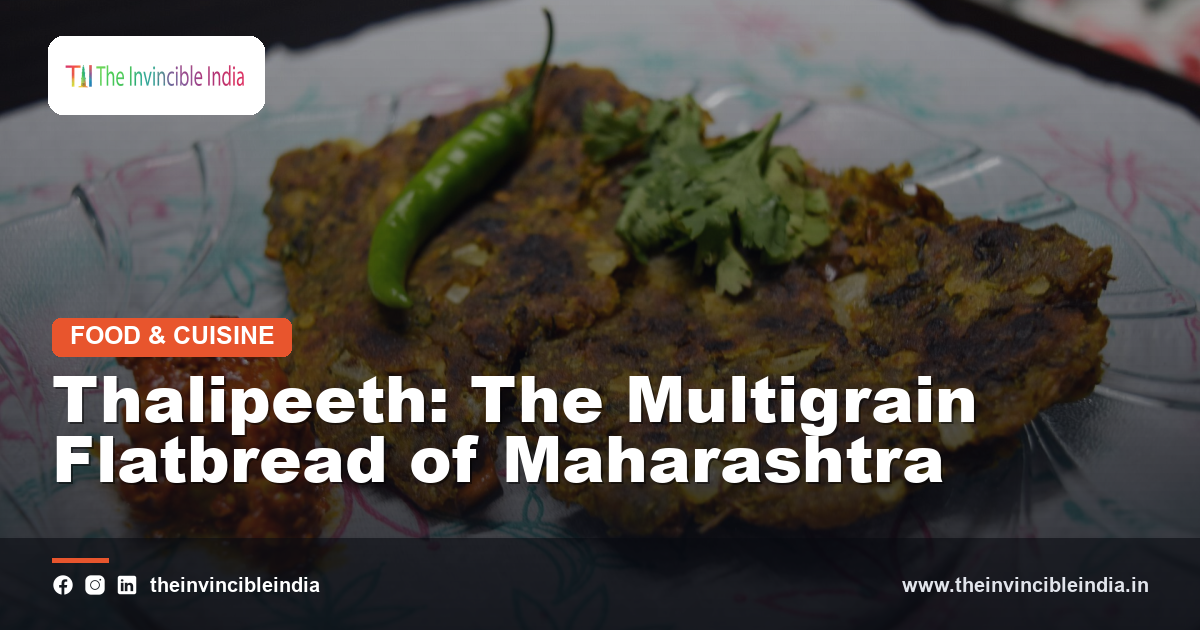
Thalipeeth is the savoury multigrain flatbread of Maharashtra, a wholesome and deeply satisfying dish made from a roasted flour blend known as bhajani and seasoned with onion, fresh coriander and spices. Patted out by hand rather than rolled, it is cooked on a griddle until crisp at the edges and soft within. Like many dishes in Maharashtrian cuisine, it turns simple grains and household seasonings into something nourishing and full of character. This guide explores thalipeeth, its history, its ingredients and technique, its many variations and its enduring place on the breakfast and festival tables of Maharashtra.
Quick Facts
| Detail | Information |
|---|---|
| Type | Savoury multigrain flatbread |
| Region | Maharashtra |
| Key ingredient | Bhajani, a roasted multigrain and pulse flour |
| Cooking method | Patted by hand and shallow-cooked on a griddle |
| Served with | White butter, curd, chutney or pickle |
| Character | Wholesome, crisp-edged and mildly spiced |
What Is Thalipeeth?
Thalipeeth is a traditional flatbread from Maharashtra, made from a flour blend of several roasted grains and pulses, mixed with onion, herbs and spices into a soft dough and shaped into a round disc. Unlike a roti, it is not rolled but patted out with wet fingers on a cloth, leaf or plate, and then slid onto a hot griddle to cook with a little oil. The result is a flavourful, slightly crumbly bread with a crisp surface and a tender interior. It is eaten for breakfast, as a snack or as a light meal. As a humble yet nourishing preparation of the Maharashtrian household, thalipeeth remains one of the region’s most cherished everyday dishes.
Origins in the Maharashtrian Kitchen
Thalipeeth grew out of the practical cooking of Maharashtra’s households, where cooks sought to make full use of the grains and pulses grown across the Deccan plateau. A bread made from a blend of several flours was both economical and highly nutritious, and it allowed leftover vegetables or herbs to be folded into the dough. The dish is closely associated with rural and urban homes alike and has long been part of everyday eating. Its exact beginnings are not documented, but its character clearly reflects the thrifty, resourceful spirit of the region’s cooking. This practical heritage, grounded in available grain and household ingenuity, is what gave thalipeeth its lasting role in Maharashtrian cuisine.
The Name and Its Meaning
The word thalipeeth is generally understood to combine thali, meaning plate, with peeth, which refers to flour or a flat base, and it points to the manner in which the bread is shaped. The dough is spread directly onto a plate, a banana leaf or a piece of cloth, which gives the bread its name and its characteristic rough, rustic form. In some communities the term is used interchangeably with other regional names for similar multigrain breads. Understanding the name helps explain the technique that distinguishes it from rolled breads. This simple linguistic link between the plate and the flour captures the unfussy, hands-on nature of thalipeeth and its place in everyday Marathi food culture.
Bhajani, the Heart of Thalipeeth
Bhajani is the flour blend that gives thalipeeth its distinctive flavour and nutritional richness. It is made by dry-roasting a mixture of grains and pulses, which commonly include jowar, bajra, rice, wheat, chana dal and urad dal, along with spices such as coriander and cumin seeds, and then grinding them into a fine flour. The roasting step lends a toasty, nutty aroma that sets the bread apart from those made with raw flour. Households traditionally prepared bhajani in bulk and stored it for months, while ready-made versions are now widely sold. This unique roasted multigrain blend is the true soul of thalipeeth, and its balance of grains is what gives each household version its signature taste.
Ingredients That Complete the Dough
Beyond bhajani, the dough is enriched with a handful of fresh ingredients that bring colour and flavour. Finely chopped onion is the most common addition, along with fresh coriander, green chillies, ginger and sometimes garlic. Seeds such as sesame and cumin, a pinch of turmeric, red chilli powder and salt complete the seasoning. Some cooks add a little grated vegetable, such as bottle gourd, cabbage or spinach, which keeps the dough moist and adds nutrition. Water is added gradually to form a soft, pliable dough. This thoughtful combination of roasted flour and fresh seasonings creates the lively balance of earthy and fresh flavours that makes thalipeeth so appealing and so adaptable to the contents of any kitchen.
Shaping the Dough by Hand
The shaping of thalipeeth is a skill in itself. Because the multigrain dough contains little gluten, it cannot be rolled thin like wheat chapati dough, so the cook pats it out gently with moistened fingers on a damp cloth, a piece of plastic or a banana leaf until it forms an even round about as thick as a pancake. A small hole is often poked in the centre and a few more around the surface, which allows steam to escape and oil to seep in during cooking. The flat disc is then carefully turned onto the hot griddle. This hand-patting technique, requiring patience and a light touch, is what gives thalipeeth its characteristic rustic texture and appearance.
Cooking on the Griddle
Cooking thalipeeth is a quiet, patient process. The patted disc is placed on a hot, lightly greased tawa, and a little oil or ghee is drizzled around the edges and into the central hole. A lid may be placed over the pan for a short time so that the bread steams and cooks through, and then the lid is removed to allow the surface to turn crisp and golden. It is flipped once to brown the other side. The finished bread has crunchy, caramelised edges and a soft, flavourful centre. This gentle griddle cooking, balancing steam and direct heat, brings out the nutty character of the roasted flour and produces the bread’s much-loved texture.
Serving Thalipeeth with Butter and Curd
Thalipeeth is traditionally served hot, with accompaniments that complement its robust flavour and slight dryness. A generous dollop of fresh white butter melting on the surface is the classic choice, while cool, creamy curd offers a refreshing contrast. Chutneys, particularly those made from peanuts, green chillies or sesame, are favourite partners, and a spoonful of tangy lemon pickle is often added to the plate. Some families serve it with a bowl of spicy dry curry or a glass of buttermilk. This simple repertoire of accompaniments, which highlights rather than hides the bread’s own flavour, shows how a humble preparation can become a deeply satisfying meal when served with the right companions.
Regional Variations Across Maharashtra
Like many traditional dishes, thalipeeth varies from one part of Maharashtra to another and from one household to the next. Some versions emphasise jowar, a grain common in the drier parts of the Deccan, while others use more rice or wheat. Western Maharashtra, Vidarbha and the Konkan each have preferences in spicing and in the addition of vegetables or herbs. Certain communities prepare thalipeeth with specific ingredients on particular days of the week. These differences reflect local agriculture and family custom rather than any fixed rule. The wide range of regional variations shows how adaptable the dish is and how thoroughly it has been absorbed into the diverse food culture of the state.
Upvas Thalipeeth for Fasting Days
An important variation is the fasting version of thalipeeth, prepared on days when grains such as wheat and rice are avoided for religious reasons. This upvas thalipeeth is made from flours permitted during fasts, such as those derived from sabudana, rajgira or singhara, combined with boiled and mashed potato, crushed peanuts, green chillies and cumin, and flavoured with rock salt. The dough is shaped and cooked in the same manner as the regular version, producing a soft yet satisfying flatbread. It is typically accompanied by curd or a peanut chutney. This fasting adaptation demonstrates how thalipeeth bends to the requirements of religious observance while retaining its familiar form and comfort.
Nutritional and Everyday Value
Part of the enduring appeal of thalipeeth lies in its wholesome character. Because it blends several grains and pulses, it offers a varied mix of cereal and legume flavours, and the additions of vegetables and herbs bring freshness. It is filling without being heavy and is a popular choice for a substantial breakfast or a light dinner. Cooking with only a small amount of oil keeps it simple. Households often view it as a sensible way to use up leftover vegetables and cooked grains. This combination of variety, economy and satisfying flavour explains why thalipeeth has long been valued as a practical and nourishing part of the daily Maharashtrian diet.
Thalipeeth in the Maharashtrian Thali
Within the larger framework of Maharashtrian meals, thalipeeth occupies a flexible role. It can be the star of a casual breakfast or tea-time spread, appear beside a bowl of curry at a simple meal, or be served as part of a festive spread alongside sweets and pickles. During travel it is a favourite packed food because it keeps reasonably well and tastes good even when cool. Its cousins in the family of Indian multigrain flatbreads include the Gujarati thepla and the Rajasthani bajra roti, each with its own character. This versatile place on the Maharashtrian table shows how a single, simple bread can suit many occasions and moods.
Making Thalipeeth at Home
Making thalipeeth at home is a rewarding exercise that requires no special equipment. The cook mixes bhajani with chopped onion, herbs and spices, adds warm water gradually until the dough is soft and holds together, and rests it briefly. The dough is divided into balls, patted out on a damp cloth, and cooked on a hot griddle with a little oil until crisp and golden on both sides. Practice helps in judging the right moisture and thickness, and early attempts may crack or tear before the technique settles. Families often pass on tips informally across generations. This easy, forgiving approach to home cooking is part of what keeps thalipeeth a living, everyday tradition.
Thalipeeth, Hospitality and Memory
For many Maharashtrians, thalipeeth is a dish tied to memory, evoking the smell of a griddle on a morning stove and the sight of a plate with a blob of white butter slowly melting. It is a dish offered to guests who drop in unannounced, shared among family on lazy weekends and carried in tiffin boxes on journeys. Recipes are rarely written down, and each household believes its own version to be the best. Food writers and cultural historians often cite thalipeeth as an example of the comfort foods that anchor regional identity. This emotional resonance is as much a part of thalipeeth as its ingredients and technique.
Thalipeeth Today
Today thalipeeth continues to thrive on Maharashtrian tables and has found new admirers across the country and abroad. Ready-made bhajani flour is sold in stores, making the dish easy to prepare even in busy urban households, and restaurants and cafes serve it as a regional speciality, sometimes with modern twists. Home cooks experiment with millets and vegetables, reflecting growing interest in traditional grains. Despite such changes, the essence of the dish remains the same. This enduring popularity, built on simplicity, wholesome flavour and generations of family practice, ensures that thalipeeth remains a beloved and living part of Maharashtra’s rich culinary heritage.
Sources & Further Reading
- Ministry of Culture, Government of India (indiaculture.gov.in).
- Maharashtra Tourism Development Corporation (maharashtratourism.gov.in).
Frequently Asked Questions
What is thalipeeth?
Thalipeeth is a savoury multigrain flatbread from Maharashtra, made from a roasted flour blend called bhajani mixed with onion, herbs and spices. It is patted by hand and cooked on a griddle.
What is bhajani flour?
Bhajani is a blend of dry-roasted grains and pulses, commonly including jowar, bajra, rice, wheat and lentils along with spices, ground into flour. It gives thalipeeth its nutty flavour and distinctive taste.
How is thalipeeth different from roti?
Thalipeeth is made from a multigrain dough with little gluten and is patted out by hand rather than rolled. It also contains onion, herbs and spices in the dough itself, unlike a plain roti.
What is thalipeeth eaten with?
It is usually served hot with white butter, curd, peanut or green chutney and pickle. Some families also enjoy it with a simple dry curry or buttermilk.
Is there a fasting version of thalipeeth?
Yes, upvas thalipeeth is made from fasting-friendly ingredients such as sabudana, rajgira or singhara flour with potato and peanuts. It is cooked the same way and eaten on religious fast days.


