

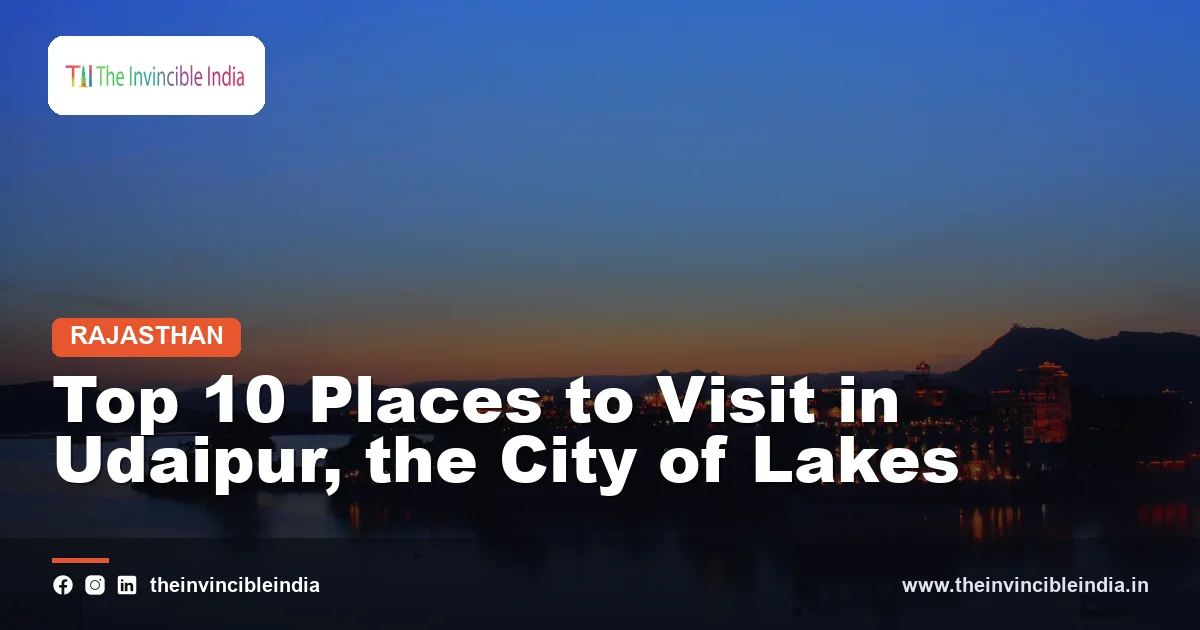
Fondly called the “City of Lakes” and the “Venice of the East,” Udaipur is one of Rajasthan’s most enchanting and romantic destinations. Founded in 1559 by Maharana Udai Singh II as the new capital of the Mewar kingdom after the fall of Chittorgarh, this city is a dreamy tapestry of shimmering lakes, marble palaces, sacred temples and the ancient Aravalli hills. Consistently ranked among the most beautiful cities in the world, Udaipur offers a rare combination of royal grandeur, natural serenity and living tradition. In this detailed guide, we explore the top 10 places to visit in Udaipur, along with deeper history, day trips, food, shopping and everything you need to plan the perfect trip.
A City Steeped in History
The story of Udaipur is inseparable from the story of Mewar, one of the longest-serving royal dynasties in the world. When repeated invasions threatened Chittorgarh, Maharana Udai Singh II chose the fertile, lake-fed valley by the Aravallis to build a new, more defensible capital. Sheltered by hills and blessed with water, Udaipur flourished as a centre of art, architecture and Rajput valour. The Sisodia rulers of Mewar were famous for never fully submitting to the Mughals, and that fierce sense of pride and heritage still colours the city today, from its palaces to its folk performances. Legend says a holy sage advised Udai Singh to build his capital here, promising it would never run dry — and indeed the lakes have sustained the city for centuries.
Quick Facts About Udaipur
| Founded | 1559, by Maharana Udai Singh II |
| Also known as | City of Lakes, Venice of the East |
| State | Rajasthan |
| Famous for | Palaces, lakes, Mewar heritage, miniature paintings |
| Best time to visit | October to March |
| Ideal trip length | 2–3 days (plus day trips) |
| Nearest airport | Maharana Pratap Airport, Dabok (~22 km) |
1. City Palace
Perched majestically on the eastern banks of Lake Pichola, the City Palace is the largest palace complex in Rajasthan and the crown jewel of Udaipur. Built over nearly 400 years by successive Maharanas beginning with Udai Singh II, it is a spectacular fusion of Rajput and Mughal architecture, with a facade stretching around 244 metres and rising some 30 metres high. Inside its fortified walls lies a labyrinth of eleven interconnected palaces, courtyards, terraces and museums. Highlights include the Mor Chowk (Peacock Courtyard) adorned with glittering glass mosaics of peacocks, the Sheesh Mahal (Palace of Mirrors), the Krishna Vilas, the Moti Mahal and the Zenana Mahal (women’s quarters). The terraces offer breathtaking views over the lake, and the palace museum displays royal artefacts, weapons, paintings and costumes. A visit here is essentially a walk through the entire history of Mewar.
2. Lake Pichola
An artificial freshwater lake created in 1362, well before the city itself was founded, Lake Pichola is the beating heart of Udaipur. Its calm waters, spread over roughly 6.7 square kilometres, reflect the palaces, ghats and hills that ring it. A boat ride at sunset is the quintessential Udaipur experience, offering postcard views of the Lake Palace, Jag Mandir island, the imposing City Palace facade and the bustling bathing and washing ghats. The lake is fed by the Sisarma and other seasonal streams, and its islands and surrounding havelis make every angle a photographer’s delight, especially in the golden light of early morning and dusk.
3. Lake Palace (Taj Lake Palace)
Appearing to float like a vision of white marble in the middle of Lake Pichola, the Lake Palace was built between 1743 and 1746 by Maharana Jagat Singh II as a royal summer retreat, originally named Jag Niwas. Today it is one of the most romantic luxury heritage hotels in the world, its marble walls seeming to rise straight from the water. Even if you are not staying, its ethereal beauty when viewed from a boat or the City Palace ramparts is unforgettable, and it has featured in numerous films.
4. Jag Mandir
Another exquisite island palace on Lake Pichola, Jag Mandir was built across the 17th century. It is known for its domes, gardens, an elegant row of carved marble elephants and rich history. It is said to have sheltered the Mughal prince Khurram — later Emperor Shah Jahan — during a rebellion against his father, and some believe its architecture partly inspired the Taj Mahal. Today it houses a restaurant and garden, accessible by boat, and makes a memorable spot for a meal or a quiet wander.
5. Jagdish Temple
Built in 1651 by Maharana Jagat Singh, this grand Indo-Aryan temple in the heart of the old city is dedicated to Lord Vishnu in the form of Jagannath. Rising three storeys high with an intricately carved 24-metre spire covered in sculptures of dancers, elephants and musicians, it has been in continuous worship for centuries. A brass image of Garuda and beautifully sculpted stone elephants guard the entrance, and the temple’s bells, chants and aartis fill the surrounding lanes with devotion.
6. Sajjangarh (Monsoon Palace)
Set atop Bansdara hill at around 944 metres, the 19th-century Sajjangarh, popularly known as the Monsoon Palace, was built by Maharana Sajjan Singh, originally intended as an astronomical centre and later a monsoon retreat for watching the rain clouds. It offers the most spectacular panoramic views in Udaipur, taking in the city, its lakes, Fateh Sagar and the surrounding countryside. It is especially magical at sunset, and its location within the Sajjangarh Wildlife Sanctuary adds to the appeal.
7. Fateh Sagar Lake
Ringed by hills and dotted with three islands, including the popular Nehru Park, Fateh Sagar Lake is a favourite among locals. Its scenic promenade is perfect for an evening stroll, a cup of coffee or an ice cream, and boat rides take visitors to the islands. The lake, connected to Lake Pichola by a canal, is an artificial reservoir originally built in the 17th century and later rebuilt by Maharana Fateh Singh, after whom it is named.
8. Saheliyon Ki Bari
The “Garden of the Maidens,” built in the 18th century by Maharana Sangram Singh II, was created for the royal ladies of the court and the maids who accompanied a queen as part of her dowry. This lush retreat features lotus pools, marble elephants, delicate kiosks and fountains that once ran purely on water pressure without any pumps, fed by the lake above. It remains a tranquil oasis reflecting the refined court life of Mewar.
9. Bagore Ki Haveli
This restored 18th-century mansion on the waterfront at Gangaur Ghat was once the residence of a Mewar prime minister, Amir Chand Badwa. It now houses a museum displaying royal costumes, jewellery, glassware, turbans and everyday objects of the era, including what is claimed to be the world’s largest turban. Every evening, the courtyard comes alive with the Dharohar folk dance and music show, one of the best introductions to Rajasthani culture, complete with the famous bhavai dance in which performers balance up to ten brass pots on their heads.
10. Vintage and Classic Car Museum
Housing the Mewar royal family’s collection of vintage automobiles, this museum is a treat for enthusiasts. The collection includes Rolls-Royces, a 1934 Rolls-Royce Phantom, a Cadillac convertible used in the James Bond film Octopussy, and the Rolls-Royce used to ferry Queen Elizabeth II during a royal visit. Housed in the former royal garage (Mewar State Motor Garage), it offers a glimpse into the modern chapter of Mewar’s royal story.
Beyond the Top 10
Udaipur rewards those who linger. Ambrai Ghat and Gangaur Ghat offer stunning waterfront views, especially at sunrise, and Ambrai is a famous spot to photograph the City Palace across the water. Shilpgram, a rural arts and crafts village on the outskirts, showcases the folk culture of western India and hosts a lively winter crafts festival. Gulab Bagh is a large garden ideal for a relaxed walk, and the Karni Mata ropeway to Machla Magra hill offers sweeping views of the city and lakes. Vintage lovers should also visit the Crystal Gallery in the Fateh Prakash Palace, home to a rare collection of crystal furnishings.
Best Day Trips From Udaipur
Udaipur is an excellent base for exploring the wider Mewar region. The magnificent Kumbhalgarh Fort, with the second-longest wall in the world, lies about two hours away and is often combined with the stunning Ranakpur Jain Temple, famous for its 1,444 uniquely carved marble pillars. The ancient temple town of Eklingji, the ruined temples of Nagda, and the historic Chittorgarh Fort (about two hours away) are all rewarding excursions into Mewar’s past.
Best Time to Visit
The best time to visit Udaipur is between October and March, when daytime temperatures are pleasant and evenings are cool — ideal for sightseeing and boat rides. The Mewar Festival in spring and Shilpgram Utsav in late December are wonderful times to experience local culture. Summers (April to June) are hot, often crossing 40°C, while the monsoon (July to September) transforms the surrounding hills into lush green and fills the lakes, lending the city a romantic, misty charm despite occasional rain.
How to Reach Udaipur
Udaipur is well connected. Maharana Pratap Airport at Dabok, about 22 km from the city, links Udaipur to major Indian cities such as Delhi and Mumbai. The Udaipur City railway station connects to Delhi, Jaipur, Ahmedabad and other hubs. By road, Udaipur is linked by national highways to Ahmedabad (about 260 km), Jaipur (about 395 km) and Jodhpur (about 250 km), and forms part of many Rajasthan tour circuits.
Local Cuisine and Shopping
No visit is complete without sampling Rajasthani specialities such as dal baati churma, gatte ki sabzi, ker sangri and the sweet, crumbly ghewar and malpua. For shopping, the lanes around Hathi Pol, Bada Bazaar and the Clock Tower are treasure troves of miniature paintings (Udaipur is a renowned centre of the Mewar school), silver jewellery, block-printed textiles, leather juttis, colourful puppets and pichwai paintings.
Travel Tips
Allow at least two to three days to experience Udaipur properly, with an extra day for Kumbhalgarh and Ranakpur. Wear comfortable shoes for palace visits, carry water and sun protection, and consider a sunset boat ride on your first evening for orientation. Respect temple dress codes, bargain politely in the markets, and book heritage-hotel dinners or the Dharohar show in advance during peak season. Early mornings at the ghats offer the best light and the most authentic glimpses of local life.
Festivals of Udaipur
Udaipur’s calendar is rich with colour. The Mewar Festival, held in spring around Gangaur, celebrates the arrival of the season with processions, songs and beautifully dressed images of Gauri carried to Lake Pichola. The Shilpgram Utsav, a ten-day crafts fair held from late December, brings together artisans and folk performers from across western India. The Hariyali Amavasya and Jal Jhulni Ekadashi festivals see the lakes and temples come alive, while Holi is celebrated grandly at the City Palace with the royal Holika Dahan and a procession of horses and elephants.
Where to Stay in Udaipur
Udaipur offers accommodation for every budget. For a once-in-a-lifetime splurge, the Taj Lake Palace and the Oberoi Udaivilas are among the most celebrated luxury hotels in the world. Heritage havelis converted into boutique hotels near the old city and the ghats offer character and lake views at mid-range prices, while the lanes around Lal Ghat and Hanuman Ghat have a wide choice of guesthouses and rooftop cafes popular with backpackers. Staying near Lake Pichola puts you within walking distance of the main sights.
Frequently Asked Questions
Why is Udaipur called the City of Lakes?
Udaipur is built around several interconnected artificial lakes, including Lake Pichola, Fateh Sagar, Swaroop Sagar and Udai Sagar, earning it the name “City of Lakes.”
Who founded Udaipur and when?
Udaipur was founded in 1559 by Maharana Udai Singh II as the capital of the Mewar kingdom.
How many days are enough for Udaipur?
Two to three days are ideal to explore the palaces, lakes, temples and markets, with an extra day for nearby trips like Kumbhalgarh and Ranakpur.
What is the best time to visit Udaipur?
October to March offers the most pleasant weather for sightseeing and boat rides.
What is the famous evening show in Udaipur?
The Dharohar folk dance and music show at Bagore Ki Haveli is held every evening and is a wonderful introduction to Rajasthani culture.
Which day trips are best from Udaipur?
Kumbhalgarh Fort, Ranakpur Jain Temple, Eklingji, Nagda and Chittorgarh Fort are the most popular day trips.


