

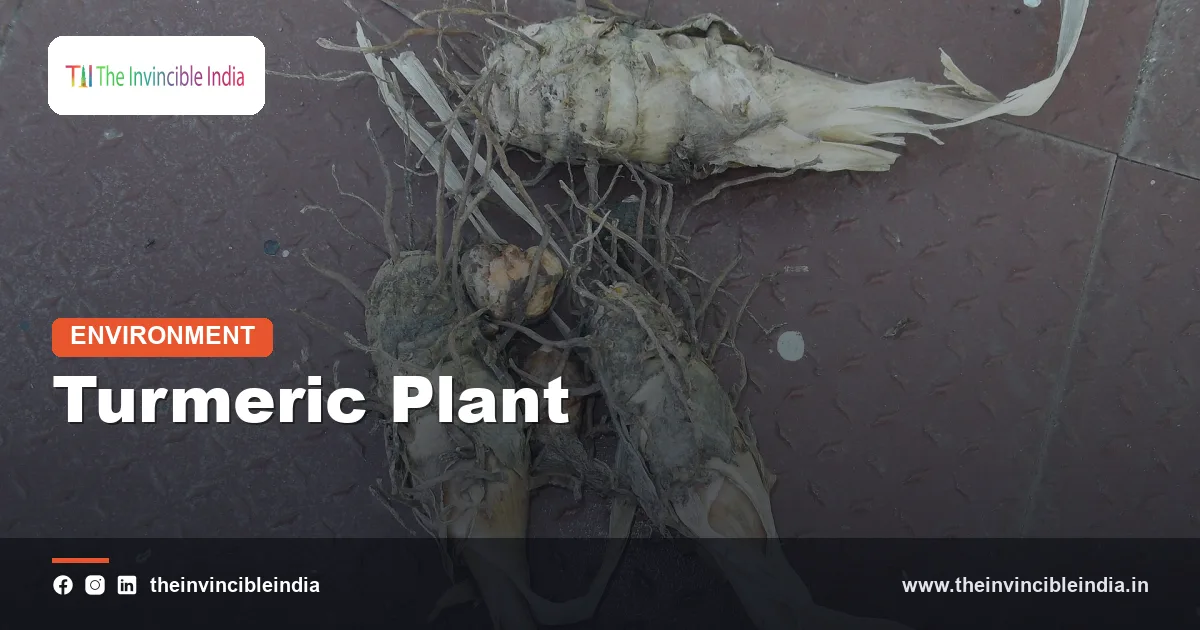
Turmeric (Curcuma longa) is a tall, leafy perennial herb of the ginger family whose underground stem, or rhizome, is boiled, dried and ground into the bright yellow spice that Indians call haldi. India is the world’s largest producer, consumer and exporter of turmeric, and the spice is woven into the country’s kitchens, wedding rituals, Ayurvedic practice and agriculture.
The turmeric plant is grown mainly in the warm, humid parts of peninsular and eastern India, and its colour comes from a group of compounds called curcuminoids, of which curcumin is the best known. This explainer covers what the plant is, how it grows, where it is cultivated, how the rhizome is processed, and why it matters to farmers, cooks and researchers. It was last reviewed on 23 October 2026.
| Attribute | Detail |
|---|---|
| Scientific name | Curcuma longa (family Zingiberaceae, the ginger family) |
| Common Indian names | Haldi (Hindi), haridra (Sanskrit), manjal (Tamil, Malayalam), pasupu (Telugu), arishina (Kannada), halad (Marathi) |
| Part used | The rhizome (underground stem), sold as fingers and bulbs |
| Active colouring compounds | Curcuminoids, led by curcumin; typical commercial turmeric contains a few per cent curcumin by weight |
| Crop duration | Roughly seven to nine months from planting to harvest |
| Main growing states | Telangana, Maharashtra, Tamil Nadu, Andhra Pradesh, Karnataka, Odisha, Meghalaya and West Bengal |
| India’s global position | Largest producer, consumer and exporter; supplies the large majority of the world’s turmeric |
| Key institutions | Spices Board of India, ICAR-Indian Institute of Spices Research (Kozhikode), National Turmeric Board (Nizamabad, Telangana) |
| Cultural role | Used in cooking, the haldi ceremony, puja rituals, Ayurveda and natural dyeing |
Key Takeaways
- Turmeric is the dried rhizome of Curcuma longa, a perennial herb related to ginger, and it is cultivated in India as an annual crop.
- India is the world’s leading producer, consumer and exporter of turmeric and accounts for the large majority of global output.
- Curcumin, the main curcuminoid in turmeric, gives the spice its yellow colour; its content varies by variety, with the Lakadong turmeric of Meghalaya known for unusually high levels.
- Turmeric needs warm, humid weather, well-drained loamy soil and about seven to nine months to mature, with planting typically at the start of the monsoon.
- Harvested turmeric must be boiled, sun-dried and polished before it becomes the familiar yellow powder.
- In 1997 the US Patent Office revoked a patent on the wound-healing use of turmeric after India’s CSIR showed the use was long established in traditional knowledge.
What Is the Turmeric Plant?
The turmeric plant is a herbaceous perennial, Curcuma longa, that grows to roughly one metre in height and carries long, broad, lance-shaped leaves on short pseudostems. Underground it forms a branching rhizome system: a thicker central “mother” rhizome, called the bulb, and slender side branches known as fingers.
The plant belongs to the Zingiberaceae family, the same botanical group as ginger, cardamom and galangal. The outer skin of the rhizome is pale brown, while the inside is deep orange-yellow when fresh. The flowers appear as a spike of pale yellow or white bracts, but the crop is grown for its rhizome, so flowering is of little commercial importance.
Turmeric is a sterile triploid plant in most cultivated forms, which means it seldom sets viable seed. Farmers therefore propagate it vegetatively by planting pieces of rhizome, called seed rhizomes. This is also why the crop depends so heavily on healthy planting material.
Where Does Turmeric Come From and What Does Haldi Mean?
Turmeric is native to the tropical regions of South Asia, and India has grown and used it for several thousand years. The Sanskrit name haridra is the root of the Hindi word haldi, and the plant appears in classical Indian texts on medicine and ritual.
Turmeric spread from the subcontinent along trade routes to Southeast Asia, China, the Middle East and, later, Africa and the Caribbean. The English word “turmeric” is generally traced to medieval European languages, possibly linked to the Latin terra merita, though the exact origin is debated.
In Indian languages the spice has many regional names, and the plant has accumulated a rich body of folk usage. Households keep a jar of haldi in almost every kitchen, and the root itself is sold fresh in markets in winter, when it is grated into pickles and curries.
How Is Turmeric Grown in India?
Turmeric is grown in India as a rain-fed or irrigated crop planted from rhizome pieces, typically between April and July, and harvested about seven to nine months later, from roughly January to March. The crop prefers a warm, humid climate with temperatures broadly in the range of 20 to 35 degrees Celsius and reliable rainfall or irrigation through the growing period.
Soil and land preparation
Turmeric grows best in well-drained, friable loam or sandy loam rich in organic matter. Waterlogged soil encourages rhizome rot, so farmers prepare raised beds or ridges and furrows, and add farmyard manure before planting.
Planting and care
Farmers plant finger or mother rhizome pieces, each carrying at least one healthy bud, at a spacing that leaves room for the rhizomes to expand. Seed rhizomes are often treated against fungal infection before planting. Mulching with leaves or straw helps conserve moisture and suppress weeds, and fields usually receive several rounds of weeding and earthing up.
Intercropping and rotation
Turmeric tolerates partial shade, so it is sometimes grown as an intercrop under coconut, arecanut or other orchard trees. Because it is a heavy feeder on the soil, growers commonly rotate it with other crops rather than plant it on the same plot year after year.
Which Indian States Grow the Most Turmeric?
Telangana, Maharashtra, Tamil Nadu, Andhra Pradesh and Karnataka are among the leading turmeric-growing states in India, with Odisha, West Bengal, Gujarat and Meghalaya also contributing. Exact rankings shift from year to year with rainfall and prices, so it is more reliable to think in terms of regional clusters than precise tonnage.
| Region or market | State | Known for |
|---|---|---|
| Nizamabad | Telangana | One of the biggest turmeric trading centres; home of the National Turmeric Board |
| Sangli and Hingoli | Maharashtra | A major trading hub; Sangli turmeric is a long-established name in the market |
| Erode | Tamil Nadu | A leading market and processing centre for the Erode turmeric trade |
| Salem and Erode belt | Tamil Nadu | Salem turmeric, valued for colour and polish |
| Kandhamal | Odisha | Kandhamal Haldi, a Geographical Indication (GI) tagged variety grown by tribal farmers |
| Jaintia Hills | Meghalaya | Lakadong turmeric, known for its high curcumin content |
| Alappuzha region | Kerala | Alleppey Finger turmeric, a traditional export grade |
What Are the Main Varieties of Turmeric?
India grows dozens of turmeric varieties and local types, and they differ mainly in curcumin content, colour, yield and duration. Varieties are commonly named after the place where they were first popularised, such as Salem, Erode, Rajapuri and Alleppey.
- Lakadong: a Meghalaya variety that is widely reported to contain much higher curcumin than ordinary commercial turmeric, which makes it attractive for export and for nutraceutical use.
- Alleppey Finger: a well-known export type from Kerala, marketed for its deep colour.
- Salem and Erode types: Tamil Nadu varieties prized for bright colour and good polish after processing.
- Rajapuri: a Maharashtra type with thick, fleshy rhizomes that is widely used for table and fresh consumption.
- Improved cultivars: research institutions such as ICAR-Indian Institute of Spices Research have released improved cultivars with higher curcumin or better disease tolerance, and the Spices Board promotes their use.
The choice of variety depends on the buyer. Culinary markets prize colour and aroma, whereas the health-supplement and extract industries look for high curcumin and low moisture.
What Is Curcumin and Why Does It Matter?
Curcumin is a yellow polyphenol pigment that makes up the main part of the curcuminoids in turmeric, and it is responsible for most of the spice’s colour. Commercial turmeric typically contains a few per cent curcumin by dry weight, though the figure varies widely by variety, soil and processing.
Curcumin has been studied extensively in laboratories for possible effects on inflammation and oxidative stress. However, scientific reviews note that curcumin is poorly absorbed when eaten on its own, and many clinical results remain preliminary. Dietary turmeric is generally regarded as safe in food amounts, but concentrated supplements are a different matter and should be taken on medical advice.
Black pepper contains piperine, which laboratory studies suggest can improve curcumin absorption, and this is one reason that traditional Indian recipes often pair haldi with pepper and fat. This explainer does not make medical claims; readers with health conditions should consult a qualified doctor.
How Is Turmeric Processed After Harvest?
Harvested turmeric rhizomes are cleaned, boiled, dried in the sun and polished before they are sold as dried fingers or ground into powder. This post-harvest chain takes several weeks and strongly affects the colour, aroma and market price of the final product.
- Harvesting: farmers lift the rhizomes once the leaves turn yellow and begin to dry, then separate the mother bulbs from the fingers.
- Boiling or curing: rhizomes are boiled in water until they soften, which gelatinises the starch, removes the raw smell and gives an even colour.
- Drying: the cooked rhizomes are spread in the sun for roughly ten to fifteen days, or dried in mechanical dryers, until they turn hard and brittle.
- Polishing: dried rhizomes are rubbed in a rotating drum or by hand to remove the rough skin and give a smooth surface.
- Grinding and grading: polished fingers are milled into powder, sieved and graded for sale.
Some growers sell fresh turmeric directly in winter markets, and a growing segment extracts oleoresin and curcumin for use in food colouring, cosmetics and supplements.
What Is the Cultural and Religious Role of Turmeric in India?
Turmeric holds an auspicious status in Hindu tradition, and it is used in daily puja, in the haldi ceremony before weddings and in many regional rituals. A paste of haldi is applied to the bride and groom in several communities, and the colour yellow is associated with purity and good fortune.
Turmeric also appears in many everyday customs. Households often apply a little haldi to a cut because of its long-reputed antiseptic use, and a pinch of it goes into boiling rice, dal and vegetable dishes in most Indian regions. Haldi doodh, or turmeric milk, is a common home remedy for colds in many families, though its benefits rest on tradition rather than conclusive trials.
The spice also carries economic meaning, because it supports millions of smallholder farmers, traders and processors. Cooperatives and farmer producer organisations increasingly handle drying and grading to capture more value.
Which Government Bodies Support Turmeric in India?
The Spices Board of India, which operates under the Ministry of Commerce and Industry, is the main body promoting turmeric production, quality and exports. The board registers exporters, sets quality norms and runs schemes for post-harvest improvement and for certified organic production.
The National Turmeric Board, announced in 2023 and launched in January 2025 with its headquarters at Nizamabad in Telangana, was set up to focus on research, value addition, branding and the welfare of turmeric farmers. Research on varieties, agronomy and pest management is led by ICAR institutes, including the Indian Institute of Spices Research at Kozhikode, along with state agricultural universities.
Turmeric is also included in several Geographical Indication registrations, and the Food Safety and Standards Authority of India (FSSAI) lays down purity standards for turmeric powder in the domestic market.
What Was the Turmeric Patent Case?
The turmeric patent case was a landmark 1990s dispute in which India’s Council of Scientific and Industrial Research (CSIR) successfully challenged a US patent on the use of turmeric for wound healing. The patent, granted in 1995 to two researchers at a US university, was revoked by the US Patent and Trademark Office in 1997.
CSIR argued that the medicinal use of turmeric on wounds was well documented in ancient Indian texts, so the claim was not novel. The decision became an early example of India defending its traditional knowledge against what is often called biopiracy. It also helped inspire the Traditional Knowledge Digital Library (TKDL), a database that records Indian medicinal knowledge so that patent examiners worldwide can find prior art.
What Pests and Challenges Affect Turmeric Farming?
Turmeric farming faces threats from rhizome rot, leaf spot and leaf blotch diseases, and from pests such as the shoot borer and the rhizome scale insect. Waterlogging, poor seed material and erratic rainfall are common sources of loss, and fluctuating market prices make the economics unpredictable for smallholders.
| Challenge | Typical cause | Common response |
|---|---|---|
| Rhizome rot | Fungal infection in waterlogged soil | Better drainage, treated seed rhizomes, crop rotation |
| Leaf spot and leaf blotch | Fungal pathogens in humid weather | Resistant varieties, timely sprays, field hygiene |
| Shoot borer | Insect larvae feeding inside the pseudostem | Monitoring and approved biological or chemical control |
| Price volatility | Swings in supply and export demand | Storage, forward selling, farmer producer organisations |
| Contaminants such as adulterated colour | Addition of illegal dyes to powder | FSSAI testing, branded and traceable supply chains |
Buyers in export markets also test turmeric for pesticide residues and heavy metals, so clean cultivation and proper drying have become commercial necessities as well as health measures.
Bottom Line
Turmeric is a modest-looking rhizome with an outsized place in India’s agriculture, trade and culture, and India remains the dominant force in the world turmeric market. The plant’s future depends on healthy planting material, sound post-harvest practice and keeping the spice’s reputation for purity intact.
Frequently Asked Questions
Is turmeric a root or a rhizome?
Turmeric is a rhizome, which is a horizontally growing underground stem rather than a true root. The rhizome stores starch and the yellow pigment, and farmers harvest and dry it to make the spice.
Which state is the largest producer of turmeric in India?
Telangana and Maharashtra are among the largest turmeric-producing states, along with Tamil Nadu, Andhra Pradesh and Karnataka. The exact ranking changes with seasonal conditions and prices, and Nizamabad and Sangli are two of the best-known trading centres.
How long does turmeric take to grow?
Turmeric takes roughly seven to nine months to mature after planting. Farmers usually plant from April to July at the start of the monsoon and harvest from around January to March, once the leaves turn yellow and dry.
What gives turmeric its yellow colour?
Curcuminoids, mainly curcumin, give turmeric its yellow colour. These pigments are concentrated in the rhizome and make up a few per cent of typical commercial turmeric by weight.
What is Lakadong turmeric?
Lakadong turmeric is a variety from the Jaintia Hills of Meghalaya that is widely reported to have much higher curcumin content than ordinary turmeric. It is valued in export and health-product markets, and it is promoted as a speciality product of the region.
Why is turmeric used in Indian weddings?
Turmeric is used in Indian weddings because it is considered auspicious and purifying in Hindu tradition. In the haldi ceremony, a paste of turmeric is applied to the bride and groom before the wedding, and the practice is also linked to its long use as a skin preparation.
{“@context”:”https://schema.org”,”@graph”:[{“@type”:”FAQPage”,”mainEntity”:[{“@type”:”Question”,”name”:”Is turmeric a root or a rhizome?”,”acceptedAnswer”:{“@type”:”Answer”,”text”:”Turmeric is a rhizome, which is a horizontally growing underground stem rather than a true root. The rhizome stores starch and the yellow pigment, and farmers harvest and dry it to make the spice.”}},{“@type”:”Question”,”name”:”Which state is the largest producer of turmeric in India?”,”acceptedAnswer”:{“@type”:”Answer”,”text”:”Telangana and Maharashtra are among the largest turmeric-producing states, along with Tamil Nadu, Andhra Pradesh and Karnataka. The exact ranking changes with seasonal conditions and prices, and Nizamabad and Sangli are two of the best-known trading centres.”}},{“@type”:”Question”,”name”:”How long does turmeric take to grow?”,”acceptedAnswer”:{“@type”:”Answer”,”text”:”Turmeric takes roughly seven to nine months to mature after planting. Farmers usually plant from April to July at the start of the monsoon and harvest from around January to March, once the leaves turn yellow and dry.”}},{“@type”:”Question”,”name”:”What gives turmeric its yellow colour?”,”acceptedAnswer”:{“@type”:”Answer”,”text”:”Curcuminoids, mainly curcumin, give turmeric its yellow colour. These pigments are concentrated in the rhizome and make up a few per cent of typical commercial turmeric by weight.”}},{“@type”:”Question”,”name”:”What is Lakadong turmeric?”,”acceptedAnswer”:{“@type”:”Answer”,”text”:”Lakadong turmeric is a variety from the Jaintia Hills of Meghalaya that is widely reported to have much higher curcumin content than ordinary turmeric. It is valued in export and health-product markets, and it is promoted as a speciality product of the region.”}},{“@type”:”Question”,”name”:”Why is turmeric used in Indian weddings?”,”acceptedAnswer”:{“@type”:”Answer”,”text”:”Turmeric is used in Indian weddings because it is considered auspicious and purifying in Hindu tradition. In the haldi ceremony, a paste of turmeric is applied to the bride and groom before the wedding, and the practice is also linked to its long use as a skin preparation.”}}]}]}


