

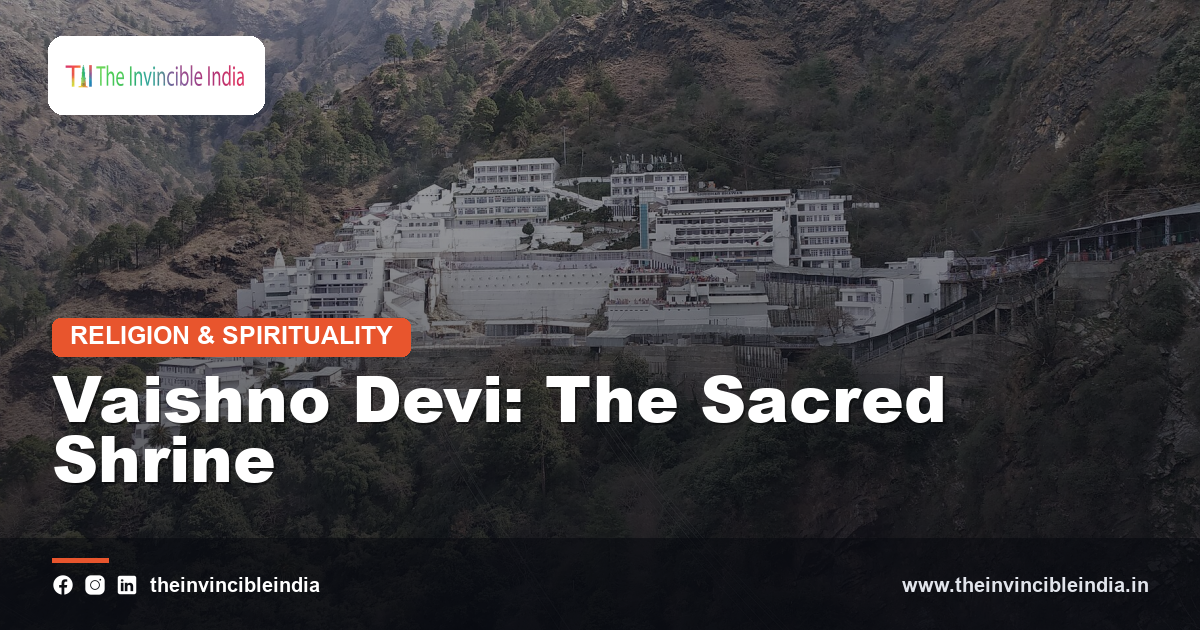
Set high among the Trikuta hills in the Jammu region, Vaishno Devi is one of the most visited pilgrimage destinations in India, drawing devotees from across the country throughout the year. The shrine is dedicated to the Goddess in her form as Vaishno Devi, understood by devotees as an embodiment of divine feminine power. Reaching the sanctum requires a trek through mountainous terrain, a journey that pilgrims regard as an integral part of their devotion rather than a mere approach route. Combining natural grandeur with deep-rooted devotional tradition, Vaishno Devi occupies a distinctive place among India’s Shakti shrines, embodying both the physical rigor and the emotional intensity long associated with Himalayan pilgrimage.
Quick Facts
| Detail | Information |
|---|---|
| Location | Trikuta hills, Jammu region |
| Deity | Goddess Vaishno Devi (a form of Shakti) |
| Base Town | Katra |
| Access | On foot, pony, palanquin, or cable transport |
| Tradition | Shakti / Goddess worship within Hinduism |
| Management | A dedicated shrine board |
A Shrine Amid the Trikuta Hills
Vaishno Devi is set within a cave shrine high in the Trikuta hills, a spur of the Himalayan foothills in the Jammu region of northern India. The setting itself, remote and elevated, has long contributed to the shrine’s reputation as a place set apart from ordinary life, reached only through sustained physical effort.
The natural landscape of forested slopes and mountain air forms an inseparable part of the pilgrimage experience, reinforcing the sense that the journey to the shrine is as spiritually significant as the destination itself. This blending of geography and devotion is characteristic of many Himalayan pilgrimage sites across northern India.
Legendary Origins of the Shrine
Devotional tradition surrounding Vaishno Devi describes the Goddess choosing this remote mountain cave as her abode, a story passed down through generations of pilgrims and local narrative. As with many ancient shrines, the precise historical origins are less central to devotees than the living tradition of belief that surrounds the site today.
These accounts, transmitted primarily through oral tradition and popular retelling, emphasize themes of divine protection and the triumph of righteousness, themes common to goddess-centered narratives across India. Rather than functioning as historical record, such legends serve to deepen the devotional meaning pilgrims associate with the journey and the sanctum itself.
The Goddess as an Embodiment of Shakti
Vaishno Devi is understood within Hindu tradition as a manifestation of Shakti, the divine feminine principle understood as the active, dynamic power underlying creation. This association places the shrine within a wider network of goddess-centered worship found across the subcontinent, each site linked to its own local form of the divine feminine.
Devotees often approach the Goddess as a source of protection, strength, and maternal compassion combined, a duality that runs through much of Shakti worship in India. This blending of nurturing and empowering qualities helps explain the deep emotional attachment many pilgrims feel toward the shrine.
The Town of Katra and the Journey Begins
Most pilgrims begin their journey in the town of Katra, which has grown substantially around its role as the gateway to the shrine. Lodging, food services, and preparation facilities cluster around the base, reflecting the steady, year-round flow of visitors who pass through on their way up the mountain.
For many pilgrims, Katra marks a symbolic threshold between ordinary daily life and the sacred journey ahead. The atmosphere of anticipation in the town, filled with fellow travelers preparing for the ascent, is often described by visitors as an integral part of the overall pilgrimage experience.
The Trek and Modes of Ascent
The path from Katra to the shrine winds upward through mountainous terrain, and pilgrims may choose to walk, ride ponies, be carried in palanquins, or use available modern transport options along parts of the route. Regardless of the method chosen, the ascent is widely regarded as a test of devotion and endurance.
Along the way, rest points, shelters, and food stalls support the steady stream of pilgrims, many of whom travel in family groups or with organized parties. The shared physical effort of the climb often fosters a strong sense of community among travelers who may otherwise be strangers to one another.
The Sacred Cave and the Pindis
At the heart of the shrine lies a cave sanctum containing naturally formed rock structures known as pindis, which devotees revere as manifestations of the Goddess. Rather than a conventional sculpted image, this natural form is central to the shrine’s distinctive character and adds to its aura of ancient sanctity.
Pilgrims pass through the cave in a continuous, carefully managed procession to receive darshan, a ritual viewing regarded as the culmination of the entire journey. The intimate, enclosed setting of the cave heightens the emotional significance of this moment for many devotees after their long ascent.
Ritual Practice and Darshan
Darshan at Vaishno Devi follows an organized system designed to accommodate the very large number of pilgrims who visit, particularly during peak seasons. Devotees typically wait in queues that move through covered walkways before reaching the sanctum, a process that itself has become part of the shrine’s devotional rhythm.
Simple offerings, prayer, and moments of quiet reflection accompany the viewing of the sacred pindis. Many pilgrims also participate in associated rituals at nearby points along the route, weaving together a broader devotional sequence rather than treating the main shrine as an isolated stop.
Ardhkuwari and Other Sacred Stops
Partway along the pilgrimage route lies Ardhkuwari, a site closely tied to the broader devotional narrative of the Goddess and regarded by many pilgrims as an important stop in its own right. A visit here is often considered a meaningful complement to the main shrine visit.
Other points along the trail carry their own local significance, often marked by shrines, shelters, or resting spots associated with particular episodes of devotional lore. Together these stops transform the ascent into a sequence of sacred encounters rather than a single destination reached by a direct route.
The Bhairon Nath Temple
Many pilgrims extend their journey to include the temple of Bhairon Nath, situated a further distance from the main shrine and closely linked to it in devotional tradition. Visiting this temple is popularly regarded as completing the full pilgrimage cycle associated with Vaishno Devi.
The relationship between the two shrines reflects a broader pattern in Indian devotional geography, in which pilgrimage sites are often linked in pairs or clusters that together tell a fuller sacred narrative. Completing the combined visit is considered by many devotees to fulfill the pilgrimage in its traditional, complete form.
Festivals and Peak Pilgrimage Periods
Certain periods of the year, particularly those associated with major Goddess-centered festivals, see a marked increase in the number of pilgrims making the journey to Vaishno Devi. These occasions are marked by heightened devotional activity, additional rituals, and a palpable sense of collective celebration along the route.
During these peak times, the shrine and surrounding facilities operate at their busiest, reflecting the deep and widespread devotion the site commands across different regions and communities of India. The festive atmosphere during these periods adds a distinct dimension to the pilgrimage experience.
Management and Facilities for Pilgrims
A dedicated shrine board oversees the administration of Vaishno Devi, coordinating everything from crowd management and safety along the trek to the maintenance of rest houses, medical facilities, and amenities for the steady flow of visitors. This organized approach has become a model referenced by other major pilgrimage sites in India.
Ongoing efforts to improve accessibility, sanitation, and pilgrim comfort reflect the scale of responsibility involved in supporting such a heavily visited shrine, balancing the preservation of its sacred character with the practical needs of the very large numbers who undertake the journey each year.
Vaishno Devi Within the Shakti Tradition
Vaishno Devi belongs to a wider constellation of Shakti shrines found across the Indian subcontinent, each associated with its own local legend, geography, and ritual tradition. Collectively, these shrines form an important thread within Hindu devotional practice, emphasizing the goddess as a living, accessible presence rather than an abstract concept.
The prominence of Vaishno Devi within this network owes much to its accessibility, dramatic setting, and long-established devotional following, which together have made it one of the most recognized goddess shrines in northern India and a touchstone for Shakti worship more broadly.
Cultural and Economic Significance to the Region
Beyond its religious importance, Vaishno Devi has become a major driver of economic activity in the surrounding region, supporting local livelihoods connected to hospitality, transport, and pilgrim services. The steady flow of visitors throughout the year sustains an entire local economy built around the pilgrimage.
This economic dimension exists alongside, rather than in tension with, the shrine’s spiritual role, illustrating how major pilgrimage centers in India often serve as anchors for both devotional life and regional development, shaping the character of the towns and communities that surround them.
Connections to Other Himalayan Shrines
Vaishno Devi is often considered alongside other prominent Himalayan pilgrimage destinations, forming part of a broader tradition of mountain-based sacred sites across northern India. This tradition holds that elevated, remote locations carry a particular spiritual resonance, requiring effort and endurance as part of genuine devotion.
Pilgrims who visit Vaishno Devi frequently mention pilgrimages to other Himalayan shrines in the same breath, reflecting a shared devotional culture that spans the northern mountain regions and draws on common themes of ascent, purification, and encounter with the sacred.
Preservation of Natural and Sacred Heritage
The dual identity of the Trikuta hills, as both a place of natural beauty and a site of deep religious significance, has encouraged ongoing attention to environmental stewardship alongside pilgrim management. Efforts to maintain the trail, manage waste, and protect the surrounding forest reflect an awareness that the setting itself is part of the shrine’s sanctity.
This attention to preservation reflects a broader recognition across Indian pilgrimage sites that natural and spiritual heritage are often deeply intertwined, and that safeguarding one requires attention to the other, particularly at a site visited by such large numbers of people each year.
Vaishno Devi Today
Today, Vaishno Devi remains one of the most visited pilgrimage destinations in India, drawing devotees of many backgrounds who undertake the mountain journey each year in search of blessing and spiritual renewal. Its combination of dramatic natural setting and deeply rooted devotional tradition continues to define its enduring appeal.
As facilities and infrastructure continue to evolve to meet growing pilgrim numbers, the essential character of the shrine, a cave sanctuary reached through effort and devotion in the heart of the Trikuta hills, remains unchanged, ensuring that Vaishno Devi continues to hold a central place in India’s living pilgrimage traditions.
Sources & Further Reading
- Ministry of Culture, Government of India (indiaculture.gov.in).
- Ministry of Tourism, Government of India.
Frequently Asked Questions
Where is Vaishno Devi located?
Vaishno Devi is located in the Trikuta hills near the town of Katra, in the Jammu region of northern India.
How do pilgrims reach the shrine?
Pilgrims typically begin their journey in Katra and reach the shrine by walking, riding a pony, using a palanquin, or taking available modern transport options along parts of the route.
What is found inside the sacred cave?
The cave sanctum contains naturally formed rock structures known as pindis, which devotees revere as manifestations of the Goddess.
Is there another shrine associated with the pilgrimage?
Yes, many pilgrims also visit the nearby Bhairon Nath temple, which is traditionally regarded as completing the full pilgrimage.
Who manages the Vaishno Devi shrine?
A dedicated shrine board oversees the administration, facilities, and pilgrim services associated with the shrine and its approach route.


