


India is one of the world’s 17 megadiverse countries, home to an astonishing variety of wildlife including tigers, elephants, one-horned rhinos, Asiatic lions, leopards, snow leopards and more than 1,300 bird species. The country has over 100 national parks and more than 560 wildlife sanctuaries, many protected under Project Tiger, the pioneering conservation programme launched in 1973. From the mangroves of the Sundarbans to the high deserts of Ladakh, this detailed guide covers the top wildlife sanctuaries and national parks in India, along with the best times to visit and essential safari tips.
India’s Conservation Story
India has a long tradition of protecting nature, from ancient sacred groves to modern legislation like the Wildlife Protection Act of 1972. Project Tiger, launched in 1973 with nine reserves, has since grown to more than 50 tiger reserves and has helped India become home to around 70 per cent of the world’s wild tigers. Parallel efforts have brought the one-horned rhino and the Asiatic lion back from the brink. Ecotourism now plays a vital role in funding conservation and involving local communities.
Quick Facts
| National parks | Over 100 |
| Wildlife sanctuaries | Over 560 |
| Tiger reserves | More than 50 (Project Tiger) |
| Best time for safaris | October to June |
Jim Corbett National Park (Uttarakhand)
Established in 1936 as Hailey National Park, Jim Corbett is India’s oldest national park and the birthplace of Project Tiger. Set in the Himalayan foothills along the Ramganga River, it offers a mix of grasslands, hills and dense forest, and is a prime destination for spotting Bengal tigers, along with elephants, deer and over 600 bird species. Its Dhikala zone is especially prized by wildlife enthusiasts.
Ranthambore National Park (Rajasthan)
Famous for relatively frequent tiger sightings against the dramatic backdrop of the ancient Ranthambore Fort, this park in eastern Rajasthan is one of the best places in India to photograph tigers in the wild. Its dry deciduous forests, lakes and ruins create a uniquely picturesque setting.
Kaziranga National Park (Assam)
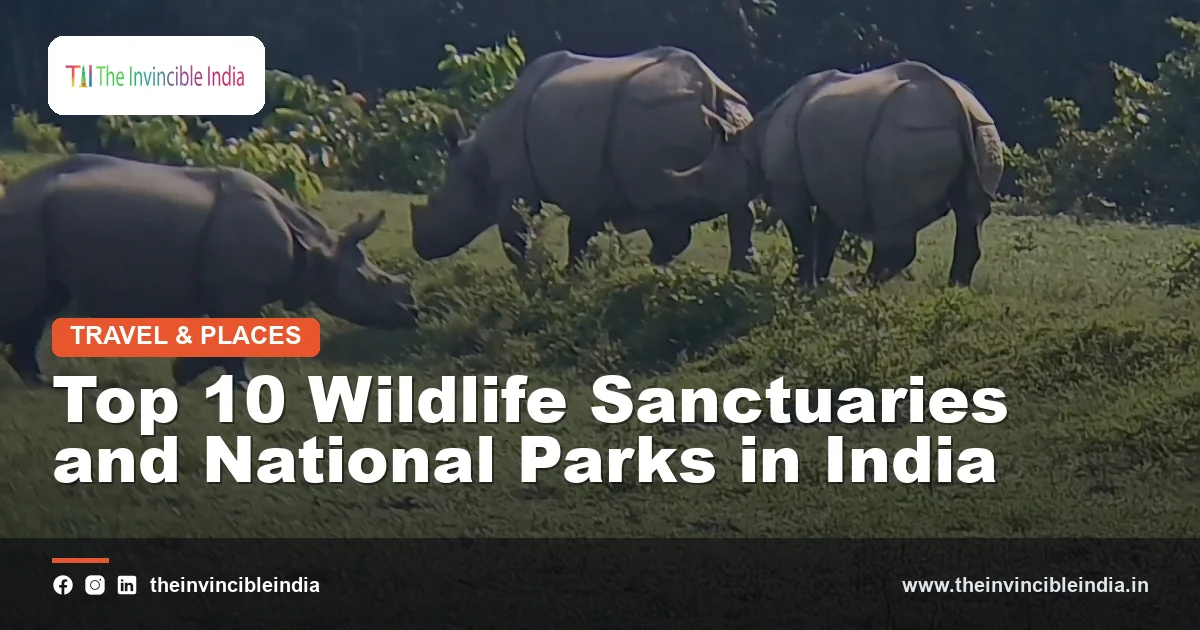
A UNESCO World Heritage Site, Kaziranga is home to roughly two-thirds of the world’s one-horned rhinoceroses, as well as tigers, wild elephants, water buffalo and swamp deer. Its tall elephant grass, marshes and the mighty Brahmaputra create a stunning habitat, best explored by jeep or, in season, on elephant-back.
Gir National Park (Gujarat)
Gir is the last natural home of the majestic Asiatic lion, whose population has steadily recovered from just a few dozen a century ago to several hundred today, thanks to sustained conservation. A safari here offers the rare thrill of seeing these big cats, along with leopards, crocodiles and numerous birds.
Bandhavgarh National Park (Madhya Pradesh)
Known for one of the highest densities of tigers in India, Bandhavgarh in Madhya Pradesh also features an ancient hilltop fort and a landscape rich in legend. Its compact core zones make sightings relatively likely.
Kanha National Park (Madhya Pradesh)
The lush sal forests and open meadows of Kanha are said to have inspired Rudyard Kipling’s “The Jungle Book.” One of India’s largest and best-managed parks, it is credited with saving the hard-ground barasingha (swamp deer) from extinction and is home to tigers, leopards and abundant wildlife.
Sundarbans National Park (West Bengal)
A UNESCO World Heritage Site straddling India and Bangladesh, the Sundarbans is the world’s largest mangrove forest and home to the elusive Royal Bengal tigers famous for swimming between islands. Explored by boat, it is a unique and mysterious ecosystem of tidal waterways, mudflats and mangroves.
Periyar Wildlife Sanctuary (Kerala)
Set around a scenic lake in the Western Ghats at Thekkady, Periyar is famous for its herds of elephants and offers boat safaris that provide a different, tranquil way to watch wildlife, along with spice-plantation walks in the surrounding hills.
Bandipur and Nagarhole (Karnataka)
Part of the Nilgiri Biosphere Reserve, these adjoining parks in Karnataka are excellent for spotting tigers, elephants, gaur (Indian bison), leopards and dholes (wild dogs), set amid beautiful teak and bamboo forests.
Hemis National Park (Ladakh)
A high-altitude park in Ladakh, Hemis is famous as one of the best places in the world to spot the elusive snow leopard, especially in winter, along with other Himalayan species like the blue sheep and Tibetan wolf.
Other Notable Parks
India offers many more remarkable reserves, including Tadoba in Maharashtra (excellent for tigers), Sariska in Rajasthan, Pench (another Jungle Book landscape), Satpura for walking safaris, Nagarhole’s Kabini backwaters, and the birdwatchers’ paradise of Keoladeo (Bharatpur), a UNESCO site.
Best Time for a Safari
| Tigers (central India) | March to June (best sightings) |
| Kaziranga rhinos | November to April |
| Snow leopard (Hemis) | January to March |
| General wildlife | October to June |
Safari Tips and Responsible Tourism
Book safaris and park permits well in advance, as many popular zones fill up quickly. Wear neutral, earthy colours, carry binoculars and a good camera, and follow your guide’s instructions. Most parks close during the monsoon (roughly July to September) for breeding season. Above all, practise responsible tourism: keep a respectful distance, never feed or disturb animals, avoid plastic, keep noise to a minimum, and choose operators and lodges that support conservation and local communities. This ensures these precious habitats survive for future generations.
More Great Parks and Reserves
Beyond the headline destinations, India has a wealth of superb reserves that reward the patient traveller. Tadoba-Andhari in Maharashtra has become one of the most reliable tiger destinations in the country, with excellent sightings around its lakes and open forests. Pench, straddling Madhya Pradesh and Maharashtra, is another landscape that inspired Kipling and offers dense wildlife alongside fewer crowds. Satpura National Park is prized for its walking safaris, canoe rides and rugged scenery, offering a more intimate experience than jeep-only parks. Sariska in Rajasthan, once emptied of tigers, has been successfully repopulated and lies within easy reach of Delhi and Jaipur. In the far north, Dudhwa in Uttarakhand shelters tigers, rhinos and swamp deer along the Nepal border, while the Kabini backwaters on the edge of Nagarhole are legendary for black-panther and elephant sightings.
Birdwatching and Wetlands
India is a paradise for birdwatchers, with several wetlands of global importance. Keoladeo National Park (Bharatpur) in Rajasthan, a UNESCO World Heritage Site, hosts thousands of resident and migratory birds each winter, including painted storks and, historically, the rare Siberian crane. Chilika Lake in Odisha, Asia’s largest brackish-water lagoon, draws vast flocks of flamingos and other waterbirds, while Kerala’s Kumarakom and Assam’s wetlands add to the country’s rich avian diversity. Many of these sites are recognised as Ramsar wetlands of international importance and are ideal for gentle, boat-based wildlife watching suitable for all ages.
Types of Wildlife Safaris
India offers several ways to experience its wilderness. The most common is the jeep safari, in open 4×4 vehicles that cover core zones in the early morning and late afternoon when animals are most active. Canter (larger shared vehicle) safaris are available in some parks. Boat safaris, as at Periyar, the Sundarbans and Kabini, offer a peaceful vantage on riverine and lake wildlife. Elephant-back safaris, where still permitted, allow access to grasslands, and a growing number of parks such as Satpura now offer guided walking safaris and cycling for a closer connection with nature. Each type has its own permit rules, timings and charges, so it pays to research and book ahead.
What to Pack and Photography Tips
A successful safari begins with good preparation. Wear neutral, earthy colours such as khaki, olive and brown, and dress in layers, as early mornings can be cold even before hot afternoons. Carry binoculars, a hat, sunscreen, insect repellent, a refillable water bottle and any personal medication. For photography, a telephoto lens (at least 200mm, ideally longer) is invaluable, along with plenty of memory and a fast shutter for moving subjects; a bean bag helps steady the camera in a moving jeep. Most importantly, be patient and quiet — wildlife sightings reward stillness and respect.
The Best Time to Plan Your Trip
Timing is everything for a wildlife holiday in India. The winter months from November to February are comfortable and excellent for birdlife and rhinos, while the hot, dry months of March to June, though uncomfortable, often deliver the best big-cat sightings as animals gather around shrinking waterholes. Most tiger reserves close their core zones during the monsoon (roughly July to September) for the breeding season, though some buffer zones remain open. Planning around these cycles, and around each park’s specific calendar, dramatically improves your chances of memorable sightings.
Elephant Reserves and Corridors
India is home to the largest population of wild Asian elephants in the world, and Project Elephant, launched in 1992, protects them through dedicated reserves and corridors. Southern reserves such as Bandipur, Nagarhole, Wayanad and Mudumalai form part of a vast contiguous elephant landscape in the Western Ghats, while the forests of the northeast and Odisha shelter significant herds. Protecting the migratory corridors that connect these habitats is one of the most important challenges in Indian conservation, as it allows elephants to move safely and reduces conflict with human settlements.
Marine and Coastal Reserves
India’s wildlife is not confined to forests. The country has marine national parks in the Gulf of Mannar off Tamil Nadu and the Gulf of Kutch in Gujarat, protecting coral reefs, sea turtles, dugongs and rich marine life. The Andaman and Nicobar Islands harbour some of the finest coral ecosystems in the region. These reserves highlight the astonishing breadth of India’s biodiversity, from snow leopards in the Himalayas to corals in the tropical seas, all within a single country.
Conservation and Local Communities
Successful conservation in India increasingly depends on involving the people who live around protected areas. Ecotourism generates income and employment for local communities as guides, drivers, lodge staff and artisans, giving them a direct stake in protecting wildlife. Community-run conservancies, homestays and buffer-zone tourism help reduce dependence on the forest and ease human-wildlife conflict. When you travel responsibly and choose operators that employ and benefit local people, your visit becomes part of the conservation solution rather than a pressure on it.
Ethical Wildlife Tourism
As wildlife tourism grows, so does the responsibility of every visitor to protect the very creatures they come to see. Ethical wildlife tourism means keeping a respectful distance, never feeding, chasing or crowding animals, avoiding flash photography, staying inside the vehicle, and never littering or playing loud music. Choose parks and operators that cap vehicle numbers and follow strict guidelines, and treat a sighting as a privilege rather than a right. By putting the welfare of animals first, travellers help ensure that India’s forests remain wild and full of life for generations to come.
Frequently Asked Questions
Which is the oldest national park in India?
Jim Corbett National Park in Uttarakhand, established in 1936, is India’s oldest national park.
Where can I see one-horned rhinos in India?
Kaziranga National Park in Assam is home to about two-thirds of the world’s one-horned rhinoceroses.
Where are Asiatic lions found in India?
Gir National Park in Gujarat is the only natural home of the Asiatic lion.
What is the best time for a wildlife safari in India?
October to June is ideal, with the hotter months of March to June often offering the best tiger sightings.
Where can I spot a snow leopard in India?
Hemis National Park in Ladakh is one of the best places in the world to spot snow leopards, especially in winter.