

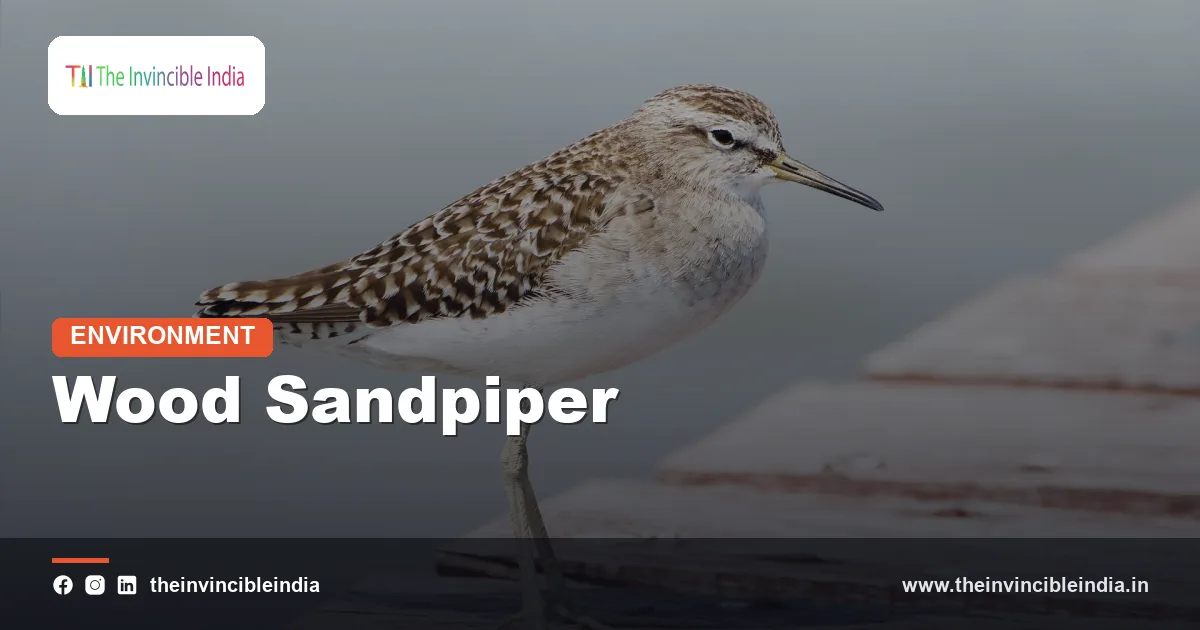
The wood sandpiper (Tringa glareola) is a small, slender wading bird that breeds in the northern forests and bogs of Europe and Asia and spends the winter in large numbers across India, where it feeds on the muddy edges of ponds, marshes and paddy fields. Arriving from about August and leaving by April or May, the wood sandpiper is one of the most common and widespread winter shorebirds on the subcontinent.
Because it is small, brown and quick to take flight, the wood sandpiper is often overlooked, yet it is a reliable sign that a wetland is healthy. This explainer covers how to identify the bird, where it breeds, its long migration to India, what it eats and how it differs from similar waders.
| Common name | Wood sandpiper |
|---|---|
| Scientific name | Tringa glareola |
| Family | Scolopacidae (sandpipers, snipes and allies) |
| Size | About 19 to 21 cm in length, weighing roughly 50 to 80 g |
| Status in India | Common winter visitor to wetlands across most of the country, from about August to April |
| Breeding range | Northern Europe and northern Asia, in wet taiga and boggy forest clearings |
| Diet | Insects, larvae, small crustaceans, snails and other small invertebrates |
| Migration | Long-distance migrant using the Central Asian Flyway and other routes |
| Conservation status | Least Concern (IUCN), with a very large global population |
Key Takeaways
- The wood sandpiper is a small wader of the sandpiper family that breeds in northern Eurasia and winters in India and other warm regions.
- Tringa glareola is one of the most numerous winter-visiting shorebirds in India and is found in freshwater wetlands, ponds, marshes and flooded paddy fields.
- The wood sandpiper can be recognised by its spotted brown back, long pale eyebrow stripe, yellowish legs and white rump in flight.
- Wood sandpipers eat insects, larvae, snails and small crustaceans that they pick from shallow water and mud.
- Unlike many waders, the wood sandpiper often nests in trees, using the abandoned nests of other birds.
- The IUCN lists the wood sandpiper as Least Concern, although loss of wetlands remains a long-term worry for migratory waders.
What is the wood sandpiper?
The wood sandpiper is a small, long-legged shorebird of the family Scolopacidae that migrates between its northern breeding grounds and southern wintering grounds. It is a medium-small member of the genus Tringa, which includes the green sandpiper, common redshank, marsh sandpiper and greenshank.
In India, the wood sandpiper is a winter visitor and passage migrant, which means it does not breed in the country. Birdwatchers see it from late summer through the winter, and it is one of the species counted in the annual waterbird censuses held at Indian wetlands.
How do you identify a wood sandpiper?
A wood sandpiper can be identified by its brown upperparts spotted with white, a long white eyebrow stripe that extends behind the eye, pale yellowish legs and a white rump that shows in flight. The bird is slim and graceful, with a thin straight bill and a pale underside that is lightly streaked on the breast.
Field marks to look for
- Back: brownish grey with many pale spots, giving a speckled look.
- Head: a clear white supercilium, or eyebrow, that reaches behind the eye.
- Legs: fairly long and yellowish to greenish-yellow.
- Bill: straight, dark and of moderate length, about as long as the head.
- In flight: white rump, finely barred tail and pale underwing.
- Call: a quick, high, whistling “chiff-iff-iff” given when the bird is flushed.
The sexes look alike, and young birds are a little warmer in tone, with buff spots on the back. When feeding, the wood sandpiper often bobs its body gently and walks carefully in shallow water.
Where does the wood sandpiper breed?
The wood sandpiper breeds in the northern parts of Europe and Asia, mainly in wet taiga forest, bogs and marshy clearings. Its breeding range stretches from Scandinavia across Russia and Siberia, and it favours open swampy ground with scattered trees and pools.
The nesting habits are unusual for a sandpiper. Many pairs lay eggs in a shallow scrape on the ground, but the species is also known to use old nests of thrushes and other birds in trees. The chicks leave the nest soon after hatching and are led to the water by the parents. This behaviour gives the bird its name, since it is closely tied to wooded habitats during the breeding season.
During the breeding season, wood sandpipers are noisy and defend their territories with display flights and loud calls. Because these areas are remote, most Indian birdwatchers never see the bird in its breeding plumage or at its nest.
Why does the wood sandpiper migrate to India?
The wood sandpiper migrates to India because the northern wetlands where it breeds freeze in winter and food becomes unavailable, while India’s wetlands stay open and rich in invertebrates. Birds fly south in late summer, make stops at lakes and marshes along the way and arrive in India from about August.
The journey follows broad routes known as flyways. Many of the wood sandpipers that reach India are thought to travel along the Central Asian Flyway, which crosses Central Asia and links Siberian breeding grounds with South Asian wintering areas. Others arrive via nearby routes. During the journey, birds fatten up at stopover sites, so the health of those stopovers is crucial for their survival.
The yearly cycle
- April to July: breeding in northern Eurasia.
- July to September: southward migration begins and the first birds reach India.
- October to March: wintering in Indian wetlands.
- March to May: northward migration and departure from India.
Some young or non-breeding birds may stay in the south through the summer, so a few individuals can be seen in India outside the usual season.
Where can you see the wood sandpiper in India?
The wood sandpiper can be seen in freshwater wetlands across most of India, including village ponds, reservoirs, marshes, river edges, canals and flooded fields. It is more of a freshwater bird than many coastal waders, though it also visits the edges of brackish pools and lagoons.
Good places to look include:
- Wetland reserves and bird sanctuaries across the country.
- Paddy fields during and after harvest, when the stubble is flooded.
- Muddy margins of tanks, lakes and irrigation ponds.
- Sewage-fed and fish-farm ponds, which attract many waders.
- Slow river stretches with sandy or muddy banks.
The bird is often seen alone or in small, loose groups, though larger flocks form at productive sites. It is usually shy, and a sudden take-off with a sharp call is often the first sign of its presence.
What does the wood sandpiper eat?
The wood sandpiper eats insects, insect larvae, small crustaceans, snails and worms that it finds in shallow water and on wet mud. It walks slowly in water a few centimetres deep, picking prey from the surface or probing lightly into the mud with its bill.
Typical prey includes midge and mosquito larvae, beetles, small aquatic bugs, tiny shrimps and spiders. The bird occasionally eats a few seeds. Wood sandpipers help control insect populations in paddy fields and wetlands, so they offer a small but real benefit to farmers. In turn, they are prey for raptors and other predators, which means they are part of the larger wetland food chain.
How is the wood sandpiper different from similar waders?
The wood sandpiper differs from similar waders in its spotted back, yellowish legs, long eyebrow stripe and slim build. It is most often confused with the green sandpiper, the common sandpiper and the marsh sandpiper, which share its habitat in winter.
| Bird | Size and build | Key differences |
|---|---|---|
| Wood sandpiper | Small and slim | Spotted back, long pale eyebrow, yellowish legs, pale underwing |
| Green sandpiper | Slightly larger and stockier | Darker back, shorter eyebrow, dark underwing, dark green legs |
| Common sandpiper | Small and short-legged | Constant tail bobbing, plain brown back, white wing bar |
| Marsh sandpiper | Slender, longer-legged | Very long greenish legs, needle-thin bill, paler plumage |
Observers can improve identification by noting the underwing colour in flight and the length of the eyebrow stripe. These two features are among the most reliable ways to separate the wood sandpiper from the green sandpiper.
Is the wood sandpiper threatened?
The wood sandpiper is not threatened globally and is classified as Least Concern by the IUCN because its population is very large and its range is vast. In India, it is still common, although the long-term health of migratory shorebird populations depends on wetlands being kept intact along the full flyway.
Wetland loss is the main danger to this and other migratory waders. Threats include:
- Drainage and reclamation of marshes and ponds for farming, housing and industry.
- Pollution of wetlands by sewage, chemicals and plastic.
- Loss of stopover sites along migration routes.
- Disturbance by people and dogs at feeding places.
- Climate change, which can disturb the timing of breeding and migration.
- Hunting at some stopover sites in other countries.
Protecting village ponds and seasonal wetlands in India, which are often overlooked, helps the wood sandpiper and many other species.
Why does the wood sandpiper matter?
The wood sandpiper matters because it is an indicator of wetland health and a living link between India and the far north. Its presence shows that a pond, marsh or field edge still offers clean shallow water and plenty of invertebrate food.
Citizen science also relies on this bird. Counts of wood sandpipers in annual waterbird censuses and online checklists help scientists track migration timing and population change. Since the species is common and approachable, it is a good first wader for beginner birdwatchers to learn.
How can you watch wood sandpipers without disturbing them?
You can watch wood sandpipers without disturbing them by keeping a good distance, moving slowly, using binoculars and avoiding sudden noise at the water’s edge. The bird is naturally wary and flies off at the first sign of danger, so a patient approach gives better views than a close one.
Some practical tips for beginners include:
- Visit early in the morning or late in the afternoon, when waders feed actively and the light is soft.
- Walk along the bund or edge of the wetland instead of in the mud, which keeps birds from being flushed.
- Scan the margins of shallow pools with binoculars before stepping closer.
- Listen for the sharp, whistling flight call, which often gives away a bird before it is seen.
- Keep dogs away from feeding flocks, as repeated flushing wastes the energy the birds need for migration.
- Upload sightings to a citizen-science checklist so that counts can feed into national monitoring.
A telescope or a long camera lens helps with identification, since details such as leg colour and the shape of the eyebrow stripe are small. Learning to separate the wood sandpiper from the green and common sandpipers is a rewarding exercise that sharpens skills for harder waders.
How does the wood sandpiper survive such a long journey?
The wood sandpiper survives its long journey by building up fat reserves at stopover sites, flying in the cooler hours and following well-known routes between wetlands. A bird weighing only a few dozen grams can cover thousands of kilometres each way, which is a remarkable feat for such a small body.
Before departure, the bird feeds heavily and stores energy as fat. It then flies in stages, resting and refuelling at lakes, marshes and river banks. Because migration depends on a chain of wetlands, the loss of even a few sites along a route can reduce survival. This is why conservation of ordinary ponds and marshes in India is linked to the future of birds that breed far away in Siberia and Europe.
Bottom Line
The wood sandpiper is a small and easily overlooked bird with an extraordinary journey, linking Siberian forest bogs with Indian ponds and paddy fields every year. Protecting everyday wetlands is the best way to ensure that it keeps returning.
Frequently Asked Questions
Is the wood sandpiper a resident or a migrant in India?
The wood sandpiper is a migrant in India. It breeds in northern Eurasia and visits India as a winter visitor, typically from about August to April. It does not breed in the country.
How can I tell a wood sandpiper from a green sandpiper?
The wood sandpiper has a paler, spotted back, a longer white eyebrow, yellowish legs and a pale underwing. The green sandpiper is darker and stockier, with a shorter eyebrow, dark green legs and a dark underwing. Both show a white rump in flight.
What does the wood sandpiper eat?
The wood sandpiper eats insects, larvae, small crustaceans, snails and worms. It picks food from shallow water and wet mud. It also helps reduce insect numbers in paddy fields and wetlands.
Where does the wood sandpiper breed?
The wood sandpiper breeds in northern Europe and Asia, mainly in wet taiga forest and boggy clearings. It nests on the ground and also in trees, sometimes using old nests of other birds. The breeding range stretches from Scandinavia to Siberia.
Is the wood sandpiper endangered?
No, the wood sandpiper is not endangered. The IUCN classes it as Least Concern because it has a very large range and population. Wetland loss is still a long-term risk for migratory waders.
When is the best time to see the wood sandpiper in India?
The best time to see the wood sandpiper in India is the winter months, roughly from October to March. Birds arrive from about August and most leave by April or May. Look for them on muddy pond edges, marshes and flooded paddy fields.
{“@context”:”https://schema.org”,”@graph”:[{“@type”:”FAQPage”,”mainEntity”:[{“@type”:”Question”,”name”:”Is the wood sandpiper a resident or a migrant in India?”,”acceptedAnswer”:{“@type”:”Answer”,”text”:”The wood sandpiper is a migrant in India. It breeds in northern Eurasia and visits India as a winter visitor, typically from about August to April. It does not breed in the country.”}},{“@type”:”Question”,”name”:”How can I tell a wood sandpiper from a green sandpiper?”,”acceptedAnswer”:{“@type”:”Answer”,”text”:”The wood sandpiper has a paler, spotted back, a longer white eyebrow, yellowish legs and a pale underwing. The green sandpiper is darker and stockier, with a shorter eyebrow, dark green legs and a dark underwing. Both show a white rump in flight.”}},{“@type”:”Question”,”name”:”What does the wood sandpiper eat?”,”acceptedAnswer”:{“@type”:”Answer”,”text”:”The wood sandpiper eats insects, larvae, small crustaceans, snails and worms. It picks food from shallow water and wet mud. It also helps reduce insect numbers in paddy fields and wetlands.”}},{“@type”:”Question”,”name”:”Where does the wood sandpiper breed?”,”acceptedAnswer”:{“@type”:”Answer”,”text”:”The wood sandpiper breeds in northern Europe and Asia, mainly in wet taiga forest and boggy clearings. It nests on the ground and also in trees, sometimes using old nests of other birds. The breeding range stretches from Scandinavia to Siberia.”}},{“@type”:”Question”,”name”:”Is the wood sandpiper endangered?”,”acceptedAnswer”:{“@type”:”Answer”,”text”:”No, the wood sandpiper is not endangered. The IUCN classes it as Least Concern because it has a very large range and population. Wetland loss is still a long-term risk for migratory waders.”}},{“@type”:”Question”,”name”:”When is the best time to see the wood sandpiper in India?”,”acceptedAnswer”:{“@type”:”Answer”,”text”:”The best time to see the wood sandpiper in India is the winter months, roughly from October to March. Birds arrive from about August and most leave by April or May. Look for them on muddy pond edges, marshes and flooded paddy fields.”}}]}]}


