

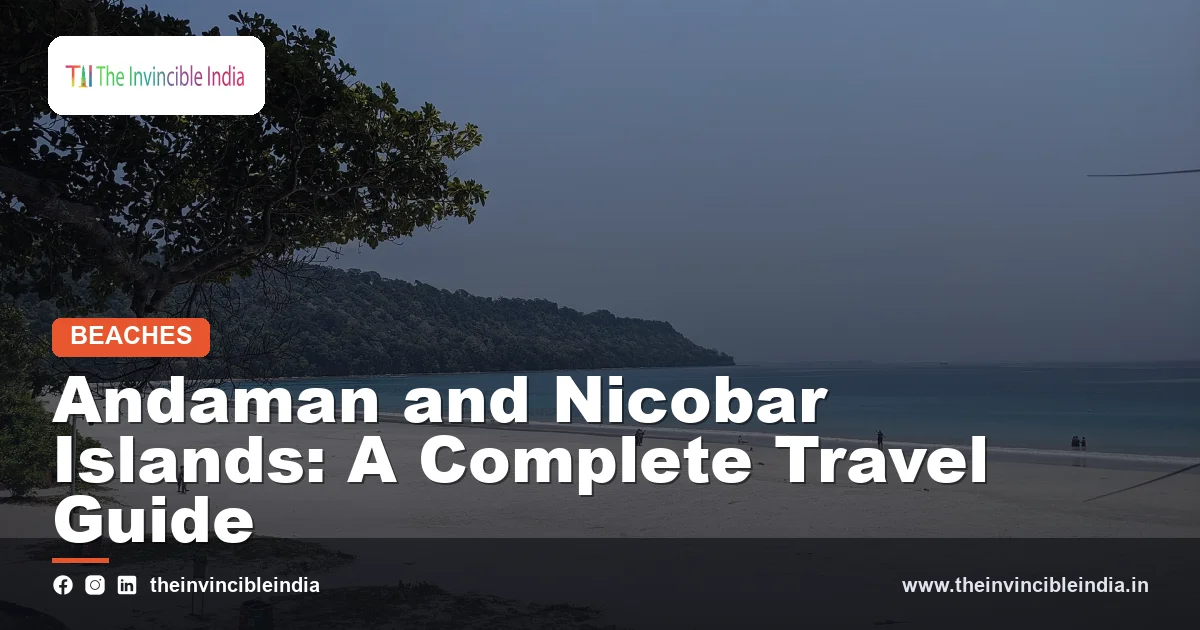
The Andaman and Nicobar Islands, a Union Territory scattered across the Bay of Bengal, are an island paradise of powder-white beaches, turquoise waters, vibrant coral reefs and lush tropical rainforest. Comprising more than 570 islands, of which only a handful are open to tourists, the archipelago combines stunning natural beauty with a poignant colonial history and a wealth of marine adventure. Far removed from the Indian mainland and closer to Southeast Asia, the Andamans offer a genuine tropical escape unlike anywhere else in India. This detailed guide covers everything you need to plan a trip to these remarkable islands.
Quick Facts
| Location | Bay of Bengal |
| Capital | Port Blair |
| Famous for | Beaches, scuba diving, Cellular Jail |
| Best time to visit | October to May |
| Ideal trip length | 5–7 days |
A Poignant History
Beneath their idyllic surface, the Andaman Islands carry a moving history. During the colonial era, the British built the notorious Cellular Jail at Port Blair, where many of India’s freedom fighters were imprisoned in harsh solitary confinement, far from the mainland. The islands were also occupied by Japanese forces during the Second World War, and briefly saw the flag of the Indian National Army raised on Indian soil. Today, several islands have been renamed to honour this legacy — Havelock as Swaraj Dweep, Neil as Shaheed Dweep and Ross Island as Netaji Subhas Chandra Bose Dweep — and the Cellular Jail stands as a national memorial.
Radhanagar Beach
On Havelock Island, Radhanagar Beach is the jewel of the Andamans and is consistently ranked among the finest beaches in Asia. Its long sweep of soft white sand, backed by dense forest and lapped by clear turquoise water, is especially magical at sunset, when the sky blazes with colour. Calm and clean, it is perfect for swimming and simply relaxing, and its unspoilt beauty is the image most visitors carry home from the islands.
Scuba Diving and Marine Life
The Andamans are among the best places in India for scuba diving and snorkelling, blessed with vibrant coral reefs and an astonishing diversity of marine life, from colourful reef fish and turtles to rays and reef sharks. Havelock and Neil Islands are the main diving hubs, offering courses for complete beginners as well as dives for the certified. The warm, clear waters and rich underwater world make exploring beneath the surface an unforgettable highlight of any trip.
The Cellular Jail
In the capital, Port Blair, the Cellular Jail (Kala Pani) is the most significant historical site in the islands. Built by the British to isolate political prisoners, its long wings of tiny solitary cells bear witness to the suffering and sacrifice of India’s freedom fighters. A visit to this national memorial is deeply moving, and the evening sound-and-light show, which narrates the story of the jail and the struggle for independence, is a powerful and memorable experience.
Neil Island and Ross Island
Beyond Havelock, the smaller Neil Island (Shaheed Dweep) offers a quieter, more laid-back atmosphere, with pretty beaches such as Bharatpur and Laxmanpur and a famous natural rock bridge. Ross Island (Netaji Subhas Chandra Bose Dweep), a short boat ride from Port Blair, was once the administrative headquarters of the British; today its atmospheric colonial ruins, slowly reclaimed by the roots of great trees and home to roaming deer and peacocks, make for a fascinating and photogenic excursion.
Baratang and Beyond
For the adventurous, Baratang Island offers a very different experience, reached by a journey through dense forest and mangrove creeks. It is famous for its limestone caves, filled with dramatic stalactites and stalagmites, and its rare mud volcanoes. This part of the islands showcases the wild, untamed side of the Andamans and their remarkable natural diversity.
Respecting the Islands and Their People
The Andaman and Nicobar Islands are home to several indigenous tribes, some of whom, like the Sentinelese, remain uncontacted and strictly protected by law. Large parts of the islands are off-limits to protect these communities and the fragile environment, and travellers must respect these restrictions absolutely. Responsible tourism — protecting the coral reefs, avoiding plastic, and never attempting to contact or photograph protected tribes — is essential to preserving this special place.
Best Time to Visit and How to Reach
The best time to visit the Andamans is between October and May, when the seas are calm and the weather is ideal for beaches and water activities; the monsoon months can bring rough seas and disrupted ferries. The islands are reached by air, with regular flights to Port Blair from Chennai, Kolkata, Delhi and other cities, and by passenger ship from the mainland. Inter-island travel is by ferry, so it is wise to book in advance and allow a relaxed pace.
Water Sports and Activities
Beyond scuba diving, the Andamans offer a wealth of water-based adventure. Snorkelling reveals the vibrant coral gardens just beneath the surface, while sea walking allows non-swimmers to stroll on the seabed among the fish. Glass-bottom boat rides, jet-skiing, kayaking through mangroves, game fishing and semi-submarine trips cater to every taste and age. Elephant Beach on Havelock and North Bay near Port Blair are popular hubs for these activities, making the islands a genuine playground for water lovers.
North Andaman and Diglipur
The far north of the archipelago, around Diglipur, remains wonderfully off the beaten track. Here you will find Ross and Smith Islands, connected by a natural sandbar, the turtle-nesting beaches, the Kalpong River and the highest point in the islands, Saddle Peak. Reaching this region requires a long journey from Port Blair, but it rewards the adventurous traveller with pristine, uncrowded beauty and a glimpse of island life far from the main tourist trail.
Barren Island: A Living Volcano
The Andamans are home to Barren Island, which hosts the only confirmed active volcano in South Asia. Rising dramatically from the sea, it can be viewed on special boat and diving trips, and its slopes and surrounding waters, rich in unique marine life, are a remarkable sight. This geological wonder adds yet another dimension to the extraordinary diversity of the islands.
Local Cuisine and Culture
The cuisine of the Andamans is a delicious reflection of its melting-pot population, drawn from mainland India and beyond. Fresh seafood — grilled fish, prawns, crab and lobster — is the star, prepared with coastal spices and coconut. The islands’ communities, descended from settlers from Bengal, Tamil Nadu, Andhra and elsewhere, alongside the indigenous peoples, give the Andamans a distinctive, laid-back island culture all their own.
Choosing Which Islands to Visit
With limited time, most visitors focus on Port Blair for its history, Havelock (Swaraj Dweep) for its beaches and diving, and Neil (Shaheed Dweep) for a quieter pace, with a day trip to Ross Island and perhaps Baratang. Those with more time can venture to North Andaman. Planning your island-hopping around the ferry schedules is essential, and booking ferries and accommodation in advance is strongly recommended, especially in peak season.
Planning Your Trip and Sustainability
A trip to the Andamans rewards a relaxed, well-planned approach. Allow buffer time for ferry travel, carry cash as ATMs can be limited on smaller islands, and remember that mobile connectivity is patchy. Above all, travel sustainably: the islands’ coral reefs and marine life are fragile, so never touch or step on coral, use reef-safe sunscreen, avoid single-use plastics, and respect all restrictions protecting the environment and the indigenous tribes. Responsible travel ensures these islands remain paradise for generations to come.
Getting Around the Islands
Travel between the Andaman Islands is mainly by sea. Both government and private ferries connect Port Blair with Havelock and Neil Islands, and booking these in advance, especially in peak season, is strongly advised as they fill quickly. On land, taxis, auto-rickshaws, buses and rented scooters help you get around, though distances on the smaller islands are short. Building buffer time into your itinerary for ferry schedules and occasional weather delays ensures a stress-free trip.
Best Time to Visit Month by Month
The Andamans enjoy a tropical climate that is warm and humid throughout the year. The peak season runs from December to February, with pleasant weather and calm seas ideal for beaches and diving. October to November and March to May are also good, often with excellent underwater visibility for divers. The monsoon, roughly from June to September, brings heavy rain and rough seas that can disrupt ferries and water activities, though it also means fewer crowds and lower prices.
Budget, Connectivity and Practical Tips
A few practical points make an Andaman trip smoother. Carry sufficient cash, as ATMs can be scarce or out of service on the smaller islands. Mobile connectivity is limited, with certain networks working better than others, so be prepared to disconnect. Pack light, breathable clothing, reef-safe sunscreen, swimwear and any medication you may need. Alcohol and some goods can be pricier than on the mainland due to transport costs, so plan your budget accordingly.
Why the Andamans Are Unique
The Andaman Islands offer a combination found nowhere else in India: world-class beaches and coral reefs, exhilarating water sports, a moving colonial history, lush rainforests and a genuine sense of remoteness. Whether you are diving among vibrant corals, reflecting at the Cellular Jail, or simply watching the sun set over Radhanagar Beach, the islands leave a deep and lasting impression, making them a truly special corner of the country.
Marine Life and Responsible Tourism
The waters around the Andaman Islands teem with an astonishing diversity of marine life, from clownfish, parrotfish and angelfish to sea turtles, rays and reef sharks, all sheltered by delicate coral gardens. Because these ecosystems are fragile, responsible tourism is essential: never touch or stand on coral, avoid buying shells or coral products, use only reef-safe sunscreen, and choose dive operators who follow sustainable practices. Protecting this underwater paradise ensures it remains vibrant for future generations of travellers and the communities who depend on it.
History Beyond the Cellular Jail
While the Cellular Jail is the most famous historical site, the Andamans hold deeper layers of history. The islands were home to indigenous tribes for tens of thousands of years, some of whom, like the Sentinelese and the Jarawa, still live in protected isolation and must never be disturbed. During the Second World War, the islands were briefly occupied by Japanese forces, and remnants of that period can still be seen. This rich and sometimes sombre history adds depth to a destination often known only for its beaches.
Frequently Asked Questions
Which is the best beach in the Andaman Islands?
Radhanagar Beach on Havelock Island is the most famous, ranked among the best in Asia.
What is the Cellular Jail?
The Cellular Jail in Port Blair is a former colonial prison, now a national memorial to India’s freedom fighters.
How many days do you need in the Andamans?
Five to seven days are ideal to cover Port Blair, Havelock and Neil Islands.
When is the best time to visit the Andamans?
October to May offers the calmest seas and best conditions for water activities.
Can you scuba dive in the Andamans?
Yes, Havelock and Neil Islands offer some of India’s finest scuba diving for all levels.


