

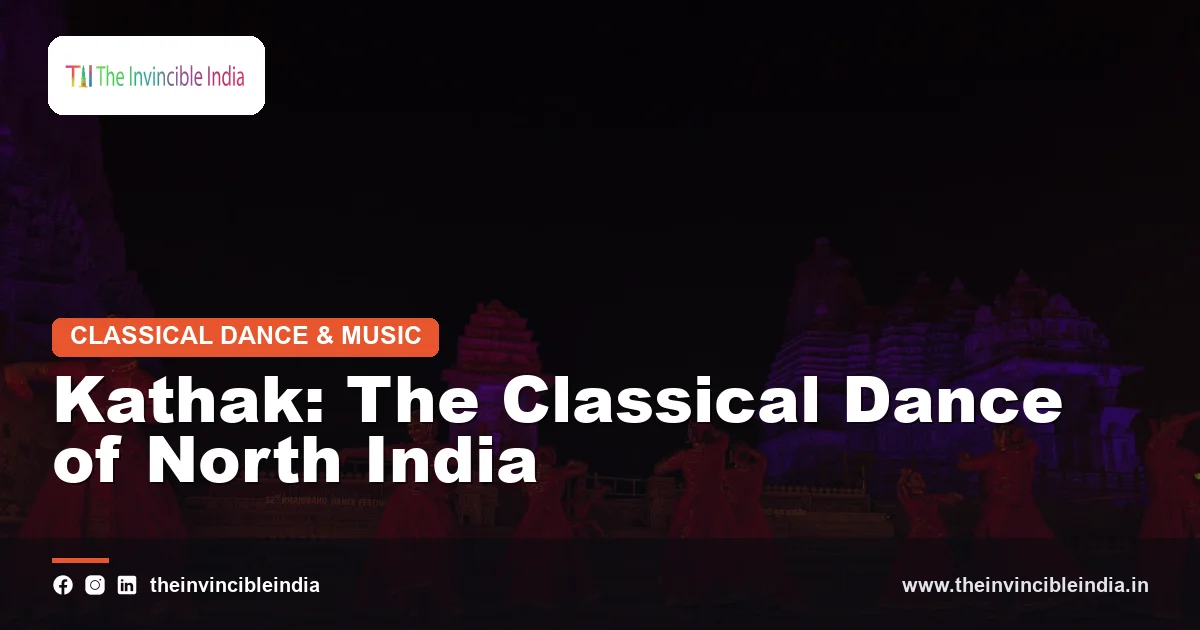
Kathak is one of the eight classical dance forms of India and the principal classical dance of North India, celebrated for its graceful movements, dazzling footwork, dramatic spins and rich tradition of storytelling. The name itself comes from the word “katha”, meaning story, and from the “kathakars”, the ancient storytellers who narrated tales of gods and heroes through movement and expression. Blending devotion, drama and rhythmic virtuosity, Kathak has evolved over centuries into a sophisticated and captivating art form. This guide explores the history, features, styles and enduring beauty of Kathak.
Quick Facts: Kathak
| Detail | Information |
|---|---|
| Type | One of India’s eight classical dance forms |
| Region | North India |
| Meaning | From “katha” (story) and “kathakar” (storyteller) |
| Signature features | Footwork, spins (chakkars), expression (abhinaya) |
| Main gharanas | Lucknow, Jaipur and Banaras |
| Key accessory | Ghungroo (ankle bells) |
The Origins of Kathak
Kathak traces its origins to the ancient kathakars, travelling storytellers of northern India who recited tales from the great epics and mythology, using rhythmic movements, gestures and facial expressions to bring their stories to life. Originally performed in temples as a form of devotion, the art gradually developed into a distinct dance form. Over the centuries, it absorbed a wide range of influences and grew into the refined classical dance known today, retaining at its heart the essential element of storytelling that gives Kathak its name and its enduring emotional power.
Temple and Court Traditions
The history of Kathak reflects two great streams of influence. In its early temple tradition, the dance was primarily devotional, telling the stories of Hindu deities, especially the tales of Krishna and Radha, as an act of worship. Later, during the Mughal era, Kathak flourished in the royal courts, where it took on a more elaborate, sophisticated and secular character, with greater emphasis on technical brilliance, intricate footwork and refined expression. This blend of temple devotion and courtly elegance gives Kathak its unique dual character, at once spiritual and dazzlingly virtuosic, and shaped the different styles that emerged.
The Elements of Kathak
Kathak is built upon a beautiful balance of two main elements. The first is nritta, the pure, rhythmic dance that showcases the technical brilliance of the performer through complex footwork, rapid spins and precise timing, performed in harmony with the beat. The second is abhinaya, the expressive aspect, in which the dancer uses facial expressions, gestures and mime to convey emotions, moods and narratives, telling stories drawn from mythology and poetry. The interplay of these elements, of rhythm and expression, technical dazzle and emotional depth, is what makes a Kathak performance so captivating to watch.
Footwork and the Spins
Two features above all define the visual excitement of Kathak: its intricate footwork and its spectacular spins. The dancer wears ghungroos, strings of small bells tied around the ankles, and through precise, rapid movements of the feet produces complex rhythmic patterns that echo and answer the beat of the accompanying drum. Equally thrilling are the chakkars, the swift pirouettes for which Kathak is famous, in which the dancer spins rapidly, sometimes many times in succession, before coming to a perfectly poised halt. The mastery of these elements requires years of rigorous training and lends performances their electrifying energy.
The Gharanas of Kathak
Kathak developed into several distinct schools, or gharanas, each with its own emphasis and style, associated with the cities where they flourished. The Lucknow gharana is celebrated for its grace, elegance and emphasis on expression and emotion; the Jaipur gharana is known for its powerful, vigorous footwork and technical virtuosity; and the Banaras gharana has its own distinctive approach. These gharanas, passed down through generations of teachers and disciples, represent living traditions of the art, each preserving and developing its own particular flavour while contributing to the rich and varied world of Kathak.
Music and Costume
A Kathak performance is a rich sensory experience, accompanied by classical music that provides the rhythmic and melodic framework for the dance. The tabla and pakhawaj drums drive the intricate rhythms, while instruments such as the sarangi and harmonium, along with vocal music, provide melody and mood. The costume is elegant and graceful: female dancers often wear a flowing skirt or an elaborate outfit with a fitted top and a scarf, adorned with jewellery, while the ankle bells complete the ensemble. Together, the music, costume and movement create a performance of great beauty and harmony.
Great Exponents of Kathak
Over the years, Kathak has been enriched and popularised by many great masters whose artistry brought the dance to national and international acclaim. These legendary performers and teachers dedicated their lives to preserving and advancing the tradition, training generations of students, choreographing new works, and taking Kathak to stages around the world. Their contributions helped establish Kathak firmly among the great classical arts of India and ensured that this ancient tradition of storytelling through dance continues to thrive, inspiring new generations of dancers and audiences alike.
Kathak Today
Today, Kathak flourishes as a vibrant and living art form, taught in dance schools and academies across India and the world, and performed on stages everywhere. While rooted in centuries of tradition, it continues to evolve, with contemporary artists exploring new themes, collaborations and choreographies, and even blending Kathak with other dance forms and music. This ability to honour its rich heritage while embracing innovation has kept Kathak relevant and popular, ensuring that the ancient art of the kathakars, telling stories through the language of movement and rhythm, remains a cherished part of India’s cultural life.
The Art of Storytelling
At its very heart, Kathak is an art of storytelling, and this is what sets it apart and gives it its name. Through the expressive language of abhinaya, using facial expressions, hand gestures (mudras) and body movement, a skilled Kathak dancer can portray entire narratives, bringing to life the tales of gods and goddesses, the playful stories of Krishna, or the emotions of love, longing and devotion. A single performer may play multiple characters, shifting seamlessly between them, and can convey subtle shades of feeling with remarkable nuance. This ability to tell stories and evoke emotion through movement is the soul of Kathak.
Training and Discipline
Mastering Kathak requires many years of dedicated training and rigorous discipline, typically under the guidance of a guru in the traditional teacher-disciple relationship. Students begin with the fundamentals of posture, rhythm and basic footwork, gradually building the strength, stamina and precision needed for the complex patterns and rapid spins of advanced performance, while also developing the expressive skills of abhinaya. This long apprenticeship instils not only technical mastery but also a deep understanding of rhythm, music and the emotional and spiritual dimensions of the art, and the bond between guru and student lies at the heart of the tradition’s transmission.
Kathak in Films and Popular Culture
Kathak has had a significant influence on Indian popular culture, particularly on the dance seen in cinema. Many classic film dance sequences drew upon the movements, spins and expressions of Kathak, and its graceful, rhythmic style helped shape the choreography of the Indian screen. Several celebrated film dancers and choreographers were trained in Kathak, and the form’s elegance continues to inspire performers today. This connection has helped keep Kathak in the public eye and has introduced its beauty to vast audiences, contributing to the enduring popularity and recognition of the classical dance across the country.
The Global Reach of Kathak
From its roots in North India, Kathak has spread far across the world, taught and performed in countries on every continent. Dance schools and cultural institutions around the globe offer training in Kathak, and Indian and international artists perform it on prestigious stages worldwide, sharing its beauty with diverse audiences. The Indian diaspora has played an important role in carrying the tradition abroad, keeping it alive for new generations far from home. This global presence is a testament to the universal appeal of Kathak, whose blend of rhythm, grace and storytelling transcends cultural boundaries and continues to captivate people everywhere.
The Spiritual Dimension of Kathak
Beneath its dazzling technique and courtly elegance, Kathak retains a deep spiritual dimension rooted in its origins as a devotional temple art. Many traditional Kathak compositions are devotional in nature, telling the stories of Krishna and other deities and expressing themes of divine love and longing. For many dancers, the practice of Kathak is not merely a performance but a form of worship and self-expression, a way of connecting with the divine through disciplined movement, rhythm and emotion. This spiritual heart, carried through centuries of temple and court traditions alike, gives Kathak a profound depth beyond its outward beauty and virtuosity.
Why Kathak Endures
Kathak endures as one of India’s most beloved classical arts because it so perfectly combines beauty, virtuosity, emotion and storytelling into a single captivating form. Its dazzling footwork and spins thrill audiences, its expressive artistry moves the heart, and its deep roots in tradition connect performers and viewers alike to centuries of culture and devotion. At once ancient and ever-evolving, rooted in heritage yet open to innovation, Kathak continues to inspire new generations of dancers and to enchant audiences around the world, ensuring that the timeless art of the storyteller-dancers lives on in all its grace and glory.
Experiencing a Kathak Performance
For anyone wishing to appreciate the beauty of Kathak, attending a live performance is the finest introduction. Watching a skilled dancer move from the delicate storytelling of abhinaya to the thrilling crescendo of rapid footwork and spinning chakkars, all in harmony with live tabla and melody, is a captivating experience that engages the eye, the ear and the heart. Cultural festivals, dance recitals and classical arts venues across India and beyond regularly present Kathak, and taking the opportunity to witness this exquisite art in person offers a memorable window into the rich and living heritage of Indian classical dance.
A Living Treasure of India
Kathak stands as one of the living treasures of India’s cultural heritage, a magnificent art form that has been refined over many centuries and continues to flourish today. In its graceful movements and dazzling rhythms, its heartfelt storytelling and its deep roots in devotion and tradition, Kathak embodies the beauty and depth of Indian classical culture, enchanting audiences and inspiring dancers around the world with its timeless artistry.
Frequently Asked Questions
What is Kathak?
Kathak is one of the eight classical dance forms of India and the principal classical dance of North India, known for its intricate footwork, spins, and storytelling through expression, with roots in the ancient tradition of the kathakars, or storytellers.
What does the word Kathak mean?
The word Kathak comes from “katha”, meaning story, and “kathakar”, meaning storyteller, reflecting the dance’s origins in the narration of tales from mythology and the epics.
What are the gharanas of Kathak?
The main gharanas, or schools, of Kathak are the Lucknow gharana, known for grace and expression, the Jaipur gharana, known for vigorous footwork, and the Banaras gharana.
What are ghungroos?
Ghungroos are strings of small bells worn around the ankles by Kathak dancers, which produce rhythmic sounds in time with the footwork and are an essential part of the performance.


