

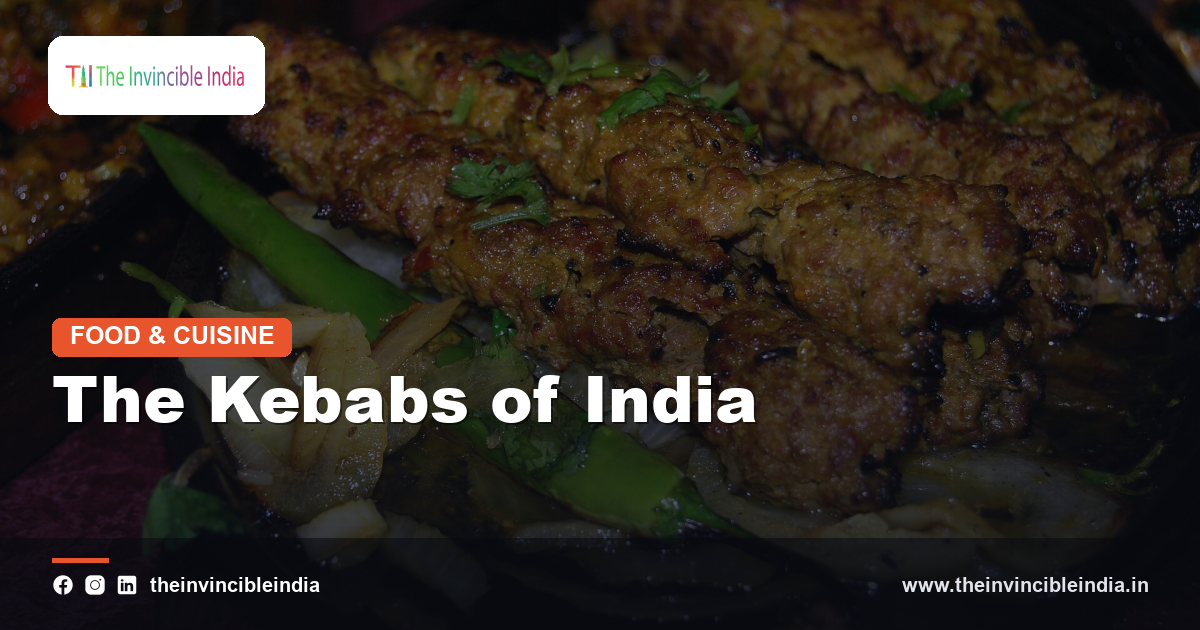
The kebabs of India are a beloved and richly varied family of grilled and skewered meat dishes, marinated with aromatic spices and cooked over open fire or within the tandoor until tender, smoky and full of flavour. From the humble seekh kebab of minced meat shaped onto a skewer to the melt-in-the-mouth galouti kebab said to have been created for those with delicate teeth, India’s kebabs reflect centuries of culinary refinement, drawing on Persian and Mughlai influence blended with local ingredients and techniques. This guide explores the wonderful variety of Indian kebabs, one of the great treasures of the country’s royal culinary heritage.
Quick Facts
| Detail | Information |
|---|---|
| Type | Grilled or skewered marinated meat dishes |
| Cooking | Open fire, charcoal or tandoor |
| Famous varieties | Seekh, galouti and boti kebab |
| Influence | Persian and Mughlai culinary tradition |
| Flavour | Smoky, tender and richly spiced |
| Role | A beloved centrepiece of festive dining |
A Beloved Family of Kebabs
The kebabs of India form a beloved and richly varied family of grilled and skewered meat dishes, each marinated with its own blend of aromatic spices and cooked over fire or in the tandoor until tender and full of smoky flavour. From simple, everyday preparations to elaborate specialities associated with royal kitchens of the past, Indian kebabs reflect a long tradition of culinary refinement and remain among the most beloved and celebrated dishes across the country. This standing as a beloved family of dishes is well earned. As the smoky, tender and richly spiced grilled meat dishes cherished across India, kebabs hold an honoured place in the country’s culinary heritage and continue to be celebrated wherever they are served.
Persian and Mughlai Influence
The kebabs of India owe much of their character to Persian and Mughlai culinary influence, which introduced techniques of marination, skewering and grilling that were blended over time with local ingredients and tastes. This historical exchange enriched Indian cuisine with a repertoire of kebab preparations that combined foreign technique with indigenous flavour, giving rise to a distinctive Indian kebab tradition found especially in the royal kitchens and cities of North India. This influence remains foundational to the kebab tradition. This owing of much of the character of Indian kebabs to Persian and Mughlai influence, blended over time with local ingredients, remains foundational to the tradition, and this historical exchange is honoured in the many kebab varieties enjoyed across India today.
The Everyday Seekh Kebab
Among the most beloved and widely enjoyed of all Indian kebabs is the seekh kebab, in which minced meat, mixed with spices, herbs and sometimes onion, is shaped around a skewer and grilled over fire or in the tandoor. The mixture is worked and shaped by hand onto long skewers before being cooked over intense heat, resulting in a kebab that is smoky, juicy and richly flavoured, a favourite at restaurants, dhabas and gatherings across the country. This seekh kebab is a staple of Indian kebab cuisine. This beloved and widely enjoyed status of the seekh kebab, made from minced meat shaped onto skewers and grilled, makes it a staple of Indian kebab cuisine, and it remains one of the most popular kebabs found across the whole country.
The Melting Galouti Kebab
A celebrated speciality is the galouti kebab, a soft, finely minced kebab known for its remarkably tender, almost melting texture, associated with the refined culinary traditions of Lucknow. Made from finely minced meat blended with a careful selection of spices and cooked gently until tender, the galouti kebab is prized for its delicate texture and complex flavour, considered one of the most refined and celebrated kebabs to emerge from India’s royal culinary heritage. This galouti kebab is a jewel of Lucknawi cuisine. This celebrated status of the galouti kebab, known for its remarkably tender, almost melting texture, makes it a jewel of Lucknawi cuisine, and it remains cherished as one of the most refined kebab preparations in all of India.
The Boti and Cubed Kebabs
Another beloved variety is the boti kebab, in which cubes of meat are marinated in a blend of yogurt and spices before being skewered and grilled to smoky, tender perfection. The marination tenderises the meat and infuses it with deep flavour, while the grilling over fire or in the tandoor gives the cubes a charred, smoky exterior and a juicy interior, making the boti kebab a favourite among those who enjoy the distinct texture of cubed, skewered meat. This boti kebab offers a distinctive textural experience. This marination and grilling of cubed meat into the boti kebab offers a distinctive textural experience within the kebab family, and this smoky, tender preparation remains a beloved choice at restaurants and gatherings across India.
Kebabs from the Tandoor
Many of India’s most beloved kebabs are cooked in the tandoor, the traditional clay oven, where the intense and even heat gives skewered meats their characteristic smoky, charred exterior and tender, juicy interior. The tandoor’s design allows skewers of marinated meat to be lowered directly into its fierce heat, cooking the kebabs quickly while sealing in flavour and moisture, a method that has become closely associated with the finest Indian kebab preparations. This tandoor cooking is central to many kebab traditions. This cooking of many beloved kebabs in the tandoor, giving them their characteristic smoky, charred exterior, is central to the tradition, and this method remains closely associated with the finest kebab preparations found across North India.
Kebabs Cooked Over Charcoal
Beyond the tandoor, many kebabs are also cooked over open charcoal fires, a method that imparts its own distinctive smoky flavour and is especially common at street stalls and outdoor gatherings. The direct heat and smoke of the charcoal fire infuses the marinated meat with a deep, smoky character as it grills, a technique cherished for the rustic, robust flavour it gives to kebabs prepared this way, particularly in more informal settings. This charcoal cooking offers its own beloved character. This cooking of many kebabs over open charcoal fires, imparting a distinctive smoky flavour, offers its own beloved character within the tradition, and this rustic method remains especially cherished at street stalls and outdoor gatherings across India.
The Art of Marination
Central to every great kebab is the art of marination, in which meat is coated in a blend of yogurt, spices and sometimes other tenderising ingredients well before cooking. This careful marination not only tenderises the meat but also infuses it deeply with flavour, ensuring that every bite of the finished kebab carries the full complexity of the spice blend used, so that the quality and patience of the marination process is essential to a truly excellent kebab. This art of marination is fundamental to kebab making. This central and careful art of marination, coating meat in yogurt and spices well before cooking, is fundamental to kebab making, and this patient preparation is what gives the finest Indian kebabs their deep, tender and richly spiced character.
Vegetarian Kebabs
Alongside meat-based varieties, India has also developed a range of vegetarian kebabs, made from ingredients such as paneer, vegetables or lentils shaped and grilled in the style of traditional kebabs. These vegetarian versions, marinated and cooked using similar techniques of spicing and grilling, offer a satisfying alternative for those who do not eat meat, allowing the smoky, spiced pleasures of kebab cuisine to be enjoyed by a wider range of diners. These vegetarian kebabs broaden the tradition’s appeal. This development of vegetarian kebabs from paneer, vegetables or lentils broadens the appeal of the tradition, and these satisfying alternatives allow the smoky, spiced pleasures of kebab cuisine to be shared by everyone.
Kebabs and Accompaniments
Kebabs are traditionally served with a range of beloved accompaniments, including mint chutney, sliced onions, lemon wedges and soft bread such as naan or roomali roti. These accompaniments add contrasting freshness, tang and texture to the rich, smoky kebab, rounding out the dish into a complete and satisfying meal or snack, and no plate of kebabs is considered truly finished without them. These accompaniments are essential to the kebab experience. This traditional serving of kebabs with mint chutney, onions, lemon and soft bread is essential to the kebab experience, and these beloved accompaniments continue to complete the dish wherever kebabs are enjoyed across India.
Regional Kebab Traditions
Different regions and cities of India have developed their own distinctive kebab traditions, each with its own specialities, spice blends and techniques reflecting local tastes and history. From the refined kebabs of Lucknow to the robust preparations found in other parts of North India and beyond, this regional diversity has enriched the overall kebab tradition, giving India a remarkably wide and varied repertoire of grilled and skewered meat dishes. This regional diversity enriches the kebab tradition. This development of distinctive regional kebab traditions across India, each with its own specialities and spice blends, enriches the tradition, and this diversity is one of the great delights of exploring Indian kebab cuisine.
Kebabs at Celebrations
Kebabs hold a cherished place at celebrations, weddings and festive gatherings, often served as a highlight among the array of dishes offered to guests. The communal enjoyment of freshly grilled kebabs, served hot and fragrant straight from the fire or tandoor, adds to the festive atmosphere of such occasions, making kebabs a favoured choice for celebratory menus and large gatherings across the country. This role at celebrations enhances the kebab’s appeal. This cherished place of kebabs at celebrations and festive gatherings enhances their appeal, and the communal, festive enjoyment of freshly grilled kebabs remains one of the great pleasures of Indian hospitality and dining.
Kebabs at Street Stalls and Restaurants
Kebabs are enjoyed both as a humble street food, grilled fresh at bustling stalls in cities across India, and as a refined offering at fine dining restaurants specialising in North Indian and Mughlai cuisine. This wide range of settings, from the informal street stall to the elegant restaurant, reflects the universal appeal of kebabs across all levels of Indian society, enjoyed by people of every background. This presence in every dining setting reflects universal appeal. This enjoyment of kebabs both as humble street food and as refined restaurant fare reflects their universal appeal across Indian society, and this wide reach is a testament to the beloved status of kebab cuisine.
The Skill of the Kebab Cook
Making a truly excellent kebab requires great skill, from selecting and marinating the meat to judging the perfect moment to remove it from the fire or tandoor, a craft honed over years of practice. Skilled kebab cooks, often working at specialised stalls or restaurants passed down through generations, are celebrated for their expertise, and the reputation of a good kebab establishment often rests entirely on the skill of its cooks. This skill of the kebab cook is central to the tradition. This requirement of great skill in making a truly excellent kebab is central to the tradition, and the expertise of skilled kebab cooks, honed over years, remains essential to the enduring reputation of India’s finest kebab establishments.
Kebabs Beyond India
The kebabs of India have travelled widely, becoming familiar and beloved dishes in Indian restaurants across the world, introducing diners everywhere to the smoky, spiced pleasures of Indian grilling. Seekh kebab and other varieties are now found on menus far from their origins, celebrated for their rich flavour and satisfying texture, standing alongside tandoori chicken and biryani as some of the most recognised dishes of Indian cuisine internationally. This global reach reflects the kebab’s universal appeal. This travelling of Indian kebabs widely to become beloved in restaurants across the world reflects their universal appeal, and they continue to serve as delicious ambassadors of India’s rich culinary heritage abroad.
The Kebabs of India Today
Today the kebabs of India continue to be celebrated as one of the country’s most beloved culinary traditions, enjoyed at street stalls, restaurants, celebrations and homes across the nation and the world. The everyday seekh kebab, the refined galouti kebab, the tender boti kebab and countless regional varieties continue to be marinated with care and grilled to smoky perfection, carrying forward centuries of culinary craft. Kebabs continue to bring people together at every kind of gathering. As the smoky, tender and richly spiced grilled meat dishes cherished across the country, the kebabs of India endure as a treasured pillar of the nation’s food heritage and a beloved gift to food lovers everywhere.
Sources & Further Reading
- Ministry of Tourism, Government of India, on the cuisines of India (tourism.gov.in).
- Culinary references on Mughlai and North Indian grilled food traditions.
Frequently Asked Questions
What is a seekh kebab?
A seekh kebab is made from minced meat mixed with spices and herbs, shaped by hand around a skewer, and grilled over fire or in the tandoor. It is one of the most popular and widely enjoyed kebabs found across India.
What makes galouti kebab special?
Galouti kebab is prized for its remarkably tender, almost melting texture, achieved through fine mincing and a careful blend of spices. Associated with the refined culinary traditions of Lucknow, it is considered one of India’s most celebrated kebab preparations.
Are Indian kebabs always cooked in a tandoor?
No, while many kebabs are cooked in the tandoor for its smoky, even heat, others are grilled over open charcoal fires, particularly at street stalls, each method imparting its own distinctive flavour and character to the finished kebab.
Can vegetarians eat Indian kebabs?
Yes, India has developed a range of vegetarian kebabs made from paneer, vegetables or lentils, marinated and grilled using techniques similar to meat-based kebabs, offering a satisfying alternative for those who do not eat meat.
What is traditionally served with kebabs?
Kebabs are traditionally served with mint chutney, sliced onions, lemon wedges and soft breads such as naan or roomali roti, accompaniments that add freshness, tang and texture to complete the dish.


