

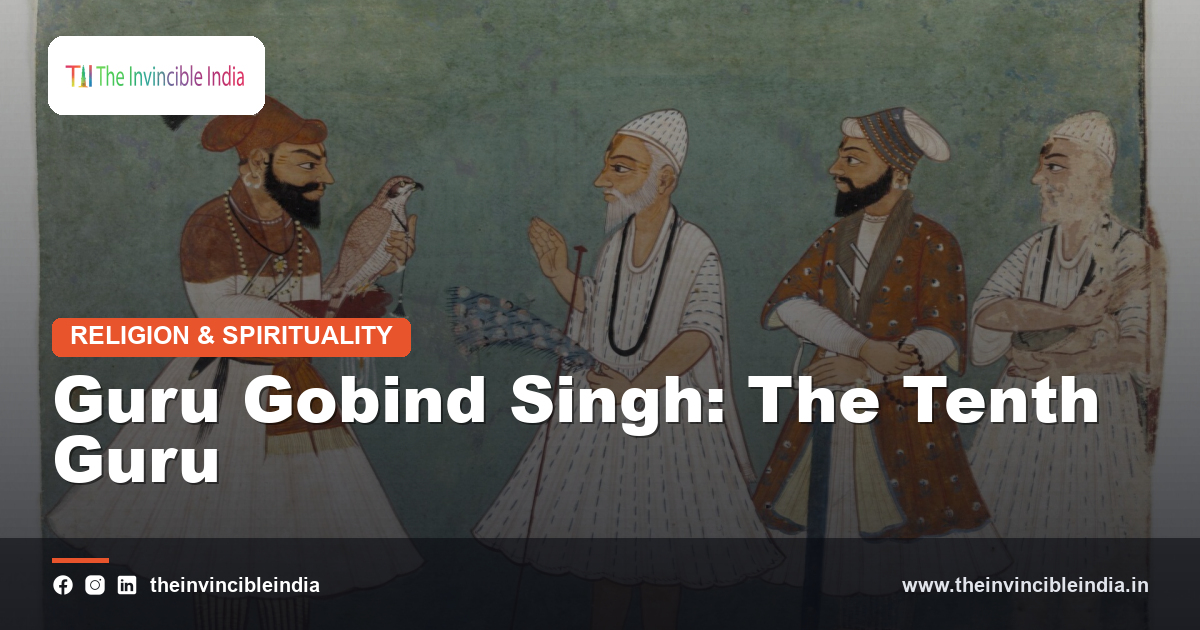
Guru Gobind Singh, the tenth and final human Guru in the line of leaders following Guru Nanak, occupies a place of profound importance within Sikh history, remembered both as a spiritual teacher and as the founder of the Khalsa, the distinct Sikh community identity that continues to shape the faith today. Assuming spiritual leadership during a period of considerable social and political upheaval in northern India, he emphasized courage, righteous conduct, and unwavering devotion to God alongside the foundational Sikh values of equality and service established by his predecessors. His decision to designate the Sikh scripture as the eternal Guru marked a defining moment in the tradition’s institutional history. This guide explores his life, teachings, and enduring legacy within Sikhism.
Quick Facts
| Detail | Information |
|---|---|
| Role | Tenth Guru of Sikhism |
| Era | Seventeenth to eighteenth century |
| Major Institution Founded | The Khalsa |
| Core Teaching | Courage, righteousness, equality |
| Scriptural Legacy | Guru Granth Sahib designated eternal Guru |
| Legacy | Sikh identity, courage, and community organization |
Historical Context and Early Life
Guru Gobind Singh was born into the family of Sikh Gurus during a period marked by considerable political tension and social upheaval across northern India, circumstances that would profoundly shape his later leadership and teachings. Raised within a household already central to the growing Sikh community, he received both spiritual and practical education befitting his position within the Guru lineage. His early years took place against a backdrop of increasing pressure faced by religious minority communities in the region, an environment that informed his later emphasis on courage and steadfast faith. Traditional accounts describe him as showing early signs of the leadership qualities and spiritual depth that would later define his role as Guru. This formative period set the stage for the transformative leadership he would go on to provide during a particularly challenging era for the Sikh community.
Succession as the Tenth Guru
Guru Gobind Singh assumed the role of Guru following the passing of his father, continuing the line of spiritual leadership established by Guru Nanak generations earlier. This succession occurred during a time of significant challenge for the Sikh community, requiring the young Guru to provide both spiritual guidance and practical leadership amid difficult external circumstances. He approached his new responsibilities with a clear sense of continuity with the teachings of his predecessors, while also recognizing that the community’s changing circumstances called for new forms of organization and resilience. His leadership style combined deep reverence for established Sikh teaching with a strong emphasis on courage and disciplined action in the face of adversity. This period of succession marked the beginning of one of the most consequential chapters in the development of Sikh religious and communal identity.
Formation of the Khalsa
Among Guru Gobind Singh’s most significant contributions was the formal establishment of the Khalsa, a distinct community identity intended to embody courage, discipline, and unwavering commitment to Sikh principles. The formation of the Khalsa represented a pivotal moment in Sikh history, creating a clearly identifiable community bound by shared commitments and visible markers of identity. Members initiated into the Khalsa were expected to uphold high standards of ethical conduct, courage, and readiness to defend righteousness and the vulnerable. This institution gave the Sikh community a renewed sense of collective identity and purpose during a period of considerable external pressure. The Khalsa remains a central and defining institution within Sikhism today, reflecting Guru Gobind Singh’s enduring vision for a disciplined, courageous, and unified community of faith.
The Five Ks and Khalsa Identity
Guru Gobind Singh established a set of distinctive articles of faith, commonly known as the Five Ks, intended to be worn by initiated members of the Khalsa as visible markers of their commitment and identity. These articles carry symbolic meaning connected to discipline, spiritual commitment, and readiness to uphold righteous conduct, and their consistent adoption gave the Khalsa a recognizable and unified visual identity. This practice of visible identity markers served both a spiritual and a practical purpose, fostering a strong sense of communal belonging while making members readily identifiable within their communities. The continued observance of these articles of faith remains a central feature of Khalsa identity among practicing Sikhs today. This system of visible identity is regarded as one of Guru Gobind Singh’s most distinctive and enduring institutional contributions to Sikh tradition.
Emphasis on Courage and Righteous Defense
Guru Gobind Singh placed strong emphasis on courage and the readiness to defend righteousness, particularly the protection of the vulnerable and the defense of religious freedom, as essential spiritual virtues for members of the Sikh community. This teaching emerged from the challenging historical circumstances the community faced during his leadership, circumstances that called for resilience and disciplined resolve alongside continued spiritual devotion. He taught that courage in defense of justice was fully compatible with, and indeed an expression of, sincere spiritual commitment, rather than being separate from religious life. This integration of spiritual devotion with disciplined courage became a defining characteristic of Sikh identity under his leadership. His teachings on this theme continue to shape Sikh values regarding justice, service, and the defense of the oppressed to the present day.
Literary and Scholarly Contributions
Guru Gobind Singh was known as a patron of learning and literature, supporting scholars and contributing to the compilation and composition of literary works during his leadership of the Sikh community. His court is remembered within Sikh tradition as a center of intellectual and literary activity, reflecting his personal commitment to education alongside his role as a spiritual and military leader. This support for scholarship and composition reflected a broader vision in which spiritual leadership encompassed cultural and intellectual patronage as well as religious guidance. His own compositions and contributions to Sikh literary tradition are remembered as significant expressions of his spiritual and philosophical outlook. This dimension of his legacy highlights the multifaceted nature of his leadership, combining scholarly patronage with his more widely known roles as spiritual teacher and community organizer.
Guru Gobind Singh as Warrior and Spiritual Leader
Guru Gobind Singh is remembered within Sikh tradition as embodying a distinctive combination of spiritual depth and disciplined, courageous action, roles that he regarded as fully complementary rather than contradictory. His leadership during periods of considerable external conflict required him to guide the Sikh community through significant hardship while continuing to emphasize devotion, ethical conduct, and communal solidarity. This dual identity as both spiritual guide and courageous leader reflected his broader teaching that righteous action in defense of justice was itself a legitimate expression of faith. His example continues to shape Sikh understanding of the relationship between spiritual devotion and worldly responsibility. This integrated model of leadership remains one of the most distinctive and influential aspects of his legacy within Sikh tradition.
The Guru Granth Sahib as Eternal Guru
In one of his most consequential acts, Guru Gobind Singh designated the Sikh scripture, compiling the hymns of Guru Nanak and subsequent Gurus along with other devotional writings, as the eternal and final Guru for the Sikh community, ending the line of human Gurus. This decision established the scripture itself as the permanent source of spiritual authority and guidance for Sikhs going forward, a role it continues to hold within Sikh worship and community life today. This act reflected his conviction that the accumulated spiritual wisdom of the Guru lineage was fully and sufficiently contained within the scripture, requiring no further human successor. This decision remains one of the most significant institutional developments in Sikh history, shaping the structure of Sikh religious authority to the present day.
Founding of Anandpur and Community Life
Guru Gobind Singh established and developed a significant community center in the Punjab hills, which became an important focal point for Sikh religious life, community organization, and teaching during his leadership. This settlement served as a base from which he guided the community, received visitors and scholars, and organized the formal establishment of the Khalsa. Community life at this center emphasized shared worship, disciplined conduct, and collective preparation for the challenges the community faced during this period. The settlement’s significance within Sikh history reflects its role as a center of both spiritual and organizational activity under Guru Gobind Singh’s leadership. It remains an important site of memory and pilgrimage within Sikh tradition, commemorating this formative period of communal development.
Teachings on Equality
Guru Gobind Singh continued and reinforced the foundational Sikh teaching on the equality of all people, extending this principle through the inclusive structure of the Khalsa, which welcomed members regardless of prior caste or social background into a shared communal identity. This emphasis on equality was expressed through shared practices, communal worship, and a common set of visible identity markers that placed all initiated members on equal standing within the community. His teachings reinforced the conviction, first articulated by Guru Nanak, that spiritual worth and communal belonging were not determined by birth or social status. This consistent emphasis on equality across the Guru lineage reflects one of the most enduring and defining values within Sikh tradition as a whole. It remains a central principle guiding Sikh community life today.
Sikh Institutions Shaped by His Leadership
Guru Gobind Singh’s leadership left a lasting institutional imprint on Sikhism, particularly through the formal structure and identity of the Khalsa, which continues to shape Sikh community organization, initiation practices, and collective identity today. His decision to designate the scripture as eternal Guru similarly reshaped the structure of Sikh religious authority in a way that continues to guide the tradition. These institutional developments provided the Sikh community with durable frameworks for maintaining shared identity, values, and religious practice across subsequent generations. His combined emphasis on communal discipline, courage, and equality helped shape Sikh institutional culture in ways still visible in contemporary practice. These lasting institutional contributions represent some of the most significant and enduring aspects of his leadership legacy.
Guru Gobind Singh in Sikh Worship and Memory
Guru Gobind Singh is remembered with deep reverence within Sikh worship, his life and teachings recounted alongside those of the other Gurus as part of the community’s shared spiritual heritage. His compositions and contributions to Sikh literary and devotional tradition continue to be recited and studied within Sikh religious life. Sikh institutions and gathering places frequently commemorate key events from his life, preserving his memory through storytelling, recitation, and communal observance. His example as both spiritual teacher and courageous leader continues to serve as a model referenced in Sikh religious teaching and moral instruction. This continued prominence within Sikh worship and communal memory reflects the profound and lasting significance of his leadership within the tradition’s history.
Symbolism and Iconography
Guru Gobind Singh is commonly depicted in traditional Sikh art as a dignified figure, often shown with symbols associated with both spiritual authority and readiness for righteous defense, reflecting his dual role as spiritual leader and courageous protector of his community. These depictions are found across Sikh devotional art, manuscripts, and public commemorative imagery, treated with considerable reverence within Sikh visual culture. His iconography frequently emphasizes dignity, composure, and resolve, qualities associated with his historical leadership during a challenging period. Such imagery remains widely recognized and respected across Sikh communities in India and around the world. This visual tradition helps sustain collective memory of his leadership and teachings across successive generations of Sikh devotees.
Commemoration and Festivals
Sikh communities around the world commemorate key events associated with Guru Gobind Singh’s life and leadership through annual observances involving communal worship, recitation of scripture, devotional singing, and processions. These commemorations serve to renew collective memory of his teachings on courage, equality, and disciplined faith, drawing together Sikh communities in shared celebration and reflection. Such occasions often include communal service and the distribution of shared meals, reflecting the enduring Sikh values he helped reinforce and institutionalize. These annual observances play an important role in transmitting his teachings and legacy to younger generations within the Sikh community. This continued tradition of communal commemoration reflects the lasting reverence in which his leadership and example are held.
Guru Gobind Singh's Legacy Today
Guru Gobind Singh’s legacy remains central to Sikh identity and practice today, with the Khalsa continuing to serve as a defining institution shaping how millions of Sikhs understand their communal and religious identity. His teachings on courage, equality, and disciplined devotion continue to inform Sikh ethical and social values across communities in India and around the world. The scripture he designated as eternal Guru remains the living spiritual and moral authority guiding Sikh worship and daily life. Scholarly and popular interest in his life and leadership continues to grow, reflecting his enduring historical and spiritual significance. This sustained institutional and devotional vitality ensures that Guru Gobind Singh’s legacy remains a profoundly living presence within contemporary Sikh life rather than a distant historical memory.
Sources & Further Reading
- Ministry of Culture, Government of India (indiaculture.gov.in).
- Sahitya Akademi.
Frequently Asked Questions
Who was Guru Gobind Singh?
Guru Gobind Singh was the tenth and final human Guru of Sikhism, remembered as the founder of the Khalsa and for his teachings on courage, equality, and disciplined devotion to God.
What is the Khalsa?
The Khalsa is the distinct Sikh community identity founded by Guru Gobind Singh, marked by shared articles of faith, disciplined conduct, and a commitment to courage and the defense of righteousness.
What are the Five Ks?
The Five Ks are articles of faith established by Guru Gobind Singh, worn by initiated Khalsa members as visible symbols of their spiritual commitment and communal identity within Sikhism.
Why did Guru Gobind Singh designate the scripture as the eternal Guru?
He believed the accumulated spiritual wisdom of the Guru lineage was fully contained within the scripture, and by designating it as eternal Guru, he ended the line of human Gurus and established lasting religious authority.
How is Guru Gobind Singh remembered in Sikhism?
He is remembered as both a spiritual teacher and courageous leader who reinforced Sikh teachings on equality and service while founding the Khalsa, an institution still central to Sikh identity today.


