

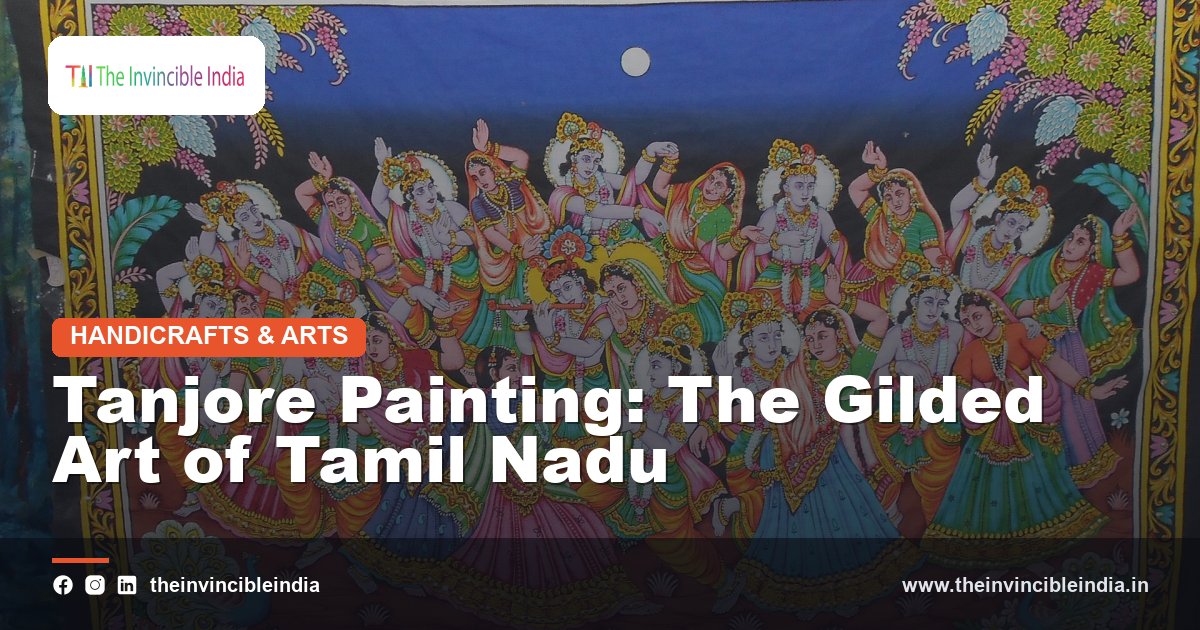
Tanjore painting, also known as Thanjavur painting, is the rich and opulent classical painting tradition of Tamil Nadu, celebrated above all for its lavish use of gold leaf, its raised relief work and its glowing images of gods and goddesses. Named after the historic city of Thanjavur, where it flourished under royal patronage, this art is instantly recognised by its shimmering gold surfaces, jewel-like decoration and serene devotional figures, often set within an ornate arch. More than a painting, a Tanjore work is a richly worked devotional object, radiant with gold and colour. This guide explores its history, its distinctive technique, its themes, its patrons and its living tradition among the great handicraft arts of India.
Quick Facts
| Detail | Information |
|---|---|
| Type | Classical devotional painting with gold leaf and relief |
| Region | Thanjavur, Tamil Nadu |
| Signature features | Gold leaf, raised gesso relief and gem-like inlay |
| Themes | Hindu deities, especially Krishna and other gods |
| Flourished under | The rulers and patrons of Thanjavur |
| Recognition | Protected by a Geographical Indication (GI) tag |
The Gilded Art of the South
Tanjore painting is among the most opulent and distinctive of India’s painting traditions, famous for its lavish use of gold and its rich, glowing beauty. Created on a wooden base and built up with layers of preparation, colour, gold leaf and decorative relief, a Tanjore painting is as much a crafted devotional object as a picture. Its figures of gods and goddesses, serene and richly adorned, gleam with gold and jewel-like ornament, radiating a sense of divine splendour. Rooted in the classical culture of Tamil Nadu and nurtured under royal patronage in the city of Thanjavur, this gilded art is one of the treasures of South Indian heritage.
The City of Thanjavur
Tanjore painting takes its name from Thanjavur, the historic city in Tamil Nadu that was for centuries a great centre of art, culture and religion. Home to magnificent temples and a rich courtly tradition, Thanjavur nurtured many arts, and it was here that the distinctive style of gilded painting developed and flourished under the patronage of its rulers. The city’s deep artistic and devotional culture provided the setting in which the tradition grew, and its name became inseparable from the art. To this day, Thanjavur and the surrounding region remain the heartland of the tradition, and the painting carries the name of the city that gave it birth.
History and Patronage
The Tanjore painting tradition developed over several centuries, taking its mature form under the royal courts that ruled Thanjavur, whose patronage supported and shaped the art. The rulers and nobles who governed the region were great patrons of religion and the arts, and they commissioned paintings of deities for temples, palaces and homes, encouraging the development of the rich, gilded style. Under this patronage, the tradition flourished and its distinctive techniques were refined. The art thus grew as a courtly and devotional tradition, sustained by the wealth and piety of its patrons, and their support was crucial in giving Tanjore painting its opulent character and high artistic standard.
The Distinctive Gold Leaf
The most striking feature of Tanjore painting is its lavish use of gold leaf, which gives the art its characteristic radiance and opulence. Real gold leaf is applied to parts of the painting, especially the ornaments, crowns, thrones, pillars and decorative borders, so that these areas gleam with a rich metallic lustre that catches the light. This use of gold makes a Tanjore painting shimmer and glow, lending its sacred figures an aura of divine splendour and richness. The gold does not fade, and a well-made Tanjore painting retains its brilliance for generations. This gilding is the hallmark of the tradition and the source of much of its beauty and appeal.
The Art of Relief
Another distinctive feature of Tanjore painting is its use of raised relief work, which gives the art a three-dimensional richness. Using a paste, a gesso-like material, the artist builds up certain areas of the composition, such as ornaments, jewellery, crowns and architectural details, into low relief above the surface of the painting. The gold leaf and colour are then applied over this raised work, so that the decorated areas stand out physically as well as visually, catching the light and adding depth and texture. This combination of relief and gilding gives Tanjore paintings their characteristic tactile richness and their jewel-encrusted appearance, and distinguishes them from flat painting traditions.
Gems and Glass Inlay
Adding further to the opulence of Tanjore painting is the inlay of decorative stones and glass. Semi-precious stones, coloured glass pieces and beads are set into the painting, especially into the raised relief ornaments, crowns and jewellery of the figures, so that they sparkle like real gems. This inlay work enhances the sense of richness and splendour, making the deities appear adorned with jewels and the whole painting glitter with colour and light. The combination of gold leaf, raised relief and inlaid stones creates the unmistakable, lavish beauty of a Tanjore painting, turning the devotional image into a dazzling, precious object worthy of the divine subjects it depicts.
Devotional Themes
Tanjore paintings are overwhelmingly devotional in subject, depicting the gods and goddesses of the Hindu pantheon. Among the most beloved subjects is Krishna, especially the enchanting image of the divine child, along with deities such as Rama, Lakshmi, Saraswati, Ganesha, Murugan and many others. The figures are typically shown frontally, serene and richly adorned, often seated or standing within an ornate arch or canopy. These sacred images were created as objects of worship for temples and homes, and their devotional purpose shapes their style and composition. The glowing, gilded depiction of the deities expresses reverence and celebrates the beauty and majesty of the divine.
The Composition
A Tanjore painting typically follows a characteristic composition centred on the main deity, who dominates the picture as a large, serene, frontal figure. This central figure is usually framed within an ornate arch or decorative canopy, richly worked in gold and relief, and may be flanked by attendant figures, consorts or devotees. Curtains, pillars, thrones and decorative borders complete the setting, all lavishly adorned. The composition is designed to focus devotion on the deity while surrounding the figure with splendour befitting the divine. This balanced, ornate and hierarchical arrangement, with the glowing central figure set amid rich decoration, is characteristic of the tradition and central to its devotional effect.
The Wooden Base
Unlike many painting traditions on paper or cloth, Tanjore paintings are traditionally created on a solid base, historically a wooden plank, which gives the finished work its sturdiness and allows for the heavy relief and inlay work. A cloth is fixed to the wooden board and coated with a preparation to create a smooth, firm ground, on which the design is then drawn and built up. This solid support is essential to the technique, bearing the weight of the gesso relief, gold leaf and inlaid stones, and giving the painting the character of a durable, panel-like object. The use of this firm base is one of the practical foundations of the distinctive Tanjore style.
The Painstaking Process
Creating a Tanjore painting is a laborious, multi-stage process demanding great skill and patience. After the base is prepared, the design is drawn and the areas of relief are built up with the paste and shaped. The gold leaf is carefully applied, the stones and glass are inlaid, and the colours are painted in, with fine detailing to complete the figures and ornament. Each stage requires precision and care, and the whole process, involving many different skills from relief work to gilding to painting, can take considerable time. This painstaking, multi-skilled process, carried out with devotion, is what produces the rich and enduring beauty of a fine Tanjore painting.
The Artisans
Tanjore painting is the work of skilled artisans who master its many demanding techniques, and the tradition has been sustained by communities of craftspeople in Thanjavur and the surrounding region, often passing the skills down through generations. Creating a fine painting requires expertise in preparing the base, building the relief, applying gold leaf, inlaying stones and painting the figures with delicacy, a rare combination of crafts. This knowledge is transmitted within families and workshops, preserving the standards of the art. The dedication and skill of these artisans, working through the long process to create each gilded image, is the foundation of the tradition and the source of its enduring quality.
Recognition and a GI Tag
Tanjore painting is celebrated as one of the great classical art traditions of India, admired for its opulence, craftsmanship and devotional beauty. To protect the tradition and the artisans, Thanjavur painting has been granted a Geographical Indication (GI) tag, recognising it as a product distinctive to its region and helping to safeguard its authenticity against imitation. The art is also supported through crafts promotion and a strong market for the paintings, which are prized as devotional objects and works of art for temples, homes and collections. This recognition and support help sustain the tradition and the livelihoods of the artisan communities who keep it alive.
Tanjore Glass Painting
Closely related to the classic gilded panels is the tradition of Tanjore glass painting, a form of reverse painting on glass that flourished in the region. In this technique, the image is painted on the back of a sheet of glass, so that it is viewed through the glass from the front, and gold leaf and bright colours are used to create rich, luminous devotional images. Because the painting is done in reverse, the artist must work with great care, applying the details first. These glass paintings, glowing with colour and gold, became popular as devotional images and decorative works, and they form a charming offshoot of the Tanjore tradition, sharing its love of gold, colour and sacred subjects in a different and delicate medium.
Tanjore Painting Today
Today Tanjore painting flourishes as a living tradition, cherished across India and among Indian communities around the world. The gilded images of deities remain popular as objects of worship and as treasured works of art for homes and temples, and demand for them continues strong, especially for auspicious occasions and celebrations. Artisans in Thanjavur and beyond keep the demanding craft alive, preserving its traditional techniques of gold leaf, relief and inlay, while creating works for a wide market. New generations carry the tradition forward. In its shimmering gold, its rich relief and its serene devotional figures, Tanjore painting remains one of the most opulent and beloved art traditions of India.
Sources & Further Reading
- Ministry of Culture, Government of India, on the classical art traditions of India (indiaculture.gov.in).
- Geographical Indications Registry, Government of India, on the GI status of Thanjavur painting (ipindia.gov.in).
- Development Commissioner (Handicrafts), Ministry of Textiles, on traditional Indian handicrafts.
Frequently Asked Questions
What is Tanjore painting?
Tanjore painting, also called Thanjavur painting, is the rich, gilded classical painting tradition of Tamil Nadu, famous for its lavish gold leaf, raised gesso relief work and inlaid stones, and its glowing devotional images of Hindu deities.
Why are Tanjore paintings covered in gold?
Tanjore paintings use real gold leaf, applied especially to ornaments, crowns, thrones and borders, to give the sacred figures an aura of divine splendour. The gold gleams and catches the light, and it does not fade, keeping the painting radiant for generations.
What are Tanjore paintings made on?
Tanjore paintings are traditionally made on a solid base, historically a wooden plank, with a cloth fixed to it and coated to form a smooth, firm ground. This solid support bears the weight of the relief work, gold leaf and inlaid stones.
What themes do Tanjore paintings depict?
Tanjore paintings are devotional, depicting Hindu gods and goddesses such as Krishna, especially the divine child, along with Rama, Lakshmi, Saraswati and Ganesha, usually shown as serene, richly adorned figures within an ornate arch.
Where does Tanjore painting come from?
Tanjore painting comes from Thanjavur in Tamil Nadu, where it developed and flourished under the patronage of the city’s rulers, and the surrounding region remains the heartland of the tradition.


