

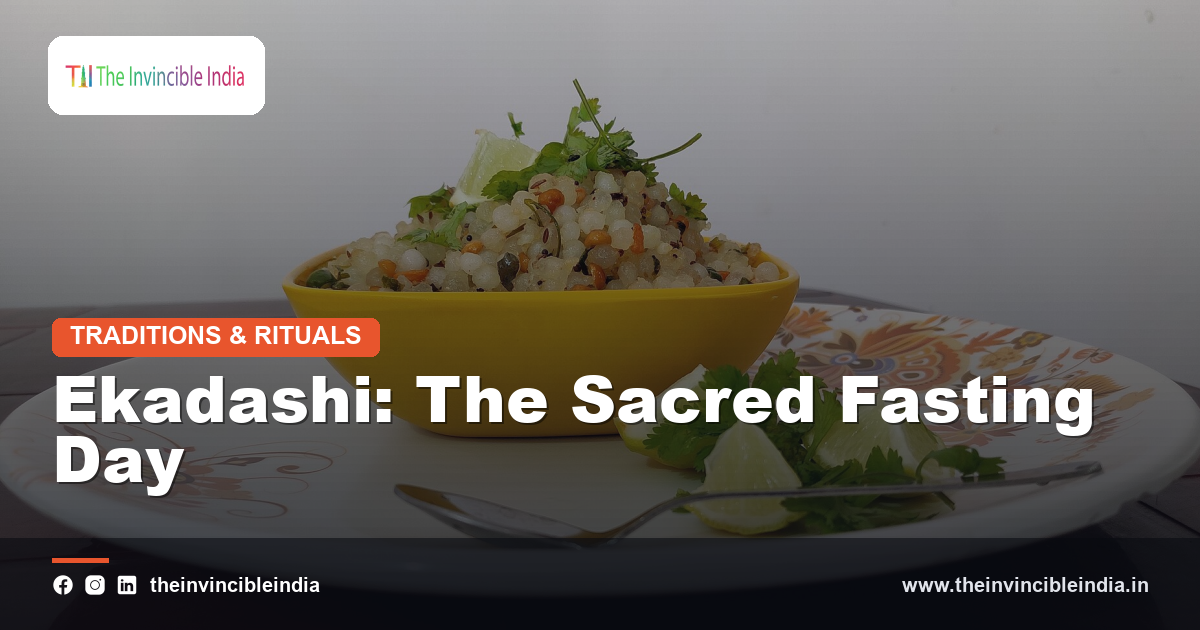
Ekadashi refers to the eleventh day of each lunar fortnight in the Hindu calendar, observed by many devotees as a day of fasting and dedicated worship of Vishnu. Falling twice each lunar month, once in the waxing and once in the waning fortnight, Ekadashi is considered one of the most widely observed fasting days across Hindu tradition, alongside the broader practices described in the Indian fasting and vrat tradition. Observance typically involves abstaining from grains, engaging in prayer and, in many cases, remaining awake through devotional activities into the night. This guide outlines the meaning, rituals and regional variations associated with Ekadashi.
Quick Facts
| Detail | Information |
|---|---|
| Also Known As | Ekadashi vrat |
| Dedicated To | Lord Vishnu |
| Type of Observance | Recurring Hindu fasting day |
| General Timing | Eleventh day of each lunar fortnight, twice monthly |
| Key Practices | Fasting, Vishnu worship, night vigil |
| Region of Prominence | Observed across Hindu communities in India and worldwide |
Meaning and Significance
Ekadashi is observed as one of the most widely followed recurring fasting days within Hindu tradition, falling on the eleventh day of each lunar fortnight and dedicated primarily to the worship of Vishnu. The day is regarded as spiritually significant, offering devotees a regular occasion for fasting, prayer and reflection.
Because it recurs twice each lunar month, Ekadashi provides a consistent rhythm of religious observance throughout the year, distinguishing it from festivals tied to a single annual date. This regularity has helped the practice remain a familiar and sustained part of devotional life for many practicing Hindus.
Position in the Lunar Calendar
Ekadashi falls on the eleventh day counted from the new moon in the waxing fortnight and again from the full moon in the waning fortnight, meaning it occurs twice within each lunar month. Hindu calendars and almanacs specify the exact dates for each occurrence throughout the year.
This lunar basis situates Ekadashi within the broader Hindu calendrical system, in which many religious observances are calculated according to the phases of the moon rather than the solar calendar used for civil purposes, giving the day its recurring but calendar-shifting character.
Dedication to Lord Vishnu
Ekadashi is primarily associated with the worship of Vishnu, regarded in Hindu tradition as the preserver among the principal deities, and the day’s rituals typically centre on prayers, hymns and offerings directed toward him. Some traditions associate specific Ekadashis throughout the year with particular forms or stories connected to Vishnu.
This consistent devotional focus gives Ekadashi a distinct religious identity centred on a single deity, in contrast to festivals that draw on a wider range of deities or themes, reinforcing its character as a specifically Vaishnava observance embraced broadly across Hindu practice.
The Practice of Fasting
Fasting on Ekadashi typically involves abstaining from grains and certain other foods, with the specific dietary restrictions varying according to individual capacity and family or regional custom. Some devotees observe a complete fast, while others follow a partial fast permitting specific foods such as fruits or dairy.
This flexibility in the strictness of the fast allows a wide range of devotees, including the elderly and those with health considerations, to participate in the observance according to their own circumstances, reflecting a broader accommodation found within Hindu fasting practices generally.
Spiritual and General Wellbeing Rationale
The practice of fasting on Ekadashi is generally understood within Hindu tradition as serving both spiritual and physical purposes, offering an occasion for disciplined self-restraint alongside a periodic dietary pause. Such fasting is viewed as an act of devotion rather than a purely medical practice.
This combination of spiritual and general wellbeing rationale is characteristic of many traditional Hindu fasting customs, in which religious observance and everyday practical benefit are understood as complementary rather than separate concerns.
Rituals and Worship on Ekadashi
Devotees observing Ekadashi typically rise early, bathe and offer prayers to Vishnu, often visiting a temple or maintaining a home shrine dedicated to the deity for the occasion. Recitation of specific prayers or scriptures associated with Vishnu is a common feature of the day’s observance.
Many devotees also choose to remain awake through part or all of the following night, engaging in devotional singing or reading as an extension of the day’s spiritual focus. This combination of fasting, worship and vigil forms the core structure of Ekadashi observance across most traditions.
Jagran: The Night Vigil
A night vigil, known as jagran, is commonly observed by devotees following the day’s fast, involving continued prayer, devotional singing or scripture reading through part or all of the night. This practice is regarded as an extension of the day’s spiritual discipline into the hours after sunset.
The vigil is often undertaken communally, with groups of devotees gathering at temples or homes to sustain devotional activity together, reinforcing the social and communal dimension of what might otherwise be an individually observed fast.
Breaking the Fast: Parana
The Ekadashi fast is traditionally broken the following morning through a ritual known as parana, performed within a specified time window according to the lunar calendar. This concluding ritual is considered an essential part of properly completing the observance.
Devotees typically consult a religious calendar to determine the appropriate time for parana, reflecting the broader attention to precise timing that characterises many aspects of Ekadashi observance, from the fast’s beginning through to its formal conclusion the next day.
Notable Ekadashis Through the Year
Certain Ekadashis occurring at particular points in the year are regarded as especially significant, often associated with specific stories or themes connected to Vishnu, and are marked with more elaborate observance than the standard fortnightly occurrence. These particular days often draw larger temple attendance.
The recognition of certain Ekadashis as especially auspicious adds variation to what would otherwise be a uniformly recurring observance, giving devotees periodic occasions through the year for heightened devotional focus within the broader Ekadashi tradition.
Ekadashi in Vaishnavism
Within Vaishnavism, the tradition of Hindu practice centred on the worship of Vishnu, Ekadashi holds particular prominence as one of the most consistently observed fasting days, reflecting the tradition’s broader emphasis on devotion to this deity. Vaishnava communities often observe the day with particular rigor.
This strong association with Vaishnava practice has helped Ekadashi remain a widely recognised and consistently followed observance, extending its influence well beyond any single regional or linguistic community within the broader landscape of Hindu religious practice.
Regional Variations Across India
While the core practice of fasting and Vishnu worship is broadly consistent, specific customs surrounding Ekadashi vary across India’s regions, including differences in permitted foods, particular prayers recited and the scale of temple observance. Local almanacs may also show minor variation in calculated dates.
These regional differences reflect the broader diversity of practice found within Hindu tradition generally, in which a shared underlying observance accommodates a range of local customs without altering the day’s essential religious character.
Ekadashi and Temple Traditions
Major Vishnu temples across India often see increased attendance on Ekadashi, with special prayers, decorations and extended worship hours organised to accommodate the larger number of devotees observing the day. Some temples hold particular reputations for their Ekadashi celebrations specifically.
This heightened temple activity reflects the broader importance of Ekadashi within the annual religious calendar, providing devotees with a structured, recurring opportunity to combine personal fasting with communal worship at significant religious sites.
Community and Family Observance
Ekadashi is often observed as a family practice, with households collectively following the day’s dietary restrictions and joining together for prayers, even when individual members’ strictness of fasting may vary according to personal capacity. Elder family members frequently guide younger ones in the customs associated with the day.
This family dimension helps sustain the practice across generations, embedding Ekadashi within the rhythm of household religious life rather than treating it solely as an individual or temple-based observance.
Ekadashi Among the Broader Vrat Tradition
Ekadashi is one among a wider set of vrats, or vows involving fasting and devotional discipline, observed throughout the Hindu calendar, distinguished by its recurring fortnightly timing rather than a single annual occurrence. This places it within a broader tradition of periodic religious fasting.
Its frequent recurrence gives Ekadashi a distinctive place within this wider vrat tradition, offering devotees a regular and dependable framework for sustained spiritual discipline throughout the year, rather than an occasional or once-yearly commitment.
Scriptural References to Ekadashi
References to the significance of Ekadashi appear within various Hindu scriptural and devotional texts, which describe the spiritual merit traditionally associated with its observance and recount stories connected to particular Ekadashis. These texts have helped sustain the practice’s importance across generations of devotees.
Such scriptural grounding lends Ekadashi a textual as well as devotional foundation, reinforcing its standing as an established and long-recognised observance within the broader corpus of Hindu religious literature and practice.
Ekadashi and Traditional Wellness Understanding
Alongside its spiritual purpose, periodic fasting of the kind practiced on Ekadashi is sometimes discussed in relation to traditional Indian understandings of wellness, which have long emphasised balance and moderation in diet as part of a broader approach to health. Such discussions generally frame the practice as complementary to its devotional meaning.
This connection between fasting and traditional wellness thinking reflects a broader pattern within Hindu practice, in which religious observance and general wellbeing are often understood as mutually reinforcing rather than entirely separate concerns.
Ekadashi Beyond India
Hindu communities living outside India generally continue to observe Ekadashi, adapting the practice to local circumstances while maintaining its core elements of fasting and prayer. Temples and community organisations abroad often provide guidance on the correct dates according to the lunar calendar.
This continued observance among diaspora communities reflects the practice’s portability, requiring no elaborate infrastructure beyond personal discipline and access to a lunar religious calendar, allowing devotees to maintain the tradition wherever they reside.
Preparing for an Ekadashi Fast
Devotees preparing to observe Ekadashi often plan their meals in advance, consuming a lighter meal the evening before to ease into the fasting period ahead. Many also set aside time for prayer and reduce other engagements to focus more fully on the day’s devotional purpose.
This preparatory approach reflects the broader discipline associated with Ekadashi, in which the fast is treated not as a sudden restriction but as a planned period of focused observance, supported by simple practical steps taken in the days beforehand.
Ekadashi Today
Ekadashi continues to be widely observed by Hindu devotees today, with fasting, temple worship and, for many, a night vigil remaining the core elements of the day’s practice. Its recurring nature means the observance is woven consistently into the religious calendar throughout the year.
Modern devotees, including those living outside India, generally maintain the practice according to their own capacity, often supported by calendars and religious applications that track the correct dates. This continued relevance reflects Ekadashi’s enduring place within everyday Hindu devotional life.
Sources & Further Reading
- Ministry of Culture, Government of India (indiaculture.gov.in).
- Sahitya Akademi.
Frequently Asked Questions
What is Ekadashi?
Ekadashi is the eleventh day of each lunar fortnight in the Hindu calendar, observed as a fasting day dedicated primarily to the worship of Vishnu.
How often does Ekadashi occur?
It occurs twice each lunar month, once in the waxing fortnight and once in the waning fortnight, according to the Hindu lunar calendar.
What is parana?
Parana is the ritual breaking of the Ekadashi fast on the following morning, performed within a specific time window according to the lunar calendar.
Do all devotees fast the same way on Ekadashi?
No, the strictness of the fast varies, with some observing a complete fast and others following a partial fast permitting certain foods.
What is jagran in relation to Ekadashi?
Jagran is a night vigil observed by some devotees following the day’s fast, involving continued prayer or devotional singing through part or all of the night.


