

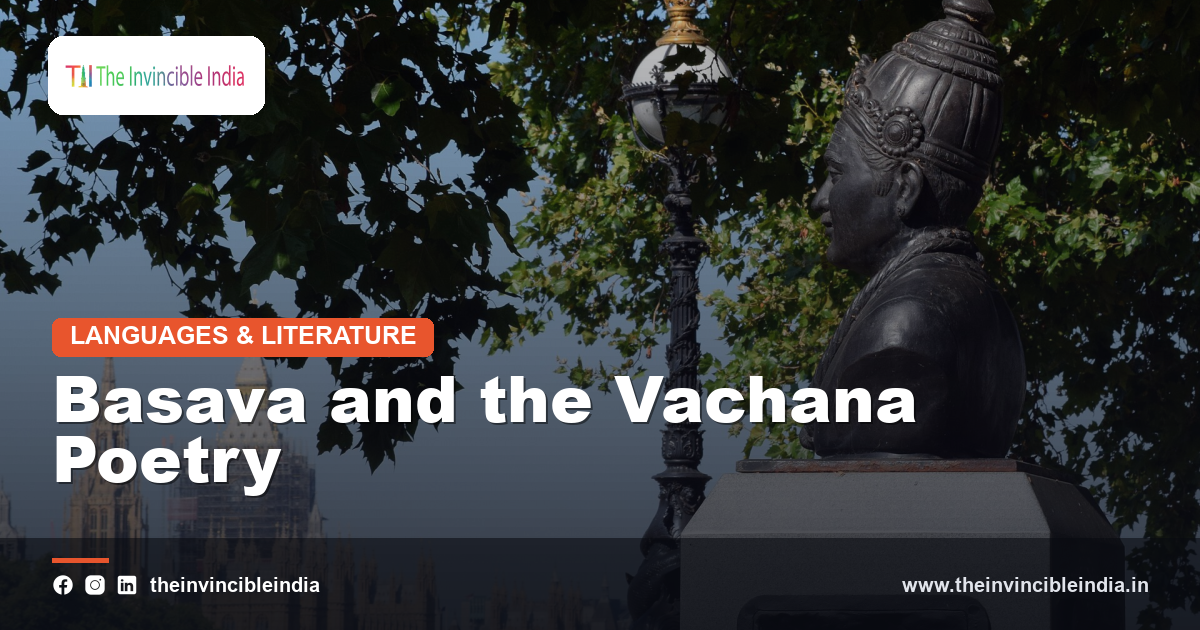
Basava stands among the most influential social reformers and philosopher-poets of medieval Karnataka, remembered for founding a movement that challenged rigid caste hierarchy and ritual formalism through direct, ethical devotion to Shiva. Writing in accessible Kannada rather than formal Sanskrit, he composed vachanas, short devotional verses in free prose-poetry form that expressed spiritual insight in the language of ordinary people. His teachings, centered on equality, honest labor, and personal devotion, gave rise to what became known as the Lingayat or Veerashaiva tradition, and the community of poet-saints associated with him produced one of the richest bodies of vernacular devotional literature in Indian history. Basava’s legacy endures as both a spiritual and social landmark in Karnataka’s history.
Quick Facts
| Detail | Information |
|---|---|
| Tradition | Lingayat (Veerashaiva) movement |
| Region | Karnataka, medieval India |
| Language | Kannada |
| Literary Form | Vachana (free-verse devotional poetry) |
| Core Teaching | Equality, honest labor, devotion over ritual |
| Associated Institution | Anubhava Mantapa, a hall of spiritual dialogue |
Who Was Basava
Basava is remembered as a towering figure in the religious and social history of medieval Karnataka, celebrated as a philosopher, poet, and social reformer whose teachings reshaped the spiritual and ethical outlook of his followers. His life and thought remain closely tied to the region’s devotional and literary heritage.
Rather than pursuing devotion through elaborate ritual or scriptural scholarship, Basava emphasized a direct, personal relationship with the divine grounded in ethical conduct and social equality. This distinctive approach helped his ideas resonate widely among ordinary people during his lifetime and long after.
Historical and Social Context
Basava lived during a period in Karnataka’s history marked by rigid social hierarchy, elaborate ritual practice, and significant inequality between different sections of society. His teachings emerged as a direct response to these conditions, offering an alternative vision of spiritual and social life.
Against this backdrop, Basava’s insistence on equality and ethical living represented a significant challenge to established norms, appealing to communities who had long been excluded from full participation in formal religious and social life. This context helps explain the lasting impact of his reformist message.
Basava and the Lingayat Tradition
Basava is closely associated with the founding and early development of the Lingayat tradition, also known as Veerashaivism, a devotional movement centered on personal worship of Shiva rather than temple ritual or priestly mediation. This tradition continues to be practiced widely in Karnataka today.
Central to Lingayat practice is the wearing of a small personal emblem representing the deity, allowing devotees to carry their object of worship with them rather than depending on temple visits. This practice reflects Basava’s broader emphasis on direct, personal, and portable devotion.
Core Philosophy and Teachings
At the heart of Basava’s philosophy lies the conviction that sincere devotion and ethical conduct matter more than birth, ritual status, or scriptural learning in determining a person’s spiritual worth. This conviction shaped both his teaching and the community that formed around him.
Basava taught that genuine spirituality should be expressed through honest work, truthful speech, and compassionate behavior toward others, rather than confined to formal worship or religious ceremony. This practical, ethically grounded vision of spirituality distinguished his teaching from more ritual-centered religious traditions of his time.
Rejection of Caste and Ritual Hierarchy
Basava is remembered for openly challenging the caste-based social hierarchy of his time, teaching that spiritual merit and human dignity were not determined by birth or occupation. This message attracted followers from a wide range of social backgrounds, including many who had faced social exclusion.
His movement welcomed participation from communities across the social spectrum, treating manual labor and traditionally low-status occupations with the same respect accorded to more privileged social roles. This inclusive stance remains one of the most widely noted aspects of Basava’s social teaching.
The Vachana Literary Form
Basava is closely associated with the vachana, a distinctive literary form consisting of short, rhythmic prose-poems composed in everyday Kannada rather than the more formal, Sanskrit-influenced literary language used in classical texts. This form allowed spiritual ideas to reach a broad, non-scholarly audience.
Vachanas typically combine plain language with vivid imagery and direct address, often speaking as though the poet were in intimate conversation with the divine or with a listener. This conversational, accessible quality is one of the defining features of the vachana as a literary genre.
Themes in Basava's Vachanas
Basava’s vachanas explore themes of devotion, humility, ethical living, and social equality, often using everyday imagery drawn from nature, work, and daily life to convey spiritual insight. This grounding in ordinary experience gives his poetry an approachable, relatable quality.
Many of his verses also critique hypocrisy, empty ritual, and social pretension, urging listeners toward sincerity and inner transformation rather than outward display of piety or status. This combination of devotional depth and social critique gives Basava’s vachanas their distinctive moral force.
Language and Style of Vachana Poetry
The vachana form is notable for its use of plain, direct Kannada prose-poetry rather than the ornate meter and elevated vocabulary typical of earlier classical literature. This stylistic choice reflects the movement’s broader commitment to accessibility and inclusion.
By writing in a register close to spoken language, Basava and other vachana poets ensured that their teachings could be understood and remembered by people without formal literary education, helping their ideas spread widely through oral transmission as well as written text.
The Anubhava Mantapa
Basava is credited with establishing or inspiring the Anubhava Mantapa, a hall of spiritual experience where devotees, thinkers, and poets gathered to discuss philosophy, theology, and social questions in open dialogue. This institution became a central meeting point for the emerging Lingayat community.
The Anubhava Mantapa is remembered as a remarkably inclusive space, welcoming participants regardless of caste, gender, or social background, consistent with Basava’s broader teachings on equality. This spirit of open exchange helped shape the intellectual and spiritual life of the movement he inspired.
Other Vachana Poets and Sharanas
Basava’s movement attracted numerous other poet-saints, remembered collectively as sharanas, who composed their own vachanas exploring similar themes of devotion, equality, and ethical living. Their collective body of work forms a rich and varied literary tradition alongside Basava’s own compositions.
These fellow poets came from diverse social backgrounds, reflecting the inclusive character of the movement, and their vachanas together create a broad literary record of the spiritual and social concerns that animated the Lingayat community during this formative period.
Basava's View on Labor and Dignity
A distinctive element of Basava’s teaching is its emphasis on the dignity of honest labor, encapsulated in the concept often referred to as kayaka, which treats sincere work as a form of spiritual practice in itself. This idea elevated everyday occupations to a place of spiritual significance.
By framing labor in this way, Basava’s teaching offered dignity and spiritual value to occupations that were otherwise looked down upon within the rigid social hierarchy of his time, reinforcing his broader message of equality and ethical living through everyday action.
Women and Social Reform in the Movement
The movement associated with Basava is notable for including women among its poet-saints and participants, allowing them a voice in spiritual and philosophical discussion that was often denied elsewhere in the social conventions of the period. Several vachanas by women poets survive from this tradition.
This inclusion of women’s voices reflects the broader spirit of equality that ran through Basava’s teaching, extending his critique of hierarchy beyond caste alone to encompass gender as well. This aspect of the movement continues to be noted as historically significant.
Basava's Legacy in Karnataka
Basava is remembered today as one of the most important figures in Karnataka’s cultural and religious history, honored both as a spiritual teacher and as an early advocate for social equality. His memory is preserved through temples, institutions, and public commemoration across the state.
His influence extends beyond religious practice into the broader cultural identity of Karnataka, where he is regarded as a foundational figure whose teachings continue to shape discussions of social ethics and reform within the region.
Influence on Kannada Literature
Basava’s vachanas occupy a foundational place within the history of Kannada literature, recognized for introducing a distinctive prose-poetry form that expanded the language’s literary and philosophical possibilities. His work is studied both for its spiritual content and its literary innovation.
The vachana tradition he helped establish influenced generations of later Kannada writers and thinkers, demonstrating how vernacular literature could carry serious philosophical and social weight. This literary legacy remains a significant part of Kannada’s broader cultural heritage.
Basava in Modern Memory and Recognition
Basava continues to be honored in modern Karnataka through public monuments, educational institutions, and cultural observances that recognize his contributions to social reform and devotional literature. His teachings are frequently invoked in discussions of social equality and ethical governance.
Public memory of Basava blends reverence for his religious teachings with recognition of his historical role as a social reformer, reflecting the dual spiritual and civic significance attributed to his life and work in contemporary Karnataka.
Basava's Symbolism and Imagery
Basava’s vachanas frequently draw on symbolism and imagery rooted in nature, craftsmanship, and everyday rural life, using familiar objects and experiences to illustrate abstract spiritual and ethical ideas. This grounded symbolism made his teachings easier for ordinary listeners to grasp and remember.
By anchoring philosophical reflection in concrete, recognizable imagery, Basava’s poetry avoided abstraction for its own sake, ensuring that even complex ideas about devotion and ethics remained accessible to a broad and largely non-scholarly audience across Karnataka.
Basava's Relationship with Public Life
Basava is remembered as having held a position of administrative responsibility during part of his life, a role that placed him in proximity to public authority even as his teachings challenged prevailing social hierarchies. This dual position gave him a distinctive vantage point for reform.
His ability to combine institutional standing with a message of social equality helped his ideas gain wider attention, illustrating how spiritual reform and public life could intersect within the social and political context of medieval Karnataka.
Basava's Approach to Truthful Speech
Basava placed strong emphasis on truthful speech as an essential component of ethical conduct, teaching that honesty in word and intention was inseparable from genuine devotion and sincere character. This concern for truthfulness runs throughout many of his vachanas.
By linking spoken honesty so closely to spiritual worth, Basava’s teaching extended ethical responsibility into everyday conversation and conduct, reinforcing the idea that devotion could not be separated from how a person behaved and communicated in ordinary life.
Basava and Vachana Poetry Today
The vachana tradition Basava helped establish continues to be studied, translated, and read today, valued both for its literary craftsmanship and its enduring ethical and spiritual insight. Scholars and general readers alike continue to engage with this body of work.
As a foundational figure in Kannada devotional literature and social thought, Basava’s teachings on equality, honest labor, and sincere devotion remain widely referenced, underscoring the continued relevance of his vision centuries after the vachanas were first composed.
Sources & Further Reading
- Sahitya Akademi.
- Ministry of Culture, Government of India (indiaculture.gov.in).
Frequently Asked Questions
Who was Basava?
Basava was a philosopher, poet, and social reformer of medieval Karnataka, remembered for teaching equality and devotion through Kannada vachana poetry and for his association with the Lingayat tradition.
What is a vachana?
A vachana is a short, rhythmic prose-poem composed in everyday Kannada, a literary form closely associated with Basava and other poet-saints of the Lingayat movement.
What is the Anubhava Mantapa?
The Anubhava Mantapa was a hall of spiritual dialogue associated with Basava, where devotees and thinkers gathered to discuss philosophy and social questions regardless of caste or background.
What did Basava teach about caste?
Basava taught that spiritual merit and human dignity were not determined by birth, challenging caste hierarchy and welcoming followers from across the social spectrum.
What is the Lingayat tradition?
The Lingayat, or Veerashaiva, tradition is a devotional movement associated with Basava, centered on personal worship of Shiva through a portable emblem rather than temple ritual alone.


