

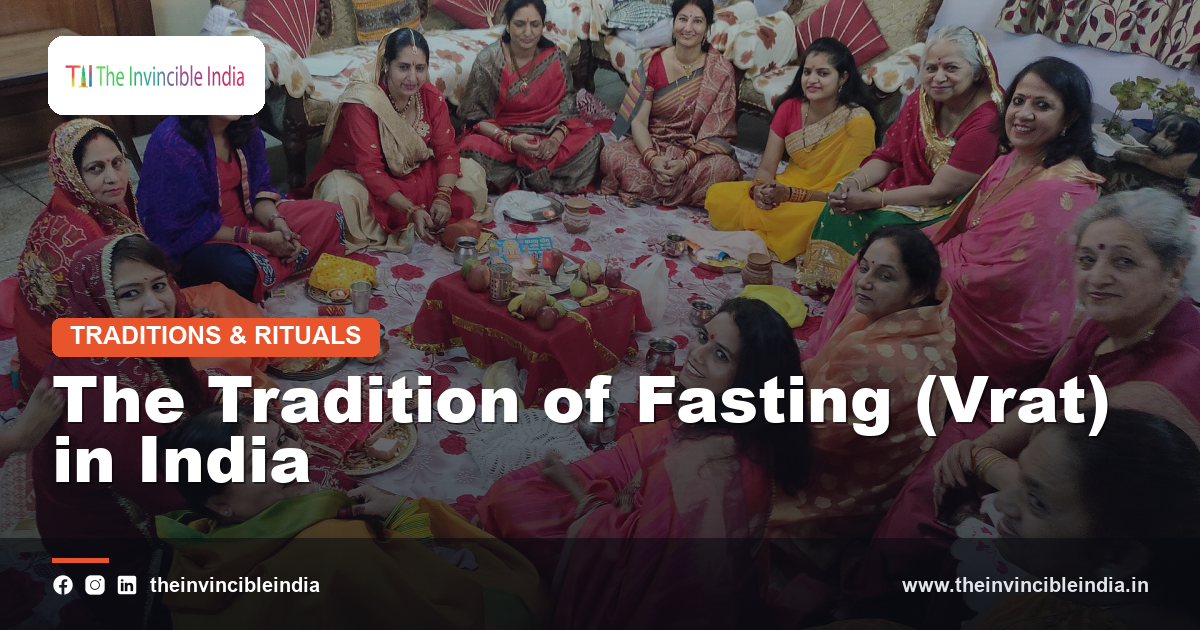
Fasting, known widely in India as vrat or upvas, is one of the most enduring and widespread expressions of religious devotion in the country, practiced across Hindu, Jain, Muslim, Christian and other communities in forms suited to their own traditions. Far from being a single uniform custom, vrat encompasses a broad spectrum of practices, from complete abstention from food and water to selective diets permitting fruits or milk, each carried out for a specific spiritual or personal purpose. The practice is closely tied to major observances such as Navratri, during which extended fasting is especially common, as well as to numerous smaller, recurring fasts observed throughout the year. This guide explores the meaning, variety and continuing relevance of fasting traditions in India.
Quick Facts
| Detail | Information |
|---|---|
| Also Known As | Vrat, Upvas, Roza (in different traditions) |
| Type of Observance | Religious and spiritual discipline |
| Common Basis | Lunar calendar days, weekly days, festivals |
| Key Practices | Food restriction, prayer, austerity, charity |
| Observed By | Hindus, Jains, Muslims, Christians and others |
| Duration | From part of a day to several consecutive days |
Meaning and Significance of Vrat
Vrat is a Sanskrit-derived term used across much of India to describe a religious vow, most commonly associated with fasting, undertaken for a specific spiritual purpose. The underlying idea is that voluntarily restraining bodily desire, especially the desire for food, sharpens attention and allows a devotee to direct their mind more fully toward prayer, gratitude or a particular deity. A vrat may be taken up for personal wellbeing, the health of a family member, thanksgiving after a wish is fulfilled, or simply as part of an annual religious calendar.
Because it is framed as a vow rather than a mere dietary choice, a vrat typically carries a sense of personal commitment and accountability. This voluntary, purpose-driven quality distinguishes it from ordinary abstention and helps explain why fasting continues to hold deep meaning for millions of observers across generations.
Vrat as Spiritual Discipline
Beyond its outward form, vrat is widely understood as a discipline intended to cultivate self-control, patience and humility. Traditional teaching holds that the temporary denial of comfort helps loosen the grip of habitual desire, creating space for reflection and devotion that daily routine often crowds out. This is one reason fasting is frequently paired with prayer, meditation or scripture reading rather than practiced in isolation.
The discipline is also understood as a leveller, since the experience of hunger and restraint is broadly similar regardless of a person’s social or economic standing. Many devotees describe the shared discomfort of a fast day as fostering empathy, particularly toward those who face hunger involuntarily, adding a social dimension to an otherwise personal practice.
Types of Fasts: Partial, Complete and Selective
Fasting practices in India vary considerably in strictness. A complete fast, often called a nirjala vrat, involves abstaining from both food and water for its duration, and is generally reserved for particular occasions or undertaken by especially devoted observers. More commonly, a phalahar or partial fast permits specific foods such as fruits, milk, yogurt and certain non-grain preparations, allowing the fast to be sustained over a longer period without complete deprivation.
A further category, the selective fast, involves avoiding particular foods, such as grains, salt or specific vegetables, rather than food altogether. This range of options allows the practice to be adapted to age, health and personal circumstance, which helps explain why fasting remains widely observed across generations and levels of physical capacity.
Weekly Day-Specific Fasts
Many Hindus observe a fast on a particular day of the week, each traditionally associated with a specific deity. Monday fasts are commonly linked to Shiva, Tuesday to Hanuman, Thursday to Vishnu or Brihaspati, and Friday to the goddess in her various forms, though regional and family custom varies considerably in these associations. Such fasts are typically lighter than festival fasts, often permitting a single meal or a restricted diet through the day.
These weekly observances tend to be personal or family choices rather than universally mandated practices, often continued out of long habit or a specific vow taken at some point in life. Their regularity gives them a quieter, more routine character compared with the larger, calendar-bound fasts tied to major festivals.
Ekadashi Fasting
Ekadashi, the eleventh day of each lunar fortnight, is one of the most widely observed fasting occasions in the Hindu calendar, associated particularly with the worship of Vishnu. Because it recurs twice a month, Ekadashi fasting has a rhythm distinct from festival-based fasts, forming a regular feature of devotional life for those who observe it consistently throughout the year.
Practices on Ekadashi vary from complete abstention to a diet excluding grains and certain vegetables, with many observers breaking the fast the following morning at a specific point known as parana. The consistency of this fortnightly cycle has made Ekadashi a significant marker of devotional discipline within many Vaishnava households.
Fasting During Navratri
Navratri, the nine-night festival dedicated to the goddess, is among the most prominent occasions for extended fasting in India. Many devotees observe a fast for all nine days, sustained through permitted foods such as fruits, milk products, and grains like buckwheat and water chestnut flour that are considered suitable for fasting.
The extended nature of Navratri fasting distinguishes it from single-day observances, requiring careful attention to diet and rest across more than a week. Households often prepare specific fasting menus during this period, and the shared experience of fasting through the festival contributes to its strong communal and family character.
Karva Chauth and Marital Devotion
Karva Chauth is a fast observed primarily by married women in parts of North and West India, undertaken for the wellbeing and long life of their husbands. The fast is typically a complete one, from sunrise until moonrise, broken only after sighting the moon through a sieve, a custom that has become closely associated with the observance.
The day usually involves elaborate preparation, including mehendi application and traditional adornment, alongside the fast itself, blending personal devotion with social and familial ritual. While regionally specific, Karva Chauth has become widely recognised as an example of how fasting can be woven into the fabric of marital and family life.
Sankashti and Deity-Specific Fasts
Alongside weekly and festival fasts, many Hindus observe fasts tied to specific deities on particular lunar days, such as Sankashti Chaturthi, associated with Ganesha, observed on the fourth day following the full moon each month. Such fasts are usually broken after moonrise, following prayers offered to the deity concerned.
These deity-specific fasts, often passed down within families or taken up in response to a personal vow, add further texture to the calendar of fasting practiced across the country. Their regularity and specificity illustrate how fasting functions not only as a broad religious category but as a finely graded set of individual devotional choices.
Phalahar: Foods Permitted During a Fast
Phalahar, literally meaning fruit-based sustenance, refers to the specific category of foods considered acceptable during a partial fast. This typically includes fresh and dried fruits, milk and milk products, certain flours such as buckwheat or water chestnut, and rock salt in place of ordinary salt, all chosen according to long-standing dietary custom rather than any single fixed rule.
Over time, phalahar has developed into something of a cuisine in its own right, with dishes such as sabudana khichdi and fruit-based preparations specifically associated with fasting days. This culinary tradition demonstrates how a religious restriction has, over generations, given rise to a distinctive and widely enjoyed set of foods.
Fasting in Jain Tradition
Fasting holds an especially central place in Jain religious life, where it is regarded as a significant form of austerity and a means of spiritual purification. Jain fasting practices range from a single missed meal to more extended and rigorous observances undertaken by both laypeople and ascetics, particularly during the annual period of Paryushana.
Because Jain philosophy places strong emphasis on self-discipline and non-attachment, fasting is viewed less as an occasional ritual and more as an ongoing practice of restraint that some observers cultivate over a lifetime. This depth of commitment reflects the broader Jain emphasis on austerity as a path toward spiritual liberation.
Fasting Across Other Faiths in India
Fasting is not confined to Hindu and Jain practice in India but forms part of religious life across several other communities as well. During the Islamic month of Ramzan, Muslims across the country observe roza, abstaining from food and water from dawn until sunset for the duration of the month, breaking the fast each evening at iftar.
Christian communities in India similarly observe fasting during Lent, typically involving abstention from specific foods and simplified meals in the period leading up to Easter. These parallel traditions, each rooted in its own theology, reflect a broader shared understanding across India’s faiths that voluntary restraint can serve as a path to spiritual reflection.
Vrat Katha: Storytelling and the Fast
Many Hindu fasts are accompanied by a vrat katha, a traditional story recited or read as part of the observance, explaining the origin or purpose of the particular fast. These stories are typically passed down orally or through small printed booklets, and are recited by the observer or a family elder either before or after the fast is broken.
The vrat katha serves both a devotional and an instructive purpose, reinforcing the values associated with the fast while giving the practice a narrative dimension beyond mere dietary restriction. This tradition of storytelling helps sustain fasting practices across generations by embedding them within a memorable and repeatable form.
Regional Variations in Fasting Customs
While certain fasts, such as Ekadashi or Navratri, are observed nationally, the specific customs surrounding them vary considerably by region. Permitted foods, the manner of breaking a fast, and the deities associated with particular fasting days can differ between North and South India, and even between neighbouring states or communities.
These regional inflections reflect the broader pattern seen throughout Indian religious practice, in which a shared underlying framework accommodates a wide range of local expression. Far from diluting the tradition, this diversity is often seen as evidence of how deeply fasting has been integrated into everyday cultural life across the country.
Health and Wellness Dimensions
Beyond its religious framing, fasting is often discussed in relation to general health and wellness, with periodic abstention from food popularly associated with digestive rest and a reset of eating habits. Many traditional fasting diets, built around fruits, dairy and specific grains, are also seen as lighter on the digestive system than regular meals.
While such wellness associations are widely held in popular belief, individuals with specific health conditions are generally advised to approach fasting with appropriate caution and to adapt practices to their own needs. This intersection of religious custom and everyday wellbeing is part of what keeps fasting relevant to contemporary audiences beyond strictly devotional contexts.
Community and Family Aspects
Fasting in India is rarely an entirely solitary act. Family members often observe fasts together, share phalahar meals, and support one another through longer observances such as Navratri, turning an individual discipline into a shared household rhythm. Community fasting during major festivals can also extend to neighbourhoods or temple congregations observing collectively.
This communal dimension reinforces social bonds even as it serves an individual spiritual purpose, reflecting a broader pattern in Indian religious life where personal devotion and shared celebration are closely intertwined. The sense of togetherness built around a shared fast is often cited by observers as one of its most valued aspects.
Fasting Traditions Today
In contemporary India, fasting traditions continue alongside significant changes in daily life, with many observers adapting old customs to modern schedules and dietary knowledge. Recipe blogs, mobile applications and packaged phalahar products have made it easier to sustain traditional fasts within busy urban routines, while awareness of nutrition has encouraged more informed approaches to extended fasts.
Despite these adaptations, the underlying purpose of vrat, voluntary restraint undertaken with devotion and intention, remains recognisably continuous with its long history. Across faiths and regions, fasting continues to serve as a widely practiced expression of discipline, gratitude and spiritual focus in Indian life.
Sources & Further Reading
- Ministry of Culture, Government of India (indiaculture.gov.in).
- Sahitya Akademi.
Frequently Asked Questions
What does the word vrat mean?
Vrat refers to a religious vow, most commonly involving fasting, undertaken for a specific spiritual purpose such as devotion, gratitude or the wellbeing of a loved one.
Why do some Hindus fast on specific days of the week?
Certain weekdays are traditionally associated with particular deities, and observing a fast on that day is seen as a way of directing devotion toward the deity concerned.
What foods are typically allowed during a Hindu fast?
Permitted foods, known as phalahar, generally include fruits, milk products, rock salt and specific flours such as buckwheat, though exact customs vary by region and family.
Is fasting practiced only by Hindus in India?
No. Fasting is also central to Jain religious life and is observed by Muslims during Ramzan and by Christians during Lent, each within their own religious framework.
Is vrat fasting the same as dieting for health reasons?
While some people note wellness benefits, vrat is primarily a religious and devotional practice undertaken for spiritual purposes rather than a dietary programme.


