

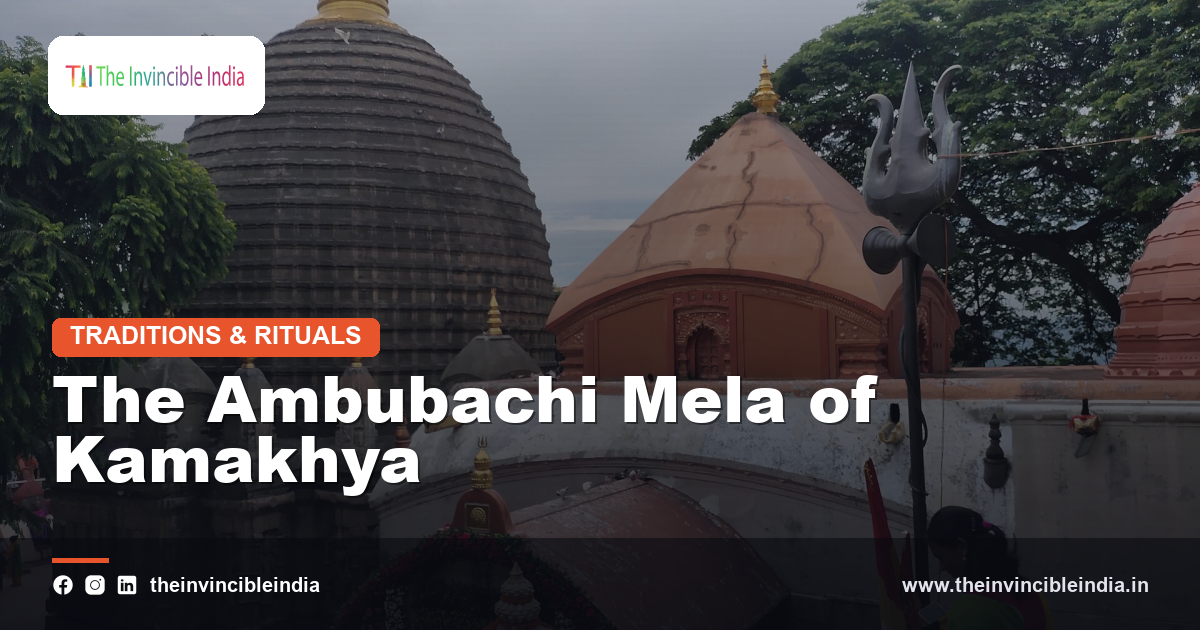
Ambubachi Mela is a distinctive Hindu festival held at the Kamakhya Temple on Nilachal Hill in Guwahati, Assam, centred on the symbolic menstruation of the goddess Kamakhya and the fertility of the earth during the monsoon season, a theme of divine feminine power also central to Navratri’s nine nights of goddess worship. During the festival, the temple’s doors are closed for a set period, after which an elaborate reopening ceremony draws large crowds of devotees, sadhus, and ascetics associated with Shakta and tantric traditions. The mela that follows combines solemn ritual with the lively atmosphere of a public fair, reflecting Kamakhya Temple’s longstanding significance as one of the most important centres of goddess worship in eastern India.
Quick Facts
| Detail | Information |
|---|---|
| Festival Type | Hindu fertility festival and mela |
| Primary Region | Guwahati, Assam, centred on the Kamakhya Temple |
| Presiding Deity | Goddess Kamakhya, a form of Shakti |
| Timing | Monsoon season, in the Assamese month of Ahaar |
| Temple Status | Temple doors closed for a set period, then reopened |
| Associated Practices | Tantric worship, ascetic gatherings, and temple mela |
Origins and the Kamakhya Temple
Ambubachi Mela is centred on the Kamakhya Temple, situated on the Nilachal Hill overlooking Guwahati in Assam, one of the most significant Shakti Peethas in the Hindu tradition. The temple is dedicated to the goddess Kamakhya, worshipped as a powerful form of Shakti associated with fertility and creative energy. Unlike many Hindu temples that centre their worship on an anthropomorphic idol, Kamakhya Temple venerates a natural rock formation regarded as symbolic of the goddess’s generative power. This distinctive form of worship has made the temple a major centre of Shakta and tantric tradition for many centuries, drawing devotees and pilgrims from across India. The Ambubachi Mela, held annually at the temple, is deeply tied to this unique form of worship and the temple’s longstanding reputation as a centre of goddess devotion.
Fertility Symbolism and Meaning
The Ambubachi Mela is understood within Hindu tradition as a celebration of the goddess Kamakhya’s annual menstruation cycle, symbolically representing the fertility of the earth itself during the monsoon season. This association draws on a broader conceptual link in Hindu thought between female fertility and the fertility of the land, particularly significant during the monsoon period when the earth becomes receptive to planting and renewal. The festival’s symbolism thus extends beyond the temple itself to broader agricultural and seasonal themes, framing the observance as a celebration of creative and generative power in both divine and natural terms. This distinctive symbolic framework sets Ambubachi Mela apart from many other Hindu festivals, grounding its central ritual meaning in themes of fertility, renewal, and the sacredness of the natural cycle.
The Temple Closure Period
A distinctive feature of Ambubachi Mela is the closing of the Kamakhya Temple’s doors for a set period during the festival, during which regular worship activities are suspended. This closure is understood as corresponding to the goddess’s menstrual period, during which the temple is considered to be in a state requiring rest and privacy rather than active worship. During this time, the temple premises are typically off-limits to visitors, and normal rituals are paused, marking a departure from the temple’s usual daily schedule of worship. This period of closure is followed by a ceremonial reopening, accompanied by purification rites, at which point regular worship resumes and a large public mela begins, drawing considerable numbers of devotees and visitors to the temple complex.
The Reopening Ceremony
Following the period of closure, the reopening of the Kamakhya Temple is marked by an elaborate ceremony involving purification rituals performed by temple priests. Devotees gather in large numbers in anticipation of this reopening, eager to receive prasad and blessings believed to carry heightened spiritual significance during this period. Items associated with the closure period, including cloth said to have absorbed symbolic significance from proximity to the sanctum, are distributed among devotees as sacred mementos. This reopening ceremony represents the ritual and emotional high point of the Ambubachi Mela, transitioning the observance from a period of restricted access into one of active celebration, worship, and communal gathering at the temple.
Tantric Tradition and Kamakhya
Kamakhya Temple holds a particularly important place within the tantric tradition of Hinduism, regarded as one of the principal centres for Shakta and tantric practice in India. The Ambubachi Mela draws considerable numbers of practitioners associated with tantric and ascetic traditions, who gather at the temple during this period to engage in specialised forms of worship and spiritual practice. This association lends the festival a distinctive character compared to more mainstream Hindu observances, reflecting the temple’s longstanding role as a site of esoteric religious practice. The presence of these traditions during Ambubachi Mela contributes to the festival’s reputation as a uniquely significant occasion within the broader landscape of Hindu religious observance, particularly for those following Shakta or tantric paths of worship.
Sadhus and Ascetic Gatherings
Ambubachi Mela attracts large numbers of sadhus and ascetics, including practitioners from various renunciate traditions, who travel to the Kamakhya Temple specifically for this occasion. Many of these ascetics set up temporary encampments on the temple grounds and surrounding areas, where they can be seen engaged in meditation, prayer, and interaction with visiting devotees throughout the festival period. Their presence adds a distinctive visual and spiritual dimension to the mela, drawing interest from pilgrims and visitors curious to observe or seek blessings from these renunciate figures. This gathering of ascetics during Ambubachi Mela reflects the broader pattern seen at other major Hindu religious gatherings, where such figures play a prominent and recognisable role in the festival’s public religious life.
Pilgrimage and Devotee Participation
Devotees travel to the Kamakhya Temple from across Assam, other parts of India, and occasionally from abroad, to participate in Ambubachi Mela, particularly to witness or take part in the reopening ceremony following the temple’s closure. Many pilgrims undertake this journey as an act of devotion to the goddess Kamakhya, seeking blessings for fertility, prosperity, or general wellbeing. The scale of pilgrim participation during the festival period places considerable demand on local infrastructure, with temporary accommodations and facilities often established to accommodate the influx of visitors. This widespread participation reflects the temple’s standing as one of the most significant pilgrimage destinations associated with goddess worship in eastern India, drawing devotees who consider a visit during Ambubachi Mela to carry particular spiritual merit.
The Mela Atmosphere
Beyond its religious rituals, Ambubachi Mela takes on the character of a large public fair, or mela, with temporary stalls, vendors, and gatherings spread across the temple grounds and surrounding areas. Visitors can find a range of religious items, food, and other goods on offer during the festival period, contributing to a lively and bustling atmosphere alongside the more solemn ritual proceedings. This combination of devotional activity and fair-like public gathering is a common feature of many major Hindu religious festivals held at significant temple sites across India. The mela atmosphere at Ambubachi provides an additional social and communal dimension to the observance, allowing visitors to combine religious pilgrimage with broader social and commercial engagement during their time at the temple.
Cultural Role Within Assam
Ambubachi Mela holds an important place within Assamese religious and cultural life, reflecting the broader significance of Shakti worship within the region’s Hindu traditions. The festival draws attention not only from religious devotees but also from those interested in Assam’s distinct cultural and religious heritage, given the Kamakhya Temple’s unique history and architectural significance. Local authorities and cultural bodies often provide support during the festival period to help manage the large gatherings and ensure the smooth conduct of associated events. This cultural prominence situates Ambubachi Mela as one of the defining religious observances of the region, comparable in local significance to other major festival gatherings held at prominent temple sites elsewhere in India.
The Nilachal Hill Setting
The Kamakhya Temple’s location atop Nilachal Hill, overlooking the city of Guwahati and the Brahmaputra River, adds a distinctive geographical and scenic dimension to the Ambubachi Mela. Pilgrims and visitors ascend the hill to reach the temple complex, often passing through markets and smaller shrines along the way, particularly crowded during the festival period. The temple’s architecture, characterised by its distinctive beehive-shaped dome, reflects a regional style associated with several important temples in Assam. This combination of natural setting and architectural character contributes to the overall pilgrimage experience during Ambubachi Mela, situating the festival’s rituals within a physically striking and historically significant location that has drawn devotees for many generations.
Kamakhya as a Shakti Peetha
Kamakhya Temple is counted among the most important Shakti Peethas, sites in Hindu tradition believed to be associated with the goddess Sati, and this status significantly shapes the religious meaning of Ambubachi Mela. As one of the principal centres of Shakti worship in India, the temple’s rituals and festivals, including Ambubachi Mela, are approached by many devotees with particular reverence tied to this broader mythological and theological framework. This context situates Ambubachi Mela within a network of related pilgrimage sites and traditions found across India, each associated with different aspects of goddess worship. Understanding this connection helps explain the festival’s distinctive emphasis on fertility and generative power, themes closely associated with Shakti worship more broadly within Hindu tradition.
Security and Crowd Management
Given the large numbers of pilgrims and visitors who gather at the Kamakhya Temple during Ambubachi Mela, considerable security and crowd management arrangements are typically put in place by local authorities each year. These measures include designated routes for pilgrims, medical facilities, and coordination among various agencies to help ensure the safety of attendees given the scale and density of the gathering. Temporary infrastructure, such as additional water supplies and sanitation facilities, is also commonly arranged to accommodate the temporary population increase around the temple during the festival period. Such organisational efforts reflect the significant logistical undertaking required to host a religious gathering of this scale, comparable to arrangements made for other major pilgrimage events held across India.
Media and Public Attention
Ambubachi Mela has increasingly drawn media coverage in recent years, particularly due to the distinctive presence of sadhus and ascetics who gather at the temple during the festival, along with the unique nature of the rituals associated with the temple’s closure and reopening. This coverage has helped introduce wider audiences, both within India and internationally, to the Kamakhya Temple and the specific traditions associated with Ambubachi Mela. While such attention has increased the festival’s visibility, its core religious significance for devotees and practitioners of Shakta and tantric traditions remains the primary focus of the observance. This growing public interest reflects a broader pattern in which distinctive regional religious festivals gain wider recognition through expanded media and travel access.
Comparisons with Other Goddess Festivals
Ambubachi Mela is sometimes discussed alongside other major Hindu festivals dedicated to goddess worship, though its specific focus on fertility symbolism and the temple’s closure and reopening ritual distinguishes it from more widely observed celebrations. While festivals elsewhere in India centre on different narratives and forms of the goddess, Ambubachi Mela’s unique connection to the Kamakhya Temple and its natural rock formation gives it a distinct ritual character. These comparisons help situate the festival within the broader diversity of goddess worship traditions found across the Indian subcontinent, each shaped by local mythology, geography, and religious history. Recognising these differences allows for a fuller appreciation of Ambubachi Mela’s specific place within the wider landscape of Shakta festival traditions.
Local Economic Impact
The large influx of pilgrims and visitors during Ambubachi Mela generates significant temporary economic activity in Guwahati and the surrounding area, benefiting local vendors, transport providers, and hospitality services. Temporary stalls selling religious items, food, and other goods proliferate around the temple complex during the festival period, providing income opportunities for local traders and artisans. Accommodation providers in the city also see increased demand during this time, as pilgrims travelling from distant regions require lodging for the duration of their visit. This economic dimension, while secondary to the festival’s religious significance, represents an important seasonal contribution to the local economy, illustrating how major religious gatherings can support livelihoods within their host communities.
Ambubachi Mela Today
Today, Ambubachi Mela continues to draw large numbers of devotees, sadhus, and visitors to the Kamakhya Temple each year, maintaining its distinctive rituals of temple closure and ceremonial reopening. The festival remains a significant occasion within Assamese religious life and within the broader tradition of Shakti worship across India, continuing to attract pilgrims seeking blessings tied to fertility and renewal. Improved transport links and growing public awareness have gradually expanded the festival’s reach, bringing visitors from increasingly diverse backgrounds to witness its unique observances. Despite this growing visibility, the core religious character of Ambubachi Mela, rooted in reverence for the goddess Kamakhya and the symbolic themes of fertility and the monsoon season, remains firmly at the heart of the celebration.
Sources & Further Reading
- Ministry of Culture, Government of India (indiaculture.gov.in).
- Assam Tourism, Government of Assam (assamtourism.gov.in).
Frequently Asked Questions
What is Ambubachi Mela?
Ambubachi Mela is an annual festival at the Kamakhya Temple in Guwahati, marking the symbolic menstruation of the goddess Kamakhya and celebrating fertility and renewal.
Why does the temple close during Ambubachi Mela?
The temple closes for a set period believed to correspond to the goddess’s menstrual cycle, reopening afterward with purification rituals and public worship.
Who attends Ambubachi Mela?
The festival draws devotees, pilgrims, and large numbers of sadhus and ascetics associated with Shakta and tantric traditions from across India.
What is the Kamakhya Temple known for?
Kamakhya Temple is a major Shakti Peetha dedicated to goddess worship, notable for venerating a natural rock formation rather than a conventional idol.
When is Ambubachi Mela held?
Ambubachi Mela is held during the monsoon season, in the Assamese month of Ahaar, coinciding with the temple’s closure and reopening period.


