

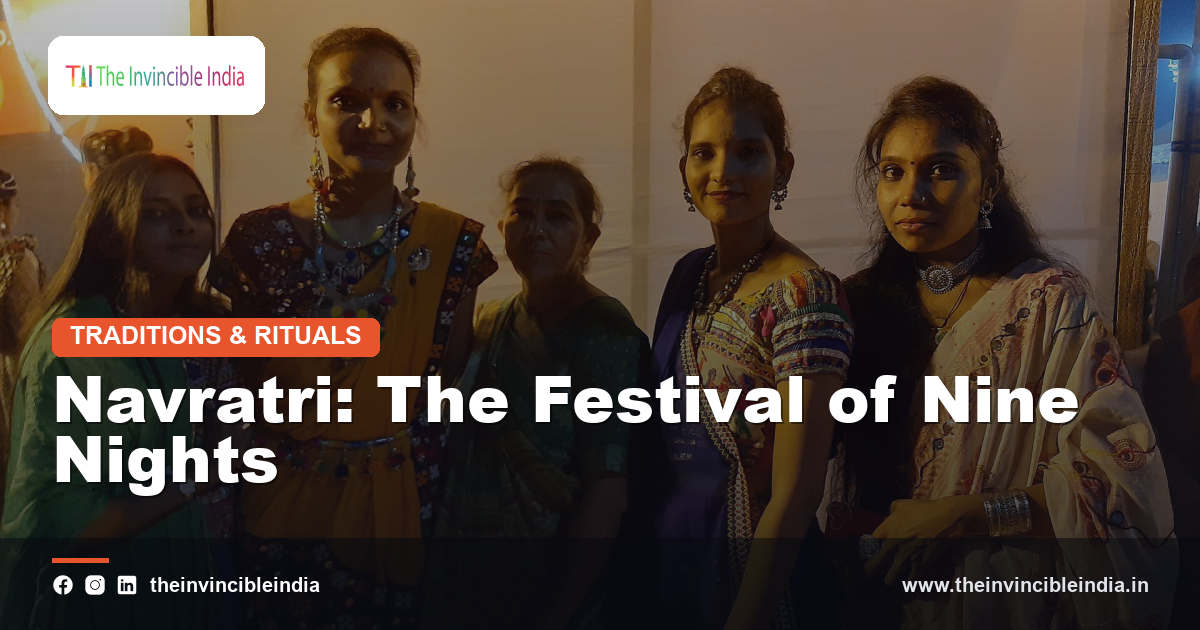
Navratri, meaning nine nights, is one of the most joyous and widely celebrated festivals of India, a great festival dedicated to the worship of the Goddess in her many forms over nine nights and days. Celebrated with devotion, fasting, music, dance and festivity across the country, it honours the Divine Feminine and celebrates the triumph of good over evil. In many regions it is marked by the spirited dances of Garba and Dandiya, in others by the worship of the Goddess and the display of her images, and it culminates in the celebration of victory on the tenth day. Rich in devotion and joy, Navratri is one of the most beloved festivals of the Hindu year. This guide explores the meaning, the nine forms of the Goddess, the customs and the celebrations of Navratri, a great festival of India’s traditions.
Quick Facts
| Detail | Information |
|---|---|
| Meaning | Navratri means nine nights |
| Dedicated to | The Goddess (Durga) in her nine forms |
| Duration | Nine nights and days, culminating on the tenth day |
| Famous dances | Garba and Dandiya, especially in Gujarat |
| Themes | Devotion to the Goddess and the triumph of good over evil |
| Celebrated | Across India, in many regional forms |
The Festival of Nine Nights
Navratri, whose name means nine nights, is one of the most important and joyous festivals of the Hindu calendar, a celebration of the Goddess over nine nights and days. Throughout this period, the Divine Feminine is worshipped in her many forms, and the festival is marked by devotion, fasting, music, dance and festivity, culminating in the celebration of the triumph of good over evil on the tenth day. Celebrated across India in a rich variety of regional forms, Navratri is a time of both deep devotion and great joy. As the great festival of nine nights dedicated to the Goddess, and a celebration of the victory of good over evil, Navratri holds a beloved place among the festivals of India.
Devotion to the Goddess
At the heart of Navratri is the worship of the Goddess, the Divine Feminine, honoured as the supreme power and the mother of the universe. During the nine nights, devotees worship the Goddess with prayers, offerings and devotion, celebrating her power and grace and seeking her blessings. The festival is one of the great occasions of the worship of the Divine Feminine, and it expresses the deep devotion to the Goddess that runs through Hindu tradition. This devotion to the Goddess, worshipped over the nine nights in her many forms as the supreme power and cosmic mother, is the spiritual heart of Navratri and connects it to the great tradition of the worship of the Divine Feminine in India.
The Nine Forms of Durga
A central feature of Navratri is the worship of the Goddess in nine forms, one for each of the nine nights, each representing a different aspect of the Divine Feminine. These nine forms of the Goddess, collectively honoured during the festival, embody her various powers and manifestations, from the gentle and nurturing to the fierce and powerful, and each is worshipped on its appointed night. The worship of the nine forms gives the festival its structure and its rich devotional meaning. This worship of the Goddess in her nine forms over the nine nights, honouring the many aspects of the Divine Feminine, is one of the most distinctive and meaningful features of Navratri and expresses the fullness and power of the Goddess.
The Triumph of Good over Evil
Navratri celebrates the triumph of good over evil, a theme embodied in the stories of the Goddess and her victory over the forces of darkness. The festival honours the Goddess as the mighty power who destroys evil and protects the world, above all in her great victory over a terrible demon, a story that expresses the triumph of righteousness over wickedness. This theme of the victory of good over evil gives the festival its deeper meaning and connects it to the celebration on the tenth day. This celebration of the triumph of good over evil, embodied in the Goddess’s victory over the forces of darkness, is one of the central themes of Navratri and a source of its spiritual power and its message of hope and righteousness.
Fasting and Devotion
Navratri is a time of fasting and devotion for many devotees, who observe special disciplines during the nine days as an expression of their devotion to the Goddess. Many keep fasts, abstaining from certain foods and following special dietary practices, and devote themselves to prayer, worship and spiritual discipline during the festival. This fasting and devotion is an important part of the observance of Navratri for many. This tradition of fasting and devotion during the nine days, in which devotees observe special disciplines as an expression of their devotion to the Goddess, is an important aspect of Navratri and reflects the deep spiritual dimension of the festival alongside its joy and festivity.
The Garba Dance
One of the most joyful and famous features of Navratri, especially in Gujarat, is the Garba, a graceful and energetic circular dance performed in devotion to the Goddess. In the Garba, people dance in circles, often around a central image or lamp representing the Goddess, moving with rhythmic, flowing steps and claps to the beat of music, in a joyful expression of devotion and celebration. The Garba is a beloved and beautiful part of the festival, bringing communities together in dance. This joyful circular dance of the Garba, performed in devotion to the Goddess during Navratri, is one of the most beloved and famous features of the festival and a wonderful expression of its combination of devotion and joyous celebration.
The Dandiya Raas
Alongside the Garba, another famous and energetic dance of Navratri is the Dandiya Raas, a lively dance performed with colourful sticks. In the Dandiya, dancers, often in pairs, strike their sticks together rhythmically as they dance to the music, in a spirited and joyful performance that is a highlight of the festival, especially in Gujarat. The Dandiya, with its colourful sticks, vibrant costumes and lively rhythm, is a delightful and energetic part of the Navratri celebrations. This lively stick dance of the Dandiya Raas, performed with colourful sticks to spirited music during Navratri, is another beloved and famous feature of the festival, and together with the Garba it fills the nights of Navratri with joyful music and dance.
Music and Festivity
Navratri is a festival of great music and festivity, especially in the regions where the Garba and Dandiya are performed, and the nights are filled with music, dance and celebration. People dress in colourful traditional attire, gather in large numbers to dance and celebrate, and the festive atmosphere is joyous and vibrant. The music, the dance, the colour and the community spirit make Navratri one of the most festive and joyful of Indian celebrations. This atmosphere of music, dance, colour and festivity, especially during the nights of Garba and Dandiya, is one of the most joyful and beloved aspects of Navratri and a wonderful expression of the celebratory spirit of the festival.
Regional Celebrations
Navratri is celebrated in a rich variety of forms across the different regions of India, reflecting the great diversity of the country’s traditions. In Gujarat it is famous for the Garba and Dandiya dances; in Bengal and the east it is celebrated as the great festival of Durga Puja; in the south it has its own traditions, including the display of dolls and figures; and in the north it is connected to the celebration of the victory of good over evil. Each region has its own customs and character for the festival. This rich diversity of regional celebrations, in which Navratri takes many forms across the country, is a striking feature of the festival and reflects the wonderful variety of India’s cultural and religious traditions.
The Display of Dolls
In parts of southern India, a beautiful tradition of Navratri is the display of dolls and figures, arranged on tiered platforms in homes for the nine days of the festival. These displays, featuring images of gods and goddesses, along with dolls representing many themes and scenes, are lovingly arranged and shared with visitors, who are invited to admire them, and they are a cherished part of the festival in the region. This tradition brings families and communities together and adds to the festive spirit. This tradition of displaying dolls and figures on tiered platforms during Navratri, cherished especially in the south, is a beautiful and distinctive regional custom of the festival and reflects the creativity and community spirit of the celebrations.
The Worship of Young Girls
A touching tradition observed during Navratri in many regions is the worship of young girls, honoured as embodiments of the Goddess. Towards the end of the festival, young girls are invited, worshipped, and offered food and gifts, as they are regarded as living forms of the Divine Feminine. This beautiful custom expresses the reverence for the Goddess and the honouring of the feminine that lies at the heart of the festival. This tradition of worshipping young girls as embodiments of the Goddess, observed during Navratri, is a touching and meaningful custom that expresses the deep reverence for the Divine Feminine at the heart of the festival and honours the feminine as sacred.
Culmination on the Tenth Day
Navratri culminates on the tenth day, celebrated as a great festival of the triumph of good over evil, which follows the nine nights of devotion. This tenth day, which brings the festival to its climax, celebrates the victory of the Goddess over the demon and, in many regions, the victory of Rama over the demon king, embodying the triumph of righteousness over evil. It is a day of great celebration and marks the joyful conclusion of the festival. This culmination on the tenth day, celebrating the triumph of good over evil after the nine nights of devotion, brings Navratri to its climax and connects it to the great celebration of victory that follows the festival of nine nights.
A Time of Renewal
Navratri is experienced by many as a time of spiritual renewal and new beginnings, a period of devotion, discipline and celebration that refreshes the spirit. The fasting and devotion of the nine days, the worship of the Goddess, and the joyous festivity together make the festival a time of spiritual cleansing, renewal and joy, and it is considered an auspicious time for new beginnings and undertakings. This sense of renewal is an important part of the meaning of the festival. This experience of Navratri as a time of spiritual renewal and new beginnings, combining devotion, discipline and joyous celebration, is an important aspect of the festival and part of what makes it so cherished and meaningful to those who observe it.
Navratri Today
Today Navratri remains one of the most joyous and widely celebrated festivals of India, observed with devotion, fasting, music, dance and festivity across the country and among Indian communities around the world. The worship of the Goddess in her nine forms, the joyful dances of Garba and Dandiya, the regional traditions and the culminating celebration of the triumph of good over evil all continue to be cherished, and the festival brings communities together in devotion and joy each year. In its combination of deep devotion to the Goddess and joyous celebration, Navratri endures as one of the most beloved and vibrant festivals of India’s rich cultural and religious tradition.
Sources & Further Reading
- Ministry of Culture, Government of India, on the festivals of India (indiaculture.gov.in).
- The Devi Mahatmya and the Puranas, on the worship of the Goddess.
Frequently Asked Questions
What is Navratri?
Navratri, meaning nine nights, is a great Hindu festival dedicated to the worship of the Goddess in her many forms over nine nights and days. It is celebrated across India with devotion, fasting, music and dance, and culminates in the celebration of the triumph of good over evil.
What are the nine forms of the Goddess in Navratri?
During Navratri, the Goddess is worshipped in nine forms, one for each of the nine nights, each representing a different aspect of the Divine Feminine, from the gentle and nurturing to the fierce and powerful, embodying her various powers and manifestations.
What are Garba and Dandiya?
Garba is a graceful, energetic circular dance performed in devotion to the Goddess during Navratri, especially in Gujarat, while Dandiya Raas is a lively dance performed with colourful sticks struck together to the rhythm of the music. Both are joyful highlights of the festival.
How is Navratri celebrated across India?
Navratri is celebrated in many regional forms: in Gujarat with Garba and Dandiya, in Bengal as the great festival of Durga Puja, in the south with displays of dolls and figures, and in the north in connection with the celebration of the victory of good over evil.
What does Navratri celebrate?
Navratri celebrates the Goddess, the Divine Feminine, worshipped over the nine nights in her many forms, and the triumph of good over evil, embodied in the Goddess’s victory over a terrible demon and, in many regions, the victory of Rama over the demon king.


