

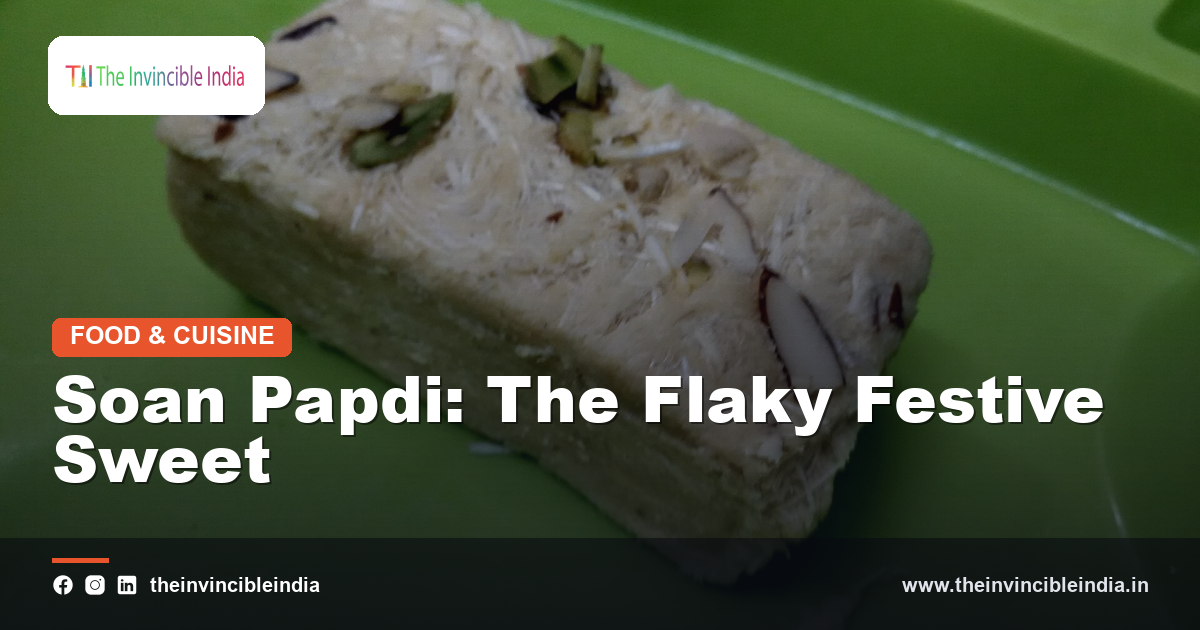
Soan papdi is one of India’s most recognisable festive sweets, a light, flaky confection of fine, thread-like strands that melt almost instantly on the tongue. Made from gram flour, wheat flour, ghee and sugar syrup, it is pulled and folded into airy layers and cut into neat cubes, often sold in distinctive boxes. It is especially associated with Diwali, when it is exchanged as a gift between families, friends and colleagues. Like the sweets described in the guide to famous sweets of India, it rewards patience and skill. This guide explores soan papdi, its making, its character and its place in Indian festive traditions.
Quick Facts
| Detail | Information |
|---|---|
| Type | Flaky festive sweet |
| Main ingredients | Gram flour, wheat flour, ghee and sugar syrup |
| Texture | Light, airy, thread-like and melt-in-the-mouth |
| Flavours | Cardamom, with pistachio and almond garnish |
| Popular at | Diwali and other festivals |
| Related sweets | Patisa, son papri and similar flaky sweets |
What Is Soan Papdi
Soan papdi, also written sohan papdi, is a traditional Indian sweet recognised for its distinctive structure of fine, spun threads layered into a light, flaky block. It is made by cooking gram flour and wheat flour in ghee, combining the mixture with a sugar syrup that has been stretched into delicate strands, and then pressing the result into a tray before cutting it into squares or cubes. The texture is unlike that of most other Indian sweets, being at once crisp, crumbly and airy, and dissolving gently in the mouth. It is usually flavoured with cardamom and garnished with chopped pistachios or almonds. This unusual structure makes soan papdi one of the most distinctive and recognisable sweets in the country.
The Name and Its Meaning
The name soan papdi is commonly written in several ways, including sohan papdi and son papdi, reflecting differences in regional pronunciation. The word papdi generally refers to something thin, flat or flaky, which describes the sweet’s layered form well. The first part of the name has been explained in different ways, and its exact derivation is not firmly established, so it is best treated with caution. In some regions the sweet is known by other names, such as patisa in parts of Odisha and eastern India, or by close variants elsewhere. These shifting names and spellings are a reminder of how widely the sweet has travelled and how many communities have made it their own.
Origins and History
The history of soan papdi is not documented in detail, and several regions and communities lay claim to it, so its origin is best described in general terms. It belongs to the long tradition of flour-and-ghee sweets of the Indian subcontinent, in which cooks learned to transform simple ingredients into elaborate confections through patient technique. Similar thread-based sweets exist across Asia and the Middle East, and food historians often note the possibility of shared culinary influences. In India, the sweet became firmly established in the repertoire of the halwai, or professional sweet maker, and spread widely through markets and festivals. Whatever its precise beginnings, soan papdi has long been a cherished part of Indian sweet-making heritage.
Gram Flour and Wheat Flour
The base of soan papdi is a combination of besan, or gram flour, and refined wheat flour, each contributing its own character. Gram flour supplies a nutty, slightly earthy flavour and a golden colour, while wheat flour gives structure and helps the sweet hold its delicate layers. The two are roasted in ghee over a gentle flame, stirred constantly until fragrant and lightly coloured. The roasting is crucial, as it removes the raw taste of the flour and develops the toasty aroma that defines the sweet. Careful attention is needed to prevent browning too quickly. This slow roasting of the flours, simple in method but demanding in practice, creates the base for the sweet’s characteristic flavour.
The Role of Ghee
Ghee is indispensable to soan papdi, lending the sweet its richness, aroma and fine, flaky texture. It is used generously to roast the flours, and it also helps the strands separate and remain light rather than dense. Good-quality ghee, with its deep, nutty fragrance, noticeably improves the finished sweet, and many confectioners emphasise the importance of using pure ghee. The fat coats the flour particles so that they do not clump when combined with the syrup. In Indian culinary tradition, ghee is prized for its taste and its association with purity and auspiciousness. Its generous use in soan papdi explains the sweet’s luxurious flavour and its melt-in-the-mouth quality.
The Sugar Syrup and Pulling the Threads
The most distinctive stage in making soan papdi is the preparation and handling of the sugar syrup. The syrup is cooked to a precise stage so that it can be stretched into long, fine strands when pulled and folded repeatedly, rather as sugar is pulled in some other confections. It is then combined with the roasted flour mixture, which is worked into the syrup in small amounts so that the threads form around it. The process requires speed, because the syrup hardens as it cools, and strength, because it is physically demanding. The result is a mass of delicate, airy fibres. This skilled pulling and folding of the syrup is what gives soan papdi its unforgettable thread-like texture.
Shaping and Setting
Once the strands have been formed and combined with the flour, the airy mixture is gently pressed into a greased tray or onto a board and shaped into a flat sheet. Chopped pistachios, almonds and a little cardamom powder are scattered over the top and lightly pressed in. After a short time to set, the sheet is cut into squares or cubes using a sharp knife, taking care to preserve the delicate flakes. The sweet is then left to cool completely before being packed. Handling must be gentle, since the layered structure is fragile and crumbles easily. This careful shaping completes the transformation of a pale, airy mass into the neat golden cubes that fill sweet boxes.
Flavourings and Garnishes
Soan papdi is traditionally seasoned with cardamom, whose warm, floral fragrance complements the nutty flavour of the roasted flours and the sweetness of the syrup. Chopped pistachios and almonds are the classic garnishes, adding a pop of green and a gentle crunch, and some versions include saffron, rose petals or silver leaf for a more festive appearance. A few modern varieties incorporate chocolate, orange or mango flavours, though the original remains the most popular. These flavourings are used with restraint so that the character of the sweet itself comes through. The light, aromatic seasoning of cardamom and nuts is a defining feature of traditional soan papdi and contributes greatly to its appeal.
Texture and Taste
Perhaps nothing about soan papdi is as memorable as its texture. When bitten into, the sweet crumbles into countless fine flakes that seem to disappear almost at once, leaving behind a delicate sweetness and the aroma of ghee and cardamom. The flavour is gentle and balanced, with roasted gram flour providing depth beneath the sugar. Connoisseurs judge soan papdi by the fineness and lightness of its threads, the evenness of its colour and the absence of heaviness. A well-made piece should feel almost weightless in the hand and yield effortlessly in the mouth. This delicate, airy quality is the true signature of the sweet and the reason for its enduring popularity.
A Gift for Diwali
Soan papdi is perhaps best known as a Diwali gift, and in the weeks before the festival, boxes of the sweet appear in shops, markets and offices across India. Its long shelf life, light weight and neat cubic shape make it convenient to pack and transport, and its attractive presentation suits the festive spirit of gifting. Families often receive several boxes from friends and colleagues, which has made the sweet the subject of affectionate jokes about being passed from one household to another. Yet its popularity remains steady, and a freshly made box is genuinely appreciated. This role as a favourite festive gift has made soan papdi one of the most familiar symbols of the Diwali season.
Other Festivals and Occasions
Although closely tied to Diwali, soan papdi is enjoyed on many other occasions as well, including Raksha Bandhan, Holi, Eid, weddings and family celebrations. It is a common component of sweet assortments served to guests, and it is frequently included in puja offerings and festive hampers. Because it is dry rather than syrupy, it is easy to serve and share without mess. Visitors to a home during a festival will often be offered a piece along with tea. The sweet’s wide acceptance across communities and festivals reflects its universal appeal. Present at so many gatherings, soan papdi has become a familiar and welcome feature of Indian hospitality throughout the year.
Patisa and Regional Cousins
Soan papdi has several close relatives across India, each with its own regional name and character. In Odisha and parts of eastern India, a similar sweet called patisa is made, while versions known as son papri or sohan halwa, though different in form, also share elements of the technique. Slight differences in the proportion of flours, the thickness of the strands and the choice of flavourings give each its own personality. Local sweet shops take pride in their particular recipes, often guarded within families. These regional cousins demonstrate how a shared idea, the spun-sugar sweet, has been interpreted in many ways, enriching the wider repertoire of Indian confectionery with variety and local identity.
The Halwai Tradition
Making soan papdi is demanding work, and it is traditionally carried out by skilled halwais who have trained for years in the handling of hot syrup and delicate flours. In busy sweet shops before festivals, teams of workers pull, fold and press the sweet in rhythmic coordination, producing large trays in a short time. The craft depends on feel as much as measurement, since the exact stage of the syrup and the speed of pulling must be judged by experience. Many families of sweet makers have kept their methods within the household for generations. This enduring tradition of skill and artistry stands behind every cube of soan papdi and is part of what makes it a cherished sweet.
Storing and Serving
Because soan papdi is a dry sweet, it keeps relatively well when stored in an airtight container in a cool place, though moisture and heat can soften its delicate layers. It should be handled gently, since the flakes break easily, and it is best served at room temperature so that the ghee retains its aroma. Sweet shops usually pack it in cartons with dividers or in tins to protect its shape. At home, it is often served on a plate with other festive sweets or alongside a cup of tea. Careful storage preserves the lightness for which the sweet is prized, ensuring that each piece retains its fragile, flaky character until the moment it is eaten.
Soan Papdi Today
Soan papdi remains a mainstay of Indian sweet shops and festive gifting, available in traditional and modern forms from local confectioners to large packaged-food brands. New flavours and packaging styles continue to appear, and the sweet is increasingly exported to Indian communities abroad. Home cooks, too, have taken up the challenge of making it, drawn by its fascinating technique and its nostalgic appeal. Despite changes in taste and trend, the classic cardamom-scented version retains its devoted following. As a light, flaky and gracefully crafted sweet, soan papdi endures as a delicious reminder of India’s festive spirit and the skill of its sweet makers.
Sources & Further Reading
- Ministry of Culture, Government of India (indiaculture.gov.in).
- Food Safety and Standards Authority of India (fssai.gov.in).
Frequently Asked Questions
What is soan papdi made of?
Soan papdi is made from gram flour, refined wheat flour, ghee and sugar syrup. It is flavoured with cardamom and usually garnished with chopped pistachios and almonds.
Why is soan papdi flaky?
Its flakiness comes from sugar syrup that is cooked to a precise stage and pulled and folded into fine strands, which are then combined with roasted flour. The result is a light, thread-like structure that crumbles and melts easily.
Is soan papdi the same as patisa?
The two sweets are closely related and share a similar flaky, thread-like texture, though patisa is the name used in parts of Odisha and eastern India. Regional recipes differ slightly in flour proportions and flavourings.
Why is soan papdi popular at Diwali?
It keeps well, travels easily and looks neat in a gift box, making it a convenient festive present. It is widely exchanged among families, friends and colleagues during the Diwali season.
How should soan papdi be stored?
It should be kept in an airtight container in a cool, dry place to protect its delicate layers from moisture. It is best handled gently and served at room temperature.


