

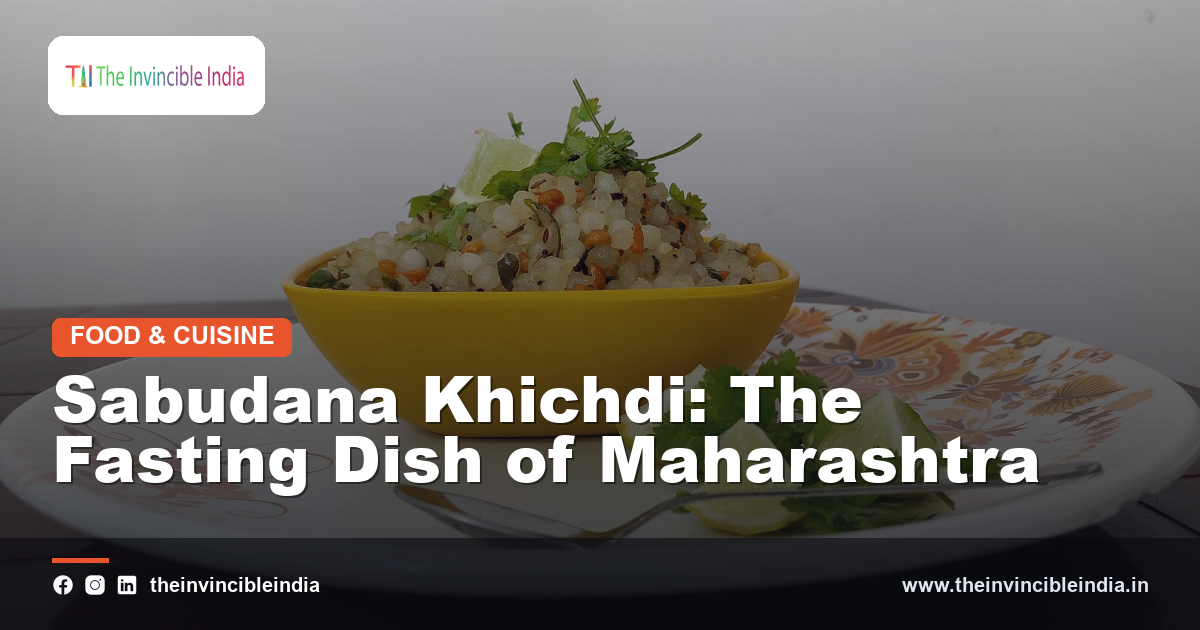
Sabudana khichdi, also spelled sabudana khichadi and often called sago khichdi or tapioca pearl khichdi, is a light, glistening dish of soaked tapioca pearls tossed with roasted peanuts, potatoes, green chillies and cumin. It is best known as a fasting dish of Maharashtra, where it is eaten on religious fast days, though it is also a popular breakfast and snack across western India. Despite the name, it has nothing to do with the rice-and-lentil khichdi; here the word simply means a mixed, tossed dish. Much of the Maharashtrian cuisine repertoire is hearty and spicy, and this soft, nutty dish shows its gentler side. This guide explains what sabudana khichdi is, how it is made and why it matters.
Quick answer: Sabudana khichdi is a Maharashtrian dish made from soaked sabudana (tapioca or sago pearls), roasted crushed peanuts, boiled potatoes, green chillies and cumin, cooked in ghee or oil and finished with lemon juice and coriander. It is also called sago khichdi and is eaten mainly during religious fasts such as Navratri, Ekadashi and Mahashivratri because it avoids grains, onion and garlic.
Key Takeaways
- Sabudana khichdi is a fasting dish from Maharashtra, in western India, made from tapioca (sago) pearls.
- It is also called sago khichdi, and here khichdi means a mixed, tossed dish, not the rice-and-lentil preparation.
- The pearls are made from starch extracted from the cassava (tapioca) root and must be soaked before cooking.
- Roasted peanuts, potatoes, green chillies, cumin and rock salt are the traditional additions.
- The dish avoids grains, onion and garlic, so it fits the rules of many Hindu fasts.
- It is served with curd or sweet-and-sour accompaniments and is also eaten as a breakfast or snack.
Read on for the ingredients, method, serving customs, and cultural role in detail.
Quick Facts
| Detail | Information |
|---|---|
| Dish | Sabudana khichdi (sago khichdi) |
| Region | Maharashtra, western India |
| Type | Fasting dish, breakfast and snack |
| Main ingredient | Sabudana (tapioca or sago pearls) |
| Key flavourings | Roasted peanuts, potato, green chilli, cumin, lemon |
| Taste | Mild, nutty, lightly spiced and tangy |
| Usually served with | Fresh curd, sweet-and-sour chutney, peanut-based sides |
| Cultural role | Eaten on fast days such as Navratri and Ekadashi |
What is sabudana khichdi?
Sabudana khichdi is a dish of soaked tapioca pearls stir-fried with peanuts, potatoes and mild spices until the pearls turn translucent and separate. The word khichdi here means a mixed preparation, and the dish should not be confused with the rice-and-lentil khichdi eaten across north and west India. The cooked pearls are soft, slightly chewy and glossy, and they carry the flavour of ghee, cumin, green chilli and roasted peanut. A squeeze of lemon and a handful of fresh coriander finish the plate. Sabudana khichdi is therefore a light yet filling dish, one that provides energy during a fast and comfort at any other time of day.
What are the other names for sabudana and sabudana khichdi?
Sabudana khichdi is also known as sago khichdi, sabudana khichadi and tapioca pearl khichdi, and sabudana itself is called sago or javvarisi in some languages. In Hindi and Marathi, sabudana is the common term for the dry white pearls, while South Indian languages use words such as javvarisi in Tamil and saggubiyyam in Telugu. English-language menus sometimes describe the dish simply as tapioca pearls with peanuts. The names matter because true sago comes from the sago palm, while most pearls sold in India are made from cassava, yet both are marketed under the same word. These alternative names help readers recognise the dish and its main ingredient across recipes, shops and regional kitchens.
Where does sabudana khichdi come from?
Sabudana khichdi is closely associated with Maharashtra, where it is a staple of fasting meals and a familiar item on breakfast menus. The dish is a regional preparation rather than a recipe with a recorded inventor, and its exact origin is not documented. Cassava itself is not native to India, so the use of tapioca pearls in Indian cooking is the result of agricultural and trade developments over time, a story told in general terms. Over generations, Maharashtrian and Gujarati households adopted the pearls for fast-day cooking because they are not considered a grain. Sabudana khichdi therefore represents a practical culinary adaptation, one that grew into a beloved tradition of western India.
What Are Sabudana Pearls Made Of?
Sabudana pearls are made from starch extracted from the cassava root, also called tapioca, which is processed into small, white, dried spheres. The starch is washed, settled and shaped into pearls through a process of tumbling and heating, then dried for storage. In India, Tamil Nadu, and particularly the region around Salem, is widely known as a centre of sabudana production. The pearls are almost pure starch, so they absorb water and become soft and translucent when soaked. Because they are not a cereal grain, many Hindu communities treat them as permitted food on fast days. Understanding the origin of the pearls explains both their neutral taste and their special place in fasting cuisine.
Why Is Sabudana Khichdi Eaten During Fasts?
Sabudana khichdi is eaten during fasts because it avoids cereals, onion and garlic, which many fasting traditions exclude, while still giving a filling meal. Hindu fasts, known as vrat or upvas, follow different rules by community, but a common feature is the avoidance of grains and certain pungent vegetables. Tapioca pearls, potatoes, peanuts and rock salt are widely accepted on such days, and together they make a complete, energy-giving plate. The dish is popular on occasions such as Navratri, Ekadashi, Mahashivratri and other fast days, and it is a familiar food during the Ashadhi Ekadashi observances in Maharashtra. Its role in fasting is the main reason the dish is known far beyond its home state.
What ingredients go into sabudana khichdi?
Sabudana khichdi is made from soaked sabudana, roasted peanuts, boiled potatoes, green chillies, cumin seeds, ghee or oil, rock salt, lemon juice and fresh coriander. Many cooks add a little sugar to balance the tang, and grated fresh coconut is a popular finishing touch in some households. Curry leaves appear in some versions, and ginger may be added if the fast allows it. Rock salt, known as sendha namak, replaces ordinary salt on fast days. Each ingredient plays a role: the pearls give body, the peanuts add crunch and richness, the potatoes add softness and the chillies add heat. The short list shows that the dish relies on balance more than complexity.
The Role of Peanuts in Sabudana Khichdi
Peanuts are the second defining ingredient of sabudana khichdi, supplying crunch, richness and protein to an otherwise starchy dish. They are dry-roasted, peeled and coarsely ground, and the powder is mixed into the soaked pearls before cooking so it coats each one. Some cooks add whole roasted peanuts at the end for texture. The peanut powder also helps absorb excess moisture, which keeps the pearls from sticking together. Peanuts are widely used in Maharashtrian cooking, appearing in chutneys, vegetable dishes and snacks, so their use here is natural. Without them the khichdi would be bland and gummy, and with them it becomes nutty, balanced and satisfying.
How is sabudana khichdi made?
Sabudana khichdi is made by soaking the pearls, mixing them with ground peanuts, and then stir-frying them with potatoes and spices until translucent. The pearls are washed, drained and soaked in just enough water to cover them, usually for several hours, until a pearl crushes easily between the fingers. Cumin seeds and green chillies are sizzled in ghee, boiled and diced potatoes are lightly fried, and the soaked pearls are added with peanut powder and rock salt. The mixture is stirred gently on low heat until the pearls turn translucent and separate. A squeeze of lemon and chopped coriander finish the dish, which is served immediately while warm and loose.
Why Is Soaking the Pearls So Important?
Soaking is the most important step in sabudana khichdi, because it decides whether the pearls turn out soft and separate or sticky and hard. Dry pearls must absorb water slowly and evenly, so cooks wash them first to remove surface starch, then drain and soak with only a small amount of water. Too much water produces a gluey mass, while too little leaves hard centres. Soaking time depends on the size and quality of the pearls, and the pearls should be fluffy and easy to press before cooking. Resting them after draining lets any remaining moisture spread. Careful soaking is therefore the quiet foundation of a good khichdi.
Common Problems and How Cooks Avoid Them
The two common problems with sabudana khichdi are sticky, clumped pearls and hard, uncooked centres, and both are linked to soaking and heat. Sticky khichdi usually results from too much water, too little draining or stirring too vigorously, while hard centres come from insufficient soaking. Cooks avoid these by rinsing the pearls well, draining them thoroughly and cooking on gentle heat with minimal stirring. Adding the peanut powder before cooking helps absorb moisture and keep the pearls separate. Using a wide pan gives the pearls room to cook evenly. With these precautions, the khichdi stays light and loose, and the pearls retain their pleasant, slightly springy bite.
What Is Sabudana Khichdi Served With?
Sabudana khichdi is usually served with fresh curd, a sweet-and-sour chutney or a plain glass of buttermilk. Curd cools the mild heat of the green chillies and adds a creamy balance, while a peanut or coconut chutney deepens the nutty flavour. In Maharashtra, it is commonly eaten alongside sweet potato preparations or fruit during fasts. As a breakfast or snack, it may be served with a cup of tea. The dish is traditionally served hot and fresh, because the pearls firm up as they cool. These accompaniments show how a simple plate can be rounded into a satisfying meal without breaking the rules of a fast.
How Does Sabudana Khichdi Compare with Other Indian Breakfasts?
Sabudana khichdi differs from other Indian breakfast dishes in being grain-free, quick and mildly spiced, whereas dishes such as poha, upma and idli rely on rice or semolina. Poha, made from flattened rice, is the closest Maharashtrian cousin in style and is cooked similarly with peanuts, curry leaves and lemon, but it is not eaten on fasts. Upma uses semolina, and South Indian staples such as idli and dosa depend on fermented rice and lentil batters, as described in the guide to South Indian breakfast. Sabudana khichdi stands apart because it fits fasting rules. This comparison shows how regional dishes serve different needs on the same morning table.
Sabudana Khichdi in Maharashtrian Life
Sabudana khichdi is part of everyday and festive life in Maharashtra, appearing at home on fast days and at street stalls and eateries throughout the year. In cities such as Pune and Mumbai, it is a familiar breakfast and snack, often sold from small stalls and sit-down restaurants. Pilgrim gatherings, including the Wari to Pandharpur around Ashadhi Ekadashi, are associated with simple fasting food, and sabudana dishes are part of that culture. Families often have their own method, such as adding coconut or a pinch of sugar. The dish connects ordinary kitchens to religious calendars, and it is a reminder that fasting food can be flavourful and comforting.
Variations of Sabudana Khichdi
Sabudana khichdi has many family and regional variations, differing in the spices, the sweetness and the added ingredients. Some cooks add grated coconut, others use a touch of sugar or jaggery, and some prefer more lemon or green chilli. Versions with sweet potato, raw banana or pomegranate seeds exist for extra texture. Gujarati households often make a slightly sweeter, more tangy version. The pearls are also used in sabudana vada, a fried patty, and in sweet puddings known as kheer. These variations show that the dish is a flexible template, and every household adapts it to its own taste while keeping the central combination of pearls and peanuts.
Tips for a Light and Fluffy Khichdi
A light, fluffy sabudana khichdi depends on rinsing, careful soaking, gentle cooking and fresh seasoning at the end. Cooks recommend washing the pearls until the water runs nearly clear, soaking them with little water, and letting them rest until each pearl is soft. Roasting and grinding the peanuts only coarsely keeps some texture. Cooking on low heat, stirring gently, and removing the pan as soon as the pearls turn translucent prevents sticking. Adding lemon juice and coriander only at the end preserves freshness. These simple habits explain why experienced cooks achieve the glossy, separate pearls that define a successful khichdi.
Sabudana Khichdi Today
Sabudana khichdi today is eaten far beyond its fasting origins, appearing on breakfast menus, in office lunch boxes and in cafes in Indian cities and abroad. Packaged mixes and ready-to-soak pearls have made it easier to prepare, while restaurants offer inventive versions with new toppings. Despite these changes, its role on fast days remains strong, and many families still prepare it as a ritual meal. The dish has also become a symbol of how Indian cooking turns restrictions into creativity. Sabudana khichdi continues to be one of the best-known foods of Maharashtra, valued for being simple, comforting and rooted in tradition.
Sources & Further Reading
- Ministry of Culture, Government of India (indiaculture.gov.in).
- Ministry of Tourism, Government of India (tourism.gov.in).
Frequently Asked Questions
What is sabudana khichdi?
Sabudana khichdi is a Maharashtrian dish made of soaked tapioca (sago) pearls stir-fried with roasted peanuts, potatoes, green chillies and cumin. It is eaten mainly on fast days but is also a popular breakfast.
Is sabudana khichdi the same as rice khichdi?
No, sabudana khichdi is not the same as the rice-and-lentil khichdi. Here the word khichdi means a mixed, tossed dish, and the main ingredient is tapioca pearls, not rice or lentils.
Why is sabudana eaten during fasting?
Sabudana is eaten during fasting because it is made from cassava starch and is not considered a grain by many Hindu communities. Combined with potatoes, peanuts and rock salt, it gives a filling meal that follows the rules of fasts such as Navratri and Ekadashi.
Why does sabudana khichdi become sticky?
Sabudana khichdi becomes sticky when the pearls are soaked in too much water or are not drained well. Rinsing, using little water, and cooking on low heat with gentle stirring keeps the pearls separate.
How long should sabudana be soaked?
Sabudana is usually soaked for several hours, until a pearl can be pressed easily between the fingers. The exact time depends on the size and quality of the pearls and the amount of water used.
What is sabudana khichdi served with?
Sabudana khichdi is usually served with fresh curd, a sweet-and-sour or peanut chutney, or buttermilk. These cool and balance the mild heat of the chillies.


