

The Madhukeshwara temple, also called the Madhukeshvara temple or simply the Banavasi temple, is an ancient Shiva shrine in the town of Banavasi in the Uttara Kannada district of Karnataka. Banavasi, known in old texts as Vanavasi and Vaijayanti, was the first capital of the Kadamba dynasty, the earliest royal house to make Kannada a language of rule. The temple has been enlarged and repaired by many later dynasties, so it records a long span of history within a single precinct. It deserves a place among the Dravidian and Deccan temples that students of Indian art visit. This article explains the town, the temple, its builders and its living traditions.
Quick answer: The Madhukeshwara temple is an ancient Hindu temple dedicated to Shiva at Banavasi in Uttara Kannada district, Karnataka, India. Banavasi was the early capital of the Kadamba dynasty, and the temple grew over many centuries under the Kadambas and later rulers. It remains an active place of worship and one of the oldest continuously used temple towns of the Kannada country.
Key Takeaways
- The Madhukeshwara temple is a Shiva temple in Banavasi, Uttara Kannada district, Karnataka.
- Banavasi was the capital of the early Kadamba dynasty, regarded as the first major Kannada-speaking royal house.
- The temple is built over many periods, with additions by later dynasties, so it reflects layered architectural styles.
- The name Madhukeshwara is traditionally linked with the honey-coloured stone of the lingam, though the origin of the name is explained in several ways.
- Banavasi stands on the Varada river and is mentioned in ancient Indian and classical records as a centre of long standing.
- The Kadambotsava festival, held at Banavasi, celebrates the heritage of the Kadamba dynasty.
The sections below describe the town, its history, the temple’s design and the ways visitors can explore it.
Quick Facts
| Detail | Information |
|---|---|
| Location | Banavasi, Uttara Kannada district, Karnataka |
| Deity | Shiva as Madhukeshwara |
| Type | Ancient Hindu temple in an old capital town |
| Early patrons | Kadamba dynasty; later Chalukyas, Rashtrakutas, Hoysalas and others |
| River | Varada river |
| Old names of the town | Vanavasi and Vaijayanti |
| Annual festival | Kadambotsava, honouring Kadamba heritage |
| Nearby town | Sirsi |
What Is the Madhukeshwara Temple?
The Madhukeshwara temple is the main temple of Banavasi and is dedicated to Shiva, who is worshipped here in the form of a lingam. It is a large stone complex with a sanctum, halls, shrines to other deities and a walled precinct that has grown over many centuries. The temple is notable less for a single moment of construction than for its long and layered life, since rulers from several dynasties added to it. Daily worship, festivals and village gatherings still take place here, so the temple is a living institution as well as a heritage monument. Pilgrims come from across Karnataka and beyond, drawn by the antiquity of the town and the reputation of the shrine. The Madhukeshwara temple is therefore best understood as a continuing sacred centre, not a ruin of the past.
Where Is Banavasi Located?
Banavasi is located in the Sirsi taluk of Uttara Kannada district in the Western Ghats region of Karnataka, on the banks of the Varada river. The town lies in a green landscape of forest and farmland, a short journey from the larger town of Sirsi. Its position between the coast and the Deccan plateau gave it importance in ancient times, since trade and armies moved along the routes that crossed the region. The name Banavasi is usually explained as the place of the forest dwellers, linked to the Sanskrit Vanavasi, which fits the wooded surroundings. The calm river and the forested hills still shape the character of the town. Banavasi is a small settlement today, but its setting recalls the days when it served as a royal capital.
Why Is Banavasi So Historically Important?
Banavasi is historically important because it was an early capital and a centre of culture long before many better-known cities of the region. The town is mentioned in ancient Indian literature and in the writings of foreign geographers, and early Buddhist records refer to a mission sent to the Vanavasa country. It later became the capital of the Kadamba dynasty, which made Banavasi a seat of royal power and learning. The town continued to matter under later dynasties, who treated it as a provincial centre and a holy place. Poets of the Kannada language also praised Banavasi, and the town became a symbol of Kannada identity. Its long record as a place of governance, faith and literature makes Banavasi one of the oldest continuously inhabited towns of Karnataka.
Who Were the Kadambas of Banavasi?
The Kadambas of Banavasi were an early ruling dynasty of Karnataka, traditionally said to have been founded by a ruler named Mayurasharma in the early centuries of the Common Era. They are widely regarded as the first major dynasty to give prominence to the Kannada language, which appears in some of their inscriptions. The Kadambas governed from Banavasi, gave land and honours to Brahmin scholars and supported temples and religious foundations. Their rule was followed by that of the Chalukyas, Rashtrakutas and other powers, yet the Kadamba name remained prestigious, and later rulers sometimes claimed a link with it. The exact details of the early Kadamba story are discussed by historians, and some dates are approximate. Their importance, however, is firmly established in the cultural memory of the region.
Who Built the Madhukeshwara Temple?
The Madhukeshwara temple is traditionally associated with the Kadamba period, though its present form is the result of many centuries of additions by successive dynasties. Inscriptions at and around Banavasi record gifts to the temple from various rulers, including the Chalukyas, the Rashtrakutas, the Hoysalas and later chiefs. Scholars therefore describe the temple as a composite structure and avoid attributing it to a single builder or date. Repairs, new halls and shrines were added as the fortunes of the town rose and fell. The result is a building in which different periods can be read in the walls, pillars and towers. This layered history is one of the most interesting features of the site, and it shows how a sacred place can be renewed across generations.
What Does the Name Madhukeshwara Mean?
The name Madhukeshwara means the lord of honey, from the Sanskrit words madhu, meaning honey, and ishvara, meaning lord. Local tradition connects the name with the honey-like colour of the lingam in the sanctum, while other explanations link it with legends about bees or with a ruler named Madhu. The variety of explanations suggests that the name is old and that the story was retold in different ways over time. The temple is also sometimes called the Madhukeshvara or Madhukeshwar temple in different spellings. Whatever its origin, the name has become a familiar title for Shiva in this part of Karnataka. It gives the temple a distinctive identity and reflects the way popular memory shapes sacred places.
What Does the Temple Look Like?
The temple is a spreading complex of stone buildings in which a main sanctum is joined to halls, porches and subsidiary shrines. Its towers and walls show influences from several periods, with older work blending into later additions, and the stone has taken on the warm weathering of centuries. A large hall with carved pillars leads towards the sanctum, and shrines to other deities stand around the courtyard. The overall effect is of a place that has grown organically rather than from a single plan. The scale is substantial but not overwhelming, and the surrounding trees and open spaces give the complex a peaceful air. A visitor walking through it can feel the passing of time in every doorway and corridor.
How Do the Kadamba Style Towers Differ From Others?
The Kadamba tradition of temple building is known for a type of tower that rises in stepped tiers and ends in a distinctive crown, a form sometimes called the Kadamba shikhara. It is a mixture of northern and southern ideas, using the stepped storeys of the Dravida style with a more pyramidal outline. This style spread beyond Banavasi and influenced temples built by the later Chalukyas and Hoysalas in Karnataka. At Banavasi, the temple reflects such ideas along with additions from other periods, so scholars treat it with care when assigning styles to particular parts. The Kadamba contribution lies in having helped to form a recognisably Karnatak way of building. The tower is a good example of how regional identity can be expressed in architecture.
What Sculptures and Carvings Can Be Seen?
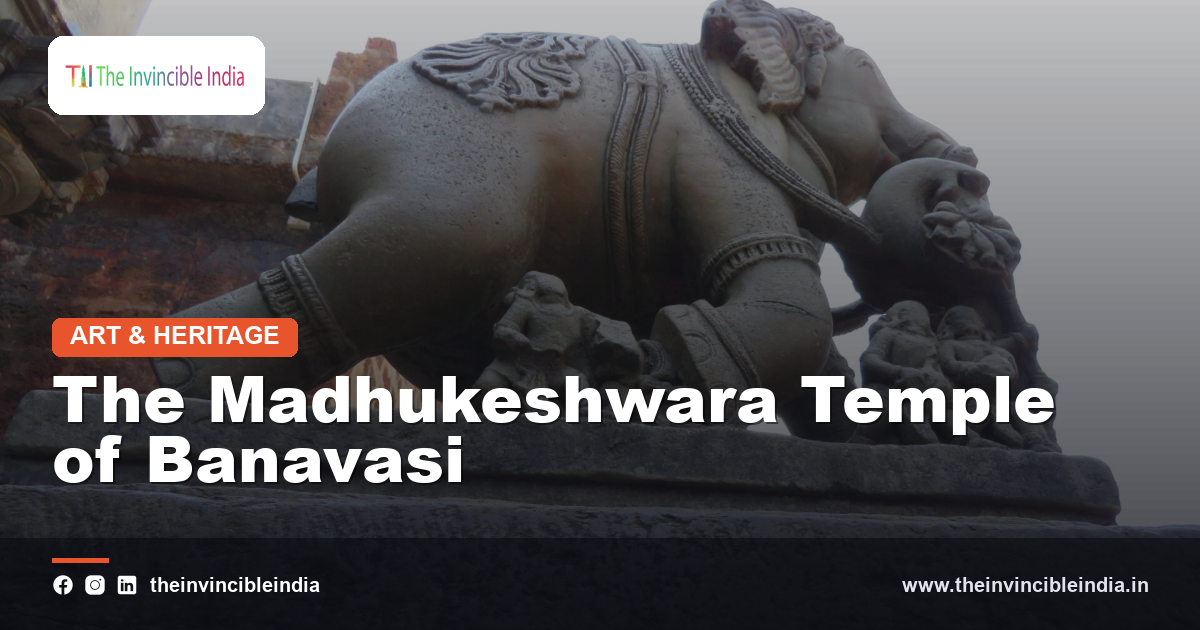
The temple holds carved pillars, doorways, panels and images that show the work of stone sculptors from different periods. A large Nandi, the bull who serves as Shiva’s vehicle, is placed in a hall facing the sanctum, in keeping with Shaiva custom. Pillars carry bands of ornament, and doorways are framed with carved figures and floral motifs. Sculpted images of deities and guardian figures can be found in niches and shrines around the complex. Older and younger carvings sit close together, and attentive visitors can notice the changes in style from one period to the next. These carvings form part of the wider history of Indian sculpture, in which temples served as living galleries of stone.
What Inscriptions Are Found at Banavasi?
Inscriptions found in and near Banavasi are among the most valuable sources for the history of the town and its temple. They record grants of land, gifts to the shrine and the names of rulers and officials, and they are written in Sanskrit and Kannada. Some are carved on stone slabs and pillars, while others appear on memorial stones in the surrounding countryside. Epigraphers use them to trace the sequence of dynasties and to understand how the temple was supported. Because early inscriptions can be difficult to date and interpret, scholars sometimes disagree about details, and readers should treat specific dates with caution. What the inscriptions show clearly is that the temple enjoyed constant royal and community support over a very long period.
What Is Kadambotsava at Banavasi?
Kadambotsava is an annual cultural festival held at Banavasi to celebrate the heritage of the Kadamba dynasty and the Kannada language. It is organised with support from the state and brings together music, dance, drama and exhibitions on the grounds near the temple. Artists from different parts of Karnataka perform, and scholars and writers speak about the history of the region. The festival draws on the memory of Banavasi as the first Kannada capital, and it gives local people a chance to take pride in their heritage. Visitors who plan their trip to coincide with the festival can see the temple in a lively cultural setting. Kadambotsava shows how a historic site can inspire contemporary celebration.
How Is Banavasi Linked to Kannada Literature?
Banavasi has a special place in Kannada literature because it appears in the writings of some of the language’s earliest and greatest poets. The medieval poet Pampa, often called the father of Kannada literature, is famous for expressing his deep affection for Banavasi, and his lines about the town are well known. Early inscriptions in Kannada were also issued from the Kadamba court, so the town is linked to the beginnings of the language as a written tongue. This literary legacy gives Banavasi an emotional importance that goes beyond its monuments. Many Kannada speakers regard the town as a symbol of their linguistic heritage. The Madhukeshwara temple, as the central sacred place of Banavasi, shares in that cultural prestige.
How Do Festivals and Worship Shape the Temple?
Daily rites, seasonal festivals and the annual rhythm of the Hindu calendar shape life at the Madhukeshwara temple. Priests perform worship of the lingam each day, and devotees bring offerings of flowers, fruit and water. Major festivals associated with Shiva, such as Mahashivaratri, draw crowds from the town and the surrounding villages. Chariot processions and temple fairs enliven the settlement on special occasions. These customs connect the present community with centuries of earlier devotees, and they keep the temple at the centre of local life. Respect for ritual and quiet behaviour are expected of visitors. The temple’s living worship is as much a part of its heritage as its stone walls and towers.
What Can Visitors See Around Banavasi?
Banavasi sits in a region of forest, rivers and waterfalls, so a visit to the temple is easily combined with other sights of Uttara Kannada. The nearby town of Sirsi is a convenient base, and the Western Ghats offer scenic drives, temples and nature spots. Other historical places in the wider region include old forts, memorial stones and temples built by later dynasties. Local markets sell regional foods and crafts that reflect the traditions of the coast and the hills. A day at Banavasi can be paired with excursions into the countryside for a fuller picture of the landscape that shaped the Kadamba kingdom. Setting the temple within its surroundings helps visitors to appreciate why this site was chosen for a capital.
How Can Visitors Plan a Visit to the Temple?
Visitors usually reach Banavasi by road from Sirsi, and the journey passes through pleasant wooded country. The cooler months from roughly October to March are comfortable for travel, while the monsoon brings heavy rain and green landscapes but slippery paths. Modest clothing and a respectful manner are expected, and shoes are removed before entering the temple. Photography rules may vary inside the sanctum, so it is wise to ask before taking pictures. A local guide or priest can explain the sculptures, inscriptions and shrines that are easy to miss. Allowing time for a slow walk through the precinct and the town gives the best sense of the place. A thoughtful visit rewards patience with insight into a very old capital.
Madhukeshwara Temple Today
The Madhukeshwara temple today continues to serve as the spiritual centre of Banavasi, welcoming worshippers, scholars and travellers throughout the year. Its stones carry the marks of the Kadambas and of the many dynasties that followed, and its courtyards remain places of quiet and gathering. Conservation work and community care help to protect the buildings, while festivals like Kadambotsava keep the town’s story alive. The challenge for the future is to manage growing interest without losing the calm that makes the place special. Banavasi has few of the crowds of larger heritage towns, which is part of its appeal. As a living link between the earliest Kannada capital and the present, the temple remains a treasured part of Karnataka’s heritage.
Sources & Further Reading
- Archaeological Survey of India (asi.nic.in).
- Ministry of Culture, Government of India (indiaculture.gov.in).
Frequently Asked Questions
Where is the Madhukeshwara temple located?
The Madhukeshwara temple is located in Banavasi, in the Uttara Kannada district of Karnataka, on the banks of the Varada river. The town is a short drive from Sirsi. It lies in the green Western Ghats region.
Who built the Madhukeshwara temple at Banavasi?
The temple is traditionally associated with the Kadamba dynasty, but it was enlarged by many later rulers, including the Chalukyas, Rashtrakutas and Hoysalas. For this reason scholars describe it as a composite structure rather than the work of a single builder. Exact construction dates are debated.
What does Madhukeshwara mean?
Madhukeshwara means the lord of honey, from madhu, meaning honey, and ishvara, meaning lord. Tradition links the name with the honey-like colour of the lingam, though other explanations exist. The temple is also spelled Madhukeshvara.
Why is Banavasi famous?
Banavasi is famous as the early capital of the Kadamba dynasty and as one of the oldest towns of Karnataka. It is linked with the beginnings of Kannada as a written language and with the poet Pampa. The Madhukeshwara temple is its main landmark.
What is Kadambotsava?
Kadambotsava is an annual cultural festival at Banavasi that celebrates the Kadamba heritage and the Kannada language. It features music, dance, drama and exhibitions. It is held near the temple and draws visitors from across the state.
What is the best time to visit Banavasi?
The best time to visit is the cooler season from about October to March. The monsoon is green but wet, and summer can be warm and humid. Visitors should dress modestly and respect temple customs.


