

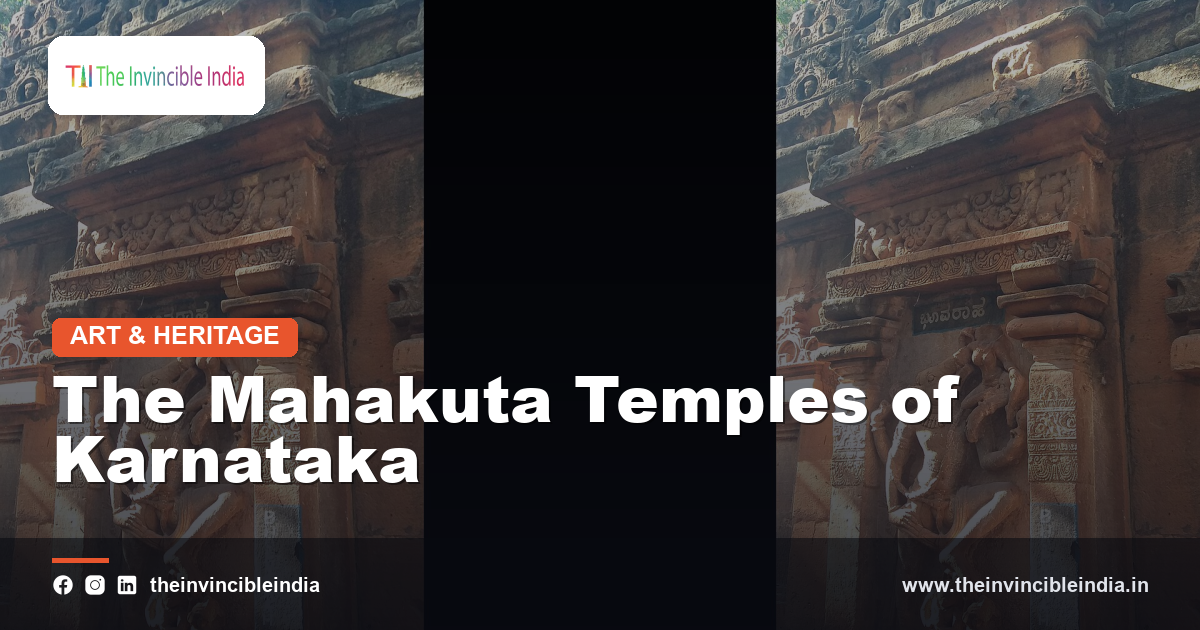
The Mahakuta temples, also written Mahakoota and sometimes called the Mahakuteshwara group after their best-known shrine, are a cluster of early Chalukya temples in the Bagalkot district of northern Karnataka. They stand a short distance from the town of Badami, once the capital of the Badami Chalukya dynasty, and are gathered around a sacred pond fed by a natural spring. The group is a quiet companion to the better-known monuments of Indian temple architecture at Aihole and Pattadakal, yet it holds some of the finest early stonework of the Deccan. This article explains where the temples are, who raised them, what they contain and how to visit them with understanding.
Quick answer: The Mahakuta temples are a group of early Chalukya Hindu temples near Badami in Bagalkot district, Karnataka, India. Dedicated mainly to Shiva and built around a spring-fed pond, they date largely to the early centuries of Badami Chalukya rule. The group is notable for combining northern and southern temple towers and for its carved pillars, doorways and inscriptions.
Key Takeaways
- The Mahakuta temples are a cluster of early Chalukya shrines in Bagalkot district, northern Karnataka.
- The group lies a short distance from Badami, the former capital of the Badami Chalukya dynasty.
- The temples are gathered around a pond fed by a natural spring, which gives the site its sacred character.
- Most shrines are dedicated to Shiva, and the Mahakuteshwara temple is the best known of them.
- Both northern Nagara and southern Dravida styles of temple tower can be seen in the group.
- The nearby site of Pattadakal is a UNESCO World Heritage Site, while Mahakuta is a neighbouring but separate complex.
The sections below describe the setting, builders, architecture and living traditions of the Mahakuta temples.
Quick Facts
| Detail | Information |
|---|---|
| Location | Mahakuta, near Badami, Bagalkot district, Karnataka |
| Type | Group of early Hindu temples around a sacred pond |
| Dynasty | Badami Chalukyas (early Chalukyas) |
| Era | Largely seventh and eighth centuries CE; some dating debated |
| Main deity | Shiva (as Mahakuteshwara and in other forms) |
| Architectural styles | Nagara and Dravida towers side by side |
| Water feature | Spring-fed pond known as the Vishnu Pushkarini |
| Nearby sites | Badami cave temples, Aihole, Pattadakal |
What Are the Mahakuta Temples?
The Mahakuta temples are a compact group of stone temples built by the early Chalukya kings in what is now northern Karnataka. They occupy a quiet hollow beside a sacred pond, enclosed by a walled precinct in which several shrines stand close together. Most of the buildings are dedicated to Shiva, though carvings of other deities show that the site welcomed wider devotion. The temples are built of the local sandstone that also gave the Chalukyas their cave temples at Badami. Together they form a small museum of experiments in temple design from an era when Indian builders were still shaping the grammar of the stone temple. The group is therefore valued by historians as much as by pilgrims, because it preserves a formative chapter of Indian architecture.
Where Are the Mahakuta Temples Located?
The Mahakuta temples are located in the Bagalkot district of northern Karnataka, a short drive from the town of Badami. The site lies in the dry, rocky country of the Malaprabha river basin, where red sandstone cliffs rise above open plains. Badami, Aihole and Pattadakal form the three great centres of early Chalukya art in this landscape, and Mahakuta sits within easy reach of all of them. The temples are set in a small green hollow, and the contrast between the dry hills and the cool water of the pond is a memorable part of the visit. Because the setting is rural and calm, the temples feel removed from the bustle of the larger heritage towns. Their location in the Chalukya heartland explains both their style and their importance.
What Does the Name Mahakuta Mean?
The name Mahakuta is generally understood to mean the great peak or great summit, from the Sanskrit words maha, meaning great, and kuta, meaning peak or crest. The name is also connected with the god worshipped here, Mahakuteshwara, whose title can be read as the lord of Mahakuta. Spellings vary, and the place appears as Mahakuta, Mahakoota and Mahakutam in different writings. The word kuta also refers to a particular kind of tower in Indian temple architecture, but the link between that meaning and the place name is a matter of interpretation rather than firm record. What is clear is that the name expresses grandeur and sanctity, qualities that the early builders hoped the site would hold. The name therefore captures both the setting and the sacred purpose of the place.
Who Built the Mahakuta Temples?
The Mahakuta temples were built under the Badami Chalukya dynasty, the great ruling house that governed much of the Deccan from its capital at Vatapi, the ancient name of Badami. The early Chalukyas were patrons of Hindu temples, Jain shrines and rock-cut caves, and they left a body of monuments that shaped later South Indian art. The Mahakuta group is generally dated to the seventh and eighth centuries, though the exact years of individual shrines remain debated among scholars. Royal and courtly patrons, including members of the ruling family, are traditionally credited with funding temples and tanks at Mahakuta. Later dynasties added or repaired some structures, so the complex records more than one period of building. The temples are best understood as the work of a sustained tradition of royal patronage rather than a single act of construction.
Why Is the Sacred Pond Important at Mahakuta?
The sacred pond is the heart of Mahakuta because the temples are arranged around it and its water is believed to be pure and healing. The pond, known as the Vishnu Pushkarini, is fed by a natural spring that continues to flow, and pilgrims bathe in or sprinkle its water before worship. Water tanks are a feature of many Indian temples, since ritual cleanliness is part of devotion and since water gathers communities together. At Mahakuta the spring gives the site a freshness unusual in a dry region, and it is easy to see why early devotees treated the place as sacred. The pond is bordered by steps and small shrines, and the surrounding temples are reflected in its surface. Water and stone together give Mahakuta its distinctive and peaceful character.
What Is the Mahakuteshwara Temple?
The Mahakuteshwara temple is the most prominent shrine of the group and is dedicated to Shiva as the lord of Mahakuta. It stands within the precinct as a stone temple with a sanctum, a hall and a tiered tower of the southern Dravida type. The hall has carved pillars and doorways, and the outer walls carry images set in niches. Worship continues at the shrine, so the temple remains a living place of devotion and not merely a monument. Its plan and proportions show the careful balance that Chalukya builders sought between a solid base, a defined sanctum and a rising tower. The temple takes its name from the same word that names the site, and in popular memory the two have become one. Mahakuteshwara is the natural starting point for any visit to the group.
What Is the Mallikarjuna Temple at Mahakuta?
The Mallikarjuna temple is another important shrine of the group, dedicated to Shiva under the name Mallikarjuna, a title found in several Deccan temples. Its tower follows the Dravida pattern, with stepped storeys and small miniature shrines carved into each level. The shrine is often cited in studies of early Chalukya architecture because it shows the southern style in a clear and well-preserved form. Inside, a sanctum holds the lingam, the abstract form of Shiva, and a hall in front provides space for worshippers. The carving on pillars and walls is crisp and measured, with less of the crowded ornament of later centuries. Taken together with its neighbours, Mallikarjuna shows how the same dynasty could support differing building traditions within a single precinct.
What Architectural Styles Appear at Mahakuta?
Mahakuta is remarkable because it shows both the northern Nagara style and the southern Dravida style of temple building within one group. The Nagara tradition is marked by a curving tower called a shikhara, while the Dravida tradition uses a stepped pyramidal tower built in storeys. Chalukya builders worked at a meeting point of north and south, and they drew on both traditions, sometimes within the same site. This openness is one reason why the early Chalukya monuments are studied so closely, since they preserve a moment before regional styles hardened into separate schools. At Mahakuta the visitor can compare towers and plans in a few steps, which makes the group an excellent open-air classroom. The mixture of styles is the group’s most important architectural lesson.
What Sculptures Decorate the Temples?
The temples are decorated with carved figures, ornamental bands and pillar brackets that show the skill of early Chalukya sculptors. Forms of Shiva appear on the walls, and there are also images connected with Vishnu and other deities, reflecting the broad character of religious life in the period. Doorways are framed by carved jambs with scrolls and guardian figures, and pillars carry bands of ornament and sometimes sculpted couples. The style is rounded and graceful, with a calm balance that distinguishes it from the more elaborate work of later Hoysala and Vijayanagara temples. Weathering has softened some details, but many figures remain clear. These carvings link Mahakuta with the wider story of Indian sculpture, in which temple walls served as great books in stone.
What Do the Inscriptions at Mahakuta Tell Us?
Inscriptions found at Mahakuta provide valuable written evidence about the site and its patrons. A well-known pillar inscription associated with the Chalukya king Mangalesha is often cited by historians when they discuss the temples and the donations made to them. Such records usually describe grants of land or revenue for worship and mention rulers, officials and religious teachers. They help scholars fix approximate dates and understand how temples were supported by the surrounding community. Because inscriptions can be read in different ways, specialists continue to debate some details, and readers should treat precise dates with caution. The value of the inscriptions lies as much in their picture of social life as in their dates. They show that Mahakuta was a working religious centre supported by an organised network of donors.
How Does Mahakuta Relate to Badami, Aihole and Pattadakal?
Mahakuta belongs to the same cultural landscape as Badami, Aihole and Pattadakal, the three great centres of early Chalukya art, and it is usually visited together with them. Badami is known for its rock-cut cave temples above a large lake, Aihole for its many early experimental temples and Pattadakal for its royal temple complex, which is recognised as a UNESCO World Heritage Site. Mahakuta is a separate group, but it shares their sandstone, their patrons and their artistic ideas. A traveller who sees all four sites gains a rounded picture of how the Chalukyas moved from cave temples to freestanding structures. Mahakuta adds the element of sacred water and village setting. It is best seen as a thoughtful complement to the larger and more famous sites.
What Role Did Mahakuta Play in Shaiva Worship?
Mahakuta has long been a centre of Shaiva worship, where devotees honour Shiva in the form of the lingam. The temples were places of daily ritual, festival gatherings and community charity, supported by gifts from rulers and local patrons. Pilgrims came to bathe in the spring-fed pond and to offer prayers at the shrines, a pattern of devotion that continues in simple form today. The presence of images of other deities shows that Shaiva worship in the Deccan was not exclusive, and that temple life accommodated several traditions. Seasonal festivals, especially those linked to Shiva, bring local families to the precinct. In this way Mahakuta is both an architectural monument and a continuing link between present-day devotees and the religious world of the early Chalukyas.
How Did Chalukya Builders Work in Stone?
Chalukya builders worked in sandstone, cutting blocks from nearby quarries and fitting them together without mortar in a precise tradition of dry masonry. Sculptors carved pillars, brackets and wall panels before or after the blocks were set, using iron chisels and hammers handed down through guild traditions. The stone is warm in colour and fine enough to take sharp detail, yet soft enough to be worked with great control. Builders followed rules about proportion and orientation that were later written down in architectural treatises, though the exact manuals used at Mahakuta are not known. The results show confidence and economy of line. Seeing the joints, mouldings and carved details at close range, a visitor can appreciate how much planning lay behind each temple. The craft of the early builders is as impressive as the finished buildings.
What Is the Condition of the Mahakuta Temples Today?
The Mahakuta temples are generally in good condition for their age, and many of the shrines are intact enough to be read as complete buildings. Some surfaces have weathered, and a few carvings show wear from centuries of rain, wind and handling. Heritage protection in India is shared between the Archaeological Survey of India and state agencies, and visitors who want the exact protection status of a structure should consult those official bodies. Conservation at such sites involves cleaning, drainage care and control of vegetation, as well as managing the crowds that come at festival times. Because worship continues, the site balances the needs of a monument with those of a living temple. Respectful visiting helps to keep the stonework safe for future generations.
How Can Visitors Explore the Mahakuta Temples?
Visitors usually reach Mahakuta by road from Badami, making the visit part of a day circuit that may also include Pattadakal and Aihole. The cooler months, from roughly October to March, are the most comfortable for walking around the open precinct, since summers in northern Karnataka are very hot. Modest dress, comfortable footwear and a willingness to remove shoes near the shrines are sensible. A local guide can explain the differences between the towers and point out carvings that are easy to miss. Visitors should keep to the paths, avoid touching delicate carvings and treat the pond with the respect due to a sacred place. A relaxed pace, rather than a hurried checklist, gives the best experience of the group.
Mahakuta Temples Today
The Mahakuta temples today stand as a quiet, living group where worship, heritage and village life continue side by side. The spring still feeds the pond, the shrines still receive offerings, and the carved towers still rise above the simple surroundings. Interest in lesser-known heritage has grown, and travellers who tour the Chalukya sites increasingly include Mahakuta in their plans. The challenge for the future is to welcome visitors without harming fragile carvings or disturbing the calm of the precinct. Careful documentation, community care and thoughtful tourism all help to protect the site. In its stones and its water, Mahakuta still preserves the artistic confidence of the early Chalukyas and the devotion of those who prayed here.
Sources & Further Reading
- Archaeological Survey of India (asi.nic.in).
- Ministry of Culture, Government of India (indiaculture.gov.in).
Frequently Asked Questions
Where are the Mahakuta temples located?
The Mahakuta temples are located near Badami in the Bagalkot district of northern Karnataka, India. They stand in a small hollow beside a spring-fed pond. Aihole and Pattadakal lie within easy reach.
Who built the Mahakuta temples?
The Mahakuta temples were built under the Badami Chalukya dynasty, which ruled much of the Deccan from Badami. They are generally dated to the seventh and eighth centuries, though exact dates of individual shrines are debated. Later rulers added or repaired some structures.
What is Mahakuta famous for?
Mahakuta is famous for its early Chalukya Shiva temples, its sacred spring-fed pond and its mixture of northern and southern temple styles. The group also holds carved pillars, doorways and inscriptions. It is valued as a quiet and well-preserved site of early Deccan architecture.
Which deity is worshipped at Mahakuta?
Shiva is the main deity worshipped at Mahakuta, most prominently as Mahakuteshwara and Mallikarjuna. Images connected with other deities, including Vishnu, also appear in the carvings. Worship continues at the shrines today.
Is Mahakuta a UNESCO World Heritage Site?
No, the Mahakuta group is not itself part of the UNESCO inscription, although the nearby Pattadakal monuments are a World Heritage Site. Mahakuta is a separate complex in the same cultural landscape. Visitors can combine the two in one trip.
What is the best time to visit the Mahakuta temples?
The best time to visit is the cooler season from about October to March. Summers in northern Karnataka are very hot, and the monsoon can make paths slippery. Visitors should wear modest clothing and comfortable footwear.


