

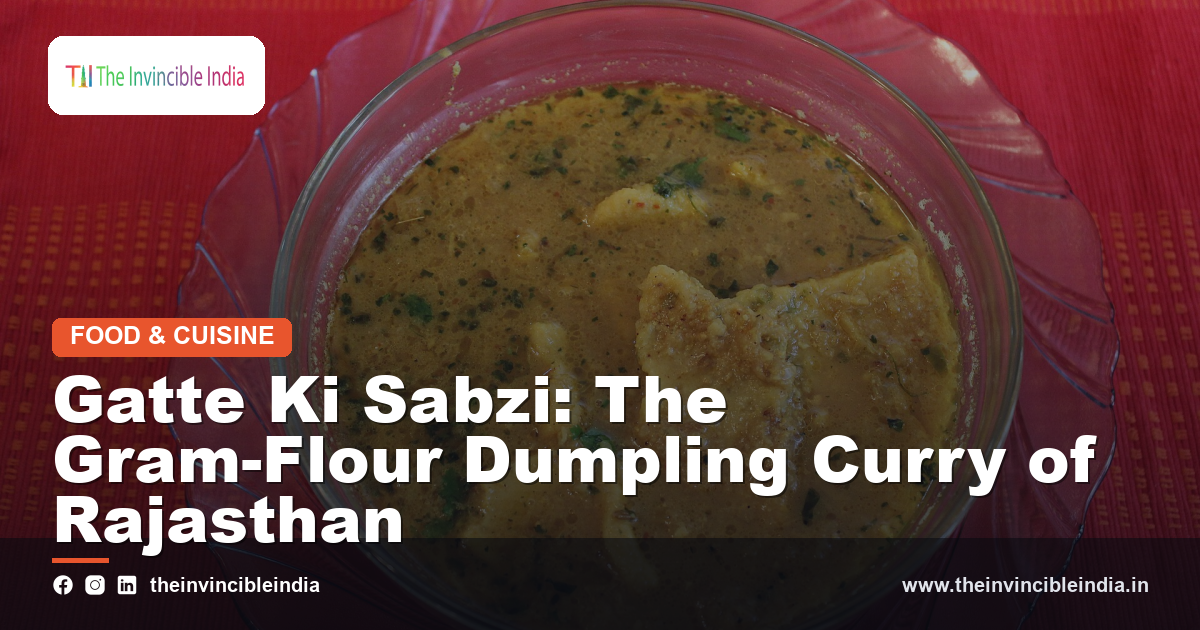
Gatte ki sabzi, also spelled gatte ki sabji and known in some households as gatta curry or besan gatte, is a vegetarian curry of Rajasthan made from steamed or boiled dumplings of gram flour simmered in a spiced gravy. It is one of the best-loved dishes of Marwari and Rajasthani homes, and it shows how a dry, water-scarce region turned pantry staples into a satisfying main course. The dumplings, called gatte, are firm and savoury, and they soak up the tangy yogurt-based sauce around them. A typical Indian thali from Rajasthan often includes it beside dal, baati and a sweet. This guide explains what the dish is, where it comes from and how it is made.
Quick answer: Gatte ki sabzi is a vegetarian curry from Rajasthan, India, made of spiced gram-flour (besan) dumplings called gatte that are boiled, sliced and simmered in a yogurt-based gravy. It developed in the arid Marwar region, where dried pulses and flours were reliable staples when fresh vegetables were scarce. The dish is usually eaten with roti or rice and is a staple of Rajasthani and Marwari home cooking.
Key Takeaways
- Gatte ki sabzi is a vegetarian Rajasthani curry whose main ingredient is dumplings made from gram flour, also called besan.
- The dumplings, called gatte, are kneaded with spices and yogurt or oil, rolled into logs, boiled, sliced and then simmered in gravy.
- The dish is closely tied to the arid Marwar region, where dry pantry ingredients were relied upon in place of fresh vegetables.
- The gravy is usually based on yogurt, onion, tomato or spice powders, and its tang balances the richness of the gatte.
- Gatte ki sabzi is commonly served with roti, rice or paratha, and it often appears in a Rajasthani thali.
- Gatte can also be used in other dishes such as gatte ka pulao and gatte ki khichdi.
The sections below explain the dish, its origins, its ingredients and method, and the ways it is served across Rajasthan and beyond.
Quick Facts
| Detail | Information |
|---|---|
| Dish type | Vegetarian main course, dumpling curry |
| Region | Rajasthan, especially Marwar; also Marwari communities elsewhere |
| Main ingredient | Gatte (spiced dumplings of gram flour or besan) |
| Gravy base | Yogurt with onion, tomato and spice powders |
| Cooking method | Dumplings boiled, sliced and simmered in gravy |
| Usually served with | Roti, rice, paratha and a salad |
What is gatte ki sabzi?
Gatte ki sabzi is a Rajasthani curry in which firm dumplings of gram flour are simmered in a tangy, spiced gravy. Gatte are made by kneading besan with spices, a little fat and sometimes yogurt, shaping the dough into rolls and cooking them in boiling water until they set. The rolls are cut into pieces and added to the sauce, where they absorb flavour while keeping their shape. The result is a dish with a chewy, savoury bite that is somewhere between a dumpling and a protein-rich vegetable. It contains no fresh vegetables as such, yet it has the name sabzi because it is served as the vegetable course of a meal. The combination of simple flour and bold spicing is characteristic of Rajasthani vegetarian cooking.
Where does gatte ki sabzi come from?
Gatte ki sabzi comes from Rajasthan, and it is most closely linked with the Marwar region and the Marwari community. Marwar lies in the western part of the state, a dry country where fresh vegetables were historically hard to grow and keep. Cooks there built a cuisine around dried beans, pulses, flours, spices, ghee and yogurt, all of which store well. Gatte fits that pattern, since besan is a durable staple and the dumplings can be made quickly from it. Marwari families who moved to other parts of India for trade carried the dish with them, which is why gatte ki sabzi is now familiar in many cities. Its origin is therefore both regional and communal, tied to the desert and to the people who adapted to it.
Why did Rajasthan develop a dish like gatte?
Rajasthan developed gatte because the desert climate favoured foods that could be dried, stored and cooked with little water. Fresh greens were seasonal and limited, and water itself was precious, so cooks relied on besan, lentils and dried pods and berries. Using yogurt and buttermilk in place of water for gravies was another practical habit of the region. Gatte are made from flour, spices and a little fat, so they need no fresh produce and can be prepared when vegetables run out. The dish also travelled well, since the boiled gatte could be kept for a short time and added to a gravy when needed. This resourcefulness gave rise to some of the most distinctive vegetarian dishes in Indian cooking, and gatte ki sabzi is among the most celebrated.
What are the main ingredients of gatte ki sabzi?
The main ingredients of gatte ki sabzi are gram flour, yogurt, ghee or oil, and a selection of spices including red chilli powder, turmeric, coriander and carom seeds. The dumpling dough usually contains salt, a little oil or ghee, and often yogurt or a pinch of baking soda for softness. The gravy is built from yogurt whisked with spices, with onion, ginger, garlic or tomato added in many household versions. Some Marwari and Jain kitchens leave out onion and garlic and rely on asafoetida for depth. Fenugreek leaves, dried mango powder and fresh coriander may be added for tang and aroma. The ingredient list is short and made up almost entirely of pantry items, which fits the dish’s origin in a desert kitchen where such staples were the foundation of daily meals.
How are gatte made?
Gatte are made by kneading gram flour with salt, spices and a little fat into a firm dough, rolling it into thin logs and boiling them until they float and firm up. The dough should be stiff enough to hold its shape yet soft enough to cook through, and cooks adjust the amount of yogurt or water carefully. The logs are lowered into boiling water and cooked until set, then drained and cooled. Once cool, they are cut into rounds or short pieces. Some cooks fry the pieces lightly in ghee for extra flavour and a firmer surface before adding them to the sauce. The quality of the gatte decides the dish, because dumplings that are too dense turn rubbery and those that are too soft fall apart. Skill lies in judging the dough and the boiling time.
How is the gravy prepared?
The gravy for gatte ki sabzi is prepared by cooking whisked yogurt with spices in hot ghee or oil until it thickens, after which the gatte are added to simmer. Cooks usually begin by tempering oil with cumin and asafoetida, then add ginger, onion or tomato if the household uses them. Spice powders go in next, followed by yogurt that has been beaten smooth and sometimes mixed with a spoonful of besan to prevent splitting. The mixture is stirred continuously and cooked gently until the sauce is smooth and the fat separates. The sliced gatte are then folded in and simmered long enough to absorb the gravy. A final sprinkle of dried fenugreek or fresh coriander finishes the dish. The tangy, spiced sauce is what makes the mild gatte taste lively.
Why does gatte ki sabzi use yogurt?
Gatte ki sabzi uses yogurt because it provides the tang, creaminess and body of the gravy while saving precious water in a dry region. Yogurt is a staple of Rajasthani kitchens, where it is eaten fresh and used in many curries and buttermilk soups. Its acidity balances the earthy flavour of gram flour, and it keeps the dumplings moist and soft as they simmer. When properly cooked, yogurt also thickens the sauce naturally without the need for cream or nuts. Cooks take care to whisk it well and keep the heat moderate, since boiling too fiercely can make it curdle. The use of yogurt is thus both practical and flavourful, and it ties gatte ki sabzi to a wider regional tradition of cooking with fermented dairy.
What spices give gatte ki sabzi its flavour?
The flavour of gatte ki sabzi comes from a modest set of spices: carom seeds, cumin, red chilli powder, turmeric, coriander powder and often asafoetida. Carom seeds, called ajwain, are used in the dumpling dough and give a distinctive aroma that also aids digestion according to long household belief. Red chilli provides colour and warmth, while turmeric adds a golden tint. Asafoetida, or hing, stands in for onion and garlic in kitchens that avoid them. Dried mango powder and dried fenugreek leaves can add tang and a slightly bitter fragrance. The spicing is bold but not complicated, and it is applied in both the dough and the gravy so that the flavour runs through the whole dish. This layering is a mark of careful Rajasthani cooking.
What is gatte ki sabzi served with?
Gatte ki sabzi is usually served with roti, plain rice or paratha, and it often forms part of a larger Rajasthani thali. A thali might pair it with dal, baati, churma, kadhi, pickles and a cooling salad, giving a balanced meal of grains, pulses and dairy. Wheat rotis and bajra rotis are both common, and steamed rice suits the gravy well. A side of raw onion, green chilli or papad adds crunch and sharpness, and a spoonful of ghee over the bread is a customary touch. The dish is hearty enough to stand as the main item for a vegetarian meal. In festival and family settings it frequently takes its place among several vegetables, offering variety and substance together.
How is gatte ki sabzi different from kadhi pakora?
Gatte ki sabzi differs from kadhi pakora in the type of dumpling and the thickness of the sauce. Kadhi is a yogurt and gram-flour soup, usually thinner and sourer, in which fried fritters called pakoras are floated. Gatte ki sabzi, by contrast, uses boiled dumplings in a spiced, thicker gravy that clings to the pieces. The two dishes share ingredients, namely besan and yogurt, which shows how closely related many Rajasthani preparations are. Some households even use leftover gatte in a kadhi-style gravy, blurring the line. Understanding the difference helps explain why gatte ki sabzi is considered a dry-to-semi-dry vegetable dish while kadhi is eaten more like a sauce over rice. Both reflect the same creative use of gram flour and yogurt.
What are the common variations of gatte?
The common variations of gatte include stuffed gatte, fried gatte, gatte ka pulao, gatte ki khichdi and gatte in a dry masala. Stuffed versions have a filling of spices, grated coconut, dried fruit or paneer inside the dough before boiling. Some families fry the sliced gatte until crisp before adding them to the gravy, while others keep them soft. Gatte ka pulao combines the dumplings with rice and whole spices as a one-pot dish, and a dry preparation tosses the pieces in a spiced masala without a gravy. Jain kitchens prepare versions without onion and garlic. The range of forms shows how flexible the gatte idea is, and why cooks across Rajasthan and Gujarat have adapted it. The basic principle remains steady: spiced gram-flour dumplings paired with a flavourful base.
Why is gatte ki sabzi popular in Marwari and Jain homes?
Gatte ki sabzi is popular in Marwari and Jain homes because it is vegetarian, filling and can be prepared without onion or garlic when needed. Marwari communities have long been associated with Rajasthan and with strong vegetarian traditions, and their cuisine has been shaped by rules of diet, travel and festivals. Jain dietary practice avoids root vegetables, so gram flour, yogurt and dried spices become especially important. Gatte supply substance and protein in such meals without needing prohibited ingredients. The dish keeps well enough for travel and can be made on short notice, which suited merchant families on the move. Its adaptability to different dietary rules has made it a quiet favourite and a staple of community gatherings and everyday family meals.
How do you store and reheat gatte ki sabzi?
Gatte ki sabzi stores well for a day or two in a cool place or the refrigerator and tastes even better after resting because the dumplings absorb more gravy. Many cooks prepare the boiled gatte ahead of time and keep them separate from the sauce until close to serving, which keeps the texture firm. When reheating, a splash of water or buttermilk loosens the gravy, and gentle heat prevents the yogurt from splitting. Stirring slowly and avoiding a hard boil protects the sauce. The dish does not freeze as well as some curries because yogurt can separate on thawing, so it is best eaten fresh or within a short period. Careful storage and reheating preserve both the tang of the gravy and the springy bite of the gatte.
What are common mistakes when making gatte ki sabzi?
The most common mistakes in making gatte ki sabzi are an overly soft dough, undercooked gatte and curdled yogurt gravy. A dough that is too wet produces dumplings that disintegrate in the pot, while one that is too dry gives hard, dense pieces. Gatte that are not boiled long enough remain raw in the centre and taste of uncooked flour. Adding cold or poorly whisked yogurt to a very hot pan makes the gravy split, so cooks beat it smooth, keep the heat moderate and stir steadily. Over-salting is easy because both the dough and the sauce are seasoned. Letting the gatte simmer too long can also make them soggy. Careful attention to these details leads to dumplings that are tender yet firm and a gravy that is smooth and balanced.
Gatte Ki Sabzi Today
Gatte ki sabzi today remains a cornerstone of Rajasthani vegetarian cooking, served in homes, restaurants and thali meals across India and abroad. It is often the dish that vegetarian visitors to Rajasthan are encouraged to try, and it appears on menus of heritage hotels and regional restaurants. Home cooks continue to prepare it for family meals and festive gatherings, and many have developed their own versions with extra spices, stuffings or lighter gravies. The dish also demonstrates how a cuisine shaped by scarcity can become a source of pride and creativity. As interest in regional Indian food grows, gatte ki sabzi stands as a reminder that humble ingredients, handled with skill, can produce something satisfying and enduring.
Sources & Further Reading
- Ministry of Culture, Government of India (indiaculture.gov.in).
- Rajasthan Tourism, Department of Tourism, Government of Rajasthan (tourism.rajasthan.gov.in).
Frequently Asked Questions
What is gatte ki sabzi?
Gatte ki sabzi is a vegetarian Rajasthani curry made of gram-flour dumplings simmered in a yogurt-based gravy. The dumplings are boiled, sliced and then cooked in a spiced sauce.
What are gatte made of?
Gatte are made of gram flour (besan) kneaded with spices, salt and a little fat, and often yogurt. The dough is rolled into logs, boiled until firm and cut into pieces.
Is gatte ki sabzi vegetarian?
Yes, gatte ki sabzi is entirely vegetarian. It is made from gram flour, yogurt and spices, and Jain versions can be prepared without onion and garlic.
What is gatte ki sabzi eaten with?
Gatte ki sabzi is usually eaten with roti, rice or paratha. In Rajasthan it often appears in a thali with dal, baati, kadhi and pickles.
Which region does gatte ki sabzi come from?
Gatte ki sabzi comes from Rajasthan, especially the Marwar region, and it is closely associated with Marwari cooking. The dish developed in a dry climate where pantry staples such as besan were relied upon.
Why does gatte ki sabzi use gram flour?
Gatte ki sabzi uses gram flour because it is a durable, protein-rich pantry staple that was easy to store in Rajasthan’s dry climate. It can be turned into dumplings without any fresh vegetables.


