

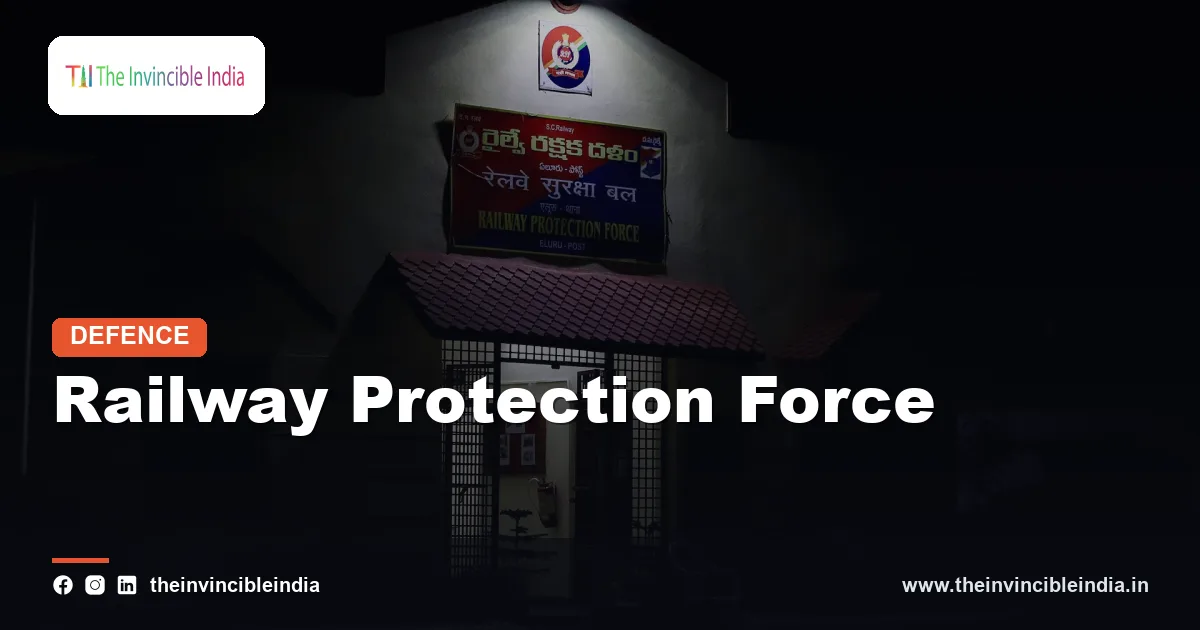
The Railway Protection Force (RPF) is an armed force of the Union of India, constituted under the Railway Protection Force Act, 1957 and administered by the Ministry of Railways, whose job is to protect railway property, passengers and the passenger area across the Indian Railways network. It is a uniformed, Union-controlled force with its own ranks, discipline code and training institutions, and it works alongside, but separately from, the state-run Government Railway Police (GRP).
Anyone who has travelled by train in India has probably seen RPF personnel on platforms, at ticket counters or inside coaches. The Railway Protection Force is also behind well-known passenger initiatives such as Operation Nanhe Farishte for children in distress and Meri Saheli for women travelling alone. This explainer sets out what the force is, how it is organised, what legal powers it holds and where its limits lie. It was last updated on 17 October 2026.
| Fact | Detail |
|---|---|
| Full name | Railway Protection Force (RPF) |
| Parent ministry | Ministry of Railways, Government of India |
| Founding law | Railway Protection Force Act, 1957 |
| Legal status | Armed force of the Union (status declared through the 1985 amendment) |
| Head of the force | Director General, RPF, at the Railway Board, New Delhi |
| Core mandate | Protection and security of railway property, passengers and passenger area |
| Specialised wing | Railway Protection Special Force (RPSF) |
| Well-known initiatives | Operation Nanhe Farishte, anti-human-trafficking drives, Meri Saheli |
| Not the same as | Government Railway Police (GRP), which is a state police unit |
Key Takeaways
- The Railway Protection Force is an armed force of the Union constituted under the Railway Protection Force Act, 1957 and controlled by the Ministry of Railways.
- The Railway Protection Force is responsible for railway property, passengers and the passenger area, which makes it a security force rather than a general police force.
- The Government Railway Police is a separate state-controlled body, and it, not the Railway Protection Force, is the main agency that registers and investigates serious crimes on trains.
- Operation Nanhe Farishte is a Railway Protection Force campaign that identifies and rescues children found alone or in distress at railway stations and in trains.
- Meri Saheli is a Railway Protection Force initiative, begun around 2020, in which women personnel look after the safety of women passengers travelling alone.
- The Railway Protection Special Force is the armed, battalion-style wing of the Railway Protection Force that is deployed for sensitive security duties.
What Is the Railway Protection Force and What Does It Do?
The Railway Protection Force is the dedicated security force of the Indian Railways, tasked with protecting railway property, railway passengers and the passenger area. Indian Railways is one of the largest railway networks in the world, running tens of thousands of route kilometres, thousands of stations and a very large fleet of goods wagons, locomotives and coaches. Securing such an asset base needs a force that belongs to the railway system itself, which is the gap the RPF fills.
In practice the force carries out several kinds of work. Its personnel guard stations, yards, workshops, goods sheds and railway colonies; escort selected trains; prevent theft and pilferage of railway material; and act against ticketless travel, touts and unauthorised vendors. They also handle crowd management at busy stations, especially during festivals and large fairs, and they respond to emergencies such as accidents and bomb threats.
Three duties are usually grouped together in official descriptions of the force:
- Protecting railway property: preventing theft, damage, sabotage and illegal possession of railway material.
- Protecting passengers: maintaining order and responding to harassment, snatching and other threats within railway premises and on trains.
- Protecting the passenger area: keeping platforms, circulating areas and trains free of unauthorised persons and offences under the Railways Act, 1989.
How Did the Railway Protection Force Come into Being?
The Railway Protection Force grew out of the earlier watch-and-ward arrangements of individual railway companies, and it took its present legal form through the Railway Protection Force Act, 1957. In the 19th century, each railway company kept its own guards to protect goods and premises. After independence the railways were consolidated under the Government of India, and the earlier arrangements were found inadequate against widespread theft of goods in transit.
The 1957 Act created a single force for the better protection and security of railway property. Over the following decades the law was amended to widen the force’s scope. The 1985 amendment is generally cited as the point at which the force was declared an armed force of the Union, and later amendments and parallel changes to the Railways Act, 1989 strengthened its role in protecting passengers and the passenger area as well.
| Period | Development |
|---|---|
| 19th century | Individual railway companies employ their own watch and ward staff. |
| 1957 | The Railway Protection Force Act, 1957 provides for a force to protect railway property. |
| 1966 | The Railway Property (Unlawful Possession) Act, 1966 gives the force a dedicated law for offences involving railway property. |
| 1985 | An amendment declares the force an armed force of the Union. |
| 1989 | The Railways Act, 1989 replaces the older railways law and defines offences in railway premises and trains. |
| 2000s onward | The mandate is extended in practice to passenger safety and passenger area security. |
| 2015 and after | Child rescue, anti-trafficking and women-safety initiatives become prominent. |
Who Runs the Railway Protection Force?
The Railway Protection Force is headed by the Director General, RPF, who sits at the Railway Board in New Delhi and is traditionally an officer of the Indian Police Service on deputation. The Director General reports to the Ministry of Railways, and the force follows a command chain that mirrors the zonal structure of Indian Railways itself.
Each railway zone has a Principal Chief Security Commissioner who leads the RPF in that zone. Below the zonal level, the force is organised into divisions, each under a Divisional Security Commissioner, and then into posts at stations, yards and depots, each led by an Inspector or Sub-Inspector. The officer cadre includes Assistant Security Commissioners, who are the direct entry gazetted officers of the force, and the subordinate ranks run from Constable and Head Constable to Assistant Sub-Inspector, Sub-Inspector and Inspector.
Recruitment and training
Constables and Sub-Inspectors of the RPF are recruited through central examinations conducted by recruiting agencies for the railway system, followed by physical standard and physical efficiency tests. Trained recruits are put through basic training at RPF training centres across the country. The force also runs an academy at Lucknow, which is associated with the training of officers and instructors.
What Powers Does the Railway Protection Force Have?
The Railway Protection Force has the power to arrest, search and prosecute for a defined set of railway offences, but it is not a general police force and it does not investigate all crimes. Its powers come from three main laws: the Railway Protection Force Act, 1957; the Railway Property (Unlawful Possession) Act, 1966; and the Railways Act, 1989.
It is worth being precise here, because popular summaries often say the RPF’s arrest and prosecution powers flow only from the Railways Act. In fact, the force’s authority to enquire into, arrest and prosecute offenders in cases of unlawful possession of railway property rests mainly on the Railway Property (Unlawful Possession) Act, 1966, read with the RPF Act. The Railways Act, 1989 is what gives the force its authority over offences involving passengers and railway premises.
- Railway property offences: theft, pilferage and unlawful possession of railway material are handled by RPF officers under the 1966 Act, which allows them to arrest and to conduct the enquiry and prosecution.
- Railways Act offences: acts such as ticketless travel, touting, unauthorised vending, travelling on the roof of a train or misusing the alarm chain are addressed under the Railways Act, 1989.
- Offences outside this list: serious crimes against the person, such as murder, robbery or sexual assault on a train, are generally registered and investigated by the Government Railway Police or the local police, with the RPF assisting and handing over suspects.
How Is the Railway Protection Force Different from the Government Railway Police?
The Railway Protection Force is a Union force under the Ministry of Railways, whereas the Government Railway Police is a state police organisation that functions under the state government’s home department. The difference matters because “police” and “public order” are state subjects under the Constitution, while the railways are a Union subject.
| Aspect | Railway Protection Force (RPF) | Government Railway Police (GRP) |
|---|---|---|
| Controlled by | Ministry of Railways (Union) | State government (home department) |
| Legal basis | Railway Protection Force Act, 1957 | State police laws and the Code of Criminal Procedure framework |
| Main focus | Railway property, passengers and passenger area | Crime and law and order on railway premises and in trains |
| Investigates serious crime | Generally not; assists and hands over | Yes, registers FIRs and investigates |
| Funding | Railways | Largely the state, with railway cost sharing |
| Armed force of the Union | Yes | No |
In day-to-day work the two forces share space and often work as a team. A common pattern is that RPF personnel detain a suspect on the platform and then transfer the person to the GRP for registration of an FIR where the offence demands it.
What Is Operation Nanhe Farishte?
Operation Nanhe Farishte is a campaign of the Railway Protection Force, launched in 2015, to rescue and protect children who are found alone, lost, runaway or in vulnerable circumstances on railway premises and trains. The name translates roughly as “little angels”, and the operation is meant to catch children at the stage when they are most at risk of exploitation.
Railway stations are among the first places a runaway child reaches, since trains are cheap and widely available. The operation therefore trains RPF personnel to look for signs that a child is travelling without a guardian, to speak to the child gently, and to avoid treating the child as an offender.
The standard process is as follows:
- RPF staff identify a child who appears unaccompanied or distressed.
- The child is taken to a safe place and given food, water and basic care.
- The case is reported to the Child Welfare Committee and, where relevant, to Childline and partner non-governmental organisations.
- The child is reunited with the family or placed in a child care institution under the Juvenile Justice (Care and Protection of Children) Act, 2015.
What Are the Anti-Human-Trafficking Units and the Force’s Role Against Trafficking?
The Railway Protection Force plays an important part in intercepting human trafficking because railways are a common route for moving victims, including women, children and bonded labourers, from one state to another. Anti-Human Trafficking Units (AHTUs) are specialised police units set up with support from the Ministry of Home Affairs, and the RPF coordinates with these units, the GRP and civil society organisations when trafficking is suspected.
Within the RPF, staff at major stations and on long-distance routes are trained to notice patterns such as groups of minors travelling with unrelated adults, people who cannot explain where they are going, or travellers who appear coached. Where trafficking is suspected, the suspects are detained and handed to the appropriate police unit for investigation under the relevant criminal law, and the rescued persons are taken to shelter homes or child protection bodies.
The force presents this work as part of a wider approach in which children and women in distress are treated as persons needing care first, and cases are then taken forward through the legal system.
What Is Meri Saheli?
Meri Saheli is a women-centred safety initiative of the Railway Protection Force, started around 2020 and gradually extended across railway zones, in which women RPF personnel take special responsibility for women passengers travelling alone. “Saheli” means a female friend, and the scheme is built around that idea of accompanied, reassuring travel.
Under the scheme, teams that include women personnel meet women passengers on selected long-distance and sensitive trains, tell them how to reach help, note seat details and keep an eye on the coaches reserved for women. The scheme also covers awareness work at stations, such as publicising the railway helpline number 139 and the RailMadad complaint system.
Meri Saheli sits alongside other safety measures that the railways have promoted, including the presence of women constables in escort parties, the marking of coaches reserved for women and the use of surveillance cameras on platforms and in selected coaches.
What Is the Railway Protection Special Force?
The Railway Protection Special Force (RPSF) is the specially armed wing of the Railway Protection Force, raised in the mid-1980s as a battalion-structured reserve for sensitive security duties. It is organised in battalions rather than in the station-and-division pattern of the regular RPF, and it is intended to be moved rapidly to where the need is greatest.
The special force has typically been called on for duties such as guarding vulnerable railway installations, assisting during law and order disturbances that threaten the network, and supporting security arrangements during major events. It is also used to reinforce areas affected by extremist activity or agitation.
In everyday use the term “RPF” often covers both the regular force and the RPSF, but in official documents the two are distinguished by their organisation and training.
Why Does the Railway Protection Force Matter?
The Railway Protection Force matters because the railways carry a very large number of passengers and a significant share of the country’s freight every day, and a failure of security anywhere on the network can have wide effects. Theft of railway material, trespassing, stone-pelting at trains and obstruction of tracks all create risks to lives as well as property.
The force also functions as the most visible point of contact between the railways and ordinary travellers. Over time its work has widened from guarding goods to include child rescue, trafficking interception, women’s safety, helping passengers who have lost luggage, and responding to medical emergencies on platforms. This broader service role is a significant change from the force’s original purpose in 1957.
Bottom Line
The Railway Protection Force is the Union’s own armed security force for the railways, created by an Act of Parliament in 1957 and run by the Ministry of Railways. It protects property, passengers and the passenger area, works with the state-run Government Railway Police on wider crime, and has built a public profile through programmes such as Operation Nanhe Farishte and Meri Saheli.
Frequently Asked Questions
What is the Railway Protection Force?
The Railway Protection Force is an armed force of the Union of India that protects railway property, passengers and the passenger area. It was created by the Railway Protection Force Act, 1957 and works under the Ministry of Railways. It is separate from the Government Railway Police, which is controlled by state governments.
Is the Railway Protection Force the same as the railway police?
No, the Railway Protection Force is not the same as the railway police. The railway police, formally the Government Railway Police, is a state body that registers and investigates crimes on railway premises and trains, while the RPF is a Union force focused on railway property and passenger security. The two work together at stations and on trains.
Does the Railway Protection Force have the power to arrest?
Yes, the Railway Protection Force has the power to arrest in a defined set of cases. Its officers can arrest and prosecute persons involved in unlawful possession of railway property under the Railway Property (Unlawful Possession) Act, 1966, and can act against offences listed in the Railways Act, 1989. For serious crimes against the person, the force usually hands suspects over to the police.
What is Operation Nanhe Farishte?
Operation Nanhe Farishte is a Railway Protection Force campaign, begun in 2015, to rescue children who are alone or in distress at railway stations and on trains. Rescued children are given basic care and referred to Child Welfare Committees, Childline and partner organisations, and are then reunited with their families or placed in care.
What is Meri Saheli?
Meri Saheli is a Railway Protection Force initiative for the safety of women travelling alone by train. Begun around 2020 and extended to more railway zones, it involves women RPF personnel who meet women passengers, explain how to seek help and keep watch over women’s coaches on selected trains.
Whom should a passenger contact in a railway emergency?
A passenger in an emergency should call the railway helpline 139 or use the RailMadad system, which routes security and other complaints to the right authority. On a platform, the nearest RPF post or on-duty RPF personnel can also be approached. For a serious crime, the Government Railway Police registers the complaint.
{“@context”:”https://schema.org”,”@graph”:[{“@type”:”FAQPage”,”mainEntity”:[{“@type”:”Question”,”name”:”What is the Railway Protection Force?”,”acceptedAnswer”:{“@type”:”Answer”,”text”:”The Railway Protection Force is an armed force of the Union of India that protects railway property, passengers and the passenger area. It was created by the Railway Protection Force Act, 1957 and works under the Ministry of Railways. It is separate from the Government Railway Police, which is controlled by state governments.”}},{“@type”:”Question”,”name”:”Is the Railway Protection Force the same as the railway police?”,”acceptedAnswer”:{“@type”:”Answer”,”text”:”No, the Railway Protection Force is not the same as the railway police. The railway police, formally the Government Railway Police, is a state body that registers and investigates crimes on railway premises and trains, while the RPF is a Union force focused on railway property and passenger security. The two work together at stations and on trains.”}},{“@type”:”Question”,”name”:”Does the Railway Protection Force have the power to arrest?”,”acceptedAnswer”:{“@type”:”Answer”,”text”:”Yes, the Railway Protection Force has the power to arrest in a defined set of cases. Its officers can arrest and prosecute persons involved in unlawful possession of railway property under the Railway Property (Unlawful Possession) Act, 1966, and can act against offences listed in the Railways Act, 1989. For serious crimes against the person, the force usually hands suspects over to the police.”}},{“@type”:”Question”,”name”:”What is Operation Nanhe Farishte?”,”acceptedAnswer”:{“@type”:”Answer”,”text”:”Operation Nanhe Farishte is a Railway Protection Force campaign, begun in 2015, to rescue children who are alone or in distress at railway stations and on trains. Rescued children are given basic care and referred to Child Welfare Committees, Childline and partner organisations, and are then reunited with their families or placed in care.”}},{“@type”:”Question”,”name”:”What is Meri Saheli?”,”acceptedAnswer”:{“@type”:”Answer”,”text”:”Meri Saheli is a Railway Protection Force initiative for the safety of women travelling alone by train. Begun around 2020 and extended to more railway zones, it involves women RPF personnel who meet women passengers, explain how to seek help and keep watch over women’s coaches on selected trains.”}},{“@type”:”Question”,”name”:”Whom should a passenger contact in a railway emergency?”,”acceptedAnswer”:{“@type”:”Answer”,”text”:”A passenger in an emergency should call the railway helpline 139 or use the RailMadad system, which routes security and other complaints to the right authority. On a platform, the nearest RPF post or on-duty RPF personnel can also be approached. For a serious crime, the Government Railway Police registers the complaint.”}}]}]}


