

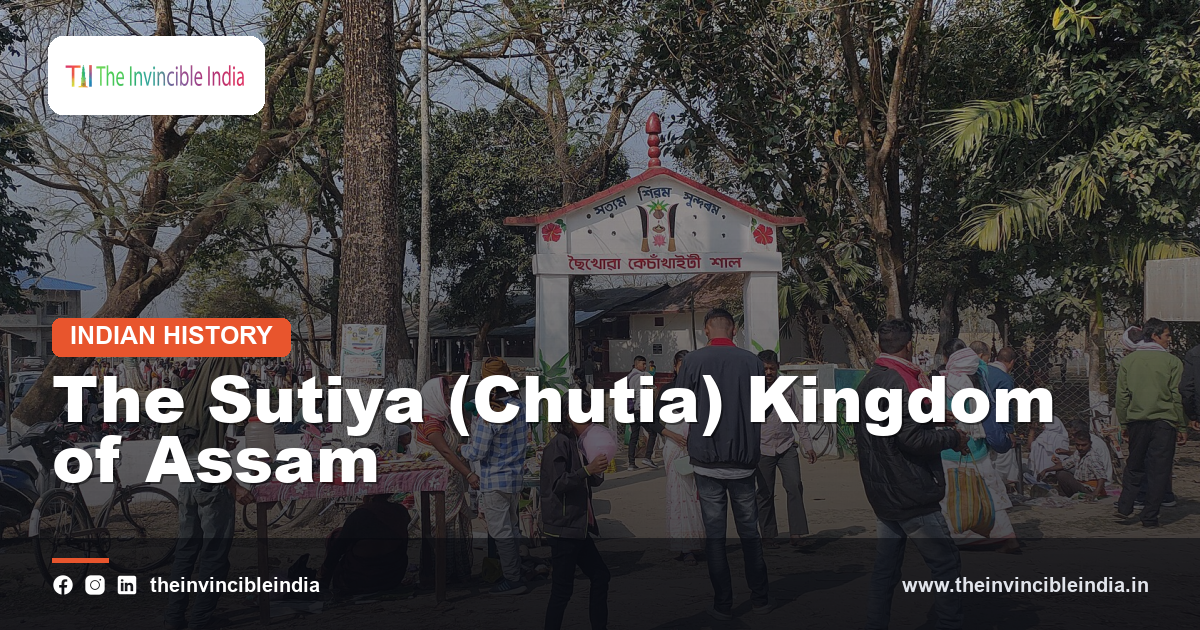
The Sutiya kingdom, also known as the Chutia kingdom, was a medieval state of upper Assam, centred on the region around Sadiya in the north-eastern corner of the Brahmaputra valley. Flourishing roughly from about the twelfth to the sixteenth century, according to the generally accepted chronology, the kingdom held the upper reaches of the valley until its conquest by the neighbouring Ahom kingdom in the early sixteenth century. Much of its early history rests on tradition, and the kingdom is remembered in connection with the region of Sadiya and with sacred sites such as the Tamreswari temple, associated with the goddess known as Kecaikhati. As one of the medieval kingdoms of the north-east, the Sutiya kingdom belongs to the wider tapestry of India’s regional states, like the medieval powers described in our guide to the Chalukya dynasty. Because much of the early history rests on tradition and the record is limited, this guide keeps to general terms where the account is uncertain.
Quick answer: The Sutiya kingdom, also known as the Chutia kingdom, was a medieval state of upper Assam centred on the region around Sadiya, flourishing roughly from about the twelfth to the sixteenth century according to the generally accepted chronology. It held the upper reaches of the Brahmaputra valley until its conquest by the neighbouring Ahom kingdom in the early sixteenth century. The kingdom is remembered in connection with Sadiya and with sacred sites such as the Tamreswari temple, and much of its early history rests on tradition.
Key Takeaways
- The Sutiya kingdom, also known as the Chutia kingdom, was a medieval state of upper Assam centred on the region around Sadiya.
- It flourished roughly from about the twelfth to the sixteenth century, according to the generally accepted chronology.
- The kingdom held the upper, north-eastern reaches of the Brahmaputra valley.
- It is remembered in connection with the region of Sadiya and with sacred sites such as the Tamreswari temple.
- The Sutiya kingdom was conquered by the neighbouring Ahom kingdom in the early sixteenth century.
- Much of its early history rests on tradition, and the surviving record is limited.
Read on for the history, culture, and legacy in detail.
Quick Facts
| Detail | Information |
|---|---|
| Kingdom | The Sutiya (Chutia) kingdom of upper Assam |
| Period | Roughly the 12th to the 16th century; early dates traditional |
| Region | Upper Assam, around Sadiya |
| Centre | The region of Sadiya |
| Associated Temple | The Tamreswari (Kecaikhati) temple |
| Neighbours | The Ahom and Kachari kingdoms |
| End of Kingdom | Conquered by the Ahoms in the early 16th century |
| Known From | Tradition, inscriptions and later chronicles |
| Legacy | An early medieval kingdom of the upper Brahmaputra valley |
What Was the Sutiya Kingdom?
The Sutiya kingdom, also known as the Chutia kingdom, was a medieval state of upper Assam that held the north-eastern reaches of the Brahmaputra valley, centred on the region around Sadiya. Flourishing roughly from about the twelfth to the sixteenth century, according to the generally accepted chronology, the kingdom formed one of the notable powers of upper Assam before the rise of its neighbours to dominance in the valley. The kingdom is remembered as the state of the Sutiya people, who established their rule over the upper country and maintained it until their conquest by the Ahom kingdom. Much of its early history rests on tradition, and the surviving record is limited, so the account of the kingdom is reconstructed from tradition, inscriptions and later chronicles. As one of the medieval kingdoms of the north-east, the Sutiya kingdom holds a place in the history of Assam. Its story forms part of the rich medieval history of the Brahmaputra valley.
Where Was the Sutiya Kingdom Located?
The Sutiya kingdom was located in upper Assam, in the north-eastern corner of the Brahmaputra valley, centred on the region around Sadiya where the valley meets the surrounding hills. This upper country, a land of rivers, forests and fertile land at the head of the valley, formed the heartland of the kingdom, set at the point where the Brahmaputra and its tributaries emerge into the plains. The position of the kingdom at the head of the valley placed it among the powers of upper Assam, in contact and contest with the neighbouring kingdoms and peoples of the region, including the Ahoms to the west. The geography of the upper valley, with its rivers and its frontier of hills, shaped the character and fortunes of the kingdom. The region of Sadiya anchored the Sutiya kingdom in the historical geography of upper Assam. The kingdom was thus firmly rooted in the north-eastern reaches of the Brahmaputra valley.
What Are the Names Sutiya and Chutia?
The kingdom is known by the names Sutiya and Chutia, alternative renderings of the name of the people and the state that ruled the upper Brahmaputra valley. The two forms, Sutiya and Chutia, are used in different sources and traditions to refer to the same kingdom and community, and the variation reflects the different ways the name has been recorded and transmitted. The name refers both to the Sutiya people, the community that established the kingdom, and to the state they built in upper Assam. As with many such names, the precise origin and the preferred spelling are matters of tradition and scholarly discussion. The community is treated here with respect as one of the peoples who shaped the history of the region. The names Sutiya and Chutia thus both denote the people and the kingdom of upper Assam. Understanding this variation helps readers recognise the kingdom across the different sources in which it appears.
When Did the Sutiya Kingdom Flourish?
The Sutiya kingdom is generally held to have flourished from about the twelfth to the sixteenth century, according to the accepted chronology, though the precise dates, especially of its earlier history, rest largely on tradition and are treated with scholarly care. The kingdom established its authority over upper Assam in the medieval period and held the upper reaches of the Brahmaputra valley through several centuries, until its conquest by the Ahoms in the early sixteenth century. The chronology of the kingdom is reconstructed from tradition, inscriptions and later chronicles, which provide the principal evidence for its rulers and history. As with other kingdoms whose early history rests on tradition, the dating of individual events and rulers is often uncertain and debated among scholars. The long span of the kingdom extended through the medieval centuries of the region’s history. The details of the chronology are described in general terms, reflecting the uncertainty of the record. The Sutiya kingdom thus belongs to the medieval history of upper Assam.
How Did the Sutiya Kingdom Originate?
The origin of the Sutiya kingdom is attributed in tradition to early rulers who established the authority of the Sutiya people over the upper Brahmaputra valley around Sadiya, founding the state that would endure for several centuries. According to the traditional accounts, the kingdom arose from the rise of the Sutiya community and its early leaders, who built their power in the upper country and set their seat in the region of Sadiya. These accounts of the founding, cherished in the memory of the region, rest largely on tradition and later chronicles rather than on independent contemporary record, and their details are treated with scholarly care. The foundation of the kingdom marks the beginning of the long rule of the Sutiyas over upper Assam. From these traditional beginnings the state grew through the extension of its authority over the upper valley. The origins of the Sutiya kingdom thus belong to the traditional memory of the region, preserved in its chronicles and lore.
What Was Sadiya?
Sadiya, in the north-eastern corner of the Brahmaputra valley, was the region and centre most closely associated with the Sutiya kingdom, serving as the heart of the state in upper Assam. Set at the head of the valley where the great river and its tributaries emerge from the hills, Sadiya formed the focus of the political, religious and cultural life of the kingdom. The region is remembered for its association with the Sutiya rulers and with sacred sites such as the Tamreswari temple, which lay within the sphere of the kingdom. Sadiya long remained a significant place in the history of upper Assam, even after the fall of the kingdom, its name bound up with the memory of the Sutiyas. The details of its history as a royal centre are drawn from tradition and the record of the region and are described in general terms. Sadiya thus stands as the enduring heart of the Sutiya kingdom and its heritage.
What Is the Tamreswari Temple?
The Tamreswari temple, in the Sadiya region of upper Assam, is the sacred site most closely associated with the Sutiya kingdom, a shrine connected with the goddess known in tradition as Kecaikhati. The temple, set in the upper country that formed the heartland of the kingdom, is remembered as an important religious centre linked with the rulers and people of the Sutiya state. Associated with the worship of the goddess, the Tamreswari temple holds a notable place in the religious traditions and heritage of upper Assam. The remains and traditions of the temple are studied for the light they shed on the religion and history of the kingdom and the region. The details of its history and its connection with the Sutiya rulers are drawn from tradition and the surviving record and are described in general terms. The Tamreswari temple thus embodies the religious heritage of the Sutiya kingdom and the Sadiya region.
Who Was the Goddess Kecaikhati?
Kecaikhati was the goddess associated in tradition with the Tamreswari temple and the religious life of the Sutiya kingdom, a deity revered in the upper Brahmaputra valley. The worship of the goddess under this name reflects the distinctive religious traditions of the region, which blended the wider heritage of goddess worship in the subcontinent with the local traditions of upper Assam. As a goddess connected with the Tamreswari temple and the Sutiya rulers, Kecaikhati held an important place in the religious world of the kingdom and its people. The traditions surrounding the goddess are drawn from the lore and heritage of the region and are treated with respect and scholarly care. The worship of Kecaikhati illustrates the religious character of the Sutiya kingdom and its roots in the traditions of upper Assam. The goddess thus stands at the centre of the religious heritage associated with the Sutiya state and the sacred sites of the Sadiya region.
How Was the Kingdom Governed?
The Sutiya kingdom was governed by its rulers, whose authority rested on control of the upper Brahmaputra valley around Sadiya, its people and its resources. The rulers maintained their authority over the upper country through the forms of medieval kingship, supported by officials, nobles and local figures who held responsibilities within the state and its defence. The kingdom drew its strength from the resources of the upper valley, with its rivers, forests and fertile land, and from the organisation of its people for labour and war. In the absence of a continuous chronicle, the details of the administration are reconstructed from tradition, inscriptions and later records and are treated with scholarly care. The forms of government followed the established patterns of the region, adapted to the setting of upper Assam. The system of governance enabled the Sutiyas to hold the upper valley through their long history. The administration of the kingdom is thus described in general terms, reflecting the limited record.
What Was the Religion and Culture?
The religion and culture of the Sutiya kingdom reflected the traditions of the upper Brahmaputra valley, blending the wider heritage of the subcontinent with the distinctive character of the region and its peoples. The kingdom was associated with the worship of the goddess, especially at the Tamreswari temple, and with the broader religious traditions of upper Assam. The culture of the kingdom, like that of the region, drew on the ways of life, traditions and beliefs of its people, shaped by the setting of the upper valley at the frontier of the hills. The rulers and people patronised sacred sites and maintained the religious and cultural traditions of their country. The art, religion and traditions of the kingdom reflected this heritage, preserved in the memory and lore of the region. The details of this culture are drawn from tradition and the surviving record and are described in general terms. Through this heritage the Sutiya kingdom contributed to the rich culture of upper Assam.
How Did the Sutiyas Relate to Their Neighbours?
The Sutiya kingdom related to its neighbours through the patterns of contact, rivalry and conflict that marked the medieval politics of the Brahmaputra valley, where several kingdoms and peoples contended for power. To the west lay the Ahom kingdom, which was extending its authority over the upper valley, and the kingdom was also in contact with the Kacharis and other powers and peoples of the region. These relations involved both exchange and conflict, as the kingdoms of the valley competed for territory and influence in the medieval period. The position of the Sutiya kingdom at the head of the valley placed it in direct contact with the expanding Ahom state, a contact that would in time prove decisive for its fate. The details of these relations are drawn from tradition and the chronicles of the region and are described in general terms. The dealings of the Sutiyas with their neighbours thus form part of the wider medieval history of the Brahmaputra valley.
How Did the Ahoms Conquer the Sutiya Kingdom?
The Sutiya kingdom was conquered by the neighbouring Ahom kingdom in the early sixteenth century, bringing to an end its independent rule over the upper Brahmaputra valley. As the Ahom state extended its authority eastward and northward through the valley, it came into conflict with the Sutiya kingdom at the head of the valley, and in a series of campaigns the Ahoms overcame the kingdom and absorbed its territory. According to the Ahom chronicles, the conquest brought the upper country and the region of Sadiya under Ahom control, extending the reach of the growing kingdom. This conquest was part of the broader expansion by which the Ahoms rose to dominance in the Brahmaputra valley. The details of the conquest are drawn from the Ahom chronicles and the record of the region and are described in general terms. The fall of the Sutiya kingdom thus marked a significant stage in the rise of the Ahom state and the reshaping of the politics of upper Assam.
What Happened After the Conquest?
After the conquest, the territory of the Sutiya kingdom was absorbed into the growing Ahom state, and the Sutiya people continued as one of the communities of the Brahmaputra valley under the new order. The incorporation of the upper country and the region of Sadiya extended the authority of the Ahom kingdom and added to its resources and manpower, strengthening its position in the valley. The Sutiya community, with its traditions and heritage, continued to form part of the social fabric of upper Assam in the centuries that followed. The conquest marked the end of the Sutiya kingdom as an independent state but not the end of the Sutiya people, who remained a living community of the region. The details of this period are drawn from the chronicles and record of the region and are described in general terms. The aftermath of the conquest thus wove the history and heritage of the Sutiyas into the broader story of Ahom Assam.
How Do We Know About the Sutiya Kingdom?
We know about the Sutiya kingdom chiefly from tradition, from a limited body of inscriptions, and from the later chronicles of the region, especially the Ahom Buranjis that record the kingdom and its conquest. The traditions and later chronicles preserve the memory of the rulers, the founding and the history of the kingdom, though much of the earlier account rests on tradition rather than contemporary record. Inscriptions and remains associated with the kingdom and its sacred sites add further evidence of its history and religion. As with other kingdoms whose record is limited and whose early history rests on tradition, scholars read these sources with care, weighing their accounts and recognising the uncertainty of many details. The surviving remains of the Sadiya region, including sacred sites such as the Tamreswari temple, are studied for the light they shed on the kingdom. The sources for the Sutiya kingdom thus combine tradition, epigraphy and later chronicle, treated with scholarly care.
What Heritage Survives?
The Sutiya kingdom left a heritage seen in the remains and traditions of the Sadiya region of upper Assam, in sacred sites such as the Tamreswari temple, and in the living memory and identity of the Sutiya community. The remains associated with the kingdom and its temples bear witness to its history and religion, standing as reminders of the medieval state that once held the upper valley. The traditions of the kingdom, preserved in the lore and chronicles of the region, keep alive the memory of its rulers and its history. The Sutiya community continues to form part of the rich social and cultural fabric of upper Assam, carrying forward its heritage and identity. These remains and traditions are studied through archaeology, tradition and the records of the region. The heritage of the Sutiya kingdom thus endures in the sacred sites, traditions and community of upper Assam. It forms a valued part of the region’s medieval history.
Why Is the Sutiya Kingdom Significant?
The Sutiya kingdom is significant as one of the medieval states of upper Assam and as a kingdom whose history illustrates the rich and contested political world of the Brahmaputra valley before the rise of the Ahoms to dominance. Its rule over the upper country around Sadiya, its sacred sites such as the Tamreswari temple, and its eventual conquest by the Ahoms form an important chapter in the medieval history of the region. The kingdom reflects the diversity of the peoples and states that shaped the history of upper Assam, and its community remains a living part of the region’s identity. Its history, reconstructed from tradition, inscriptions and later chronicles, offers a window onto the medieval north-east, often less prominent in the general narrative. For students of Indian history, the Sutiya kingdom offers a vivid example of a regional medieval state of the Brahmaputra valley. Its significance rests on its place in the rich history of upper Assam.
The Sutiya Kingdom Today
The Sutiya kingdom is remembered today through the heritage of the Sadiya region of upper Assam, the sacred sites associated with the kingdom, and the living identity of the Sutiya community. The remains and traditions of the kingdom, including sites such as the Tamreswari temple, stand as reminders of the medieval state that once held the upper valley, drawing the interest of visitors and students of history. The Sutiya community continues to form part of the rich cultural fabric of upper Assam, preserving and celebrating its heritage and history. Scholars continue to study the tradition, inscriptions and chronicles of the region to refine the understanding of the kingdom and its debated early history. The memory of the kingdom forms part of the wider historical identity of the north-east. For readers of Indian history, the Sutiya kingdom offers a striking example of a medieval kingdom of upper Assam. Its legacy endures in the heritage, traditions and community of the region.
Sources & Further Reading
- Archaeological Survey of India (asi.nic.in).
- Ministry of Culture, Government of India (indiaculture.gov.in).
- Directorate of Archaeology, Government of Assam.
Frequently Asked Questions
What was the Sutiya kingdom?
The Sutiya kingdom, also known as the Chutia kingdom, was a medieval state of upper Assam centred on the region around Sadiya, flourishing roughly from about the twelfth to the sixteenth century. It held the upper reaches of the Brahmaputra valley until its conquest by the Ahoms.
Where was the Sutiya kingdom located?
The Sutiya kingdom was located in upper Assam, in the north-eastern corner of the Brahmaputra valley, centred on the region around Sadiya. This upper country lay at the head of the valley, where the river and its tributaries emerge from the surrounding hills.
What is the Tamreswari temple?
The Tamreswari temple, in the Sadiya region, is the sacred site most closely associated with the Sutiya kingdom, connected with the goddess known in tradition as Kecaikhati. It is remembered as an important religious centre of the kingdom and the upper valley.
How did the Sutiya kingdom end?
The Sutiya kingdom was conquered by the neighbouring Ahom kingdom in the early sixteenth century, which brought its territory around Sadiya under Ahom control. This conquest was part of the broader expansion by which the Ahoms rose to dominance in the Brahmaputra valley.
Why is the kingdom called both Sutiya and Chutia?
Sutiya and Chutia are alternative renderings of the name of the people and the kingdom of upper Assam, used in different sources and traditions. The variation reflects the different ways the name has been recorded and transmitted over time.
How do we know about the Sutiya kingdom?
The kingdom is known chiefly from tradition, a limited body of inscriptions, and the later chronicles of the region, especially the Ahom Buranjis that record its history and conquest. Much of its early history rests on tradition and is treated with scholarly care.


