

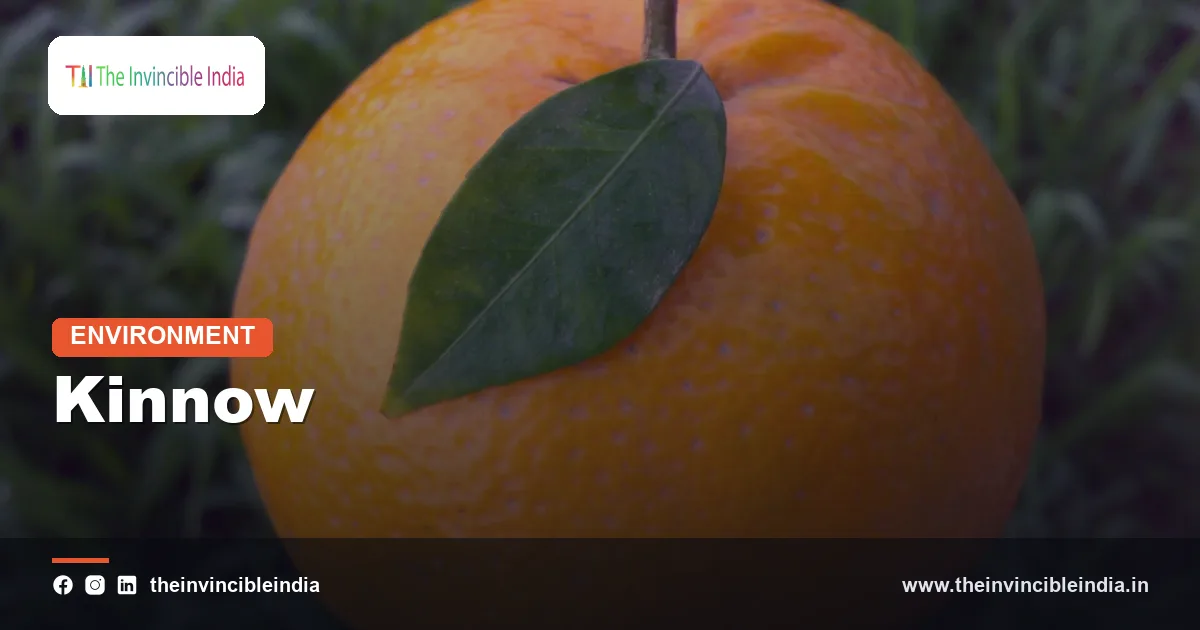
The kinnow is a juicy, loose-skinned mandarin hybrid of citrus that is grown mainly in Punjab, Haryana and Rajasthan and harvested in the Indian winter, roughly from December to February. Bred in California from two mandarin parents and introduced to the Indian plains in the 1950s, the kinnow became the leading mandarin of north-western India and one of the best-known winter fruits sold in Indian markets.
The kinnow is easy to recognise by its deep orange, slightly rough rind that peels away in a single piece, its sweet-tart juice and its many seeds. It is eaten fresh, pressed into juice, and increasingly processed and exported, which makes it an important horticultural crop for farmers in the canal-irrigated belt of the north-west.
Quick Facts
| Attribute | Detail |
|---|---|
| Common names | Kinnow, kinnow mandarin, kinnu |
| Scientific name | Citrus nobilis x Citrus deliciosa (a mandarin hybrid, treated within Citrus reticulata) |
| Family | Rutaceae (the citrus or rue family) |
| Origin of the hybrid | Developed by H. B. Frost at the University of California Citrus Experiment Station, Riverside, United States, and released in the 1930s |
| Introduction to India | Brought to northern India in the 1950s through the agricultural research system in Punjab |
| Where grown in India | Punjab (especially the Abohar-Fazilka belt and Hoshiarpur), Haryana (Sirsa and Fatehabad), Rajasthan (Sri Ganganagar and Hanumangarh), and parts of Himachal Pradesh and Jammu |
| Harvest season | Winter, mainly December to February |
| Part used | Fruit pulp and juice; peel for flavouring and processing |
| Main uses | Fresh eating, juice, squash, concentrates, and export of graded fruit |
Key Takeaways
- The kinnow is a mandarin hybrid between the King mandarin and the Willow Leaf mandarin, created by H. B. Frost in California in the early twentieth century.
- Kinnow fruit ripens in the Indian winter, with the main harvest running from December to February.
- The kinnow belt of north-west India is centred on Punjab, Haryana and Rajasthan, where canal irrigation and a cold winter suit the tree.
- Kinnow fruit is loose-skinned and easy to peel, but it contains a noticeable number of seeds, which limits its appeal for some processing uses.
- A kinnow tree is propagated by budding onto a rootstock and usually starts to bear a worthwhile crop only after about four to five years.
- Kinnow is a fair source of vitamin C and is exported in graded, waxed and packed form to neighbouring countries and the Gulf.
What is a kinnow?
A kinnow is a mandarin-type citrus fruit with a thin, orange, easily removed skin and a sweet-sharp, aromatic juice. Botanically, the kinnow belongs to the broad group of loose-skinned citrus fruits known as mandarins, which also includes the santra of central India and the satsuma of Japan.
Kinnow fruit is round to slightly flattened, usually medium to large, and weighs somewhere around 150 to 250 grams. The rind is deep orange when ripe, a little thicker than that of a typical mandarin, and finely dotted with oil glands that release a strong citrus scent when pressed. Inside, the segments are plump, juicy and separate easily. The seed count varies, but a single fruit commonly holds a dozen or more seeds, which is the most frequently cited drawback of the variety.
In everyday Indian usage, the kinnow is often called a type of orange, and traders in many markets sell it alongside the santra. Strictly speaking, the oranges of commerce in India are of two groups: the sweet orange (mosambi) and the mandarin group (santra and kinnow). The kinnow sits firmly in the second group.
Where does the kinnow come from?
The kinnow comes from California, where plant breeder Howard B. Frost crossed the King mandarin with the Willow Leaf mandarin at the University of California Citrus Experiment Station in Riverside. The cross was made in the early decades of the twentieth century, and the selected hybrid was formally released in the 1930s.
The King mandarin, sometimes called King of Siam, is a large, thick-skinned, richly flavoured fruit. The Willow Leaf mandarin, also known as mikan or Citrus deliciosa, is a small, narrow-leaved, thin-skinned fruit with a sweet taste. The aim of the cross was to combine the size and rich flavour of one parent with the productivity and refinement of the other. The resulting hybrid carried the name kinnow, a blend drawn from the names of its parents.
The kinnow did not become a leading commercial fruit in the United States, where other mandarins and tangelos were preferred. It found a far more important home in the Indian subcontinent. The plant material reached northern India in the 1950s, and orchard trials at the agricultural research stations in Punjab showed that it performed very well in the local climate. The same hybrid also became a major fruit in neighbouring Pakistan, particularly in the Sargodha region.
Where is the kinnow grown in India?
The kinnow is grown mainly in the plains of north-west India, with Punjab accounting for the largest share of orchards. The most famous growing area is the Abohar-Fazilka belt in the south-west of Punjab, close to the Rajasthan border, which has become a name almost synonymous with kinnow in fruit markets.
Several states and regions grow the fruit, as the table below summarises.
| State | Notable kinnow districts or areas | Remarks |
|---|---|---|
| Punjab | Fazilka, Abohar, Muktsar, Hoshiarpur, Bathinda | Leading producer; the Abohar-Fazilka belt is the best-known orchard region |
| Haryana | Sirsa, Fatehabad, Hisar | Orchards in the canal-irrigated western districts |
| Rajasthan | Sri Ganganagar, Hanumangarh | Irrigated by the Indira Gandhi Canal and Gang Canal systems |
| Himachal Pradesh | Lower hills and valley areas such as Una and Kangra | Smaller area; suitable low-altitude locations |
| Jammu and Kashmir | Jammu region | Limited commercial production |
Because production figures change from year to year with weather and area under cultivation, it is safest to say that India produces well over a million tonnes of mandarin-group citrus annually, with the kinnow forming a major portion of the north-western supply. Exact tonnage should always be checked against the latest horticulture statistics from the central and state agriculture departments.
What climate and soil does a kinnow tree need?
A kinnow tree grows best in a subtropical climate with distinct seasons, deep well-drained soil and dependable irrigation. The tree needs warm summers for growth and a cool winter, because cool nights during the ripening months help the fruit develop its deep orange colour and balanced sweet-sour taste.
The north-western plains suit these needs well. The region has hot summers, mild to cold winters with occasional light frost, and a network of canals and tube wells that supply water. Kinnow trees prefer sandy loam to loam soils with good drainage and a slightly acidic to near-neutral reaction. Heavy clay soils that hold water around the roots invite root rot and gummosis, while highly saline or alkaline soils reduce growth and fruit quality.
The main climatic requirements can be summarised as follows:
- Temperature: warm growing season, with winter cool enough to colour the fruit; severe frost damages young trees and flowers.
- Rainfall and irrigation: the trees need regular irrigation, especially during flowering, fruit set and fruit enlargement.
- Soil: deep, well-drained sandy loam is preferred; waterlogging must be avoided.
- Water quality: moderately saline irrigation water can reduce yield and fruit size.
How is a kinnow orchard planted and managed?
A kinnow orchard is established by planting budded saplings in the field, usually at a spacing of about six metres between rows and plants, and managing them with regular irrigation, feeding and pruning. The saplings come from nurseries where a bud of the kinnow variety is joined to a rootstock.
Propagation and rootstock
Kinnow trees are propagated by budding rather than from seed, because seedlings do not reliably reproduce the qualities of the parent tree. A bud from a healthy, disease-free mother tree is inserted into a rootstock. In India, rough lemon (known locally as jatti khatti) has traditionally been a common rootstock because it is vigorous and tolerant of a range of soils, although other rootstocks are used in places where fruit quality or disease resistance is a concern.
Planting and care
Planting is usually done in the monsoon season or in early spring, in pits prepared in advance and filled with soil and organic manure. Young trees are protected from cold and hot winds and given regular water. Pruning in the early years shapes the framework of the tree, and later pruning removes dead and crowded branches. Farmers commonly apply farmyard manure along with nitrogen, phosphorus and potassium, and correct micronutrient shortages such as zinc and iron when leaves show deficiency signs.
When does a kinnow tree bear fruit?
A kinnow tree usually starts bearing fruit three to four years after planting and reaches a commercially satisfying crop by about the fifth or sixth year. A well-managed orchard can remain productive for several decades. Kinnow trees are known for a tendency towards alternate bearing, in which a heavy crop in one year is followed by a lighter crop in the next, so management of nutrients, pruning and fruit load is important.
When is the kinnow season and how is the fruit harvested?
The kinnow season runs in winter, with fruit generally harvested from December to February and the peak of supply usually falling in January. The trees flower in spring, typically in February and March, and the fruit takes close to ten months to mature on the tree.
Growers judge ripeness not just by colour but by the balance of sugars and acids in the juice. The ratio of total soluble solids to acidity is a standard guide, and fruit picked too early tastes sour and flat. Pickers clip the fruit with a short piece of stalk using secateurs, because pulling the fruit by hand can tear the rind and open the fruit to rot.
After harvest, much of the crop passes through packing houses. The usual steps include:
- Sorting out damaged or diseased fruit.
- Washing and brushing to remove dirt.
- Applying a food-grade wax to restore shine and reduce moisture loss.
- Grading by size and colour.
- Packing in cartons or crates for domestic and export markets.
What is the nutritional value of a kinnow?
A kinnow is a good source of vitamin C and also supplies dietary fibre, small amounts of potassium and folate, and natural plant compounds such as flavonoids. Like other citrus fruits, the kinnow is mostly water and sugar, and a typical fruit supplies a modest number of calories.
The vitamin C content varies with variety, ripeness and growing conditions, but citrus fruits in general are valued as dietary sources of this vitamin. The fibre is found mainly in the pulp and the white membranes between the segments, so eating the whole segment provides more fibre than drinking strained juice. As with all foods, the kinnow is one part of a varied diet and not a cure for any illness. People with specific health conditions or on particular medicines should seek advice from a doctor or qualified dietitian.
How is the kinnow used and processed?
The kinnow is eaten mainly as a fresh fruit, but a growing share is processed into juice, squash and other products. Street vendors across northern India press the fruit into fresh juice during winter, and the segments are also added to salads, chaat and fruit platters.
Industrial processing is more difficult than for some other citrus because the seeds and the natural bitterness that can develop in the juice after extraction create quality problems. Processors manage this by careful extraction, de-bittering and timely processing. Common products include:
- Fresh juice and bottled or packaged juice.
- Juice concentrate and squash.
- Jams, marmalades and candied peel.
- Essential oil from the rind, used in flavouring and fragrance.
- Pectin and cattle feed from peel and pulp residues.
Efforts by agricultural universities and research institutes to develop low-seeded or seedless mandarin selections aim to make the fruit more attractive for both fresh consumption and processing.
How does the kinnow compare with other Indian citrus?
The kinnow differs from the santra, the mosambi and the lemon in its parentage, season, region and seed content. The comparison below sets out the main points for the better-known citrus fruits sold in Indian markets.
| Fruit | Group | Main regions | Typical season | Notable feature |
|---|---|---|---|---|
| Kinnow | Mandarin hybrid | Punjab, Haryana, Rajasthan | December to February | Easy to peel, juicy, many seeds |
| Santra (Nagpur mandarin) | Mandarin | Maharashtra, Madhya Pradesh | Winter, with another crop in some areas | Loose skin, sweet-sour taste |
| Coorg mandarin | Mandarin | Kodagu in Karnataka | Winter | Hill-grown, local variety |
| Mosambi | Sweet orange | Maharashtra, Andhra Pradesh, Punjab | Varies by region, often monsoon to winter | Pale, mild juice; skin does not peel easily |
| Lemon and lime | Acid citrus | Andhra Pradesh, Gujarat, Maharashtra and others | Throughout the year | Sour juice used as a flavouring |
What are the problems and pests of kinnow cultivation?
The main problems in kinnow cultivation are fruit drop, alternate bearing, insect pests such as citrus psylla and leaf miner, and diseases including gummosis, canker and citrus greening. Kinnow growers also face rising pressure on irrigation water and fluctuating market prices in seasons of heavy supply.
- Citrus psylla: a small sap-sucking insect that damages new shoots and can spread the bacterium that causes citrus greening, also called huanglongbing.
- Citrus leaf miner: larvae that tunnel inside young leaves, leaving silvery trails and weakening the tree.
- Gummosis: a fungal disease near the base of the trunk that causes gum oozing and bark decay, worsened by waterlogging.
- Citrus canker: a bacterial disease that produces corky lesions on leaves, twigs and fruit.
- Fruit drop: premature dropping of flowers and young fruit, linked to water stress, nutrient imbalance or pests.
Good orchard hygiene, the use of certified disease-free planting material, balanced nutrition, and integrated pest management are the usual responses. Because market gluts can pull down prices in the peak weeks, many growers and cooperatives have turned to better grading, cold storage, processing and export to spread sales over a longer period.
Does India export kinnow?
Yes, India exports kinnow in modest quantities, mainly to neighbouring countries and to markets in the Middle East. Bangladesh, Nepal, Sri Lanka, the United Arab Emirates and some Southeast Asian countries have been among the destinations for Indian mandarins in past years, though the volumes and destinations vary from season to season.
Export quality demands uniform size, bright colour, a clean rind and compliance with plant health rules. The Agricultural and Processed Food Products Export Development Authority (APEDA) supports exporters and growers with registration, standards and market information. Packing houses with washing, waxing and grading lines have been set up in the main producing districts to meet these requirements.
Bottom Line
The kinnow is a California-bred mandarin hybrid that found its best home in the canal-irrigated plains of Punjab, Haryana and Rajasthan. It is a winter fruit, easy to peel and rich in juice, and it supports thousands of orchard families, packers, processors and traders every season.
Frequently Asked Questions
What is a kinnow fruit?
A kinnow is a loose-skinned, seeded mandarin hybrid with a deep orange rind and sweet-tart juice. It was developed in California by crossing the King mandarin and the Willow Leaf mandarin. In India, it is grown mainly in Punjab, Haryana and Rajasthan and eaten fresh or as juice.
Is a kinnow the same as an orange?
No, a kinnow is a mandarin hybrid and not a sweet orange, although it is often sold as an orange in India. Mandarins like the kinnow have loose skins that peel easily, while sweet oranges such as the mosambi have tighter skins. The two groups differ in parentage, flavour and texture.
When is the kinnow season in India?
The kinnow season in India runs from about December to February, with peak supply in January. The trees flower in spring and the fruit ripens on the tree over roughly ten months. Fruit is generally picked once its sugar and acid balance has developed.
Which state is the largest producer of kinnow?
Punjab is generally regarded as the leading kinnow-producing state in India. The Abohar-Fazilka belt in south-western Punjab is the best-known orchard region. Haryana and Rajasthan are also significant producers, and exact rankings change with each year’s statistics.
Why does kinnow have so many seeds?
Kinnow fruit has many seeds because the variety is naturally seeded and develops seeds readily after pollination. Its mandarin parents also produce seeded fruit. Researchers are working on low-seeded selections, but the standard kinnow grown across India still contains a noticeable number of seeds.
Is kinnow juice good for health?
Kinnow juice supplies vitamin C and some natural plant compounds, but it also contains natural sugars and lacks the fibre of the whole fruit. Eating the segments gives more fibre than drinking strained juice. People with medical conditions, such as diabetes, should consult a doctor about suitable portions.
{“@context”:”https://schema.org”,”@graph”:[{“@type”:”FAQPage”,”mainEntity”:[{“@type”:”Question”,”name”:”What is a kinnow fruit?”,”acceptedAnswer”:{“@type”:”Answer”,”text”:”A kinnow is a loose-skinned, seeded mandarin hybrid with a deep orange rind and sweet-tart juice. It was developed in California by crossing the King mandarin and the Willow Leaf mandarin. In India, it is grown mainly in Punjab, Haryana and Rajasthan and eaten fresh or as juice.”}},{“@type”:”Question”,”name”:”Is a kinnow the same as an orange?”,”acceptedAnswer”:{“@type”:”Answer”,”text”:”No, a kinnow is a mandarin hybrid and not a sweet orange, although it is often sold as an orange in India. Mandarins like the kinnow have loose skins that peel easily, while sweet oranges such as the mosambi have tighter skins. The two groups differ in parentage, flavour and texture.”}},{“@type”:”Question”,”name”:”When is the kinnow season in India?”,”acceptedAnswer”:{“@type”:”Answer”,”text”:”The kinnow season in India runs from about December to February, with peak supply in January. The trees flower in spring and the fruit ripens on the tree over roughly ten months. Fruit is generally picked once its sugar and acid balance has developed.”}},{“@type”:”Question”,”name”:”Which state is the largest producer of kinnow?”,”acceptedAnswer”:{“@type”:”Answer”,”text”:”Punjab is generally regarded as the leading kinnow-producing state in India. The Abohar-Fazilka belt in south-western Punjab is the best-known orchard region. Haryana and Rajasthan are also significant producers, and exact rankings change with each year’s statistics.”}},{“@type”:”Question”,”name”:”Why does kinnow have so many seeds?”,”acceptedAnswer”:{“@type”:”Answer”,”text”:”Kinnow fruit has many seeds because the variety is naturally seeded and develops seeds readily after pollination. Its mandarin parents also produce seeded fruit. Researchers are working on low-seeded selections, but the standard kinnow grown across India still contains a noticeable number of seeds.”}},{“@type”:”Question”,”name”:”Is kinnow juice good for health?”,”acceptedAnswer”:{“@type”:”Answer”,”text”:”Kinnow juice supplies vitamin C and some natural plant compounds, but it also contains natural sugars and lacks the fibre of the whole fruit. Eating the segments gives more fibre than drinking strained juice. People with medical conditions, such as diabetes, should consult a doctor about suitable portions.”}}]}]}


