

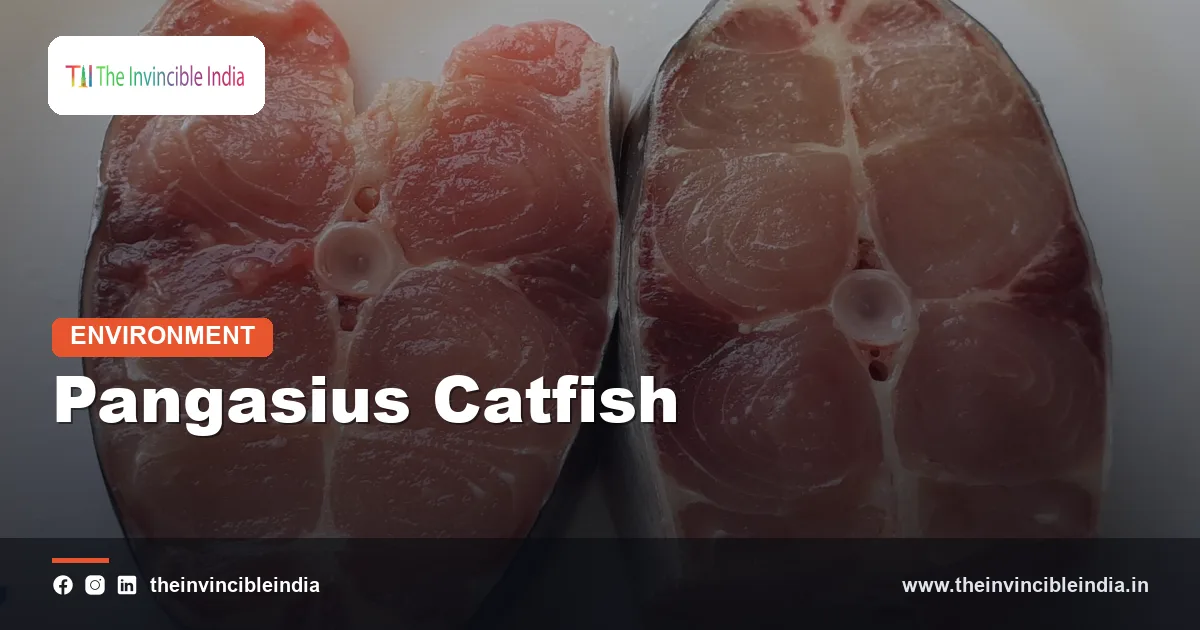
The pangasius catfish (Pangasianodon hypophthalmus), sold in Indian markets as basa or “pangas”, is a fast-growing river catfish native to the Mekong and Chao Phraya basins of Southeast Asia that has become a widely farmed pond fish in India since it was introduced in the 1990s. It grows quickly, tolerates crowded and low-oxygen ponds, and yields cheap white fillets with no intramuscular bones.
The pangasius is not the same as India’s own river fish called the pangas catfish (Pangasius pangasius), which is native to the Ganga and other large rivers, and its rapid spread has raised questions about biosecurity, water quality and the future of native fish farming. This explainer sets out what the fish is, how it is farmed in India, how it differs from native species and what the main debates are.
| Attribute | Detail |
|---|---|
| Common names | Pangasius, striped catfish, iridescent shark, sutchi catfish, Thai pangas; sold in India as basa |
| Scientific name | Pangasianodon hypophthalmus (older literature: Pangasius sutchi) |
| Family | Pangasiidae (shark catfishes) |
| Native range | Mekong and Chao Phraya river systems of Cambodia, Laos, Thailand and Vietnam |
| Introduced to India | 1990s, from Southeast Asia; now farmed in many states, with Andhra Pradesh the leading producer |
| Size | Marketed at roughly 0.8 to 1.5 kg; wild fish can exceed a metre |
| Diet | Omnivorous; accepts plant-based pellet feed, kitchen waste and small animal matter |
| Special trait | Can gulp air through its swim bladder, so it survives in low-oxygen water |
| Main concerns | Exotic-species risk, water pollution from intensive ponds, feed and residue worries |
Key Takeaways
- The pangasius catfish (Pangasianodon hypophthalmus) is a Southeast Asian species, not an Indian native, and it was brought to India in the 1990s for aquaculture.
- Pangasius is sold in Indian markets and restaurants mainly as basa, a trade name that strictly belongs to a related species but is used loosely for the farmed fish.
- The pangasius catfish grows fast and reaches market size in roughly a year, and its ability to breathe air lets farmers stock ponds more densely than with most Indian carps.
- India has its own native pangasiid, the pangas catfish (Pangasius pangasius) of the Ganga, Brahmaputra and other large rivers, which is a different species with its own conservation concerns.
- Escapes from ponds, discharge of nutrient-rich water and heavy reliance on formulated feed are the main environmental arguments against intensive pangasius farming.
- Pangasius fillets are low in fat and mild in flavour, but nutritionally they are a lean white fish rather than an oily, omega-3-rich one like sardine or mackerel.
What is the pangasius catfish?
The pangasius catfish is a large, scaleless, silvery-grey river fish of the shark-catfish family, Pangasiidae, which is native to the big rivers of mainland Southeast Asia. It has a flattened head, a broad mouth with barbels, a long anal fin and a forked tail, and a dark stripe may be visible along the flank of younger fish.
Two names cause confusion. In the aquaculture trade the species is variously called striped catfish, tra (in Vietnam), sutchi or “Thai pangas”. In Indian retail the name basa is applied to almost any farmed pangasius fillet, although scientifically the basa is a different, related species, Pangasius bocourti, that is grown mainly in Vietnam.
Pangasiidae also contains true native Indian members, notably the pangas catfish, so the word pangasius can refer to a genus, a family and a market product at once. The farmed species discussed here is the introduced one.
How did the pangasius reach India?
The pangasius reached India in the 1990s as an introduced aquaculture fish, brought from Southeast Asia, and it spread to farms in several states after fish seed began to be produced locally. Farmers were attracted by its growth rate and by a steady demand for cheap fillets.
The introduction was largely driven by farmers and traders rather than by a systematic national risk assessment. Over time, hatcheries in eastern and southern India learned to breed the fish, and the commercial culture grew most strongly in Andhra Pradesh, particularly in the Godavari and Krishna delta districts where there are many ponds, fresh water and processing links to big cities. Pangasius farming is now also reported from states such as West Bengal, Punjab, Haryana and others, in places where fish farming already existed.
India’s fisheries authorities have since issued guidance on the culture of exotic aquatic species. The principle is that introduced fish may be farmed only under controlled conditions, with a duty to prevent escape into natural water bodies.
How is pangasius farmed in India?
Pangasius is farmed in India in earthen ponds that are stocked with fingerlings, fed with floating pellets and harvested after about eight months to a year, when the fish weigh roughly one kilogram or more. The fish is suited to intensive culture because it eats prepared feed readily and survives in water with low dissolved oxygen.
The main stages of production are as follows.
- Seed production: Hatcheries breed the fish, usually with hormone-induced spawning, and supply fry that are grown to fingerlings in nursery ponds.
- Pond preparation: Farmers dry, lime and fill the ponds, and may install aerators to maintain oxygen in the water.
- Stocking and feeding: Fingerlings are stocked at high densities and fed pellets rich in protein, with the amount adjusted as the fish grow.
- Water management: Partial water exchange keeps ammonia and other wastes from building up.
- Harvest and sale: Fish are netted and sold live, whole or as processed fillets, often travelling long distances in chilled or oxygenated containers.
Feed is the largest cost, so the profit of a pangasius farm depends strongly on the price of feed ingredients. When fish prices fall or feed costs rise, farmers may struggle, a pattern that has led to periods of boom and decline in various districts.
Why is pangasius so cheap?
Pangasius is cheap because the fish grows fast, can be stocked densely and produces large boneless fillets with little waste. Compared with many native fish, a farmer can raise more kilograms per hectare of pond in a shorter time.
Processing also keeps costs down. The fillets are skinned and trimmed in standardised plants, and because the fish has a single large backbone and no small intramuscular bones it suits packaged and frozen sale. The mild, white flesh absorbs spices and sauces well, which appeals to restaurants, caterers and households that want a convenient fish.
Low price can also reflect hidden costs. Critics argue that intensive farming shifts some of the cost to the environment through effluent and to native fish through competition, though supporters reply that affordable fish improves access to animal protein for low-income buyers.
How does pangasius compare with native Indian carps?
Pangasius differs from native Indian major carps such as rohu, catla and mrigal in origin, growth rate, feeding habit and bone structure, and the two are often compared by farmers deciding what to stock. The table below lists the main differences in simple terms.
| Feature | Pangasius | Indian major carps (rohu, catla, mrigal) |
|---|---|---|
| Origin | Introduced from Southeast Asia | Native to Indian rivers |
| Growth | Very fast; market size in about a year | Slower; typically a year or more to reach table size |
| Oxygen needs | Tolerates low oxygen by breathing air | Needs better-oxygenated water |
| Bones | Boneless fillets | Many fine intramuscular bones |
| Feeding | Omnivore, takes pelleted feed | Plankton and detritus feeders, grown with natural food and supplements |
| Cultural preference | Growing, especially for fillets | Strong traditional demand, particularly in eastern India |
Many fish-farming households keep both, and polyculture with carps is a common choice in regions where buyers still prefer the taste and texture of rohu and catla.
Is pangasius safe to eat?
Pangasius is generally regarded as safe to eat when it is farmed in clean water, fed properly and cooked thoroughly, but the safety of any particular lot depends on farm practices and inspection. The concerns most often raised are residues of antibiotics or chemicals and the quality of the pond water.
In India, food safety rules set limits on veterinary drug residues in fish, and export-oriented producers follow stricter checks than local sellers. Consumers can lower their risk by buying from reliable vendors, choosing fresh or properly frozen fish and avoiding fish with an off smell or slimy, discoloured flesh.
Many claims circulate on social media that pangasius is grown in “dirty” water or is inherently harmful. Such claims are exaggerated as general statements. The more accurate message is that the quality of farming varies, which is an argument for regulation and traceability, not a reason to reject the species outright.
What about nutrition?
Pangasius is a lean white fish that provides protein with little fat and few calories. It contains lower amounts of the long-chain omega-3 fats than oily fish such as sardine, mackerel or hilsa, and its fat content also depends on the feed used. It is a reasonable protein source, but it is not a substitute for oily fish in a diet that aims to include omega-3s.
What are the environmental concerns about pangasius farming?
The main environmental concerns about pangasius farming in India are the risk of the fish escaping into rivers and wetlands, the discharge of nutrient-rich pond water and the heavy use of feed and energy. Each of these effects depends on how well a particular farm is managed.
- Escapes: During floods or through poorly fenced ponds, pangasius can reach natural waters, where it may compete with or prey on native fish and spread disease. Its air-breathing ability helps it survive in degraded water.
- Effluent: Uneaten feed and fish waste add nitrogen and phosphorus to canals and drains, contributing to algal blooms and oxygen loss.
- Feed: Fishmeal and soy in feed carry a hidden land and ocean footprint.
- Energy: Aerators and pumps use electricity or diesel.
- Biosecurity: Moving fish and seed between regions can carry parasites and pathogens.
Careful pond design, treatment of discharge water, secure embankments and responsible feeding reduce many of these risks. Scientists and fisheries officers continue to study how far pangasius has established itself outside farms.
Is pangasius legal to farm in India?
Pangasius farming is practised in India under state and central fisheries oversight, and the species is not banned in the way that the African catfish (magur) has been, but its culture is subject to guidelines on exotic species. Rules differ across states, and farmers are expected to follow biosecurity norms and to secure their ponds against escape.
The African catfish, Clarias gariepinus, was prohibited because of the documented harm it can do to native fish, and it provides a reminder of why India treats introduced fish cautiously. Anyone planning to culture pangasius should check current rules with the state fisheries department, as guidance and enforcement can change.
How can consumers choose pangasius responsibly?
Consumers can choose pangasius responsibly by buying from vendors who can say where the fish was grown, picking fresh or properly frozen fillets and preferring farms that follow recognised aquaculture standards. Traceability is the most useful signal, because the species itself is only one part of the story.
- Check that the fillets are white to pale pink, firm and free of any sour or ammonia-like smell.
- Avoid fillets that look heavily glazed with ice or are sold from a melted, refrozen block.
- Ask whether the fish comes from a farm that has a licence and records of its feed and water management.
- Cook fish thoroughly and store it in a cold chain at home.
- Vary the diet with native fish such as rohu, catla and small indigenous species, which support traditional fisheries and offer different nutrients.
What does the future hold for pangasius in India?
The future of pangasius in India depends on how well the industry manages disease, feed costs, water use and biosecurity, and on whether market prices stay high enough to reward careful farming. The fish is already established in the market, so the practical question is how to farm it with less harm.
Researchers are working on better feed that uses less fishmeal, on recirculating systems that save water and on health management that reduces the need for antibiotics. Policymakers face a balance between supporting livelihoods in the delta districts and protecting native river fish. Better monitoring of rivers, clear rules on escapes and support for native species culture are likely to shape the next stage.
Bottom Line
The pangasius catfish is a productive, affordable and widely farmed fish that has changed freshwater aquaculture in parts of India, but it remains an introduced species with real environmental and quality-control questions. Knowing that “basa” is a trade name, that India has its own native pangas catfish, and that farm management matters more than the species alone helps consumers and policymakers judge it fairly.
Frequently Asked Questions
Is pangasius the same as basa?
In Indian markets the two names are used for the same farmed fish, but scientifically they are different. The farmed pangasius is Pangasianodon hypophthalmus, while true basa is a related species, Pangasius bocourti.
Is pangasius a native Indian fish?
No, the farmed pangasius is not native to India; it comes from the Mekong and Chao Phraya river basins of Southeast Asia. India does have a native relative, the pangas catfish (Pangasius pangasius), found in rivers such as the Ganga.
Which state farms the most pangasius in India?
Andhra Pradesh is generally regarded as the leading pangasius-producing state, especially in the Godavari and Krishna delta districts. The fish is also farmed in several other states with established pond aquaculture.
Is pangasius safe to eat?
Pangasius is generally safe to eat when it is farmed in clean water, handled hygienically and cooked thoroughly. Quality varies between farms, so buying fresh or properly frozen fish from reliable sellers is advisable.
Why is pangasius cheaper than other fish?
Pangasius is cheaper because it grows quickly, can be farmed at high stocking densities and gives large boneless fillets with little waste. Standardised processing and efficient feed use also keep its price low.
Is pangasius farming harmful to the environment?
Pangasius farming can harm the environment if ponds are poorly managed, through escapes into natural waters and nutrient-rich discharge. Well-designed ponds with treated effluent and secure embankments reduce these risks.
{“@context”:”https://schema.org”,”@graph”:[{“@type”:”FAQPage”,”mainEntity”:[{“@type”:”Question”,”name”:”Is pangasius the same as basa?”,”acceptedAnswer”:{“@type”:”Answer”,”text”:”In Indian markets the two names are used for the same farmed fish, but scientifically they are different. The farmed pangasius is Pangasianodon hypophthalmus, while true basa is a related species, Pangasius bocourti.”}},{“@type”:”Question”,”name”:”Is pangasius a native Indian fish?”,”acceptedAnswer”:{“@type”:”Answer”,”text”:”No, the farmed pangasius is not native to India; it comes from the Mekong and Chao Phraya river basins of Southeast Asia. India does have a native relative, the pangas catfish (Pangasius pangasius), found in rivers such as the Ganga.”}},{“@type”:”Question”,”name”:”Which state farms the most pangasius in India?”,”acceptedAnswer”:{“@type”:”Answer”,”text”:”Andhra Pradesh is generally regarded as the leading pangasius-producing state, especially in the Godavari and Krishna delta districts. The fish is also farmed in several other states with established pond aquaculture.”}},{“@type”:”Question”,”name”:”Is pangasius safe to eat?”,”acceptedAnswer”:{“@type”:”Answer”,”text”:”Pangasius is generally safe to eat when it is farmed in clean water, handled hygienically and cooked thoroughly. Quality varies between farms, so buying fresh or properly frozen fish from reliable sellers is advisable.”}},{“@type”:”Question”,”name”:”Why is pangasius cheaper than other fish?”,”acceptedAnswer”:{“@type”:”Answer”,”text”:”Pangasius is cheaper because it grows quickly, can be farmed at high stocking densities and gives large boneless fillets with little waste. Standardised processing and efficient feed use also keep its price low.”}},{“@type”:”Question”,”name”:”Is pangasius farming harmful to the environment?”,”acceptedAnswer”:{“@type”:”Answer”,”text”:”Pangasius farming can harm the environment if ponds are poorly managed, through escapes into natural waters and nutrient-rich discharge. Well-designed ponds with treated effluent and secure embankments reduce these risks.”}}]}]}


