

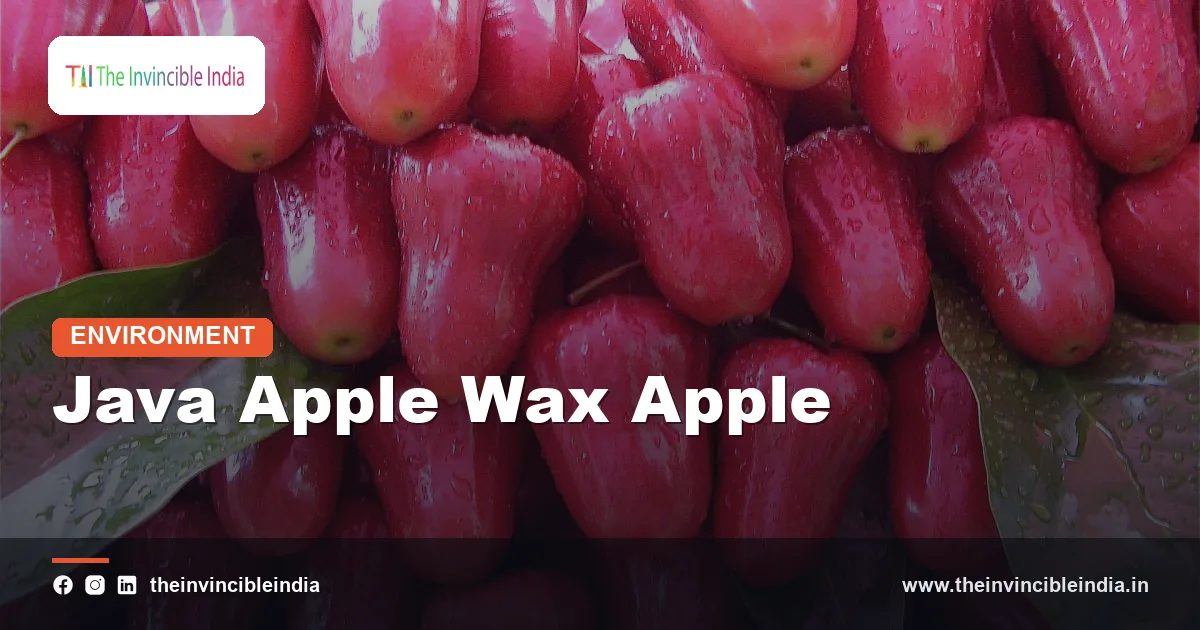
The java apple, also called the wax apple or water apple (Syzygium samarangense), is a tropical fruit tree of the myrtle family that bears glossy, bell-shaped fruit with crisp, watery, faintly sweet flesh. In India the java apple is grown in gardens and small orchards across Kerala, West Bengal, Assam, Tripura, Odisha, Karnataka, Tamil Nadu and the Andaman Islands, where it is known by local names such as jamrul and chambakka.
Despite the name, the java apple has no botanical connection with the apple tree (Malus domestica). It is a cousin of the jamun and the clove, and its appeal lies in its refreshing crunch rather than in strong sweetness. This article explains what the java apple is, how it differs from similar fruits, how it grows in Indian conditions, and why it deserves wider attention.
| Attribute | Detail |
|---|---|
| Scientific name | Syzygium samarangense |
| Family | Myrtaceae (the myrtle family) |
| Common names | Java apple, wax apple, water apple, wax jambu, jamrul (Bengali, Assamese, Hindi usage), chambakka (Malayalam) |
| Native region | Malay Peninsula and nearby islands, possibly including the Andaman Islands |
| Tree height | Usually 3 to 12 metres, with a short trunk and spreading crown |
| Fruit shape and colour | Bell or pear shaped; white, pale green, pink or deep red with a waxy sheen |
| Fruit texture | Crisp, juicy and spongy, with a mildly sweet taste |
| Fruit season in India | Mostly the hot pre-monsoon months, roughly March to June depending on region |
| Main pests | Fruit flies and fruit-sucking insects |
Key Takeaways
- The java apple (Syzygium samarangense) is a tropical tree of the myrtle family and is not related to the common apple.
- Java apple fruit is bell-shaped, waxy-skinned and crisp, with flesh that is more than 90 percent water and only faintly sweet.
- In India the java apple is called jamrul in Bengal and the northeast and chambakka in Kerala, and it grows well in warm, humid, low-lying regions.
- A java apple tree grown from a seed can take four to five years to fruit, while one propagated by air-layering often fruits within about two to three years.
- Java apple trees produce showy white powder-puff flowers that attract bees and other pollinators before the fruit forms.
- The java apple is different from the rose apple (Syzygium jambos) and the jamun (Syzygium cumini), although all three belong to the same genus.
What Is a Java Apple?
A java apple is the edible fruit of Syzygium samarangense, a medium-sized evergreen tree grown across tropical Asia for its crisp, juicy, bell-shaped fruit. The same name is used for the tree itself, which is also grown as an ornamental and shade tree in gardens.
The fruit has a thin, shiny, waxy skin that may be white, light green, pink, red or almost maroon, and a tiny crown of sepals at the wide end. The flesh is white and spongy, and the centre often contains one or two small seeds in a loose cavity or none at all. The fruit is eaten with the skin on and is valued mostly in the hot weather, when its high water content makes it a cooling snack.
Why Is It Called the Java Apple, Wax Apple and Water Apple?
The java apple is called a wax apple because of its glossy, waxy skin, a water apple because of its very high water content, and a java apple because the species has long been cultivated on the island of Java in Indonesia. The “apple” part of every name refers only to the fruit’s crisp texture and rounded shape.
The many names can cause confusion. In English, “rose apple” usually means a different species, Syzygium jambos, and “Malay apple” refers to Syzygium malaccense. In Indian languages, the word jamrul is applied loosely to several Syzygium fruits, so buyers should look at the fruit’s shape, colour and flavour to be sure of what they are getting. Scientists avoid this problem by using the Latin name, Syzygium samarangense.
Where Does the Java Apple Grow in India?
The java apple grows in India mainly in warm and humid low-lying regions, including Kerala, coastal Karnataka, Tamil Nadu, West Bengal, Assam, Tripura, Odisha and the Andaman and Nicobar Islands. It is usually found as a backyard tree rather than as a large commercial crop.
In Kerala, the tree is known as chambakka, and its pink and red fruits are a familiar sight in village gardens and roadside stalls during summer. In West Bengal, Assam and Tripura, jamrul trees are common in courtyards, where they are valued for their dense shade and fruit. The species is believed to have originated in the Malay Peninsula and neighbouring islands, and it spread through Asia by cultivation, so it is best described as a long-naturalised garden tree in India rather than a forest species.
How Does the Java Apple Tree Look and Flower?
The java apple tree is a spreading evergreen with a short trunk, drooping branches and large, glossy, opposite leaves that smell aromatic when crushed. Mature trees usually reach between 3 and 12 metres, and a well-grown specimen forms a dense, rounded crown.
- Leaves: Oblong to elliptic, about 10 to 25 centimetres long, leathery and dark green, with a pleasant spicy fragrance when bruised.
- Flowers: Pale yellow or white, with four small petals and a large tuft of long stamens, giving a powder-puff appearance. Flowers appear in clusters at the branch tips.
- Fruit: Develops in clusters, ripens within about two months of flowering and hangs downward like small bells.
- Seeds: Zero to two small seeds per fruit, sometimes none at all.
The profuse flowering is attractive to bees, butterflies and sunbirds, so the tree also supports local pollinators and small garden wildlife.
What Does a Java Apple Taste Like and What Is in It?
A java apple tastes mildly sweet, slightly floral and watery, with a crisp, almost cucumber-like crunch. The fruit is not as sweet as a mango or as tangy as a guava, and its charm is its freshness rather than its flavour intensity.
Nutritionally, the java apple is about 90 percent water. It supplies very few calories, a modest amount of vitamin C, some dietary fibre, and small amounts of potassium and other minerals. The red and pink varieties also contain anthocyanin pigments, which are plant compounds studied for antioxidant activity. These facts make the fruit a light and hydrating snack, but it should not be presented as a medicine or as a rich source of any single nutrient.
How Is the Java Apple Eaten and Used?
The java apple is eaten mostly raw, either on its own or sprinkled with a little salt, black salt or chilli powder, which brings out its sweetness. The whole fruit is edible apart from the seeds, and the skin is thin enough that it does not need peeling.
- Sliced into fruit salads and chaat for a crunchy, juicy element.
- Pickled or preserved in sugar or brine in some regions.
- Made into jam, jelly, syrup or mild wine, although the low sugar and acid content makes these less common.
- Used as an attractive garnish because of the fruit’s colour and shape.
The fruit does not store well, and it bruises easily. It is best eaten within a few days of harvest, and chilling for a few hours before serving improves the crispness.
How Is the Java Apple Grown and Propagated?
The java apple is grown from seed, air-layering or grafting, and air-layering is preferred by growers because it produces a tree true to the parent and fruits earlier. Seed-raised trees vary in fruit quality and may not match the parent’s colour and sweetness.
Climate and soil
The tree prefers a warm, humid climate with an annual rainfall of roughly 1,500 millimetres or more and tolerates a short dry period. It grows in a wide range of soils, but deep, fertile, well-drained loam with plenty of organic matter gives the best fruit. The tree dislikes prolonged cold and is damaged by frost.
Care and yield
Young trees need regular watering and protection from strong wind. Pruning after harvest keeps the crown open and encourages new flowering shoots. Adding compost and mulch helps retain moisture. Mature trees in good conditions can bear heavily, with fruit appearing one to two times a year in some locations. In Taiwan, where the wax apple is a major commercial crop, growers use fruit bagging and timed pruning to produce premium fruit, and some Indian growers are experimenting with similar methods.
How Is the Java Apple Different From Similar Fruits?
The java apple differs from similar Syzygium fruits in its bell shape, waxy skin and watery, mild flesh, while related species are rounder, more fragrant or dark purple. The table below compares the species most often confused with it in Indian markets.
| Fruit | Scientific name | Appearance | Flavour |
|---|---|---|---|
| Java apple (wax apple) | Syzygium samarangense | Bell-shaped, waxy, white to deep red | Crisp, watery, faintly sweet |
| Rose apple | Syzygium jambos | Round to oval, pale yellow-cream, hollow with loose seeds | Scented like rose water, dry and sweet |
| Malay apple | Syzygium malaccense | Oval, magenta to crimson with a large single seed | Mildly sweet, soft |
| Jamun (Indian blackberry) | Syzygium cumini | Small, oblong, purple-black | Sweet-tart and astringent |
What Are the Pests and Problems of the Java Apple?
The main problems of the java apple are fruit-fly attack, fruit splitting and bruising, and a short post-harvest life. Because the skin is thin and the flesh is soft, even minor damage leads to quick spoilage.
- Fruit flies: Female flies lay eggs under the skin, and the maggots spoil the flesh. Covering developing fruits with paper or mesh bags and removing fallen fruit reduces losses.
- Sucking insects and mites: Scale insects, aphids and mites can weaken young shoots.
- Fruit cracking: Sudden heavy rain after a dry spell can split the skin, so even moisture through mulching helps.
- Short shelf life: The fruit begins to lose crispness within a few days and needs careful handling and quick sale.
These problems explain why the java apple has not yet become a major commercial fruit in India, even though demand exists in cities during summer.
Is the Java Apple Good for the Garden and the Environment?
Yes, the java apple is a good garden and environmental tree because it supplies dense shade, nectar for pollinators and edible fruit for people and birds in a compact form. It is suited to home gardens, school grounds and roadside plantings in warm regions with sufficient moisture.
The tree’s dense leaf canopy cools the area beneath it, and the fallen leaves add organic matter to the soil. Because it flowers heavily, it supports bees and butterflies at a time of year when other nectar sources may be scarce. Gardeners should leave room for the spreading crown and avoid planting it close to buildings, since the roots and branches grow vigorously in favourable soil.
How Do You Choose and Store a Java Apple?
To choose a good java apple, pick firm fruit with glossy, unblemished skin and a deep, even colour, and avoid fruit that is soft, wrinkled or has dark spots near the base. Heavier fruit generally contains more juice and is crisper.
- Look at the colour. Deep red and pink fruits are usually sweeter, while white and pale green types are crisper and more watery.
- Check the crown. The small opening at the base should look clean and dry, without signs of rot or insect holes.
- Handle gently, as the thin skin bruises easily.
- Store in the refrigerator, ideally in a ventilated container, and eat within three to five days.
Washing the fruit just before eating is enough for most households, since the skin is eaten. If the fruit was grown with pesticide sprays, a longer rinse in clean water is advisable. Growers who bag the fruit on the tree usually produce cleaner, brighter fruit with less need for spraying.
Most java apple trees in India still grow in home gardens, and the fruit is usually sold in small quantities at local markets and roadside stalls. Better varieties, bagging methods and cold storage could help the fruit reach a wider market in the future.
Bottom Line
The java apple is a pleasant, low-calorie tropical fruit tree that is easy to grow in warm, humid parts of India and is best enjoyed fresh and chilled in summer. Its crisp texture, pollinator-friendly flowers and shady crown make it a worthwhile garden tree, even though its flavour is mild and its fruit spoils quickly.
Frequently Asked Questions
Is the java apple the same as the wax apple and water apple?
Yes, java apple, wax apple and water apple are different English names for the fruit of Syzygium samarangense. The names describe the fruit’s origin, waxy skin and high water content respectively.
Is the java apple related to the common apple?
No, the java apple is not related to the common apple. It belongs to the myrtle family, together with the guava, jamun and clove, while the common apple belongs to the rose family.
What is the java apple called in Kerala and Bengal?
The java apple is called chambakka in Kerala and is commonly known as jamrul in Bengal and the northeast. Local names vary and are sometimes used for other Syzygium fruits as well.
When does the java apple fruit in India?
The java apple fruits in India mostly during the hot months before the monsoon, roughly March to June. The exact timing depends on the region and the weather during flowering.
How long does a java apple tree take to bear fruit?
A java apple tree grown from seed usually takes four to five years to bear fruit. A tree propagated by air-layering or grafting can fruit in about two to three years.
Is the java apple healthy to eat?
Yes, the java apple is a healthy, low-calorie fruit that is mostly water and provides some vitamin C and fibre. It is a hydrating snack, but it is not a rich source of any single nutrient and should not be treated as a medicine.
{“@context”:”https://schema.org”,”@graph”:[{“@type”:”FAQPage”,”mainEntity”:[{“@type”:”Question”,”name”:”Is the java apple the same as the wax apple and water apple?”,”acceptedAnswer”:{“@type”:”Answer”,”text”:”Yes, java apple, wax apple and water apple are different English names for the fruit of Syzygium samarangense. The names describe the fruit’s origin, waxy skin and high water content respectively.”}},{“@type”:”Question”,”name”:”Is the java apple related to the common apple?”,”acceptedAnswer”:{“@type”:”Answer”,”text”:”No, the java apple is not related to the common apple. It belongs to the myrtle family, together with the guava, jamun and clove, while the common apple belongs to the rose family.”}},{“@type”:”Question”,”name”:”What is the java apple called in Kerala and Bengal?”,”acceptedAnswer”:{“@type”:”Answer”,”text”:”The java apple is called chambakka in Kerala and is commonly known as jamrul in Bengal and the northeast. Local names vary and are sometimes used for other Syzygium fruits as well.”}},{“@type”:”Question”,”name”:”When does the java apple fruit in India?”,”acceptedAnswer”:{“@type”:”Answer”,”text”:”The java apple fruits in India mostly during the hot months before the monsoon, roughly March to June. The exact timing depends on the region and the weather during flowering.”}},{“@type”:”Question”,”name”:”How long does a java apple tree take to bear fruit?”,”acceptedAnswer”:{“@type”:”Answer”,”text”:”A java apple tree grown from seed usually takes four to five years to bear fruit. A tree propagated by air-layering or grafting can fruit in about two to three years.”}},{“@type”:”Question”,”name”:”Is the java apple healthy to eat?”,”acceptedAnswer”:{“@type”:”Answer”,”text”:”Yes, the java apple is a healthy, low-calorie fruit that is mostly water and provides some vitamin C and fibre. It is a hydrating snack, but it is not a rich source of any single nutrient and should not be treated as a medicine.”}}]}]}


