

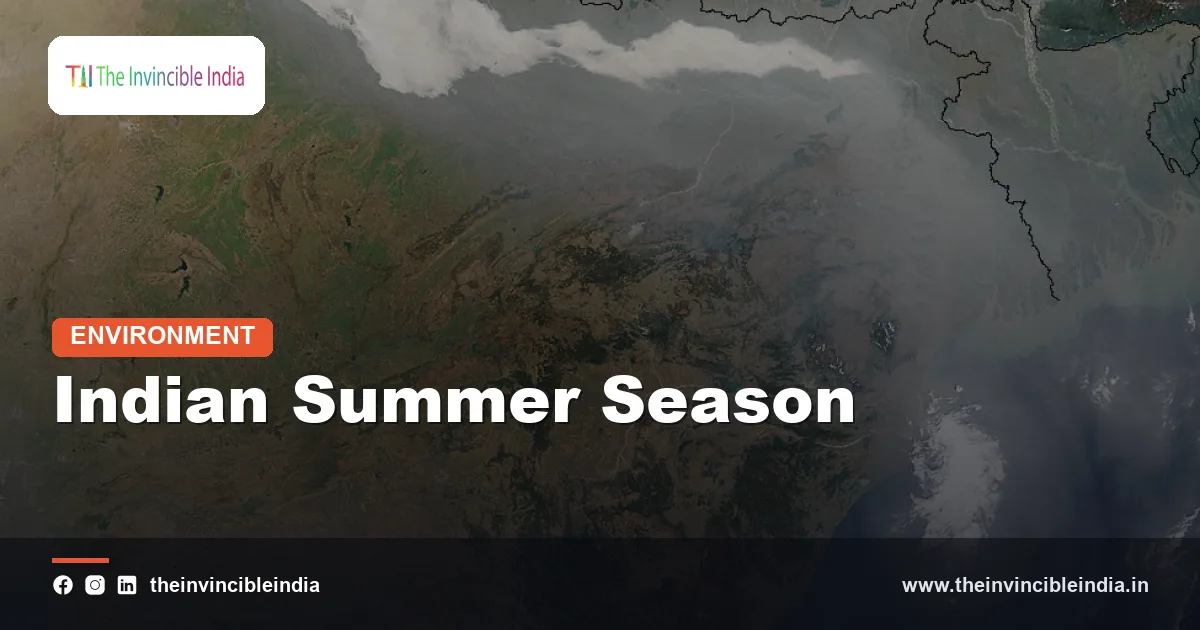
The Indian summer is the hot pre-monsoon season that runs from March to May across most of the country, when the land heats up fast, temperatures climb steadily and the winds slowly prepare for the arrival of the monsoon rains. The season ends only when the southwest monsoon sets in over Kerala, usually around the start of June, and then spreads north over the following weeks.
The Indian summer is officially called the pre-monsoon or hot-weather season by the India Meteorological Department (IMD). It is a season of intense sunshine, dry heat, scorching winds such as the Loo, sudden dust storms and violent evening thunderstorms, and it shapes farming, water supply, electricity demand and public health every year.
| Quick Facts | Details |
|---|---|
| Season name | Summer, also called the pre-monsoon or hot-weather season |
| Usual months | March to May, with the heat often lasting into June in the north-west |
| Official weather body | India Meteorological Department (IMD), under the Ministry of Earth Sciences |
| Hottest regions | North-west India, the central plains, Rajasthan, Vidarbha and inland Telangana |
| Signature hot wind | The Loo, a hot, dry westerly wind of the north Indian plains |
| Signature storms | Kalbaisakhi (Nor’westers), Andhi dust storms, mango showers |
| Traditional calendar seasons | Vasant (spring) and Grishma (summer) |
| What ends it | Arrival of the southwest monsoon over Kerala, then northward advance |
| Main risks | Heatwaves, heatstroke, water shortage, power cuts, forest fires, hail and lightning |
Key Takeaways
- The Indian summer lasts from March to May in the standard meteorological calendar, and in north-west India the extreme heat often continues into June.
- The hottest weather in India comes just before the monsoon, not at midsummer, because the Sun moves overhead northward and the land has not yet been cooled by rain.
- A heat-low pressure area over north-west India builds during the Indian summer, and this low is the engine that later pulls the monsoon winds in from the sea.
- The Loo is a hot, dry daytime wind of May and June that sharply raises the risk of heatstroke across the north Indian plains.
- Pre-monsoon thunderstorms, including Kalbaisakhi in Bengal, mango showers in the south and dust storms in the north, give brief relief but can also bring hail, lightning and damage.
- The Indian summer is warming over time, and heatwave spells are widely reported to be starting earlier and lasting longer than in past decades.
What Is the Indian Summer Season and When Does It Run?
The Indian summer season is the hottest part of the Indian year before the monsoon, officially running from March to May and known to meteorologists as the pre-monsoon season. In the traditional Hindu calendar the same period spans Vasant ritu (spring) and Grishma ritu (summer), which is why north Indian households speak of the hot months as “garmi” from roughly Chaitra to Jyeshtha.
The IMD divides the Indian year into four climatic seasons: winter (January and February), the pre-monsoon or summer season (March to May), the southwest monsoon season (June to September) and the post-monsoon or retreating-monsoon season (October to December). The summer season therefore sits between the cool dry winter and the wet monsoon, and it is the driest and hottest of the four across most of the country.
The term “Indian summer” has a second, unrelated meaning in English. In Britain and North America, an Indian summer means a spell of unseasonably warm, calm weather in autumn. That usage has no connection with the Indian climate. This article uses the term only for the hot season of the Indian subcontinent.
Why Does India Get So Hot Before the Monsoon?
India gets so hot before the monsoon because the Sun’s direct rays shift steadily northward after the March equinox, while the land, dry after winter, has no cloud cover or soil moisture to absorb that heat. Land warms much faster than the sea, so the interior of the subcontinent heats far more than the surrounding oceans.
Several factors combine to make the Indian summer severe:
- Overhead Sun: The Tropic of Cancer passes through the middle of India, so the Sun moves from near the equator in March to nearly overhead across central and northern India by May and June.
- Clear, dry skies: After winter, little cloud covers the plains, so sunlight reaches the ground almost unimpeded for many hours each day.
- Dry soil: Without moisture to evaporate, most of the incoming solar energy goes into heating the ground and the air above it rather than into evaporation.
- Distance from the sea: The interior plains and plateaus are far from the moderating effect of the ocean, so the daily temperature swing is large and the peak is high.
- Mountain barrier: The Himalayas block cold air from Central Asia in summer, which keeps the northern plains trapped in heat.
The result is that the highest temperatures of the year are recorded in May or early June, not at the summer solstice in late June. By then the monsoon has usually begun to cool the south and the east, while the north-west remains the hottest part of the country.
How Does the Heat Low Prepare the Ground for the Monsoon?
The heat low is a broad area of low air pressure that forms over north-west India and Pakistan during the Indian summer, and it works like a giant vacuum that later draws moist monsoon winds from the Arabian Sea and Bay of Bengal. As the surface heats, the air above it expands and rises, leaving lower pressure near the ground.
The cooler, denser air over the Indian Ocean sits at higher pressure. Air naturally flows from high to low pressure, and as the pressure gap grows through April and May, the stage is set for a dramatic reversal of the winds. This seasonal reversal is exactly what the word “monsoon” describes; it comes from an Arabic word meaning season or wind-shift.
So the discomfort of the Indian summer is also the necessary preparation for the rains. A weak or late build-up of the heat low can delay or weaken the monsoon’s onset, which is one reason forecasters watch the pre-monsoon temperatures so closely. Other large-scale influences, such as the Pacific Ocean’s El Nino and La Nina phases and the Indian Ocean Dipole, then decide how strong the rains turn out to be.
How Does Summer Differ Across Regions of India?
Summer differs sharply across India: the north-west and the central plains are the hottest and driest, the coasts are humid rather than extremely hot, the hills stay relatively cool, and the north-east and the far south see early rain. The country’s size and varied terrain mean that “the Indian summer” is really several different summers at once.
North-west India and the Indo-Gangetic Plain
North-west India, including Rajasthan, Punjab, Haryana, Delhi, western Uttar Pradesh and Gujarat, has the harshest summer. Daytime maximum temperatures commonly cross 40°C in April and May and can approach or pass 45°C in the driest districts. Western Rajasthan, with the Thar Desert, has recorded readings around 50°C. Nights stay warm, giving little relief during a prolonged heatwave.
Central India and the Deccan
The central plains and the Deccan interior, including Vidarbha in Maharashtra, Madhya Pradesh, Chhattisgarh and inland Telangana, are among the hottest parts of the country in April and May. The Deccan plateau is a rain-shadow region of the Western Ghats, so it is drier and hotter than the coast at the same latitude.
Coastal India
Coastal cities such as Mumbai, Chennai and Kolkata rarely see the extreme dry heat of the interior, but the combination of high temperature and high humidity makes the summer oppressive. Sea breezes provide some relief in the afternoon, and the high moisture means the body struggles to cool itself by sweating.
Hills, North-east and the Far South
Hill stations in the Himalaya, the Western Ghats and the Nilgiris stay far cooler, which is why they became favoured summer retreats. Kerala and the north-east begin receiving pre-monsoon showers as early as March and April, and the humid far south sees only a modest rise in temperature compared with the north.
| Region | Typical summer character | Main weather features |
|---|---|---|
| North-west India | Very hot and dry, with the highest temperatures of the year | Loo, dust storms, severe heatwaves |
| Central India and Deccan | Hot and dry, with a hot inland interior | Heatwaves, scattered thunderstorms |
| East India | Hot and humid | Kalbaisakhi (Nor’westers) in Bengal, Bordoichila in Assam |
| Coastal peninsula | Humid, moderate maximums | Sea breezes, mango showers in the south-west |
| Himalayan hills | Pleasant to warm, with a short season | Hailstorms, forest fires in dry spells |
What Is the Loo and How Do Heatwaves Develop?
The Loo is a strong, hot, dry wind that blows from the west across the north Indian plains during the afternoons of May and June, and it is the best-known feature of the Indian summer. The wind forms as air passing over the heated deserts of Rajasthan and Pakistan becomes extremely hot and dry, and then sweeps east and south-east across the Indo-Gangetic Plain.
A heatwave occurs when such conditions persist and temperatures stay far above the seasonal norm for several days. The IMD declares a heatwave for the plains when the maximum temperature reaches at least 40°C and is about 4.5°C or more above normal, and it also uses an absolute threshold of 45°C. For hilly regions and for coastal areas the thresholds are lower, because local people and buildings are adapted to cooler conditions.
Heatwaves develop when a persistent high-pressure system over the region sinks and warms the air, clouds are scarce, the soil is dry and no moist wind arrives from the sea. If a western disturbance or a thunderstorm system does not arrive to break the pattern, the heat can last for a week or longer.
The main health danger is heat exhaustion and heatstroke, which can be fatal, especially for outdoor workers, the elderly, children and people without access to shade, water or cooling. Warm nights add to the strain because the body cannot recover.
What Are Pre-Monsoon Thunderstorms in the Indian Summer?
Pre-monsoon thunderstorms are the sudden, violent storms that break the heat of the Indian summer in April and May, and they vary in name and character from region to region. They form when intense heating makes the lower atmosphere unstable and moist air from the sea collides with hot, dry air from the interior.
- Kalbaisakhi or Nor’westers: Violent late-afternoon thunderstorms with squalls, hail and heavy rain across West Bengal, Odisha, Jharkhand and Bangladesh. The name means “calamity of the month of Baisakh”.
- Bordoichila: The Assamese name for similar spring storms in Assam and the north-east.
- Mango showers: Light to moderate pre-monsoon rain in Kerala, Karnataka and Tamil Nadu that helps ripen mangoes.
- Andhi (dust storms): Walls of dust that sweep across Rajasthan, Punjab, Haryana and Uttar Pradesh, sharply reducing visibility and sometimes toppling trees and hoardings.
- Hailstorms: Ice pellets from tall thunderclouds that can flatten standing crops and orchards, particularly in north and central India in March and April.
These storms bring welcome relief from the heat, but they can also cause deaths, damage to crops and property, power failures and disruption of flights. Lightning during these storms is a significant hazard for people in the open.
How Do Summer Cyclones Fit Into the Indian Summer?
Summer cyclones fit into the Indian summer as the first of two annual cyclone peaks over the north Indian Ocean, which occur in the pre-monsoon months of April to June and again in the post-monsoon months of October to December. The seas are at their warmest in April and May, which fuels storm development.
Both the Bay of Bengal and the Arabian Sea can produce these storms. The Bay of Bengal is the more active basin, and its cyclones usually strike the coasts of Odisha, Andhra Pradesh, West Bengal and Bangladesh. Arabian Sea cyclones are less frequent, but they threaten Gujarat, Maharashtra and the Konkan coast, and scientists have noted that they are becoming more intense as the sea warms.
The IMD issues cyclone warnings in colour-coded stages, and evacuation planning has greatly reduced loss of life in coastal states over the past quarter-century, even as the storms have grown stronger.
How Does the Indian Summer End and the Monsoon Begin?
The Indian summer ends when the southwest monsoon arrives, a transition that starts with the monsoon’s onset over Kerala around 1 June and then moves north across the country, reaching most of India by early to mid-July. The IMD declares the onset only after rainfall, wind and cloud criteria are satisfied over a large part of Kerala and nearby regions.
The northward advance is not smooth. It often advances in surges, pauses for days, and then moves again. North-west India is the last region to receive the rains, so its summer lasts longest. Delhi’s normal monsoon arrival is around the end of June, and western Rajasthan sees the monsoon only in July and in a thin form.
In the weeks just before the onset, humidity rises, the sky clouds over, and the dry heat gives way to a sticky, muggy phase. This transition can be physically demanding, because heat stress is made worse by moist air even if the thermometer reading is slightly lower.
Why Does the Indian Summer Matter for Farming, Water and Power?
The Indian summer matters enormously because it governs the end of the winter crop season, the water available for the monsoon sowing, and the nation’s electricity demand. The weeks of March to May decide whether the harvest is gathered in good condition and whether reservoirs hold enough water to last until the rains.
- Agriculture: The wheat and mustard harvest of the rabi season takes place in March and April, and extreme early heat can shrivel grain and cut yields. The short zaid season grows melons, cucumbers and vegetables with irrigation. Farmers prepare their fields during this period for sowing the kharif crops once the monsoon rain arrives.
- Water: Reservoirs and rivers fall to their lowest levels just before the monsoon. Cities and villages in dry regions face shortages, tankers and rationing, and groundwater falls as farms and households pump more.
- Power: Air conditioners, coolers and fans push peak electricity demand to its annual high in the Indian summer, which stresses the grid and fuels debate about load management and clean energy.
- Health and work: Outdoor labourers, from farm workers to construction crews and delivery riders, lose productive hours, and heat-related illness rises.
- Forests: Dry leaf litter and high temperatures lead to forest fires, particularly in the Himalayan foothills, such as Uttarakhand, and in central India.
How Is the Indian Summer Changing?
The Indian summer is changing in the direction of hotter, earlier and longer heat, in line with global warming and local factors such as urban growth. Records and studies from the IMD and independent researchers point to a rise in the frequency and duration of heatwaves over large parts of the country in recent decades.
Cities add a further layer through the urban heat island effect. Concrete, asphalt and glass absorb and release heat, and the loss of trees and water bodies removes natural cooling. Night-time temperatures in big cities therefore stay higher than in surrounding rural areas.
The warm-up also interacts with humidity. Humid heat is harder on the human body than dry heat at the same air temperature, and scientists use a measure called wet-bulb temperature to describe the combined stress. Regions such as the Indo-Gangetic Plain and the eastern coast are watched closely for this reason.
These trends are statements about patterns, not predictions for any single year. Any given summer can still be milder than the last because of cloud, rain and large-scale climate patterns, and scientists are careful to separate natural year-to-year variation from the longer warming trend.
How Can People Stay Safe During the Indian Summer?
People can stay safe in the Indian summer by drinking enough water, avoiding the outdoors in the hottest hours, wearing light cotton clothing and recognising the early signs of heat illness. Public health agencies, including the National Disaster Management Authority (NDMA), issue standard advice each season.
- Drink water regularly, even when not thirsty, and use oral rehydration solution, lassi, or lemon water during long exposure.
- Avoid strenuous work outdoors between late morning and late afternoon, the hours when the Loo is strongest.
- Wear loose, light-coloured cotton clothes and cover the head with a hat, cloth or umbrella.
- Never leave children or pets in parked vehicles.
- Seek medical help quickly for high body temperature, confusion, dizziness, fainting or hot dry skin, which are warning signs of heatstroke.
Many states and cities now follow Heat Action Plans, a model pioneered by Ahmedabad after the deadly 2010 heatwave, which combine early warnings, cooling shelters, adjusted work hours and hospital preparation.
Bottom Line
The Indian summer is the hot, dry run-up of March to May that loads the land with heat so the monsoon can begin. It brings hardship in the form of heatwaves, water stress and storms, but it also drives the very pressure contrast that delivers the rains. Understanding its rhythm helps people prepare, and the season’s growing intensity makes that preparation more urgent each year.
Frequently Asked Questions
When is the summer season in India?
The summer season in India runs from March to May, and in north-west India the heat frequently lasts into June. The India Meteorological Department calls this period the pre-monsoon or hot-weather season. It ends when the southwest monsoon arrives over Kerala around 1 June and then advances north.
Which is the hottest month in India?
May is generally the hottest month in most of India, with the highest temperatures in the north-west and central plains often recorded in late May or early June. The peak comes before the monsoon, not at the June solstice, because rain and cloud later cool the land. Coastal and southern areas often see their warmest weather in April and May.
What is the Loo in the Indian summer?
The Loo is a hot, dry, gusty westerly wind that blows across the north Indian plains in the afternoons of May and June. It forms as air heated over the Rajasthan and Pakistan deserts sweeps east. The Loo greatly raises the risk of heatstroke, so people are advised to avoid being outdoors in the afternoon.
Why does India have pre-monsoon thunderstorms?
India has pre-monsoon thunderstorms because strong heating makes the air unstable and moist sea air meets hot, dry interior air. The best-known examples are Kalbaisakhi in Bengal, mango showers in the south and Andhi dust storms in the north. These storms give brief relief from the heat but can bring hail, lightning and strong squalls.
Does the Indian summer have anything to do with the monsoon?
Yes, the Indian summer directly prepares the monsoon, because the intense heating creates a low-pressure area over north-west India that pulls in moist winds from the ocean. A strong pressure contrast helps the monsoon set in. The strength of the rains then depends on other factors, including El Nino, La Nina and the Indian Ocean Dipole.
Is the Indian summer getting hotter?
Evidence points to a warming trend, with heatwaves widely reported as becoming more frequent and longer in many parts of India. Urban growth adds to the heat in cities. However, individual years still vary a great deal, so scientists treat the long-term trend separately from any single summer.
{“@context”:”https://schema.org”,”@graph”:[{“@type”:”FAQPage”,”mainEntity”:[{“@type”:”Question”,”name”:”When is the summer season in India?”,”acceptedAnswer”:{“@type”:”Answer”,”text”:”The summer season in India runs from March to May, and in north-west India the heat frequently lasts into June. The India Meteorological Department calls this period the pre-monsoon or hot-weather season. It ends when the southwest monsoon arrives over Kerala around 1 June and then advances north.”}},{“@type”:”Question”,”name”:”Which is the hottest month in India?”,”acceptedAnswer”:{“@type”:”Answer”,”text”:”May is generally the hottest month in most of India, with the highest temperatures in the north-west and central plains often recorded in late May or early June. The peak comes before the monsoon, not at the June solstice, because rain and cloud later cool the land. Coastal and southern areas often see their warmest weather in April and May.”}},{“@type”:”Question”,”name”:”What is the Loo in the Indian summer?”,”acceptedAnswer”:{“@type”:”Answer”,”text”:”The Loo is a hot, dry, gusty westerly wind that blows across the north Indian plains in the afternoons of May and June. It forms as air heated over the Rajasthan and Pakistan deserts sweeps east. The Loo greatly raises the risk of heatstroke, so people are advised to avoid being outdoors in the afternoon.”}},{“@type”:”Question”,”name”:”Why does India have pre-monsoon thunderstorms?”,”acceptedAnswer”:{“@type”:”Answer”,”text”:”India has pre-monsoon thunderstorms because strong heating makes the air unstable and moist sea air meets hot, dry interior air. The best-known examples are Kalbaisakhi in Bengal, mango showers in the south and Andhi dust storms in the north. These storms give brief relief from the heat but can bring hail, lightning and strong squalls.”}},{“@type”:”Question”,”name”:”Does the Indian summer have anything to do with the monsoon?”,”acceptedAnswer”:{“@type”:”Answer”,”text”:”Yes, the Indian summer directly prepares the monsoon, because the intense heating creates a low-pressure area over north-west India that pulls in moist winds from the ocean. A strong pressure contrast helps the monsoon set in. The strength of the rains then depends on other factors, including El Nino, La Nina and the Indian Ocean Dipole.”}},{“@type”:”Question”,”name”:”Is the Indian summer getting hotter?”,”acceptedAnswer”:{“@type”:”Answer”,”text”:”Evidence points to a warming trend, with heatwaves widely reported as becoming more frequent and longer in many parts of India. Urban growth adds to the heat in cities. However, individual years still vary a great deal, so scientists treat the long-term trend separately from any single summer.”}}]}]}


