

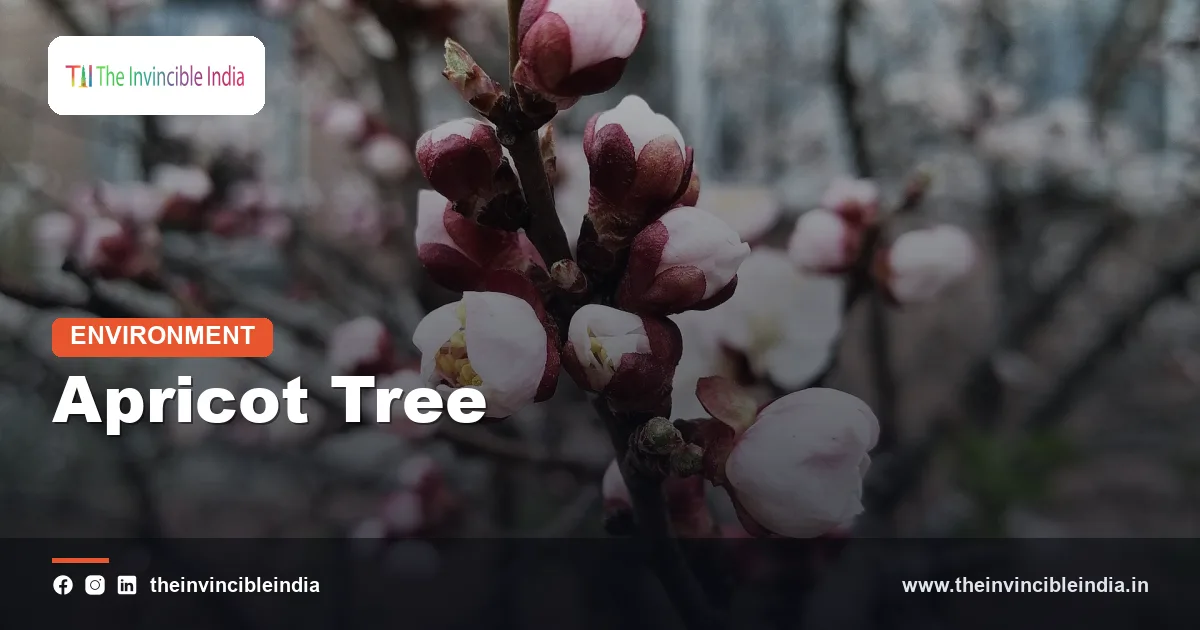
The apricot (Prunus armeniaca) is a hardy, deciduous stone-fruit tree of the rose family that thrives in the cold, dry valleys of the Indian Himalaya, especially in Ladakh, Himachal Pradesh, Jammu and Kashmir and Uttarakhand. Its small, orange-yellow fruit is eaten fresh in summer and dried as khubani, and its kernels yield an oil used in food and cosmetics. In the high-altitude desert of Ladakh the apricot is not only a crop but also a part of local culture, cuisine and the village economy.
This article explains what an apricot tree is, where it grows in India, how it flowers and fruits, which varieties are grown, how apricots are dried and used, and what challenges growers face in the mountains.
Quick Facts
| Common name | Apricot (Hindi: khubani, zardalu; Ladakhi: chuli) |
|---|---|
| Scientific name | Prunus armeniaca |
| Family | Rosaceae (the rose family) |
| Where grown in India | Ladakh, Himachal Pradesh (Kinnaur, Lahaul-Spiti, Kullu, Shimla), Jammu and Kashmir, Uttarakhand |
| Season | Blossom in March to April; fruit ripens roughly from June to August, later at higher altitudes |
| Fruit | A small, velvety, orange-yellow drupe with a single stone |
| Uses | Fresh eating, sun-dried fruit, jams, chutneys, desserts, kernel oil, timber and ornamental blossom |
| Origin | Believed to have been domesticated in Central Asia and western China, then spread along trade routes |
| Notable fact | The Ladakh Raktsey Karpo apricot received a Geographical Indication (GI) tag in 2022 |
Key Takeaways
- The apricot (Prunus armeniaca) is a deciduous stone-fruit tree in the family Rosaceae and is closely related to the peach, plum, cherry and almond.
- In India, the apricot is grown mainly in the cold Himalayan regions of Ladakh, Himachal Pradesh, Jammu and Kashmir and Uttarakhand.
- Ripe apricots are eaten fresh or sun-dried; the dried fruit is known in Hindi and Urdu as khubani and is the basis of desserts such as khubani ka meetha.
- The Ladakh Raktsey Karpo apricot received a Geographical Indication tag in 2022, recognising it as a product of the region.
- Apricot trees flower early in spring, so late frosts can damage the blossom and cut the harvest in a poor year.
- Apricot kernels yield an edible and cosmetic oil, but bitter kernels contain amygdalin and should not be eaten in quantity.
What is an apricot tree?
An apricot tree is a small to medium deciduous tree, usually 5 to 10 metres tall, that belongs to the genus Prunus in the rose family, Rosaceae. It produces white to pale pink blossom in early spring and a fleshy single-seeded fruit called a drupe, which is the botanical name for stone fruit.
The leaves are broad, rounded and finely toothed, with a pointed tip. The bark is reddish-brown to grey and becomes rough with age. The tree has a spreading crown and a moderately long life, though orchard trees are often renewed after several decades.
The species name armeniaca is Latin for “Armenian”, reflecting the old European belief that the tree came from Armenia. Modern botanical and genetic work points instead to Central Asia and western China as the area of domestication, from where the fruit travelled along ancient trade routes to the Middle East, the Mediterranean and the Indian subcontinent.
Where is the apricot grown in India?
The apricot is grown in India mainly in the high-altitude and temperate Himalayan belt, with Ladakh, Himachal Pradesh, Jammu and Kashmir and Uttarakhand as the principal areas. The tree prefers a cold winter, a dry climate with bright summer sun, and well-drained soil, conditions found in the mountain valleys.
- Ladakh: Apricots are cultivated in Leh and Kargil districts, along river valleys and irrigated village terraces. The Kargil region and villages such as those in the Indus valley are known for the crop, and the Dah-Hanu area is famous for its blossom in spring.
- Himachal Pradesh: Apricot orchards are found in Kinnaur, Lahaul-Spiti, Kullu, Shimla and Sirmaur districts, where the fruit is sold fresh and dried.
- Jammu and Kashmir: Apricot trees are grown in parts of the Kashmir valley and in higher areas, often alongside walnut and almond.
- Uttarakhand: Apricots grow in the hills of the Garhwal and Kumaon regions, including wild or semi-wild trees near villages.
Apricot cultivation in India is small in scale compared with the major producing countries of West and Central Asia, but within the Himalaya it is among the most important fruit crops at higher altitudes.
Why is the apricot important in Ladakh?
The apricot is important in Ladakh because it is one of the few fruit crops that can grow reliably in the cold desert, and it provides food, cash income and oil for rural households. In Ladakh, apricots are known locally as chuli, and a village orchard can contribute a large share of household earnings.
The role of the apricot goes beyond the fruit itself:
- The fresh fruit is a summer food and is also sold in markets in Leh and Kargil.
- Dried apricots are stored for the long winter and are used in cooking and as a snack.
- Kernels are cracked and eaten or pressed for oil, which is used in cooking and as a skin and hair preparation.
- Apricot wood is used for fuel and in light construction, and the blossom adds to local tourism in spring.
The Ladakh Raktsey Karpo, a prized sweet local variety, received a Geographical Indication (GI) tag in 2022. A GI tag identifies a product as originating from a specific area and helps farmers to market it under a recognised name. This distinction has increased interest in the fruit as a speciality product of the region.
How does the apricot flower and fruit?
The apricot flowers in early spring, usually before the leaves open, and the fruit develops over the next three to four months before ripening in summer. Flowers are white to pink, about 2 to 3 cm wide, with five petals, and they open in March or April depending on altitude.
Most apricot varieties are self-fertile, which means a single tree can set fruit without a second variety nearby, although the presence of bees helps to carry pollen and improve the fruit set. The flowers open early, at a time when insects are still few, so pollination can be affected by cold, rainy weather.
After pollination, the ovary swells into a drupe with an outer skin, a fleshy middle layer and a hard stone, inside which lies the kernel. The fruit changes from green to orange or yellow, and its sugar content rises as it ripens. In the lower valleys the harvest begins around June, while in higher villages it can continue into August.
What varieties of apricot are grown in India?
India grows both local and improved varieties of apricot, including the traditional Ladakhi types such as Raktsey Karpo and Halman, and introduced varieties in Himachal Pradesh such as New Castle and Nari. Many orchards in Ladakh also contain seedling trees, each with slightly different fruit.
| Variety or type | Region | Notes |
|---|---|---|
| Raktsey Karpo | Ladakh | Prized sweet local fruit; GI-tagged in 2022 |
| Halman | Ladakh | Local variety used fresh and for drying |
| Nari | Himachal Pradesh | Hill variety grown in mid-altitude orchards |
| New Castle | Himachal Pradesh | Introduced variety with an early harvest |
| Seedling apricots | Across the Himalaya | Grown from stones; fruit varies in size, sweetness and kernel type |
Varieties differ in fruit size, colour, sweetness, ripening time and whether the kernel is sweet or bitter. For drying, growers prefer fruit with high sugar content and firm flesh. For fresh sale, size, colour and the ability to travel are important.
How is the apricot grown?
The apricot is grown from budded or grafted saplings planted in well-drained soil in a sunny position, with a winter cold period that lets the tree rest before spring growth. Many traditional trees in the Himalaya, however, are grown from seed, which is why fruit quality varies so much.
Key elements of cultivation include:
- Climate: cold winters, bright sun and low humidity; apricots tolerate cold well but flower early.
- Soil: light, well-drained loam; waterlogging harms the roots.
- Irrigation: in Ladakh, glacier-fed channels supply water, since rainfall is very low.
- Pruning: regular pruning shapes the tree, lets light reach the fruit and removes dead wood.
- Propagation: budding or grafting onto rootstocks gives uniform trees; seed gives variable ones.
Common problems include frost at flowering, fruit drop, fungal diseases in wetter areas and pests such as fruit flies and borers. Careful site choice, pruning and orchard hygiene reduce losses.
What is khubani and how are apricots dried?
Khubani is the Hindi and Urdu word for apricot, and it usually refers to dried apricots, which are made by drying ripe fruit in the sun until most of the water is gone. In Ladakh and Himachal Pradesh, the fruit is halved, the stone is removed, and the pieces are spread on rooftops, cloth or racks in dry mountain air.
The dry climate and strong sunlight make drying efficient and help to preserve the fruit for the winter. Some producers use sulphur treatment to keep the colour bright, while sun-dried fruit without such treatment is darker and chewier. The stone is cracked, and the kernel is used separately.
Dried apricots are used in many dishes. In Hyderabad, khubani ka meetha is a well-known dessert made by stewing soaked dried apricots with sugar and serving them with cream or custard. In Kashmir and the Himalaya, dried apricots are added to meat dishes, rice preparations and sweets, and they are eaten as a snack.
Are apricot kernels and apricot oil safe?
Sweet apricot kernels and refined apricot oil are used in food and cosmetics, but bitter kernels contain amygdalin, which can release cyanide in the body, so they should not be eaten in large quantities. The risk depends on the kernel type and the amount eaten.
In Ladakh, kernels from sweet apricots are eaten like nuts, and the oil is pressed for cooking and for skin and hair care. Cold-pressed oil is light, pale and rich in oleic acid, a common fatty acid. Bitter kernels are generally used for oil or cosmetics rather than eaten, and health authorities in several countries advise against consuming large amounts of raw bitter kernels.
The fruit flesh itself is safe and nutritious. It supplies vitamin A precursors (carotenoids), fibre, potassium and natural sugars, and dried apricots have a higher concentration of these because the water has been removed.
How did the apricot reach the Indian Himalaya?
The apricot reached the Indian Himalaya through ancient trade and travel routes that linked Central Asia, Tibet, Kashmir and the Indus valley, and it has been grown in the mountain villages for many centuries. The cold desert regions of Ladakh sit on old caravan paths, which allowed seeds and grafted plants to move with traders and travellers.
Because the tree is easily grown from stones, farmers in each valley developed their own local types by saving seed from the best trees. This explains why Ladakh and parts of Himachal Pradesh contain such a wide range of seedling apricots, and why village names are often attached to particular fruit types. The apricot spread much later and in smaller numbers to the lower hills and plains, where the warm winters do not give the tree enough cold to flower and fruit well.
How is the apricot used in Indian food?
The apricot is used in Indian food as a fresh fruit, as dried khubani in sweets and savoury dishes, and as a source of kernels and oil. The uses differ by region, but dried apricot is the most widely traded form.
- Fresh fruit: eaten whole in season, or stewed lightly with sugar.
- Dried fruit: eaten as a snack, soaked for desserts, or added to pulao, korma-style gravies and meat stews.
- Jams, jellies and squash: made by small processing units and women’s self-help groups in the hill states.
- Chutney: apricot chutney is made with spices, vinegar or sugar and is eaten with bread and rice.
- Kernel and oil: sweet kernels are eaten as a nut, and the oil is used in cooking and personal care.
In Ladakhi households, dried apricots and apricot kernels are often served to guests and are an ordinary part of winter food. The fruit also appears in modern packaged foods, which helps growers to find buyers outside the mountains.
What challenges do apricot growers face?
Apricot growers face frost at flowering, limited water, pests and diseases, post-harvest losses and the difficulty of transporting a delicate fruit from remote valleys to markets. Because the tree flowers early, a cold spell in spring can destroy much of the crop in a single night.
Other pressures include changes in rainfall and snowmelt patterns, which affect irrigation in Ladakh, and the shortage of storage and processing facilities in remote areas. Fresh apricots bruise easily and spoil quickly, which is why so much of the harvest is dried locally.
Several measures can help. Improved varieties, better orchard management, processing units for drying and pulping, and branding through the GI tag can all raise returns. Agricultural universities and horticulture departments in the Himalayan states support farmers with training and planting material.
Bottom Line
The apricot is a hardy Himalayan fruit tree that has shaped diet, income and landscape in Ladakh and the hill states of northern India. Its fresh fruit, dried khubani and kernel oil make it a multi-use crop, and recognition such as the 2022 GI tag for Ladakh’s Raktsey Karpo shows its importance as a regional speciality.
Frequently Asked Questions
What is the scientific name of the apricot?
The scientific name of the apricot is Prunus armeniaca. It belongs to the rose family, Rosaceae, and is a relative of the peach, plum, cherry and almond. The species name armeniaca refers to Armenia, although the tree is believed to have originated in Central Asia and western China.
Where are apricots grown in India?
Apricots are grown in India mainly in Ladakh, Himachal Pradesh, Jammu and Kashmir and Uttarakhand. They prefer cold winters, dry air and bright sunshine, which are typical of the Himalayan valleys. Ladakh is especially well known for its apricot orchards and for the spring blossom.
What is khubani?
Khubani is the Hindi and Urdu name for apricot and is most often used for the dried fruit. Dried khubani is eaten as a snack and used in cooking, and it is the main ingredient in the Hyderabadi dessert khubani ka meetha. The word is also used for the fresh fruit in some regions.
When is the apricot season in India?
The apricot season in India runs roughly from June to August, depending on altitude. Fruit ripens first in the lower valleys and later in the higher villages. The trees flower earlier, in March or April, before the leaves open.
Are apricot seeds safe to eat?
Sweet apricot kernels are eaten in small quantities in Ladakh, but bitter kernels contain amygdalin and should not be eaten in large amounts. Amygdalin can release cyanide when digested. It is safer to eat the fruit flesh and to use kernel oil only from a reliable, properly processed source.
What is the Ladakh Raktsey Karpo apricot?
The Ladakh Raktsey Karpo is a local apricot variety grown in Ladakh that received a Geographical Indication (GI) tag in 2022. It is a prized, sweet local type. The GI tag recognises the apricot as a product of the Ladakh region and helps farmers to market it under its regional name.
{“@context”:”https://schema.org”,”@graph”:[{“@type”:”FAQPage”,”mainEntity”:[{“@type”:”Question”,”name”:”What is the scientific name of the apricot?”,”acceptedAnswer”:{“@type”:”Answer”,”text”:”The scientific name of the apricot is Prunus armeniaca. It belongs to the rose family, Rosaceae, and is a relative of the peach, plum, cherry and almond. The species name armeniaca refers to Armenia, although the tree is believed to have originated in Central Asia and western China.”}},{“@type”:”Question”,”name”:”Where are apricots grown in India?”,”acceptedAnswer”:{“@type”:”Answer”,”text”:”Apricots are grown in India mainly in Ladakh, Himachal Pradesh, Jammu and Kashmir and Uttarakhand. They prefer cold winters, dry air and bright sunshine, which are typical of the Himalayan valleys. Ladakh is especially well known for its apricot orchards and for the spring blossom.”}},{“@type”:”Question”,”name”:”What is khubani?”,”acceptedAnswer”:{“@type”:”Answer”,”text”:”Khubani is the Hindi and Urdu name for apricot and is most often used for the dried fruit. Dried khubani is eaten as a snack and used in cooking, and it is the main ingredient in the Hyderabadi dessert khubani ka meetha. The word is also used for the fresh fruit in some regions.”}},{“@type”:”Question”,”name”:”When is the apricot season in India?”,”acceptedAnswer”:{“@type”:”Answer”,”text”:”The apricot season in India runs roughly from June to August, depending on altitude. Fruit ripens first in the lower valleys and later in the higher villages. The trees flower earlier, in March or April, before the leaves open.”}},{“@type”:”Question”,”name”:”Are apricot seeds safe to eat?”,”acceptedAnswer”:{“@type”:”Answer”,”text”:”Sweet apricot kernels are eaten in small quantities in Ladakh, but bitter kernels contain amygdalin and should not be eaten in large amounts. Amygdalin can release cyanide when digested. It is safer to eat the fruit flesh and to use kernel oil only from a reliable, properly processed source.”}},{“@type”:”Question”,”name”:”What is the Ladakh Raktsey Karpo apricot?”,”acceptedAnswer”:{“@type”:”Answer”,”text”:”The Ladakh Raktsey Karpo is a local apricot variety grown in Ladakh that received a Geographical Indication (GI) tag in 2022. It is a prized, sweet local type. The GI tag recognises the apricot as a product of the Ladakh region and helps farmers to market it under its regional name.”}}]}]}


